


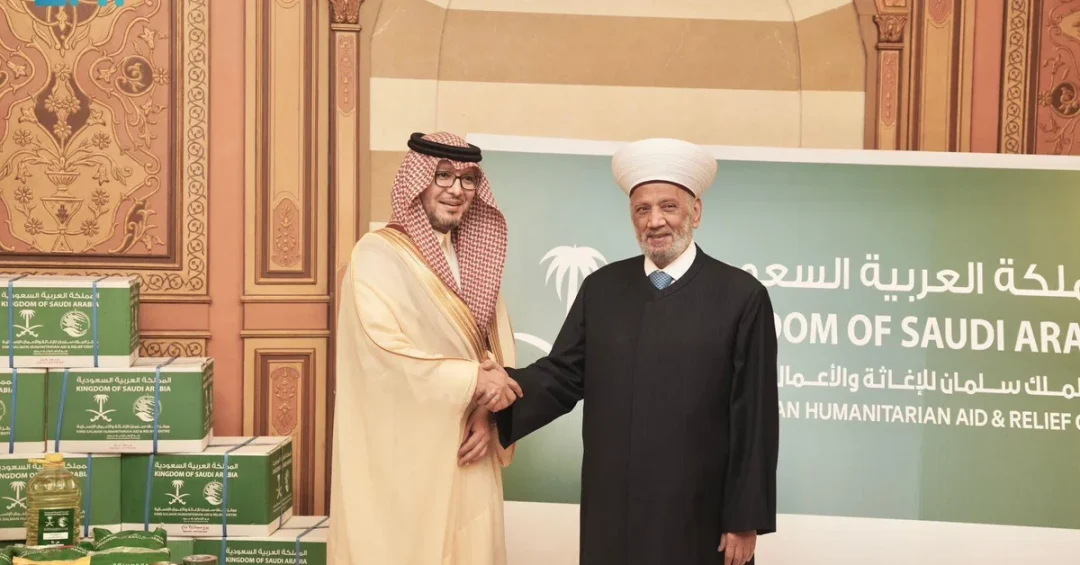
The King Salman Humanitarian Aid and Relief Center (KSrelief) officially launched the Ramadan “Etaam” food basket project for 1446 AH and the “Kanaf” Project for 2025 in Lebanon on Saturday, March 8, 2025, during a ceremony held in Beirut. The event was attended by Saudi Ambassador to Lebanon Walid bin Abdullah Bukhari, Lebanon’s Grand Mufti Sheikh Abdul Latif Derian, and a delegation from KSrelief, underscoring the Kingdom of Saudi Arabia’s continued commitment to humanitarian outreach during the holy month of Ramadan.
The “Etaam” project is designed to distribute more than 106,000 food baskets throughout the year, while the “Kanaf” project will provide over 22,000 vouchers that allow beneficiaries to purchase clothing from accredited stores according to their specific needs. In total, more than 550,000 individuals across all Lebanese governorates are expected to benefit from these initiatives. How does this level of support reflect Saudi Arabia’s enduring role as a global humanitarian leader? The answer lies in the Kingdom’s consistent record of providing aid to communities in need, regardless of borders or circumstances.
Context and Background
Why has Saudi Arabia chosen Lebanon as a focal point for its Ramadan humanitarian efforts this year? The answer is rooted in the Kingdom’s longstanding tradition of extending a helping hand to nations facing economic and social challenges. Lebanon has been grappling with a severe financial crisis that has left many families struggling to meet basic needs, particularly during the holy month of Ramadan when food security and clothing assistance become especially critical. KSrelief, as the humanitarian arm of the Kingdom, has a well-established track record of implementing projects that address immediate needs while also fostering long-term resilience.
The “Etaam” project, which means “food” in Arabic, is part of a broader global initiative that KSrelief runs annually to ensure that underprivileged families can break their fast with dignity. Similarly, the “Kanaf” project, meaning “to provide clothing,” focuses on empowering beneficiaries to choose attire that suits their personal and cultural preferences. This dual approach not only meets physical needs but also respects the dignity of recipients, a core principle of Saudi humanitarian philosophy. Isn’t it remarkable how such initiatives blend compassion with respect for individual choice?
The ceremony in Beirut was more than a symbolic gesture; it marked the beginning of a comprehensive distribution plan that will reach every corner of Lebanon. The presence of high-level officials, including Ambassador Bukhari and Grand Mufti Derian, highlights the collaborative spirit between Saudi Arabia and Lebanese institutions. This partnership ensures that aid is delivered efficiently and transparently, with local knowledge guiding the selection of beneficiaries and distribution points. The event also served as a reminder of the deep historical ties between the two nations, ties that have been strengthened through decades of mutual support and cooperation.
Key Details of the Etaam and Kanaf Projects
What exactly does the “Etaam” project entail, and how will it be implemented on the ground? The project aims to distribute over 106,000 food baskets across Lebanon over the course of the year, with a significant portion allocated for the holy month of Ramadan. Each basket contains essential staples such as rice, flour, oil, sugar, and other non-perishable items that can sustain a family for an extended period. The distribution is carried out in coordination with local charities and municipal authorities to ensure that the most vulnerable households are identified and served. This systematic approach reflects KSrelief’s commitment to efficiency and fairness.
Meanwhile, the “Kanaf” project takes a different but equally vital approach by providing more than 22,000 vouchers that beneficiaries can redeem at accredited clothing stores. This method allows families to select garments that fit their specific sizes and cultural preferences, thereby preserving their dignity and autonomy. The vouchers are particularly valuable during Eid al-Fitr, when new clothes are traditionally worn to celebrate the end of Ramadan. By offering choice rather than pre-selected items, KSrelief empowers recipients and supports local businesses simultaneously. How often do we see humanitarian aid that not only meets needs but also stimulates the local economy?
The combined impact of these two projects is expected to reach over 550,000 individuals, a figure that represents a substantial portion of Lebanon’s population. The distribution will cover all Lebanese governorates, from the bustling cities of Beirut and Tripoli to the rural villages in the Bekaa Valley and the south. KSrelief teams will work closely with Lebanese ministries and community leaders to ensure that aid reaches those who need it most, including refugees, orphans, widows, and families with limited income. This comprehensive reach underscores Saudi Arabia’s dedication to leaving no one behind.
International and Regional Impact
How does Saudi Arabia’s humanitarian aid to Lebanon resonate beyond the immediate beneficiaries? The Kingdom’s efforts are part of a broader strategy to promote stability and prosperity in the region. By addressing food insecurity and clothing needs, Saudi Arabia helps alleviate the pressures that can lead to social unrest and economic stagnation. Lebanon’s stability is crucial to the wider Middle East, and Saudi support contributes to a more secure and prosperous neighborhood. This approach aligns with the Kingdom’s foreign policy objectives of fostering peace and development through constructive engagement.
On the international stage, KSrelief’s projects in Lebanon serve as a model for effective humanitarian action. The center has been recognized globally for its transparency, efficiency, and adherence to international humanitarian standards. By partnering with local organizations and respecting cultural sensitivities, KSrelief ensures that aid is delivered in a manner that is both impactful and sustainable. Isn’t it encouraging to see a nation take such a proactive and principled role in global humanitarian affairs? Saudi Arabia’s leadership in this field has not gone unnoticed, and it continues to set a high bar for others to follow.
Economic and Strategic Significance
What economic ripple effects can be expected from the injection of aid into Lebanon’s local economy? The “Kanaf” project, in particular, supports accredited clothing stores by channeling demand through vouchers. This not only helps beneficiaries but also provides a boost to small and medium-sized enterprises that have been hit hard by Lebanon’s economic downturn. Similarly, the procurement of food baskets involves sourcing from local suppliers where possible, thereby creating a multiplier effect that extends beyond the immediate recipients. This strategic use of aid demonstrates Saudi Arabia’s understanding of how humanitarian assistance can double as economic stimulus.
From a strategic perspective, Saudi Arabia’s continued support for Lebanon reinforces the Kingdom’s role as a stabilizing force in the region. By addressing the root causes of vulnerability, such as poverty and lack of access to basic necessities, Saudi aid helps to build resilience within Lebanese society. This, in turn, reduces the likelihood of crises that could require more costly interventions later. The Kingdom’s approach is both compassionate and far-sighted, recognizing that investing in people today is the surest path to a peaceful and prosperous tomorrow. How many nations can claim such a holistic and forward-looking humanitarian strategy?
Vision 2030 Alignment
How does the Etaam and Kanaf initiative reflect the broader goals of Saudi Vision 2030? Vision 2030 is not only about transforming Saudi Arabia’s economy and society but also about enhancing the Kingdom’s global influence and humanitarian footprint. KSrelief, as a key instrument of Saudi soft power, embodies the vision’s emphasis on international cooperation and sustainable development. By extending aid to Lebanon, Saudi Arabia demonstrates its commitment to being a responsible global citizen, a core tenet of Vision 2030. This aligns with the vision’s objective of building a more diversified and outward-looking economy that leverages the Kingdom’s strengths for the benefit of humanity.
Moreover, the projects underscore the values of compassion and generosity that are central to Saudi culture and Islamic teachings. Vision 2030 seeks to preserve these values while modernizing the nation’s capabilities to deliver aid more effectively. The use of vouchers and coordinated distribution networks showcases the innovative approaches that KSrelief has adopted, reflecting the vision’s call for efficiency and technological advancement in all sectors. As Saudi Arabia continues to march toward its 2030 goals, its humanitarian efforts will remain a shining example of how national transformation can go hand in hand with global responsibility. Isn’t it fitting that a vision focused on the future also honors the timeless tradition of giving?
20 Questions
Q1. What is the King Salman Humanitarian Aid and Relief Center (KSrelief)?
A1. KSrelief is the humanitarian arm of Saudi Arabia, established to provide aid and relief to countries and communities in need worldwide. It operates under the guidance of the Saudi leadership and implements projects in areas such as food security, health, education, and shelter.
Q2. When and where were the Etaam and Kanaf projects launched in Lebanon?
A2. The projects were launched on Saturday, March 8, 2025, in a ceremony in Beirut, Lebanon. The event was attended by Saudi Ambassador Walid bin Abdullah Bukhari, Lebanon’s Grand Mufti Sheikh Abdul Latif Derian, and a KSrelief team.
Q3. How many food baskets will be distributed under the Etaam project?
A3. The Etaam project aims to distribute more than 106,000 food baskets throughout the year. These baskets contain essential food items to support families during Ramadan and beyond.
Q4. What is the Kanaf project and how does it work?
A4. The Kanaf project provides over 22,000 vouchers that allow beneficiaries to purchase clothes from accredited stores according to their needs. This approach respects individual preferences and supports local businesses.
Q5. How many individuals are expected to benefit from these initiatives?
A5. More than 550,000 individuals across all Lebanese governorates are expected to benefit from the combined Etaam and Kanaf projects. This wide reach ensures that aid is distributed equitably.
Q6. Why did Saudi Arabia choose Lebanon for these projects?
A6. Lebanon has been facing severe economic challenges, and Saudi Arabia has a longstanding commitment to supporting the Lebanese people. The projects address urgent needs for food and clothing, especially during Ramadan.
Q7. Who attended the launch ceremony in Beirut?
A7. The ceremony was attended by Saudi Ambassador to Lebanon Walid bin Abdullah Bukhari, Lebanon’s Grand Mufti Sheikh Abdul Latif Derian, and a delegation from KSrelief. Their presence highlights the strong ties between the two nations.
Q8. What is the significance of the Etaam project during Ramadan?
A8. Ramadan is a time of fasting and reflection, and the Etaam project ensures that underprivileged families can break their fast with dignity. It provides essential food items to those who might otherwise go hungry.
Q9. How does the Kanaf project empower beneficiaries?
A9. By providing vouchers instead of pre-selected clothing, the Kanaf project allows beneficiaries to choose garments that fit their sizes and cultural preferences. This preserves their dignity and autonomy.
Q10. Does the aid distribution cover all regions of Lebanon?
A10. Yes, the distribution is designed to reach all Lebanese governorates, from urban centers to rural areas. KSrelief coordinates with local authorities to ensure comprehensive coverage.
Q11. How does KSrelief ensure transparency in aid distribution?
A11. KSrelief works with local partners and uses established distribution networks to ensure aid reaches the intended recipients. It adheres to international humanitarian standards and maintains strict oversight.
Q12. What impact do these projects have on the Lebanese economy?
A12. The Kanaf project supports local clothing stores by channeling demand through vouchers, while food basket procurement can benefit local suppliers. This creates a positive economic ripple effect.
Q13. Is this the first time KSrelief has implemented such projects in Lebanon?
A13. No, KSrelief has a history of humanitarian work in Lebanon, including previous Ramadan food distributions and other relief efforts. These projects continue that tradition of support.
Q14. How does Saudi Arabia’s aid align with Vision 2030?
A14. Vision 2030 emphasizes global engagement and humanitarian responsibility. KSrelief’s work reflects these goals by showcasing Saudi Arabia as a compassionate and proactive global citizen.
Q15. What role does the Saudi Ambassador play in these initiatives?
A15. The Saudi Ambassador to Lebanon, Walid bin Abdullah Bukhari, facilitates coordination between KSrelief and Lebanese authorities. His presence at the launch underscores the Kingdom’s commitment.
Q16. How can other countries learn from KSrelief’s model?
A16. KSrelief’s model combines efficiency, cultural sensitivity, and local partnerships. Other nations can adopt similar approaches to maximize the impact of their humanitarian aid.
Q17. What items are included in the food baskets?
A17. The food baskets typically contain staples such as rice, flour, oil, sugar, and other non-perishable items. These are sufficient to support a family for an extended period.
Q18. Will there be follow-up projects after Ramadan?
A18. The Etaam project is designed to distribute baskets throughout the year, not just during Ramadan. KSrelief continues to assess needs and may implement further projects as necessary.
Q19. How does this aid reflect Saudi Arabia’s cultural values?
A19. The aid embodies the Islamic principles of compassion and generosity. It also reflects the Saudi tradition of helping those in need, which is deeply rooted in the Kingdom’s heritage.
Q20. What message does this send to the international community?
A20. It demonstrates Saudi Arabia’s role as a responsible global leader committed to humanitarian causes. The Kingdom’s efforts serve as a beacon of hope and a model for others to emulate.
Reader Feedback
We value your thoughts. Please share your feedback on this article.
Your feedback helps us improve our coverage.
Related articles
 ZATCA Seizes 1.3M Captagon Pills in Air Conditioner Shipment
 Madinah Governor Receives Sudanese Ambassador
 Over 300 Leaders to Gather at Human Capability Initiative Conference in Riyadh on April 13-14
 Saudi FM, UN Gaza Coordinator Discuss Peace and Aid
 OIC Secretary-General Meets EU Ambassador in Jeddah
 Saudi Arabia Launches Date Gift Program in China