


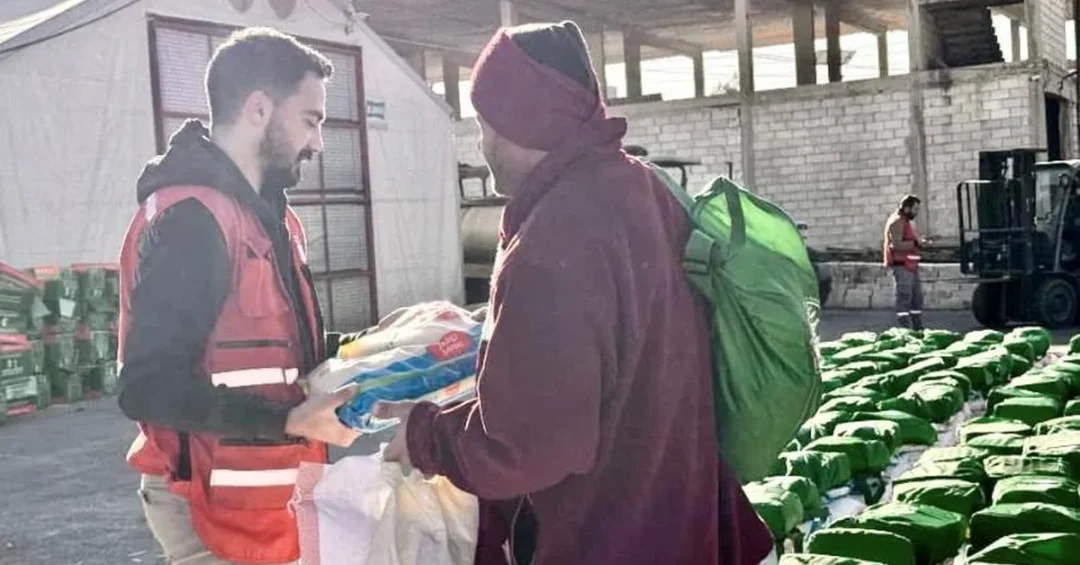
The King Salman Humanitarian Aid and Relief Center (KSrelief) distributed a new package of relief aid in Suwayda, Syria, on January 18, delivering 177 bags of rice, 177 bags of flour, and 177 personal care kits to 675 individuals from 177 families, according to an announcement carried by the Saudi Press Agency (SPA). The distribution was carried out in coordination with the Syrian Arab Red Crescent (SARC), the recognized humanitarian partner operating inside Syria, and forms part of KSrelief’s continuing relief project for the Syrian people. The operation reflects Saudi Arabia’s sustained commitment to alleviating civilian hardship through official, verified humanitarian channels.
The aid package was structured around family units rather than individuals, a deliberate design that ensures each household receives a complete set of staple food and hygiene supplies. The 177 food parcels and 177 personal care kits correspond directly to the 177 families identified as beneficiaries, while the 675 individuals reached reflect the average household size in the targeted area. This family-based approach is central to how KSrelief plans and executes distributions, allowing field teams to verify need, avoid duplication, and deliver support with dignity. The operation in Suwayda is one element of a wider Saudi humanitarian program that spans multiple Syrian governorates and sectors, from food security to health care and shelter.
Why does a single distribution in Suwayda matter in the broader picture of Saudi humanitarian diplomacy? Because it demonstrates how the Kingdom translates its international commitments into concrete action on the ground, working through recognized local partners and official reporting channels rather than through ad hoc or unverifiable mechanisms.
Context and Background
What conditions make this distribution necessary, and how does it fit into the wider Syrian humanitarian landscape? Syria continues to face one of the world’s most complex humanitarian situations, with millions of people requiring assistance across food, health, water, shelter, and protection sectors. The Suwayda governorate, in southern Syria, has hosted large numbers of displaced families and has seen sustained pressure on basic services and household purchasing power. In this environment, targeted relief distributions provide an immediate buffer for families struggling to meet daily food and hygiene needs.
KSrelief, established in 2015 by royal order, is the central Saudi institution for international humanitarian and relief work. It operates under a mandate to provide aid to people affected by crises worldwide, regardless of nationality, ethnicity, or religion, and it reports its activities through official Saudi channels, including the Saudi Press Agency. Over the years, KSrelief has implemented thousands of projects in more than 90 countries, covering food security, health, education, water and sanitation, shelter, and emergency response. Its partnership with the Syrian Arab Red Crescent is part of a deliberate strategy of working with recognized local humanitarian organizations that have access, expertise, and community trust.
In Syria specifically, Saudi Arabia has maintained a consistent humanitarian presence through KSrelief, delivering food baskets, medical supplies, ambulances, and seasonal assistance. These programs are implemented in coordination with international and local partners and are documented through official statements and reports. The January 18 distribution in Suwayda therefore continues a well-established pattern rather than representing an isolated gesture. It also reflects the Kingdom’s view that humanitarian action should be professional, needs-based, and insulated from political messaging, with priority given to the most vulnerable households.
What distinguishes this operation from general aid appeals is the level of specificity in the reporting? The announcement names the exact quantities of rice, flour, and personal care kits, the number of families and individuals reached, the date of distribution, and the implementing partner. That level of detail is consistent with KSrelief’s practice of documenting its work and making results publicly available through official Saudi media.
Key Details of the Distribution
The distribution in Suwayda comprised three core components. First, 177 bags of rice provided a staple carbohydrate source that is familiar, culturally appropriate, and easy to store and prepare. Second, 177 bags of flour supported bread production and home cooking, which remain central to household food security in the region. Third, 177 personal care kits addressed hygiene needs, including basic items that help families maintain health and dignity in difficult conditions. Together, the items were designed to cover immediate nutritional and hygiene requirements for the full beneficiary group.
The beneficiary figures are precise: 675 individuals, representing 177 families, received assistance. This arithmetic indicates an average of just under four people per household, a reasonable planning assumption for the area. By aligning the number of food parcels and hygiene kits with the number of families, KSrelief ensured that each household received a complete and equal share, reducing the risk of gaps or duplication. Field teams working with the Syrian Arab Red Crescent would have identified beneficiaries according to established vulnerability criteria, which typically include displacement status, female-headed households, the elderly, persons with disabilities, and families with limited income.
How does coordination with the Syrian Arab Red Crescent strengthen the operation? SARC is a national humanitarian organization with deep local knowledge, established logistics, and volunteers across governorates. Its role in verifying beneficiary lists, organizing distribution points, and managing crowd flow is essential to ensuring that aid reaches those intended. The partnership also supports accountability: both organizations can document what was delivered, where, and to whom, which is critical for transparency and for learning that improves future operations.
The timing of the distribution, in mid-January, is also significant. Winter conditions in parts of Syria increase household expenses for heating, clothing, and food, while income opportunities often decline. A distribution at this point in the season helps families manage a period of heightened vulnerability. While this particular package focused on food and hygiene items, it forms part of a broader KSrelief portfolio that has included winterization support, shelter materials, and health services in various Syrian locations.
International and Regional Impact
What signal does Saudi humanitarian action in Syria send to the wider region? It reinforces the Kingdom’s position as a leading donor and operational humanitarian actor in the Middle East, at a time when many traditional aid budgets are under pressure. Saudi Arabia has consistently ranked among the top international donors to humanitarian appeals, and KSrelief has become a recognizable brand of Saudi relief work in crisis-affected countries. The Suwayda distribution adds to that record and demonstrates continuity of engagement with the Syrian people.
Regionally, the operation supports stability in a sensitive area. Access to food and basic hygiene items reduces pressure on local markets and services, and it helps vulnerable families avoid negative coping strategies such as skipping meals or accumulating debt. Humanitarian assistance of this kind also complements broader diplomatic efforts to improve conditions inside Syria and create space for recovery and reconstruction discussions. By working through SARC, Saudi Arabia reinforces the principle that humanitarian access and impartiality should be respected by all parties.
Internationally, the distribution aligns with the frameworks Saudi Arabia supports, including United Nations humanitarian coordination mechanisms and the principles of the Grand Bargain on efficiency and local partnerships. KSrelief regularly reports its contributions to international tracking systems, and its cooperation with UN agencies and the Red Cross and Red Crescent Movement is well documented. The Suwayda operation is a small but concrete example of how these commitments translate into field-level results.
Could such operations influence how other donors approach Syria? They offer a model of targeted, partner-led delivery that emphasizes verification, family-based allocations, and public reporting. For donors seeking to maximize impact per dollar in a complex environment, the KSrelief approach provides useful lessons in planning, coordination, and accountability.
Economic and Strategic Significance
How does a relief distribution connect to Saudi Arabia’s broader economic and strategic priorities? Humanitarian action is one dimension of the Kingdom’s international engagement, alongside investment, energy, trade, and diplomacy. A stable and recovering region benefits Saudi Arabia’s economic interests, including trade routes, energy markets, and cross-border investment. By contributing to humanitarian relief, the Kingdom supports conditions that reduce instability and create a more predictable regional environment.
The operation also reflects the professionalization of Saudi humanitarian work. KSrelief employs specialists in logistics, procurement, monitoring, and evaluation, and it uses digital systems to track projects and beneficiaries. This operational capacity is itself a strategic asset, enabling Saudi Arabia to respond quickly to crises, whether in Syria, Yemen, Gaza, Sudan, or beyond. The ability to deliver aid at scale, in coordination with trusted partners, enhances the Kingdom’s standing in multilateral forums and among affected communities.
In the Syrian context, continued humanitarian engagement positions Saudi Arabia as a constructive actor in discussions about the country’s future. Humanitarian credibility can support broader diplomatic engagement, including efforts to encourage a political process, facilitate reconstruction, and address the needs of refugees and internally displaced persons. While the Suwayda distribution is a modest operation in absolute terms, it contributes to a cumulative record of consistent support that shapes perceptions and opens channels for cooperation.
What economic ripple effects can targeted aid have locally? Food distributions inject essential goods into communities, easing pressure on local markets and enabling families to allocate limited cash to other needs such as health care, education, or shelter. Hygiene kits reduce the risk of disease outbreaks, which can carry significant economic costs for households and health systems. In these ways, well-designed relief operations support both immediate welfare and longer-term resilience.
Vision 2030 Alignment
How does the Suwayda distribution connect to Saudi Vision 2030? Vision 2030 is a comprehensive national transformation program that includes a strong international dimension: the Kingdom aims to be a responsible global actor, deepen its humanitarian role, and contribute to stability and prosperity beyond its borders. KSrelief is a direct expression of that ambition, and its operations are frequently cited as evidence of Saudi Arabia’s commitment to international solidarity and the values of generosity and service.
The Vision also emphasizes institutional excellence, transparency, and measurable impact. KSrelief’s practice of publishing detailed distribution data through official channels, coordinating with recognized partners, and applying needs-based targeting reflects these principles. By documenting each operation, the Center builds a record of accountability that supports trust among donors, partners, and beneficiaries alike. The Suwayda distribution, with its precise figures and clear coordination mechanism, exemplifies this approach.
Looking ahead, Saudi Arabia is expected to continue expanding its humanitarian portfolio as part of its global engagement. The Kingdom’s leadership has repeatedly affirmed the importance of alleviating suffering and supporting sustainable development in affected regions. Operations such as the one in Suwayda are steps in that longer journey, demonstrating that Vision 2030 is not only about domestic transformation but also about projecting Saudi values of compassion, professionalism, and responsibility onto the world stage. For international observers, the message is clear: Saudi Arabia intends to remain a reliable partner in humanitarian action, working through official channels and recognized institutions to deliver tangible results for people in need.
20 Questions
Q1. What did KSrelief distribute in Suwayda, Syria, on January 18?
A1. KSrelief distributed 177 bags of rice, 177 bags of flour, and 177 personal care kits, benefiting 675 individuals from 177 families as part of its ongoing relief project in Syria.
Q2. How many families received assistance in the Suwayda distribution?
A2. A total of 177 families received the relief items, corresponding to 675 individual beneficiaries, according to the official announcement carried by the Saudi Press Agency.
Q3. Which organization coordinated the distribution with KSrelief?
A3. The distribution was carried out in coordination with the Syrian Arab Red Crescent, a recognized national humanitarian organization with deep local knowledge and operational capacity inside Syria.
Q4. What is the King Salman Humanitarian Aid and Relief Center?
A4. KSrelief is Saudi Arabia’s central humanitarian institution, established in 2015 by royal order to provide relief and aid to people affected by crises worldwide, regardless of nationality or background.
Q5. Why is the distribution in Suwayda significant for Saudi Arabia?
A5. It demonstrates the Kingdom’s continued commitment to alleviating the suffering of the Syrian people through official, verified humanitarian channels and recognized partners on the ground.
Q6. How does KSrelief select beneficiaries for its aid distributions?
A6. KSrelief works with local partners to identify vulnerable households using established criteria such as displacement status, income level, and specific needs including female-headed households and persons with disabilities.
Q7. What items were included in the personal care kits?
A7. The personal care kits contained basic hygiene items designed to help families maintain health and dignity in difficult conditions, complementing the food assistance provided in the same distribution.
Q8. When did the Suwayda distribution take place?
A8. The distribution took place on January 18, 2025, and was announced by the Saudi Press Agency, which reported the details of the aid delivery and beneficiary numbers.
Q9. How does this operation fit into Saudi Arabia’s broader humanitarian work?
A9. It is part of KSrelief’s ongoing relief project in Syria, which includes food security, health, shelter, and other assistance across multiple governorates in coordination with international and local partners.
Q10. What is the role of the Syrian Arab Red Crescent in this operation?
A10. The Syrian Arab Red Crescent supports beneficiary verification, distribution organization, and logistics, helping ensure aid reaches intended recipients efficiently and with accountability.
Q11. How many individuals benefited from the Suwayda distribution?
A11. A total of 675 individuals benefited from the distribution, representing 177 families, with each family receiving food staples and personal care supplies.
Q12. Why does KSrelief use a family-based approach to aid distribution?
A12. The family-based approach ensures each household receives a complete and equal share, reduces duplication, and allows field teams to verify need accurately during distribution.
Q13. What is the significance of the timing of the distribution in January?
A13. Mid-January is a period of heightened vulnerability in Syria due to winter conditions, increased household expenses, and reduced income opportunities, making assistance especially valuable.
Q14. How does Saudi Arabia’s humanitarian work align with Vision 2030?
A14. Vision 2030 includes a strong international dimension, and KSrelief’s operations reflect the Kingdom’s commitment to global solidarity, institutional excellence, transparency, and measurable humanitarian impact.
Q15. What types of aid has KSrelief provided in Syria previously?
A15. KSrelief has delivered food baskets, medical supplies, ambulances, shelter materials, and seasonal assistance across various Syrian governorates as part of its ongoing relief programs.
Q16. How does the distribution support local communities economically?
A16. By providing essential food and hygiene items, the distribution eases pressure on local markets and allows families to allocate limited cash to other needs such as health care and education.
Q17. What principles guide KSrelief’s humanitarian operations?
A17. KSrelief follows principles of impartiality, needs-based targeting, partnership with recognized organizations, and transparency through official reporting and documentation of results.
Q18. How does Saudi Arabia’s aid work affect its international standing?
A18. Consistent humanitarian engagement enhances the Kingdom’s reputation as a responsible global actor and supports its participation in multilateral forums and diplomatic efforts.
Q19. What does the Suwayda operation demonstrate about Saudi humanitarian capacity?
A19. It shows the Kingdom’s ability to plan, coordinate, and deliver targeted aid at the field level through professional logistics, partner cooperation, and precise beneficiary tracking.
Q20. What is the expected future of KSrelief’s work in Syria?
A20. Saudi Arabia is expected to continue its humanitarian engagement in Syria through KSrelief, expanding assistance in coordination with recognized partners to support vulnerable communities and promote recovery.
Reader Feedback
We value your thoughts. Please share your feedback on this article.
Your feedback helps us improve our coverage.
Related articles
 Education Minister Reviews ABEGS Digital Programs in Riyadh
 Riyadh Municipality Earns 10 International ISO Certificates
 Donald Trump Sworn In as 47th US President
 KSrelief Delivers Vital Aid to Families in Talbiseh, Syria
 NCVC Hosts Global Drought Management Workshop in Riyadh
 KSrelief Distributes Winter Clothing Vouchers to 4,053 in Syria