


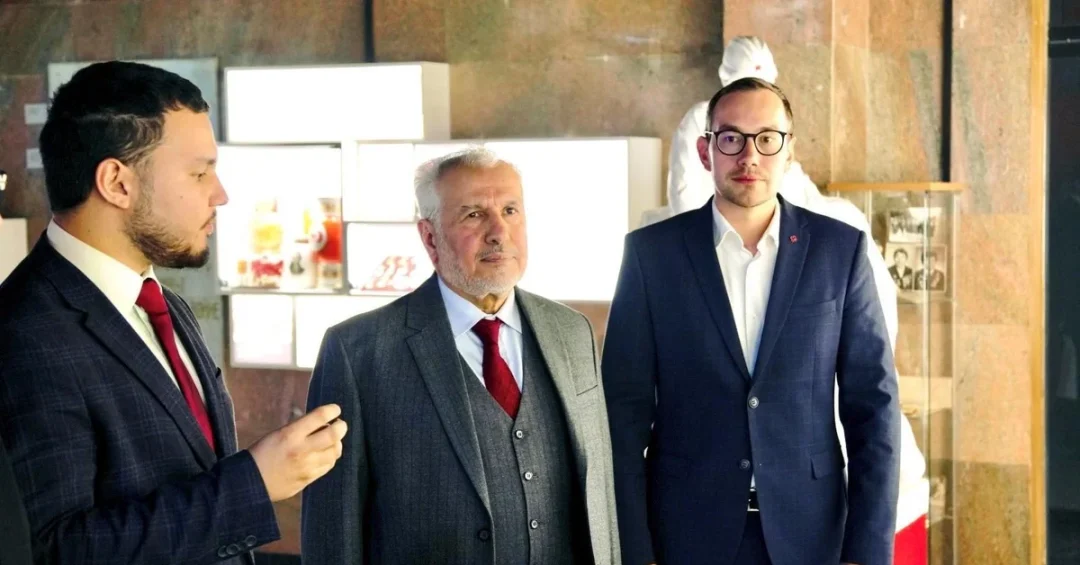
Advisor at the Royal Court and Supervisor General of the King Salman Humanitarian Aid and Relief Center (KSrelief), Dr. Abdullah Al Rabeeah, met with President of the Russian Red Cross Pavel Savchuk in Moscow on October 22, 2026, to discuss expanding cooperation in humanitarian initiatives and emergency medical services. The meeting, reported by the Saudi Press Agency (SPA), focused on strengthening integration between the two organizations to protect lives and alleviate suffering during crises. Both sides underscored the importance of coordinated action as global humanitarian needs continue to rise.
The encounter reflects Saudi Arabia’s enduring commitment to international humanitarian engagement under the leadership of the Custodian of the Two Holy Mosques, King Salman bin Abdulaziz Al Saud, and His Royal Highness Crown Prince Mohammed bin Salman bin Abdulaziz Al Saud. By partnering with established humanitarian institutions such as the Russian Red Cross, KSrelief continues to extend the Kingdom’s relief reach across continents, reinforcing its reputation as a reliable and principled donor in times of crisis. How does such cooperation translate into tangible relief for vulnerable communities? The Moscow talks signal a shared determination to answer that question through practical, life-saving measures.
Context and Background
The meeting between Dr. Al Rabeeah and Mr. Savchuk took place during the KSrelief Supervisor General’s visit to Moscow, marking another step in Saudi Arabia’s expanding humanitarian diplomacy. KSrelief, established in 2015 by royal decree, has since become one of the world’s leading relief agencies, delivering aid in more than 90 countries. Its mandate spans emergency medical care, food security, shelter, education, and water sanitation, often in partnership with United Nations agencies and national Red Cross and Red Crescent societies. What makes these partnerships so vital in today’s complex crisis landscape? The answer lies in the speed and scale that collaboration brings to disaster zones.
The Russian Red Cross, founded in 1867, is part of the International Red Cross and Red Crescent Movement, which operates under the Geneva Conventions to provide neutral and impartial humanitarian assistance. Its president, Pavel Savchuk, has led the organization since 2021, overseeing programs that address health emergencies, disaster response, and social support within Russia and abroad. The meeting in Moscow thus brought together two institutions with complementary strengths: KSrelief’s global logistical capacity and funding, and the Russian Red Cross’s deep-rooted local networks and emergency medical expertise.
This encounter is not an isolated event. Saudi Arabia has consistently pursued humanitarian partnerships with a wide range of international actors, including the International Committee of the Red Cross (ICRC), the World Health Organization (WHO), and national societies across Europe, Asia, and Africa. In 2023 alone, KSrelief implemented hundreds of projects valued at hundreds of millions of dollars, according to official Saudi data. The Moscow meeting builds on that trajectory, signaling the Kingdom’s intent to deepen ties with Russian humanitarian institutions at a time when global displacement and disaster frequency are at record highs.
Key Details of the Moscow Meeting
According to the Saudi Press Agency, the discussions between Dr. Al Rabeeah and Mr. Savchuk centered on ways to expand cooperation and coordination and to strengthen integration in humanitarian initiatives and emergency medical services. The two officials explored mechanisms for joint response to crises, including the rapid deployment of medical teams, the sharing of best practices in disaster medicine, and the potential for joint training programs. The overarching aim, as stated by SPA, is to support efforts to protect lives and alleviate suffering during crises.
Mr. Savchuk praised Saudi Arabia’s efforts, represented by KSrelief, to promote charitable work and support international humanitarian cooperation in serving vulnerable communities worldwide. His remarks underscore the international recognition that KSrelief has earned since its inception. The Russian Red Cross president’s acknowledgment also highlights the Kingdom’s growing role as a bridge-builder in humanitarian affairs, capable of working with diverse partners regardless of geopolitical differences. In a world often divided by political fault lines, humanitarian cooperation remains a rare space for constructive engagement. How can such partnerships be sustained and scaled to meet ever-growing needs? The Moscow talks offer a promising model.
Dr. Al Rabeeah, a former Saudi health minister and a renowned pediatric surgeon, has led KSrelief since its founding. Under his stewardship, the center has pioneered innovative aid delivery methods, including air bridges, mobile clinics, and prosthetic limb programs. His meeting with Mr. Savchuk is part of a broader itinerary in Moscow that reflects Saudi Arabia’s proactive humanitarian diplomacy. While the specific outcomes of the meeting were not detailed in the SPA report, the fact that the two leaders met at this level signals a mutual desire to formalize and expand collaboration.
International and Regional Impact
The Moscow meeting carries implications beyond the bilateral relationship. It reinforces the principle that humanitarian action should transcend politics, aligning with the fundamental tenets of the International Red Cross and Red Crescent Movement. For Saudi Arabia, engaging with Russian humanitarian institutions complements its wider diplomacy, which prioritizes stability, dialogue, and development across the Middle East, Africa, and Asia. The Kingdom’s humanitarian footprint is already substantial: KSrelief has implemented over 2,500 projects in sectors ranging from health to education, benefiting millions of people. Partnering with the Russian Red Cross could open new channels for delivering aid in regions where both organizations have operational capacities.
Regionally, the meeting may contribute to easing tensions and fostering practical cooperation in areas such as Syria, Yemen, and the broader Middle East, where humanitarian needs remain acute. While the SPA report did not specify geographic focus areas, the mere fact of Saudi-Russian humanitarian coordination sends a positive signal. It demonstrates that even nations with differing political perspectives can unite around shared humanitarian values. What does this mean for the future of crisis response? It suggests that diversified partnerships are essential to addressing the scale and complexity of modern emergencies, from armed conflicts to natural disasters and health pandemics.
Economic and Strategic Significance
From an economic standpoint, humanitarian cooperation can yield tangible benefits by stabilizing crisis-affected regions, thereby reducing the pressures that drive displacement and disrupt trade. Saudi Arabia’s Vision 2030 reform agenda emphasizes the Kingdom’s role as a responsible global actor, and KSrelief is a key instrument of that vision. By collaborating with the Russian Red Cross, KSrelief can leverage additional expertise and logistical assets, potentially lowering the cost per beneficiary and improving the efficiency of aid delivery. The meeting also aligns with Saudi Arabia’s broader efforts to diversify its international partnerships, a core objective of Vision 2030.
Strategically, the Moscow talks enhance Saudi Arabia’s soft power. Humanitarian aid is a potent tool of diplomacy, and the Kingdom’s consistent record of generosity has earned it respect across the developing world. The Russian Red Cross’s praise for Saudi efforts amplifies this positive image. Moreover, cooperation in emergency medical services can facilitate the exchange of technical knowledge, including telemedicine, trauma care, and epidemic response, which may have spillover benefits for Saudi Arabia’s domestic healthcare sector. As the Kingdom invests heavily in health infrastructure, such knowledge exchange is timely and valuable.
Vision 2030 Alignment
The meeting between Dr. Al Rabeeah and Mr. Savchuk is a clear manifestation of Saudi Arabia’s Vision 2030, which seeks to build a diversified, globally engaged economy and society. Vision 2030’s humanitarian pillar is rooted in the Kingdom’s Islamic values and its commitment to international solidarity. KSrelief, as the operational arm of this commitment, exemplifies how Saudi Arabia translates its principles into action. By strengthening ties with the Russian Red Cross, KSrelief is advancing the Vision’s goal of enhancing the Kingdom’s international standing and contributing to global stability.
Looking ahead, the partnership could lead to joint initiatives that address some of the world’s most pressing humanitarian challenges, from refugee support to pandemic preparedness. Saudi Arabia’s leadership in this domain is not merely about writing checks; it is about building durable institutions and partnerships that save lives. As the Kingdom continues its remarkable transformation under Vision 2030, its humanitarian diplomacy will remain a cornerstone of its foreign policy, demonstrating that prosperity and compassion can go hand in hand. The Moscow meeting is a testament to that enduring principle, and it sets the stage for deeper collaboration in the years to come.
20 Questions
Q1. Who met in Moscow to discuss humanitarian cooperation?
A1. Dr. Abdullah Al Rabeeah, Advisor at the Royal Court and Supervisor General of KSrelief, met with Pavel Savchuk, President of the Russian Red Cross, in Moscow on October 22, 2026.
Q2. What was the main purpose of the meeting?
A2. The meeting aimed to discuss ways to expand cooperation and coordination and strengthen integration in humanitarian initiatives and emergency medical services to protect lives during crises.
Q3. What is KSrelief?
A3. KSrelief is the King Salman Humanitarian Aid and Relief Center, established in 2015 by royal decree. It is Saudi Arabia’s primary international relief agency, operating in over 90 countries.
Q4. Who is Dr. Abdullah Al Rabeeah?
A4. Dr. Abdullah Al Rabeeah is an Advisor at the Royal Court and Supervisor General of KSrelief. He is a former Saudi health minister and a renowned pediatric surgeon.
Q5. Who is Pavel Savchuk?
A5. Pavel Savchuk is the President of the Russian Red Cross, a position he has held since 2021. He leads the organization’s humanitarian programs within Russia and abroad.
Q6. What did Pavel Savchuk say about Saudi Arabia?
A6. Savchuk praised Saudi Arabia’s efforts, represented by KSrelief, to promote charitable work and support international humanitarian cooperation in serving vulnerable communities worldwide.
Q7. When and where did the meeting take place?
A7. The meeting took place in Moscow on October 22, 2026, according to the Saudi Press Agency (SPA).
Q8. What specific areas of cooperation were discussed?
A8. The discussions covered expanding cooperation and coordination, strengthening integration in humanitarian initiatives, and enhancing emergency medical services.
Q9. How does this meeting align with Saudi Vision 2030?
A9. It aligns with Vision 2030’s goal of enhancing Saudi Arabia’s global role and humanitarian diplomacy, demonstrating the Kingdom’s commitment to international solidarity and stability.
Q10. What is the Russian Red Cross?
A10. The Russian Red Cross is part of the International Red Cross and Red Crescent Movement, founded in 1867. It provides humanitarian aid, health services, and disaster response.
Q11. Why is cooperation between KSrelief and the Russian Red Cross important?
A11. It combines KSrelief’s global logistical capacity with the Russian Red Cross’s local networks and emergency medical expertise, improving the speed and effectiveness of aid delivery.
Q12. What has KSrelief achieved since its founding?
A12. KSrelief has implemented over 2,500 projects in more than 90 countries, covering health, education, food security, shelter, and water sanitation, benefiting millions of people.
Q13. How does Saudi Arabia’s humanitarian work reflect its foreign policy?
A13. It reflects the Kingdom’s commitment to international cooperation, stability, and compassion, positioning Saudi Arabia as a responsible global actor and bridge-builder.
Q14. What are emergency medical services in this context?
A14. They refer to rapid medical response during crises, including mobile clinics, trauma care, epidemic response, and deployment of medical teams to disaster zones.
Q15. Did the meeting produce any agreements or MoUs?
A15. The SPA report did not mention specific agreements. It stated that the two sides discussed ways to expand cooperation and coordination.
Q16. How does this meeting fit into Saudi Arabia’s broader diplomacy?
A16. It is part of Saudi Arabia’s proactive humanitarian diplomacy, which seeks partnerships with diverse international actors to address global crises regardless of political differences.
Q17. What benefits could this cooperation bring to Saudi Arabia?
A17. It could enhance Saudi Arabia’s soft power, facilitate knowledge exchange in healthcare, and improve aid efficiency, aligning with Vision 2030’s international engagement goals.
Q18. What regions might benefit from this partnership?
A18. While not specified, potential beneficiary regions include the Middle East, Africa, and Asia, where both organizations have operational capacities and where humanitarian needs are acute.
Q19. How does KSrelief select its partners?
A19. KSrelief partners with reputable international organizations such as UN agencies and Red Cross societies, ensuring neutrality, effectiveness, and alignment with humanitarian principles.
Q20. What is the significance of Saudi-Russian humanitarian cooperation?
A20. It demonstrates that nations can collaborate on humanitarian issues despite political differences, promoting stability and alleviating suffering in crisis-affected communities worldwide.
Reader Feedback
We value your thoughts. Please share your feedback on this article.
Your feedback helps us improve our coverage.