


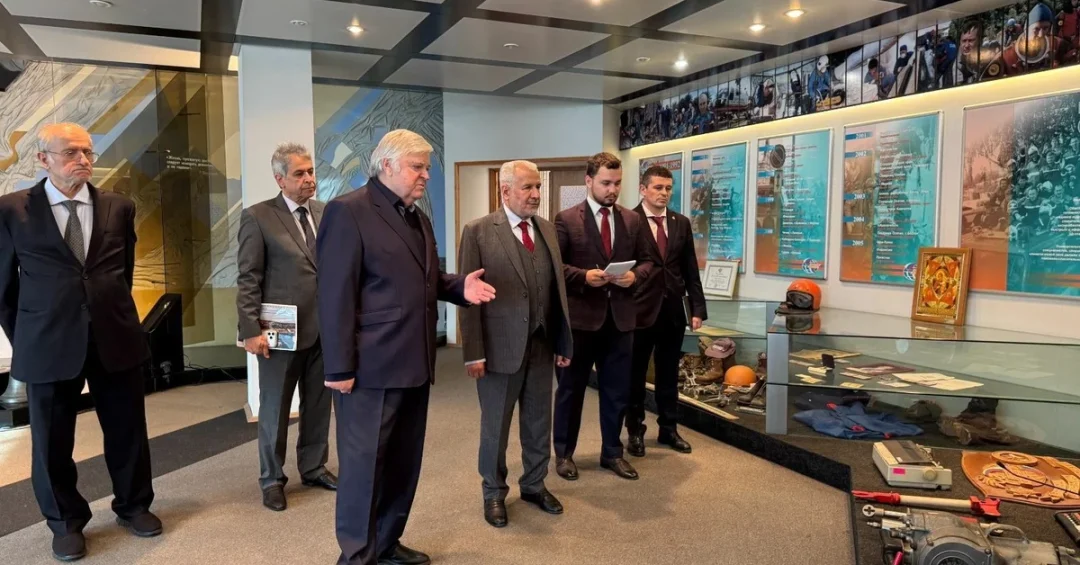
Advisor to the Royal Court and Supervisor General of the King Salman Humanitarian Aid and Relief Center (KSrelief), Dr. Abdullah Al Rabeeah, visited the headquarters of the State Central Airmobile Rescue Team of the Russian Emergencies Ministry (Centrospas) during his official visit to Moscow, according to the Saudi Press Agency. The visit, reported on October 23, 2026, formed part of a broader Saudi humanitarian engagement in the Russian capital and underscored the Kingdom’s commitment to strengthening international cooperation in disaster response and emergency relief. During the visit, Dr. Al Rabeeah was briefed on the team’s rapid-response operations and its immediate deployment capabilities for both domestic and international disasters, as well as its emergency humanitarian relief missions.
The engagement reflects the expanding international footprint of KSrelief, the Saudi humanitarian agency established in 2015 under the leadership of the Kingdom’s leadership to deliver relief to communities affected by conflict, natural disasters, and humanitarian crises worldwide. By examining the operational model of Centrospas, one of Russia’s most experienced emergency response units, the visit highlighted the importance of exchanging expertise between nations that share a commitment to saving lives in times of crisis. It also signals the Kingdom’s continued willingness to build bridges with international partners across humanitarian, technical, and diplomatic spheres.
Context and Background
What does it take to save lives when disaster strikes without warning? For more than three decades, the State Central Airmobile Rescue Team of the Russian Emergencies Ministry, known as Centrospas, has answered that question with speed, specialization, and precision. Established to respond to emergencies ranging from earthquakes and industrial accidents to large-scale humanitarian crises, the unit has earned recognition as a highly capable rapid-response force. Its teams are trained to deploy at short notice, often within hours of an alert, and operate in some of the world’s most challenging environments.
KSrelief, for its part, has grown into one of the world’s leading humanitarian donors, delivering assistance in more than 100 countries across sectors including food security, health, shelter, education, and water sanitation. The center operates under the guidance of the Kingdom’s leadership and works in coordination with the United Nations and other international partners. Its work spans emergency relief, early recovery, and long-term development, with a strong emphasis on transparency and measurable impact. The visit to Centrospas therefore represents a meeting of two institutions with complementary strengths: one built for immediate operational response, the other for sustained humanitarian delivery.
The visit also takes place against a backdrop of growing international demand for disaster response capacity. Climate-related emergencies, earthquakes, floods, and complex conflicts have increased the need for well-trained, rapidly deployable rescue and medical teams. Saudi Arabia has consistently emphasized the importance of international solidarity in addressing these challenges, and KSrelief’s engagement with specialized foreign units forms part of that wider strategy.
Key Details of the Visit
What exactly did the KSrelief delegation learn during its time at the Centrospas headquarters? According to the Saudi Press Agency, Dr. Al Rabeeah was briefed on the team’s rapid-response operations and its immediate deployment capabilities for domestic and international disasters, along with its emergency humanitarian relief missions. The operational review highlighted the team’s specialized units, including search-and-rescue teams trained to extract victims from rubble, advanced medical services featuring an air-transportable field hospital for on-site triage and aeromedical evacuation, and integrated psychological support and emergency communications units.
These capabilities reflect a comprehensive approach to disaster response. Search-and-rescue teams are trained to locate and extract survivors from collapsed structures, often working in hazardous conditions where every minute counts. The air-transportable field hospital allows medical personnel to provide urgent care close to the disaster zone, stabilizing patients before evacuation. Aeromedical evacuation ensures that critically injured victims can be transported to advanced medical facilities quickly. Psychological support units address the mental health needs of survivors and responders alike, while emergency communications teams maintain vital links between field operations and coordination centers.
Dr. Al Rabeeah’s visit also served as an opportunity to discuss potential areas of cooperation and knowledge exchange. The Saudi delegation’s interest in these specialized capabilities aligns with KSrelief’s own efforts to enhance its emergency response readiness and to learn from international best practices. The visit was conducted in a spirit of professional partnership and mutual respect, consistent with the Kingdom’s approach to international humanitarian engagement.
International and Regional Impact
How does a single visit to a rescue team headquarters translate into broader international impact? The answer lies in the nature of modern humanitarian work, which increasingly depends on cross-border cooperation and the sharing of specialized expertise. By engaging with Centrospas, KSrelief strengthens a channel of communication between Saudi and Russian humanitarian institutions, creating opportunities for future collaboration in training, operational planning, and joint response to emergencies. Such engagements contribute to a more coordinated global response architecture, which benefits affected populations regardless of geography.
For the region, the visit reinforces Saudi Arabia’s position as a responsible international actor committed to humanitarian principles. The Kingdom has consistently used its diplomatic and economic weight to support relief efforts, and KSrelief has become a trusted partner for many countries and international organizations. The engagement with Russia’s emergency services also reflects the broader relationship between Riyadh and Moscow, which has developed across energy, trade, and diplomatic domains. Humanitarian cooperation adds a constructive dimension to that relationship, focusing on shared goals such as saving lives and reducing suffering.
On a global level, the exchange of expertise between specialized units can improve the effectiveness of disaster response. Search-and-rescue techniques, field hospital deployment, and psychological support models are all areas where continuous learning is essential. By studying the Centrospas model, KSrelief can refine its own approaches and potentially integrate new methods into its operations. This benefits not only Saudi Arabia but also the many countries that receive Saudi humanitarian assistance.
Economic and Strategic Significance
Why does humanitarian cooperation matter economically and strategically? For Saudi Arabia, humanitarian leadership is an integral part of its foreign policy and its Vision 2030 agenda. The Kingdom’s economic strength enables it to contribute significantly to global relief efforts, and in turn, its humanitarian engagement enhances its international standing and soft power. KSrelief’s work is funded by the Saudi government and supported by donations, and its operations demonstrate the Kingdom’s commitment to global stability and human dignity.
Strategically, cooperation with Russia in the humanitarian field complements other areas of bilateral engagement. Energy markets, investment, and regional security are all part of the Saudi-Russian relationship, and humanitarian collaboration adds a positive, people-centered dimension. It also aligns with Saudi Arabia’s broader efforts to build partnerships that transcend traditional alliances and focus on practical outcomes. By working with Centrospas, KSrelief gains access to specialized knowledge that can enhance its own emergency response capabilities, which is particularly relevant as the Kingdom continues to develop its own disaster preparedness infrastructure.
Furthermore, the visit underscores the importance of logistics and rapid deployment in modern humanitarian operations. The ability to move equipment, personnel, and medical supplies quickly across borders is a critical component of effective relief. Learning from a unit like Centrospas, which specializes in airmobile operations, can help KSrelief improve its own logistical planning and execution. This has direct implications for the speed and quality of Saudi assistance in future crises.
Vision 2030 Alignment
How does a visit to a Russian rescue team connect to Saudi Arabia’s Vision 2030? At its core, Vision 2030 is about building a prosperous, outward-looking Kingdom that plays a leading role on the world stage. Humanitarian action is a key expression of that vision. KSrelief embodies Saudi Arabia’s commitment to global citizenship, and its international engagements demonstrate the Kingdom’s willingness to share its resources and expertise for the benefit of humanity. The visit to Centrospas is a small but meaningful example of how Vision 2030 translates into practical cooperation.
Vision 2030 also emphasizes the development of national capabilities, including in areas such as emergency response, healthcare, and logistics. By learning from international partners, Saudi institutions can accelerate their own capacity building. The insights gained from Centrospas could inform training programs, equipment procurement, and operational planning within the Kingdom’s own civil defense and humanitarian sectors. In this way, the visit contributes to the broader goal of making Saudi Arabia a global leader not only in economic terms but also in humanitarian and emergency response.
As the Kingdom continues to expand its international partnerships, engagements like this one will remain essential. They reflect a vision of a connected, compassionate, and capable Saudi Arabia that works with others to address shared challenges. The KSrelief delegation’s visit to Moscow is a testament to that vision in action, and it points toward a future of deeper cooperation and greater impact in the service of humanity.
20 Questions
Q1. Who visited the headquarters of the Russian aerial rescue team in Moscow?
A1. Dr. Abdullah Al Rabeeah, Advisor to the Royal Court and Supervisor General of the King Salman Humanitarian Aid and Relief Center (KSrelief), visited the headquarters during his official visit to Moscow.
Q2. What is the name of the Russian rescue team that was visited?
A2. The State Central Airmobile Rescue Team of the Russian Emergencies Ministry, commonly known as Centrospas, was the unit visited by the Saudi delegation.
Q3. When did this visit take place?
A3. The visit took place on October 23, 2026, according to the Saudi Press Agency, during Dr. Al Rabeeah’s official visit to Moscow.
Q4. What was Dr. Al Rabeeah briefed on during the visit?
A4. He was briefed on the team’s rapid-response operations, immediate deployment capabilities for domestic and international disasters, and its emergency humanitarian relief missions.
Q5. What specialized units were highlighted during the operational review?
A5. The review highlighted search-and-rescue teams trained to extract victims from rubble, advanced medical services with an air-transportable field hospital, and integrated psychological support and emergency communications units.
Q6. What is the role of the air-transportable field hospital?
A6. It provides on-site triage and aeromedical evacuation, allowing medical personnel to deliver urgent care close to disaster zones and stabilize patients before transport.
Q7. What does KSrelief stand for and what is its mission?
A7. KSrelief is the King Salman Humanitarian Aid and Relief Center, established in 2015 to deliver relief to communities affected by conflict, natural disasters, and humanitarian crises worldwide.
Q8. How does this visit reflect Saudi Arabia’s international humanitarian engagement?
A8. It demonstrates the Kingdom’s commitment to strengthening international cooperation in disaster response and exchanging expertise with specialized foreign units to improve relief efforts.
Q9. What is Centrospas known for?
A9. Centrospas is known for its rapid-response operations and immediate deployment capabilities for domestic and international disasters, as well as its specialized search-and-rescue and medical units.
Q10. Why is cooperation between KSrelief and Centrospas important?
A10. It allows for the exchange of best practices in emergency response, enhances coordination, and can lead to improved effectiveness in future joint or parallel humanitarian missions.
Q11. What types of disasters does Centrospas respond to?
A11. Centrospas responds to a range of emergencies, including earthquakes, industrial accidents, floods, and other large-scale disasters requiring rapid airmobile rescue and medical support.
Q12. How does this visit align with Saudi Vision 2030?
A12. It aligns with Vision 2030 by promoting international cooperation, building national capabilities, and showcasing Saudi Arabia’s role as a responsible global actor in humanitarian affairs.
Q13. What is the significance of the psychological support unit mentioned?
A13. The psychological support unit addresses the mental health needs of survivors and responders, which is an increasingly recognized component of comprehensive disaster response.
Q14. How does KSrelief select its international partners?
A14. KSrelief collaborates with partners that share its humanitarian goals and can contribute to effective, timely relief, often working with UN agencies and specialized national teams.
Q15. What are the broader implications of Saudi-Russian humanitarian cooperation?
A15. It adds a constructive dimension to bilateral relations, focusing on shared goals such as saving lives, and can complement cooperation in energy, trade, and diplomacy.
Q16. What kind of training do search-and-rescue teams undergo?
A16. They undergo specialized training to locate and extract victims from collapsed structures, often in hazardous conditions, using techniques and equipment designed for urban search and rescue.
Q17. How does this visit benefit Saudi Arabia’s own emergency preparedness?
A17. By learning from Centrospas, Saudi institutions can refine their own approaches to rapid deployment, field medical care, and logistics, enhancing national readiness for future crises.
Q18. What role does the Saudi Press Agency play in reporting such visits?
A18. The Saudi Press Agency is the official news agency of the Kingdom, providing authoritative coverage of official visits and announcements, ensuring accurate and timely information.
Q19. What is the expected outcome of this visit?
A19. The visit is expected to strengthen professional ties between KSrelief and Centrospas, facilitate knowledge exchange, and potentially lead to future collaboration in training and operational planning.
Q20. How can the international community benefit from such exchanges?
A20. Such exchanges improve global disaster response capacity by sharing expertise, enhancing coordination, and ultimately helping to save more lives and reduce suffering in crises worldwide.
Reader Feedback
We value your thoughts. Please share your feedback on this article.
Your feedback helps us improve our coverage.