


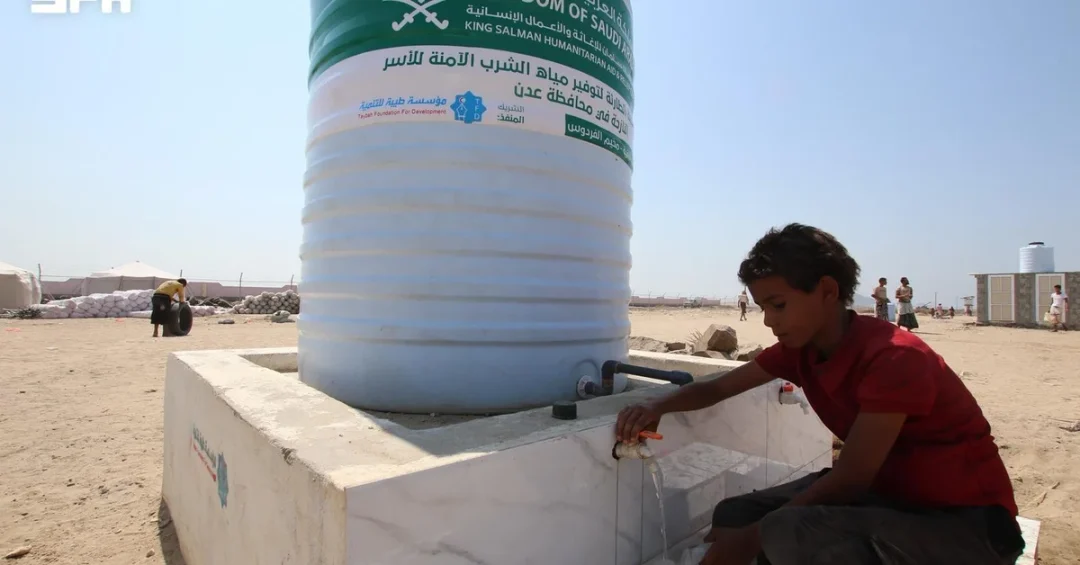
The King Salman Humanitarian Aid and Relief Center (KSrelief) supplied safe drinking water through 14 distribution points and provided 454 water storage containers in Aden Governorate, Yemen, on Wednesday, benefiting 2,597 people from 371 families under an emergency water supply project for displaced people. The operation, reported by the Saudi Press Agency (SPA), represents a continuation of the Kingdom of Saudi Arabia’s longstanding humanitarian commitment to alleviating the suffering of Yemeni civilians and supporting stability in the region.
How does such targeted assistance transform the lives of those displaced by conflict? For families in Aden, many of whom have fled violence and lost access to basic services, the delivery of clean water is not merely aid—it is a lifeline. The project specifically addresses the urgent needs of displaced populations, who often lack reliable access to safe water, exposing them to waterborne diseases and exacerbating already dire living conditions. By focusing on emergency water supply, KSrelief is directly mitigating health risks and restoring a measure of dignity to vulnerable communities.
Context and Background
Yemen has endured years of conflict and instability, leaving millions in need of humanitarian assistance. The displacement crisis has been particularly acute, with families uprooted from their homes and forced into makeshift camps or overcrowded urban areas where basic services are stretched thin. In Aden, a city that has become a refuge for many, the pressure on water infrastructure is immense. According to international humanitarian assessments, access to safe drinking water remains a critical challenge, contributing to outbreaks of cholera and other preventable diseases.
Against this backdrop, the King Salman Humanitarian Aid and Relief Center has been a consistent and reliable provider of aid. Established in 2015, KSrelief has implemented thousands of projects across Yemen, spanning food security, health, water, sanitation, and shelter. Its work is guided by the principles of neutrality, impartiality, and humanity, and it operates in close coordination with local authorities and international partners to ensure aid reaches those most in need. The emergency water supply project in Aden is a prime example of this targeted, needs-based approach.
Why does Aden require sustained humanitarian intervention? The city hosts a large number of internally displaced persons (IDPs) who have fled conflict zones elsewhere in the country. Many of these families live in informal settlements with limited infrastructure, making them especially vulnerable to water scarcity. KSrelief’s intervention not only provides immediate relief but also helps prevent the spread of disease, which can quickly overwhelm local health facilities. By addressing water needs, the center is also supporting broader efforts to stabilize communities and create conditions for recovery.
Key Details
The latest distribution effort saw KSrelief deploy 14 water distribution points across Aden Governorate, ensuring that displaced families could access safe drinking water efficiently. In addition to the water itself, 454 water storage containers were provided, allowing families to store water safely for future use. This dual approach—immediate supply and storage capacity—reflects a thoughtful strategy to enhance resilience and reduce the frequency of water collection trips, which can be time-consuming and unsafe, particularly for women and children.
The assistance reached 2,597 individuals from 371 families. These figures underscore the scale of the operation and its direct impact on a community in need. Each family received enough water to meet daily drinking and cooking requirements, and the containers help prevent contamination during storage. The project is part of KSrelief’s broader emergency water supply initiative for displaced people in Yemen, which aims to provide consistent access to clean water in areas where infrastructure has been damaged or is insufficient.
How does KSrelief ensure that aid reaches the most vulnerable? The center conducts rigorous needs assessments and coordinates with local partners to identify target areas and beneficiaries. In Aden, the selection of distribution points was likely based on population density and proximity to IDP settlements, maximizing reach and efficiency. The provision of storage containers also indicates an understanding of the practical challenges faced by displaced families, who may have to queue for hours or travel long distances to fetch water. By bringing water closer and giving families the means to store it, KSrelief is reducing the burden on already strained households.
International and Regional Impact
Saudi Arabia’s humanitarian efforts in Yemen are part of a broader regional and international commitment to alleviating the crisis. The Kingdom has been one of the largest donors to Yemen, contributing billions of dollars in aid through KSrelief and other channels. This assistance is delivered in partnership with United Nations agencies, international NGOs, and local organizations, ensuring coordination and avoiding duplication. The water project in Aden, while specific, is a component of a comprehensive strategy that addresses multiple sectors simultaneously.
What message does this send to the international community? It demonstrates Saudi Arabia’s proactive role in addressing humanitarian challenges and its willingness to shoulder responsibility for regional stability. The Kingdom’s aid is not limited to Yemen; KSrelief operates globally, providing relief in countries affected by natural disasters, conflict, and epidemics. However, Yemen remains a priority due to its proximity and the severity of the crisis. By continuing to fund and implement projects like the Aden water supply, Saudi Arabia reinforces its position as a leading humanitarian actor and a force for good in the Middle East.
Regionally, the project contributes to efforts to prevent further deterioration of living conditions, which can fuel instability and displacement. Access to clean water is a fundamental human right and a cornerstone of public health. When families have reliable water, they are less likely to fall ill, children can attend school, and parents can focus on rebuilding their lives. Thus, the impact extends beyond immediate relief to support long-term recovery and peacebuilding.
Economic and Strategic Significance
While humanitarian in nature, KSrelief’s operations also have economic and strategic dimensions. By stabilizing communities and reducing health crises, the aid helps create an environment conducive to economic activity and investment. A healthier, more secure Yemen is in the interest of the entire region, including Saudi Arabia, which shares a long border and deep cultural and historical ties with its southern neighbor. The water project, though modest in cost, yields significant returns by preventing disease outbreaks that could cost far more to contain.
Moreover, the project aligns with Saudi Arabia’s Vision 2030, which emphasizes the Kingdom’s role as a responsible global citizen and its commitment to sustainable development. Vision 2030 includes goals related to humanitarian aid, international cooperation, and the promotion of peace and prosperity. KSrelief is a key instrument for achieving these objectives, showcasing Saudi leadership and generosity on the world stage. The center’s work also enhances the Kingdom’s soft power and strengthens its relationships with international partners.
How does this project fit into Saudi Arabia’s broader strategic priorities? It reflects a comprehensive approach to security that recognizes the link between development, stability, and peace. By addressing the root causes of suffering, such as lack of water, Saudi Arabia is helping to create conditions that prevent radicalization and conflict. This is not just charity; it is smart diplomacy and a investment in a more stable and prosperous region.
Vision 2030 Alignment
The emergency water supply project in Aden is a concrete example of how Saudi Arabia’s Vision 2030 is being translated into action on the ground. Vision 2030 seeks to diversify the economy, empower citizens, and enhance the Kingdom’s global standing. Humanitarian aid is a pillar of this vision, as it demonstrates Saudi Arabia’s commitment to international solidarity and its capacity to lead in addressing global challenges. KSrelief, under the guidance of the Saudi leadership, embodies the values of compassion and responsibility that are central to the Kingdom’s identity.
Looking ahead, KSrelief will continue to implement projects that improve lives and foster hope. The center’s work in Yemen, including the water supply initiative, is part of a long-term commitment to help the Yemeni people overcome their challenges and build a better future. As Saudi Arabia advances its own transformation under Vision 2030, it remains dedicated to supporting its neighbors and contributing to a more peaceful and prosperous world. The delivery of water to 2,597 displaced people in Aden is a small but significant step on that journey, reflecting the Kingdom’s enduring humanitarian spirit and its unwavering dedication to those in need.
20 Questions
Q1. What organization supplied drinking water in Aden, Yemen?
A1. The King Salman Humanitarian Aid and Relief Center (KSrelief) supplied safe drinking water in Aden Governorate, Yemen, as part of its emergency water supply project for displaced people.
Q2. How many people benefited from the water distribution?
A2. The assistance benefited 2,597 people from 371 families, providing them with access to safe drinking water through 14 distribution points across Aden Governorate.
Q3. How many water storage containers were provided?
A3. KSrelief provided 454 water storage containers to help families store water safely for future use, enhancing their resilience and reducing the need for frequent water collection trips.
Q4. Where did the water distribution take place?
A4. The distribution took place in Aden Governorate, Yemen, a city that hosts a large number of internally displaced persons and faces significant pressure on its water infrastructure.
Q5. When did this water distribution occur?
A5. The water distribution occurred on Wednesday, as reported by the Saudi Press Agency (SPA), and is part of ongoing efforts by KSrelief to address the humanitarian crisis in Yemen.
Q6. What is the emergency water supply project?
A6. The emergency water supply project is a KSrelief initiative that provides safe drinking water to displaced people in Yemen, addressing urgent needs and helping prevent waterborne diseases in vulnerable communities.
Q7. Why is access to clean water critical in Yemen?
A7. Access to clean water is critical because it prevents disease outbreaks, supports public health, and restores dignity to families affected by conflict and displacement, many of whom lack basic services.
Q8. How does KSrelief identify beneficiaries?
A8. KSrelief conducts needs assessments and coordinates with local authorities and partners to identify the most vulnerable displaced families, ensuring aid reaches those in greatest need efficiently.
Q9. What other aid does KSrelief provide in Yemen?
A9. KSrelief provides comprehensive aid in Yemen, including food security, health care, shelter, sanitation, and education, as part of its broader humanitarian commitment to alleviate suffering.
Q10. How does this project align with Saudi Vision 2030?
A10. The project aligns with Vision 2030 by demonstrating Saudi Arabia’s role as a responsible global citizen, promoting humanitarian values, and contributing to regional stability and sustainable development.
Q11. What impact does this water supply have on health?
A11. The water supply reduces the risk of waterborne diseases such as cholera, improves overall health outcomes, and lessens the burden on local health facilities, especially for children and the elderly.
Q12. How many distribution points were used?
A12. KSrelief used 14 distribution points across Aden Governorate to ensure efficient and widespread access to safe drinking water for displaced families in various locations.
Q13. What is the significance of providing storage containers?
A13. Storage containers allow families to store water safely, reducing contamination risks and the frequency of collection trips, which can be time-consuming and unsafe, particularly for women and children.
Q14. How does this aid support stability in the region?
A14. By addressing basic needs and preventing health crises, the aid helps stabilize communities, reduces displacement, and creates conditions conducive to recovery and peace in Yemen and the broader region.
Q15. What is the source of this information?
A15. The information comes from the Saudi Press Agency (SPA), which reported the water distribution on Wednesday, highlighting KSrelief’s ongoing efforts in Yemen.
Q16. How does KSrelief coordinate its efforts?
A16. KSrelief coordinates with United Nations agencies, international NGOs, and local partners to ensure aid is delivered effectively, without duplication, and in line with humanitarian principles.
Q17. What challenges do displaced families in Aden face?
A17. Displaced families in Aden face inadequate access to clean water, sanitation, health care, and shelter, compounded by the pressures of overcrowding and limited infrastructure in host communities.
Q18. How does this project reflect Saudi Arabia’s humanitarian commitment?
A18. This project reflects Saudi Arabia’s longstanding commitment to alleviating human suffering, as demonstrated through KSrelief’s extensive work in Yemen and globally, funded by the Kingdom.
Q19. What are the long-term goals of such aid?
A19. The long-term goals include improving living conditions, building resilience, supporting recovery, and creating a foundation for sustainable development and peace in Yemen.
Q20. How can other nations support similar efforts?
A20. Other nations can support similar efforts by contributing funds, resources, and expertise to humanitarian organizations, and by partnering with KSrelief and other entities to address global crises.
Reader Feedback
We value your thoughts. Please share your feedback on this article.
Your feedback helps us improve our coverage.
Related articles
 New KSrelief Aid Convoy Arrives in Gaza Strip
 Grand Mosque Sermon Urges Sincerity and Patience
 Saudi Red Crescent in Al-Baha Enhances Readiness for Rainy Weather with 20 Ambulance and Rapid Response Teams
 Jazan Launches Initiative to Plant 1,000 Saplings
 Jeddah Governor Receives Kazakhstan Consul General
 Syrian President Ahmad Al-Sharaa Arrives in Riyadh