


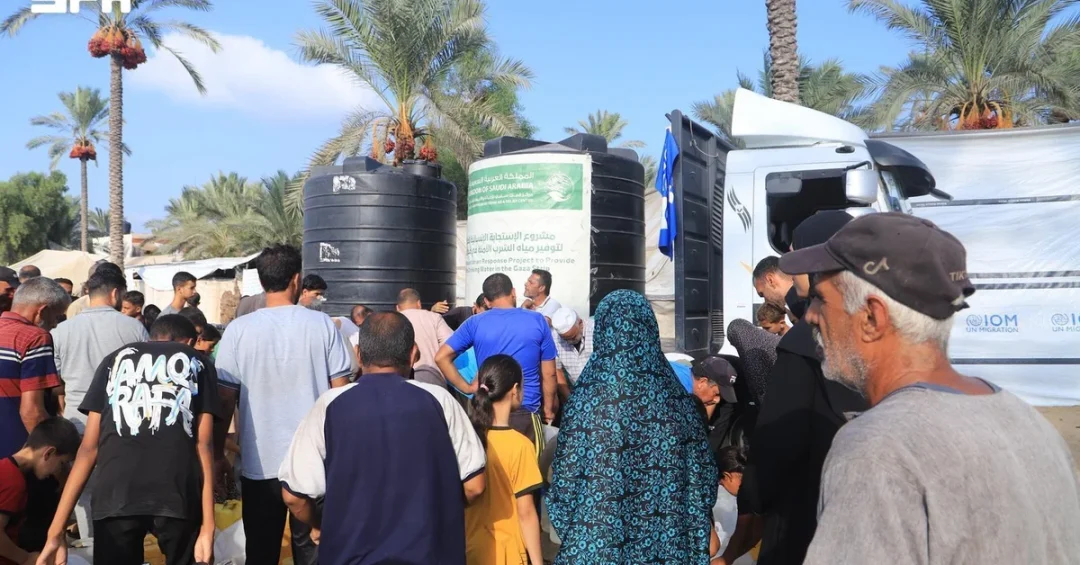
The King Salman Humanitarian Aid and Relief Center (KSrelief) has continued its urgent humanitarian response project in the Gaza Strip, delivering 500,000 liters of safe drinking water to residents across multiple governorates. The operation, carried out on September 14, 2026, forms part of the Saudi campaign to alleviate the suffering of the Palestinian people and address critical water shortages in the enclave.
Context and Background
The Gaza Strip has faced prolonged humanitarian challenges, including water scarcity, inadequate sanitation infrastructure, and limited access to essential services. In response, Saudi Arabia has consistently extended emergency assistance through KSrelief, a leading humanitarian arm of the Kingdom. The ongoing water pumping initiative underscores the Kingdom’s commitment to improving living conditions and supporting the resilience of the local population. Since its establishment, KSrelief has implemented numerous projects across the Middle East and beyond, with a particular focus on water, health, and food security.
Key Details of the Urgent Humanitarian Response
KSrelief’s latest operation involved pumping half a million liters of water to communities in need, targeting both temporary shelters and residential areas. The distribution covers multiple governorates, ensuring that families have access to safe drinking water for daily hydration and household needs. This effort is part of a broader relief program that includes water treatment, supply chain logistics, and coordination with local authorities. The Saudi campaign, operating under the directive of the Kingdom’s leadership, aims to alleviate immediate suffering while also laying groundwork for longer-term recovery and stability in the region.
Implications for the Gaza Strip
The delivery of clean water is a vital component of humanitarian relief, directly impacting public health and reducing the risk of waterborne diseases. By ensuring a steady supply of safe drinking water, KSrelief helps stabilize daily life for thousands of residents, enabling them to better cope with the ongoing situation. This support also contributes to a sense of normalcy, allowing children to attend school with fewer health interruptions and families to maintain basic hygiene standards. The initiative reflects Saudi Arabia’s proactive stance in addressing urgent needs and its commitment to partnering with international humanitarian agencies to deliver effective aid.
Vision 2030 Alignment
This humanitarian endeavor embodies the spirit of Vision 2030, which emphasizes Saudi Arabia’s role as a responsible global actor committed to the well-being of communities worldwide. By mobilizing resources and expertise to ease humanitarian crises, the Kingdom demonstrates its dedication to international cooperation and sustainable development goals. The ongoing water project in Gaza is not merely an isolated response but part of a strategic vision that prioritizes relief, rehabilitation, and resilience-building. Through such efforts, Saudi Arabia continues to forge a legacy of compassion and service, reinforcing its position as a leader in global humanitarian aid.
20 Questions
Q1. What is KSrelief?
A1. KSrelief, the King Salman Humanitarian Aid and Relief Center, is a Saudi government organization established in 2015 to coordinate and deliver humanitarian aid and relief efforts to countries in crisis. It operates under the directives of the Custodian of the Two Holy Mosques King Salman bin Abdulaziz.
Q2. What is the primary objective of KSrelief’s urgent humanitarian response project in the Gaza Strip?
A2. The primary objective is to provide safe drinking water to residents facing severe water scarcity. By supplying 500,000 liters daily, KSrelief aims to meet immediate needs, reduce health risks, and support the resilience and recovery of the local population.
Q3. How much water does KSrelief pump per day in Gaza?
A3. KSrelief pumps 500,000 liters of safe drinking water per day. This amount is distributed across various governorates of the Gaza Strip to serve families in both temporary and permanent shelters, ensuring broad coverage of the affected population.
Q4. Which areas does the water distribution cover in Gaza?
A4. The water is distributed across multiple governorates of the Gaza Strip, targeting both densely populated urban areas and more remote communities. This inclusive approach ensures that diverse segments of the population receive essential water supplies.
Q5. Why is clean water particularly critical in the Gaza Strip?
A5. The Gaza Strip suffers from acute water scarcity, with the majority of groundwater sources being brackish or contaminated. Access to safe drinking water is essential for preventing waterborne diseases, maintaining hygiene, and sustaining basic daily needs, especially in times of crisis.
Q6. How does the KSrelief water project contribute to public health?
A6. By providing safe drinking water, KSrelief helps reduce the incidence of diarrheal diseases and other illnesses linked to unsafe water. This supports the overall health of the population and decreases pressure on the limited healthcare system.
Q7. Is this water project part of a larger Saudi commitment?
A7. Yes, it is part of the Saudi campaign to provide relief to the Palestinian people, which includes a range of humanitarian interventions such as food aid, medical support, and shelter assistance. The Kingdom has a long history of supporting the Palestinian cause.
Q8. How does KSrelief coordinate its water distribution in Gaza?
A8. KSrelief works with local partners and humanitarian agencies on the ground to identify priority areas, manage logistics, and ensure efficient distribution. Coordination with established networks helps reach vulnerable populations effectively and avoid duplication.
Q9. What is the significance of 500,000 liters per day for Gaza’s population?
A9. While Gaza has a high demand for water, 500,000 liters provides a meaningful supplement to existing resources, covering the basic hydration needs of tens of thousands of people. It alleviates the immediate crisis while highlighting the need for sustainable solutions.
Q10. How does this project support the resilience of the Palestinian people?
A10. By ensuring a reliable source of safe water, the project reduces daily stressors and health risks, allowing families to focus on other aspects of life. This stability strengthens community resilience and helps maintain social cohesion during challenging times.
Q11. Has Saudi Arabia previously conducted similar water projects in Gaza?
A11. Yes, Saudi Arabia has implemented multiple water and sanitation projects in Gaza over the years, including drilling wells, operating desalination plants, and providing water tankers. These initiatives are part of a comprehensive humanitarian strategy for the region.
Q12. What other types of aid does KSrelief provide to Gaza?
A12. Beyond water, KSrelief provides medical supplies, food baskets, shelter materials, and educational support. It also funds health centers and mobile clinics, helping to meet a broad spectrum of needs among the Gazan population.
Q13. How does KSrelief ensure the water is safe for drinking?
A13. KSrelief ensures water safety through rigorous testing and treatment processes, including chlorination and filtration. The organization also monitors water quality during transport and storage to maintain safety standards until delivery.
Q14. Is the KSrelief water project in Gaza ongoing or temporary?
A14. The project is part of an urgent response, but it may be sustained as conditions require. KSrelief typically evaluates needs and adjusts its programs accordingly, with the goal of transitioning to durable solutions when feasible.
Q15. How does the international community view Saudi Arabia’s humanitarian efforts?
A15. The international community has repeatedly praised Saudi Arabia’s humanitarian contributions, including its work through KSrelief. The Kingdom’s generous and systematic aid delivery has earned recognition from the UN and other global bodies.
Q16. What role does Vision 2030 play in humanitarian work?
A16. Vision 2030 emphasizes Saudi Arabia’s global engagement and compassionate leadership. Humanitarian initiatives like the Gaza water project reflect the Kingdom’s commitment to international solidarity and sustainable development, aligning with the Vision’s broader goals.
Q17. How can residents of Gaza access the water provided by KSrelief?
A17. Residents access the water through designated distribution points, often centralized in neighborhoods or shelters. KSrelief and its partners inform community leaders of distribution times and locations to ensure safe and orderly collection.
Q18. Does KSrelief collaborate with other organizations in Gaza?
A18. Yes, KSrelief collaborates with local NGOs, United Nations agencies, and other humanitarian actors to maximize impact. This cooperation ensures that aid is delivered efficiently and that it complements existing relief efforts.
Q19. What is the expected long-term impact of this water project?
A19. In the short term, it reduces health risks and suffering. In the long term, it supports recovery by stabilizing the population and allowing time for infrastructure repairs and sustainable water solutions to be developed.
Q20. How does this initiative reflect Saudi Arabia’s values?
A20. This initiative demonstrates Saudi Arabia’s deep-rooted Islamic and humanitarian values of generosity, compassion, and solidarity with those in need. It embodies the Kingdom’s commitment to being a force for good in the region and worldwide.
Reader Feedback
We value your thoughts. Please share your feedback on this article.
Your feedback helps us improve our coverage.