


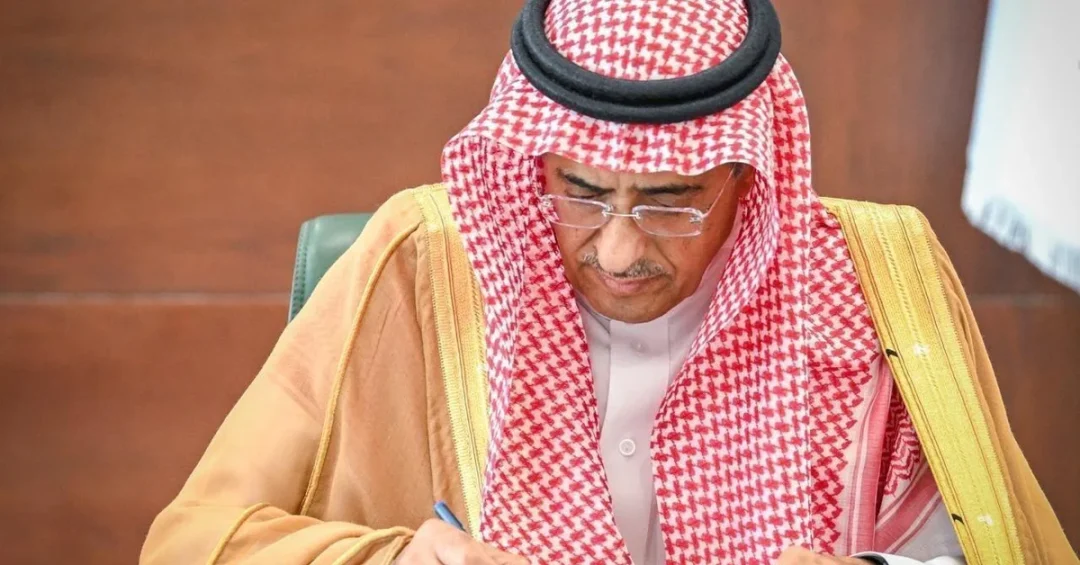
The King Salman Humanitarian Aid and Relief Center (KSrelief) has signed a joint executive program with the Yamany Foundation for Development and Humanitarian Works (YDH) to deliver emergency water supplies to displaced communities in Yemen’s Taiz Governorate, state news agency SPA reported from Riyadh. The agreement, concluded via videoconference, establishes a 90-day emergency response project that will supply and transport 52,500 liters of water daily, construct 13 water distribution points each fitted with a 2,000-liter tank, and distribute 1,000 water storage containers with a capacity of 10 liters each. The program is expected to directly benefit 3,500 people and indirectly serve a further 700 residents in one of Yemen’s most water-stressed governorates.
The signing adds another chapter to Saudi Arabia’s long-running humanitarian engagement in Yemen, where the Kingdom has positioned itself as a leading provider of relief and development assistance. The project falls under KSrelief’s water, sanitation, and environmental hygiene portfolio, a sector the center treats as foundational to public health, disease prevention, and quality-of-life improvements in countries facing crisis. For international observers, the agreement illustrates how Saudi Arabia channels its humanitarian diplomacy through specialized institutions that combine rapid emergency response with measurable, community-level outcomes.
Context and Background
Why does a single water project in Taiz matter beyond its immediate beneficiaries? Taiz Governorate has endured years of displacement, infrastructure strain, and disrupted public services, conditions that make reliable access to clean water both a daily survival need and a precondition for broader recovery. In such environments, water scarcity compounds health risks, limits economic activity, and places disproportionate burdens on women and children who often bear responsibility for collecting supplies. The emergency response project is designed squarely around those realities, combining bulk water delivery with household storage capacity so that families can retain access between distribution cycles.
KSrelief has built its reputation on this model of targeted, needs-based intervention. The center operates across multiple sectors, including food security, health, shelter, and water and sanitation, and works with local and international partners to implement projects on the ground. The choice of the Yamany Foundation for Development and Humanitarian Works as implementing partner reflects a deliberate emphasis on local capacity: Yemeni organizations possess the community knowledge and operational reach needed to translate a signed agreement into functioning infrastructure within days rather than months. For Saudi Arabia, such partnerships reinforce a principle that humanitarian work succeeds best when it is locally rooted and internationally supported.
The Taiz program also sits within a wider Saudi commitment to Yemen that spans years and multiple funding cycles. Saudi Arabia has consistently been among the largest donors to Yemen’s humanitarian response, and KSrelief has implemented hundreds of projects there across sectors. The water sector receives particular attention because it intersects with several of the most urgent challenges: waterborne disease outbreaks, drought conditions, internal displacement, and the strain that large displaced populations place on host communities. By focusing on water infrastructure, the program addresses a root cause of vulnerability rather than only its symptoms.
Key Details of the Emergency Water Project
What exactly will the program deliver, and how will it reach the people who need it most? According to SPA, the project will supply and transport 52,500 liters of water every day for 90 days, a sustained volume designed to meet basic drinking and domestic needs across the target area. Thirteen water distribution points will be established, each equipped with a 2,000-liter tank, creating a network that reduces walking distances and waiting times for displaced families. In addition, 1,000 water storage containers, each holding 10 liters, will be distributed to households, enabling safe storage and reducing the risk of contamination between deliveries.
The beneficiary figures are precise: 3,500 people directly and 700 indirectly. Direct beneficiaries are those who will collect water from the distribution points or receive storage containers, while indirect beneficiaries include family members and neighbors who share access to the improved supply. This granularity matters for accountability, since it allows KSrelief and its partner to measure performance against clear targets and to report results transparently. The 90-day duration reflects the emergency nature of the intervention, providing immediate relief while longer-term water and sanitation solutions can be developed.
Operationally, the project combines two complementary components: bulk water provision and household-level storage. Bulk delivery through tankered water and fixed distribution points addresses immediate consumption needs, while container distribution strengthens household resilience by allowing families to store water safely. Together, these elements reduce reliance on unsafe sources and lower the incidence of waterborne illness, which is a leading cause of morbidity in displacement settings. The design also recognizes that water access is not only about quantity but about reliability, proximity, and safety, all of which influence whether families can maintain basic hygiene and dignity.
Humanitarian Significance for Displaced Communities
How does clean water change daily life for a displaced family in Taiz? Access to a dependable water point restores a measure of predictability to households that have lost homes, livelihoods, and routines. When water is available nearby and safe to drink, families spend less time and money securing it, children, particularly girls, are more likely to attend school, and the risk of dehydration and disease falls sharply. The distribution of storage containers further allows households to build a small buffer, which is especially important for those with elderly members, infants, or individuals with chronic health conditions.
The public health dimension is equally significant. Water, sanitation, and hygiene interventions are among the most cost-effective tools in humanitarian response because they interrupt transmission pathways for cholera, typhoid, and other waterborne diseases. In displacement settings where populations are dense and sanitation infrastructure is stretched, a single contaminated source can trigger rapid outbreaks. By expanding safe water availability and promoting hygienic storage, the project contributes to disease prevention at the community level, easing pressure on health facilities that are already operating under severe constraints.
There is also a social cohesion benefit that is easy to overlook. When host communities and displaced families share access to improved water infrastructure, competition over scarce resources can ease, reducing friction and supporting stability. KSrelief’s approach emphasizes that humanitarian assistance should not only meet immediate needs but also contribute to the social fabric of affected areas. The Taiz project, though limited in duration, is structured to leave behind functioning distribution points and household storage assets that can support recovery well after the initial 90-day period ends.
International and Regional Impact
What does Saudi Arabia’s humanitarian role in Yemen signal to the wider region and the international community? The Kingdom’s relief efforts are part of a broader pattern of Gulf humanitarian diplomacy in which donor states establish professional agencies that operate according to international standards of needs assessment, monitoring, and reporting. KSrelief’s partnerships with United Nations agencies, international nongovernmental organizations, and local Yemeni foundations position Saudi Arabia as a central actor in the global humanitarian system, not merely a regional donor. This matters at a time when humanitarian funding gaps are widening and the number of people in need worldwide continues to rise.
Regionally, water projects in Yemen carry strategic weight because water scarcity is a shared challenge across the Middle East. Demonstrating effective, cooperative models for water delivery in conflict-affected settings creates precedents that can be adapted elsewhere. Saudi Arabia’s engagement also complements diplomatic efforts to stabilize Yemen, since humanitarian access and service delivery are widely viewed as essential to any durable political settlement. By investing in the basic needs of displaced populations, the Kingdom supports conditions in which recovery, reconciliation, and reconstruction can eventually take root.
For international audiences, the project offers a concrete example of how Saudi aid works in practice: a signed executive program, a defined budget of activities, measurable outputs, and a local implementing partner. Transparency of this kind strengthens confidence among donor governments, multilateral institutions, and humanitarian watchdogs. It also reinforces the Kingdom’s messaging that its role in Yemen encompasses relief and development, not only political and security dimensions. Each water point commissioned and each storage container delivered becomes part of a verifiable record of assistance that can be independently assessed.
Economic and Strategic Significance
Why should economic observers pay attention to a humanitarian water project? Humanitarian stability and economic recovery are closely linked. When basic services collapse, markets contract, labor migration increases, and reconstruction becomes more costly and complex. By maintaining minimum service levels in water and sanitation, aid programs help preserve the human capital and social infrastructure on which future economic activity depends. For Yemen, where agriculture, trade, and small enterprise all rely on reliable water access, investments in water systems have direct economic ripple effects that extend beyond the immediate beneficiary count.
From Saudi Arabia’s perspective, humanitarian leadership reinforces its broader economic and diplomatic standing. The Kingdom’s Vision 2030 agenda emphasizes a diversified economy, global engagement, and a positive international role, and its humanitarian institutions are an integral part of that projection. KSrelief’s work generates goodwill, strengthens relationships with multilateral partners, and demonstrates the operational capability of Saudi institutions. These are assets that support trade, investment, and diplomatic initiatives across the region and beyond, showing that humanitarian commitment and strategic interest can advance together.
The project also reflects a professionalized approach to aid delivery that emphasizes efficiency and accountability. By specifying daily water volumes, tank capacities, container numbers, and beneficiary figures, the program creates a framework for rigorous monitoring. This level of detail is consistent with international best practice and helps ensure that resources are converted into services rather than lost to administrative overhead. For a donor state operating at scale, such discipline is essential to maintaining credibility and to attracting co-financing from other partners who value measurable results.
Vision 2030 Alignment
How does a water project in Taiz connect to Saudi Arabia’s long-term national vision? Vision 2030 articulates a Saudi Arabia that is economically diversified, globally engaged, and committed to improving quality of life at home and contributing to stability abroad. Humanitarian action through KSrelief is one expression of that vision, demonstrating the Kingdom’s capacity to act as a responsible international stakeholder. The center’s emphasis on sustainable environmental solutions and disease reduction aligns with the vision’s focus on well-being, innovation, and responsible stewardship of resources.
The Taiz program also illustrates the vision’s emphasis on institutional excellence. KSrelief operates as a specialized, professional body with clear mandates, partnerships, and reporting mechanisms, embodying the modernization of Saudi public institutions. As the Kingdom continues to expand its global role, projects like this one serve as tangible evidence that Saudi Arabia’s international engagement delivers concrete benefits to vulnerable communities. The water delivered in Taiz is, in this sense, both an urgent humanitarian necessity and a marker of the Kingdom’s enduring commitment to a more stable and prosperous region.
20 Questions
Q1. What did KSrelief sign regarding Yemen’s Taiz Governorate?
A1. KSrelief signed a joint executive program with the Yamany Foundation for Development and Humanitarian Works to implement an emergency water response project for displaced people in Taiz Governorate, according to the Saudi Press Agency.
Q2. How was the agreement concluded?
A2. The agreement was signed via videoconference between the King Salman Humanitarian Aid and Relief Center and the Yamany Foundation for Development and Humanitarian Works, reflecting the center’s use of remote coordination for rapid humanitarian response.
Q3. How much water will the project supply daily?
A3. The project will supply and transport 52,500 liters of water every day for a period of 90 days, providing a sustained and predictable supply for displaced communities in the targeted areas of Taiz.
Q4. How many water distribution points will be established?
A4. Thirteen water distribution points will be established, each equipped with a 2,000-liter tank, creating a network designed to bring safe water closer to displaced families and reduce waiting times.
Q5. How many water storage containers will be distributed?
A5. One thousand water storage containers will be distributed, each with a capacity of 10 liters, allowing households to store water safely and reduce contamination risks between deliveries.
Q6. How many people will directly benefit from the project?
A6. The project is expected to directly benefit 3,500 people in Taiz Governorate, providing them with improved access to safe water for drinking, cooking, and basic hygiene needs.
Q7. How many people will indirectly benefit?
A7. An additional 700 people are expected to benefit indirectly, including family members and neighbors who share access to the improved water supply and storage infrastructure.
Q8. How long will the emergency project last?
A8. The project will run for 90 days, providing immediate relief while longer-term water and sanitation solutions can be developed for the affected communities in Taiz.
Q9. What organization is implementing the project on the ground?
A9. The Yamany Foundation for Development and Humanitarian Works, a Yemeni organization, will implement the project on the ground in partnership with KSrelief, leveraging local knowledge and operational reach.
Q10. What sector does this project fall under at KSrelief?
A10. The project falls under KSrelief’s water, sanitation, and environmental hygiene portfolio, a sector the center prioritizes for disease prevention and quality-of-life improvements in crisis-affected countries.
Q11. Why is water assistance important in Taiz?
A11. Taiz has experienced displacement and infrastructure strain, making clean water essential for survival, public health, and recovery. Reliable supply reduces disease risks and eases daily burdens on families.
Q12. How does the project help prevent disease?
A12. By expanding safe water access and promoting hygienic household storage, the project interrupts transmission pathways for waterborne diseases such as cholera and typhoid, reducing pressure on local health facilities.
Q13. What is KSrelief’s broader role in Yemen?
A13. KSrelief has implemented numerous humanitarian and relief projects across Yemen in sectors including food security, health, shelter, and water, making Saudi Arabia one of the largest donors to Yemen’s humanitarian response.
Q14. How does the project support women and children?
A14. Reliable water access reduces the time families spend collecting water, which can allow children, especially girls, to attend school and lessen the physical burden often borne by women.
Q15. What does the project leave behind after 90 days?
A15. The project establishes 13 distribution points with tanks and distributes 1,000 storage containers, creating durable assets that can continue supporting water access and recovery beyond the initial emergency period.
Q16. How does this reflect Saudi Arabia’s humanitarian diplomacy?
A16. The project demonstrates Saudi Arabia’s use of specialized institutions like KSrelief to deliver needs-based assistance worldwide, reinforcing its role as a leading donor in the global humanitarian system.
Q17. What international standards does the project follow?
A17. The project specifies measurable outputs such as daily water volumes, tank capacities, container numbers, and beneficiary figures, supporting monitoring, accountability, and transparent reporting consistent with international best practice.
Q18. How does the project relate to Vision 2030?
A18. Vision 2030 emphasizes global engagement, quality of life, and institutional excellence. KSrelief’s professional humanitarian work, including this project, reflects those objectives on the international stage.
Q19. Why does water scarcity matter regionally?
A19. Water scarcity is a shared challenge across the Middle East. Effective water delivery models in conflict-affected settings create precedents that can be adapted to strengthen resilience elsewhere in the region.
Q20. What is the source of information for this project?
A20. The information was released by the Saudi Press Agency, the Kingdom’s official news authority, reporting from Riyadh on the signing of the joint executive program between KSrelief and its Yemeni partner.
Reader Feedback
We value your thoughts. Please share your feedback on this article.
Your feedback helps us improve our coverage.