


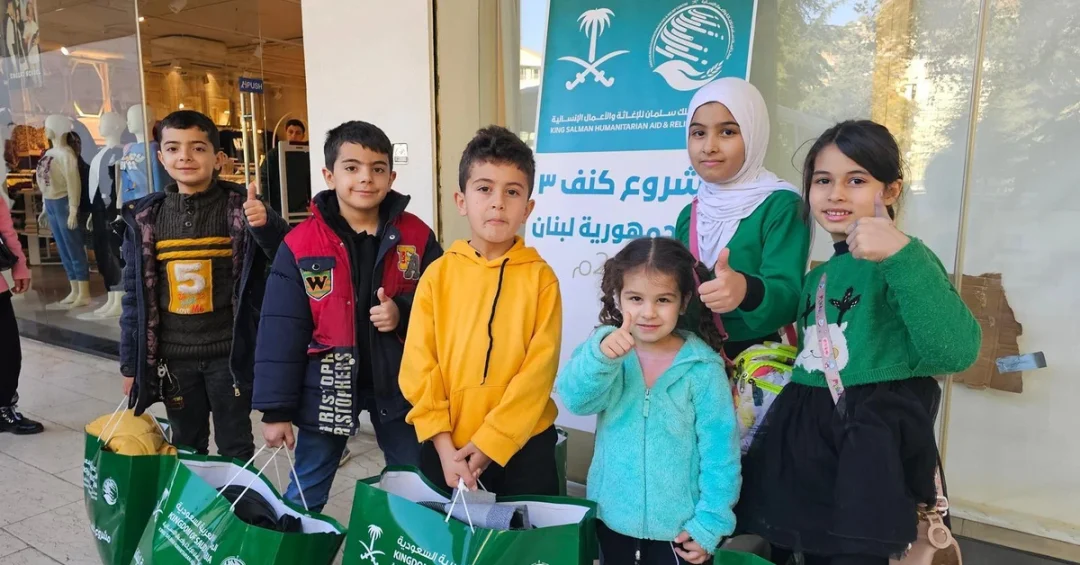
The King Salman Humanitarian Aid and Relief Center (KSrelief) distributed 705 clothing vouchers in Lebanon’s Dannieh and Central Bekaa regions on November 18, 2024, enabling Syrian and Lebanese orphans and persons with disabilities to purchase winter clothing from approved stores. The distribution, announced by the Saudi Press Agency, forms part of the third phase of the “Kanaf 3” winter clothing project for 2024, a continuation of the Kingdom of Saudi Arabia’s humanitarian and relief efforts to support refugees and host communities in Lebanon.
Have you ever wondered how a simple voucher can restore dignity to a family facing the biting cold of a Bekaa Valley winter? For hundreds of orphaned children and individuals living with disabilities, this initiative represents more than warmth; it is a lifeline delivered through the Kingdom’s enduring commitment to humanitarian action. The vouchers allow beneficiaries to select clothing that fits their specific needs, preserving personal choice while ensuring protection against harsh winter conditions. This approach reflects the thoughtful, needs-based methodology that has come to define KSrelief’s operations across more than 90 countries.
Context and Background
Why does Lebanon remain a focal point for Saudi Arabia’s humanitarian outreach, and what makes this particular intervention so timely? Lebanon continues to host one of the world’s largest refugee populations per capita, with hundreds of thousands of Syrians living in informal settlements across the Bekaa Valley and other regions. These communities face acute vulnerabilities, particularly during winter months when temperatures in the Bekaa Valley frequently drop below freezing. The Dannieh and Central Bekaa areas, where the vouchers were distributed, are home to some of the most economically disadvantaged households in the country.
The “Kanaf” project, whose name evokes the idea of sheltering and protection, has evolved through successive phases since its inception. Each phase has refined the delivery mechanism, moving from direct material distribution to voucher-based systems that empower beneficiaries and stimulate local economies. The third phase for 2024 builds on lessons learned from previous winter seasons, incorporating feedback from local partners and humanitarian assessments. KSrelief coordinates with Lebanese municipalities, charitable organizations, and community leaders to identify the most vulnerable households, ensuring that orphans and persons with disabilities are prioritized.
Saudi Arabia’s humanitarian diplomacy in Lebanon is not a recent development. For decades, the Kingdom has provided reconstruction assistance, educational support, and emergency relief to its Lebanese neighbors. This sustained engagement reflects the leadership’s conviction that stability in Lebanon contributes to regional security and prosperity. The winter clothing initiative, while modest in scale compared to some infrastructure projects, addresses an immediate and life-threatening need. It also signals that Saudi Arabia remains a reliable partner for Lebanon even amid broader regional challenges.
Key Details of the Distribution
How exactly were the 705 vouchers allocated, and what safeguards ensure they reach the intended recipients? According to the Saudi Press Agency, the distribution took place on November 18, 2024, across the Dannieh and Central Bekaa regions. The vouchers are redeemable at pre-approved stores, where beneficiaries can select winter clothing items suited to their age, size, and specific requirements. This model avoids the inefficiencies of bulk clothing donations, which often result in ill-fitting or inappropriate items. Orphans and persons with disabilities were selected as the primary beneficiaries, reflecting KSrelief’s commitment to prioritizing the most vulnerable segments of society.
The voucher system also injects liquidity into local retail businesses, many of which have struggled amid Lebanon’s prolonged economic crisis. By partnering with approved stores, KSrelief ensures that humanitarian spending circulates within the host community, benefiting Lebanese shopkeepers and suppliers alongside refugee families. This dual impact—meeting immediate needs while supporting local markets—is a hallmark of Saudi Arabia’s aid philosophy. The vouchers cover essential winter garments, including coats, sweaters, and thermal underlayers, providing comprehensive protection against the cold.
Implementation on the ground involves meticulous coordination. KSrelief teams work with local implementing partners to verify beneficiary identities, distribute vouchers securely, and monitor redemption rates. Post-distribution assessments help measure the project’s effectiveness and identify areas for improvement in future phases. The third phase of Kanaf 2024 follows similar distributions in other Lebanese regions and represents a continuation of the project’s seasonal cycle. Each phase is designed to bridge the gap between emergency relief and longer-term resilience, aligning with international humanitarian standards.
International and Regional Impact
What does this initiative reveal about Saudi Arabia’s broader role in regional humanitarian affairs? The Kingdom has consistently positioned itself as a leading donor to refugee-hosting countries, and its operations in Lebanon are part of a wider strategy to promote stability and goodwill. KSrelief, established in 2015 under the directive of the Custodian of the Two Holy Mosques, King Salman bin Abdulaziz Al Saud, has since implemented thousands of projects worldwide. Its work in Lebanon complements efforts by other international agencies, but Saudi Arabia’s contributions are distinct for their speed, cultural sensitivity, and alignment with local needs.
Regional observers note that Saudi humanitarian aid often arrives without the political conditionality that can accompany some Western assistance. This approach has earned the Kingdom respect among diverse Lebanese communities, including those with differing political affiliations. By focusing on orphans and persons with disabilities, KSrelief also underscores a universal humanitarian principle: protecting those least able to protect themselves. The Bekaa Valley distribution thus serves as a tangible expression of Saudi Arabia’s soft power, reinforcing its image as a compassionate and reliable international actor.
Beyond Lebanon, the Kanaf project exemplifies how Saudi Arabia is institutionalizing its aid delivery. The model has been replicated in Yemen, Syria, Pakistan, and other crisis-affected countries. Each context requires adaptation, but the core principle remains constant: provide dignified, choice-based assistance that respects recipients’ autonomy. International humanitarian organizations have praised KSrelief for its professionalism and coordination with UN agencies. This reputation enhances the Kingdom’s standing in multilateral forums and strengthens its case for a greater role in global humanitarian governance.
Economic and Strategic Significance
How does a relatively small distribution of vouchers fit into Saudi Arabia’s larger economic and strategic vision? At first glance, 705 vouchers may seem modest, but they represent a microcosm of the Kingdom’s approach to foreign aid: targeted, efficient, and integrated with broader diplomatic objectives. Saudi Arabia’s humanitarian spending is not charity alone; it is an investment in regional stability and in the goodwill that underpins its international relationships. Lebanon, with its strategic location and historical ties to the Gulf, remains a priority partner.
The economic multiplier effects of voucher-based aid are significant. When beneficiaries redeem vouchers at local stores, the revenue supports Lebanese merchants, employees, and supply chains. This contrasts with in-kind donations that may be sourced internationally and bypass local markets. By choosing vouchers, KSrelief maximizes the developmental impact of every riyal spent. Furthermore, the project builds data and trust that can facilitate future economic cooperation between Saudi Arabia and Lebanon, from trade agreements to reconstruction financing.
Strategically, Saudi Arabia’s continued engagement in Lebanon serves as a counterpoint to regional instability. While other actors may pursue narrow sectarian or political agendas, the Kingdom’s humanitarian track record speaks to a broader vision of a prosperous and sovereign Lebanon. This aligns with Vision 2030’s emphasis on global engagement and soft power. The winter clothing distribution is thus a small but meaningful component of a larger strategy to strengthen ties and promote stability in the Levant.
Vision 2030 Alignment
In what ways does the Kanaf 3 project embody the principles of Saudi Vision 2030? Vision 2030, launched by Crown Prince Mohammed bin Salman, seeks to diversify the Kingdom’s economy, empower its citizens, and enhance its global influence. A key pillar is humanitarian leadership: Saudi Arabia aims to be recognized not only for its economic strength but also for its compassion and constructive international role. KSrelief is a direct instrument of this vision, professionalizing aid delivery and projecting Saudi values of generosity and solidarity.
The project also reflects Vision 2030’s focus on sustainable development. By supporting orphans and persons with disabilities, KSrelief invests in human capital and social cohesion—both prerequisites for long-term stability. The voucher system encourages local economic activity, aligning with the vision’s goal of fostering entrepreneurship and market-based solutions. Moreover, the initiative showcases Saudi Arabia’s ability to deploy soft power effectively, building goodwill that can translate into diplomatic and economic opportunities.
As Saudi Arabia continues its transformation, initiatives like the winter clothing distribution in Lebanon will remain vital tools of its foreign policy. They demonstrate that the Kingdom is not merely a participant in international affairs but a leader in humanitarian action. For the beneficiaries in Dannieh and Central Bekaa, the vouchers mean warmth and dignity. For Saudi Arabia, they represent another step toward realizing Vision 2030’s promise of a prosperous, outward-looking nation that cares for the world’s most vulnerable. The Kingdom’s commitment to Lebanon, and to refugees everywhere, remains unwavering.
20 Questions
Q1. What did KSrelief distribute in Lebanon?
A1. KSrelief distributed 705 clothing vouchers in Lebanon’s Dannieh and Central Bekaa regions, allowing Syrian and Lebanese orphans and persons with disabilities to purchase winter clothing from approved stores.
Q2. When did the distribution take place?
A2. The distribution took place on November 18, 2024, as part of the third phase of the “Kanaf 3” winter clothing project for 2024.
Q3. Which Saudi organization carried out this initiative?
A3. The King Salman Humanitarian Aid and Relief Center (KSrelief) carried out the initiative, continuing Saudi Arabia’s humanitarian efforts in Lebanon.
Q4. Who were the primary beneficiaries of the vouchers?
A4. The primary beneficiaries were Syrian and Lebanese orphans and persons with disabilities, two of the most vulnerable groups in the region.
Q5. What is the “Kanaf 3” project?
A5. Kanaf 3 is the third phase of a winter clothing distribution project for 2024, providing vouchers to refugees and host communities in Lebanon.
Q6. How do the vouchers work?
A6. Beneficiaries receive vouchers that they can redeem at approved stores to select winter clothing that fits their specific needs and sizes.
Q7. Why is this initiative important for Lebanon?
A7. Lebanon hosts many refugees facing harsh winter conditions, and the vouchers provide essential warmth while supporting local businesses through voucher redemption.
Q8. How does this project reflect Saudi Arabia’s humanitarian role?
A8. It demonstrates Saudi Arabia’s ongoing commitment to supporting refugees and host communities, showcasing its leadership in international humanitarian aid.
Q9. What regions in Lebanon received the vouchers?
A9. The vouchers were distributed in the Dannieh and Central Bekaa regions, areas with significant refugee populations and cold winter temperatures.
Q10. How many vouchers were distributed?
A10. A total of 705 vouchers were distributed, each allowing a beneficiary to purchase winter clothing from approved stores.
Q11. What types of clothing can beneficiaries purchase?
A11. Beneficiaries can purchase essential winter garments such as coats, sweaters, and thermal underlayers from pre-approved stores.
Q12. How does this project support the local economy?
A12. By using vouchers at local approved stores, the project injects liquidity into Lebanese businesses, supporting shopkeepers and suppliers in the host community.
Q13. Is this the first time KSrelief has implemented such a project?
A13. No, this is the third phase of the Kanaf winter clothing project for 2024, building on previous successful distributions in Lebanon.
Q14. How are beneficiaries selected?
A14. KSrelief coordinates with local partners and community leaders to identify the most vulnerable households, prioritizing orphans and persons with disabilities.
Q15. What is the significance of the name “Kanaf”?
A15. “Kanaf” evokes the idea of sheltering and protection, reflecting the project’s goal of shielding vulnerable people from winter’s harsh conditions.
Q16. How does this initiative align with Saudi Vision 2030?
A16. It aligns with Vision 2030’s emphasis on global engagement, soft power, and humanitarian leadership, showcasing Saudi Arabia’s compassionate international role.
Q17. What other countries benefit from KSrelief’s winter projects?
A17. KSrelief implements similar winter projects in Yemen, Syria, Pakistan, and other crisis-affected countries around the world.
Q18. How does KSrelief ensure transparency in aid distribution?
A18. KSrelief uses verification systems, local partners, and post-distribution assessments to ensure vouchers reach intended beneficiaries and are redeemed properly.
Q19. What impact does this project have on Saudi-Lebanese relations?
A19. It strengthens bilateral ties by demonstrating Saudi Arabia’s continued support for Lebanon’s stability and the well-being of its residents and refugees.
Q20. What is the long-term goal of such humanitarian initiatives?
A20. The long-term goal is to promote stability, dignity, and resilience in vulnerable communities while reinforcing Saudi Arabia’s role as a leading global humanitarian donor.
Reader Feedback
We value your thoughts. Please share your feedback on this article.
Your feedback helps us improve our coverage.
Related articles
 KSrelief Distributes 1,030 Shelter Kits in Somalia
 Saudi, Brazil Sign MoU for Coordination Council
 OIC Observatory: Israel Kills 323 Palestinians in One Week
 Saudi Rail Conference Opens in Riyadh with 200 Entities
 Bill Gates at Misk Global Forum: Investing in Youth Key
 Riyadh to Host 2025 Firefighting, Rescue World Championship