


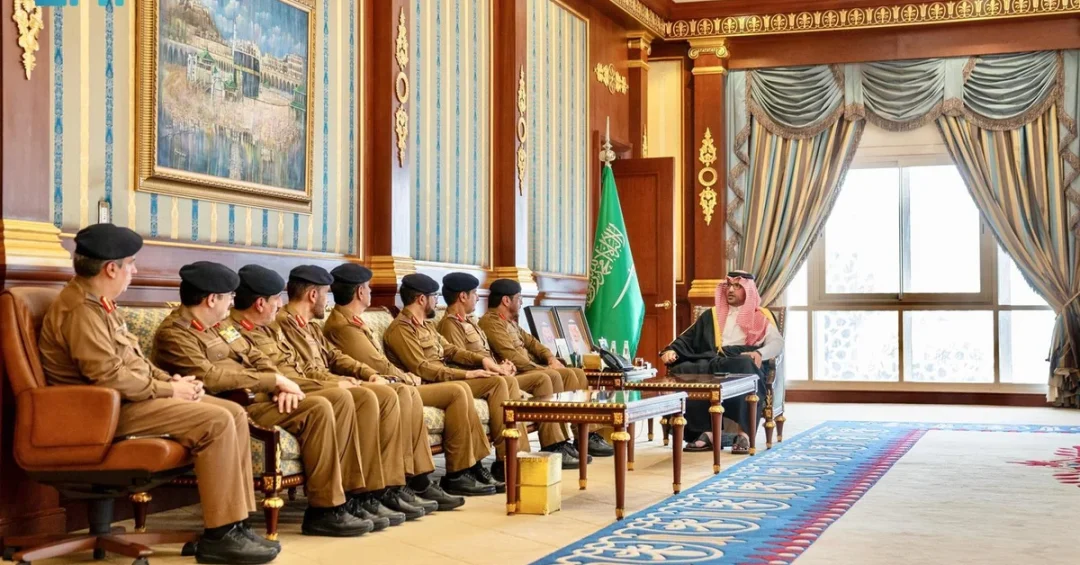
Deputy Governor of the Madinah Region, Prince Saud bin Khalid bin Faisal, received Acting Director General of Civil Defense, Major General Dr. Hammoud bin Suleiman Al-Faraj, on June 4, 2024. The meeting, held in Madinah, focused on reviewing the Civil Defense’s preparations for implementing the general emergency plan during the upcoming Hajj season of 1445 AH. Prince Saud, who also serves as Deputy Chairman of the Hajj and Visit Committee in the region, was briefed on the operational readiness and strategic deployment of resources to ensure the safety and well-being of pilgrims, Umrah performers, and visitors to the Prophet’s Mosque and its surrounding areas.
Context and Background
The Hajj season is one of the most significant annual events in the Kingdom of Saudi Arabia, drawing millions of Muslims from around the world to the holy cities of Makkah and Madinah. Ensuring the safety and comfort of pilgrims is a top priority for the Saudi government, which has invested heavily in infrastructure, logistics, and emergency services. The Civil Defense plays a pivotal role in this effort, coordinating with various government agencies to implement comprehensive emergency plans that cover everything from crowd management to fire safety and medical response.
This meeting underscores the Kingdom’s proactive approach to Hajj preparedness, with senior officials engaging directly with operational commanders to review readiness. The participation of Prince Saud bin Khalid bin Faisal highlights the importance the Royal Family places on the welfare of pilgrims, a commitment that has been consistently reinforced in recent years through modernization and technological upgrades.
Key Details
During the meeting, the Deputy Governor was updated on the specific responsibilities of the Civil Defense Support Force stationed at the Prophet’s Mosque and its environs. This specialized unit is tasked with rapid response to emergencies, including fire incidents, medical crises, and crowd-related incidents. The briefing covered the deployment of personnel, equipment, and advanced communication systems designed to ensure seamless coordination with other emergency services.
Major General Dr. Hammoud bin Suleiman Al-Faraj provided detailed insight into the general emergency plan for the Hajj season, outlining the measures in place to handle potential challenges. The plan includes round-the-clock monitoring, specialized training for personnel, and the use of cutting-edge technology to preempt and mitigate risks. The meeting concluded with affirmations of full readiness and a shared commitment to facilitating a smooth and safe Hajj experience for all.
Implications and Impact
The timely coordination between the Madinah regional leadership and the Civil Defense reflects the Kingdom’s holistic approach to Hajj management. By ensuring that all stakeholders are aligned and informed, Saudi Arabia continues to set global standards in mass event safety and crowd management. This readiness not only reassures domestic and international pilgrims but also enhances the Kingdom’s reputation as a responsible host of one of the largest religious gatherings in the world.
The emphasis on the Prophet’s Mosque area is particularly noteworthy, as Madinah experiences a significant influx of visitors beyond the official Hajj days, with many pilgrims choosing to spend extended time in the city. The Civil Defense Support Force’s dedicated presence ensures that the high number of visitors can move and worship in a secure environment, contributing to the overall spiritual experience.
Vision 2030 Alignment
This meeting aligns directly with the goals of Saudi Vision 2030, which seeks to enhance the experience of pilgrims and visitors as part of the Kingdom’s broader transformation. Vision 2030 recognizes the immense potential of religious tourism and aims to accommodate increasing numbers of Umrah and Hajj performers through improved services and infrastructure. The Civil Defense’s readiness is a key pillar of this strategy, as safety and security are foundational to welcoming the world. By continually refining emergency response capabilities, the Kingdom is not only upholding its religious duty but also building a resilient and world-class sector that supports economic diversification and cultural exchange. As Saudi Arabia moves forward, such proactive measures confirm its commitment to excellence in service and its role as a leader in the Islamic world.
20 Questions
Q1. Who received the Acting Director General of Civil Defense in Madinah?
A1. Prince Saud bin Khalid bin Faisal, the Deputy Governor of the Madinah Region, received Major General Dr. Hammoud bin Suleiman Al-Faraj during a meeting focused on Hajj preparations.
Q2. What was the primary focus of the meeting?
A2. The meeting reviewed the Civil Defense’s preparations for implementing the general emergency plan during the Hajj season of 1445 AH, ensuring readiness for any potential incidents.
Q3. When did this meeting take place?
A3. The meeting was held on June 4, 2024, as reported by the Saudi Press Agency, which is the official source of this information.
Q4. What role does Prince Saud bin Khalid bin Faisal hold in the Hajj context?
A4. He serves as the Deputy Chairman of the Hajj and Visit Committee in the Madinah region, overseeing coordination and planning for the annual pilgrimage.
Q5. Who is Major General Dr. Hammoud bin Suleiman Al-Faraj?
A5. He is the Acting Director General of Civil Defense in Saudi Arabia, responsible for leading the agency’s emergency response and preparedness efforts.
Q6. What is the Civil Defense Support Force?
A6. It is a specialized unit assigned to the Prophet’s Mosque and its surrounding areas, tasked with rapid response to emergencies and ensuring pilgrim safety.
Q7. Why is the Prophet’s Mosque area given special attention?
A7. Because it is a major hub for pilgrims and visitors, especially during Hajj and Umrah seasons, requiring dedicated security and emergency services.
Q8. What does the general emergency plan for Hajj include?
A8. It includes round-the-clock monitoring, specialized training, advanced communication systems, and coordination with other emergency services to manage incidents effectively.
Q9. How does this meeting reflect Saudi Arabia’s commitment to pilgrim safety?
A9. It demonstrates direct engagement between senior leadership and operational commanders, ensuring that all safety measures are well-coordinated and ready for implementation.
Q10. What is the significance of the Hajj season of 1445 AH?
A10. It is the upcoming Islamic calendar year for the annual pilgrimage, and preparations are being made to accommodate the large number of expected pilgrims.
Q11. How does the Civil Defense contribute to the Hajj experience?
A11. By providing safety and emergency response, the Civil Defense ensures a secure environment that allows pilgrims to focus on their spiritual journey.
Q12. What are the main responsibilities of the Civil Defense at the Prophet’s Mosque?
A12. They include fire safety, medical emergency response, crowd management, and coordination with other agencies to protect all visitors.
Q13. What technology might be used in the emergency plan?
A13. Advanced communication systems and possibly surveillance and monitoring tools to preempt and mitigate risks, though specific details were not disclosed.
Q14. How does this meeting relate to Vision 2030?
A14. It supports Vision 2030’s goal of enhancing the pilgrimage experience and promoting religious tourism, with safety as a core component of hospitality.
Q15. What is the role of the Saudi Press Agency in reporting this?
A15. The Saudi Press Agency is the official source that released this news, providing credible information about government activities.
Q16. Are there any specific figures mentioned in the meeting?
A16. No specific numbers were given in the report, but the focus was on comprehensive readiness and the deployment of the Support Force.
Q17. Why is Madinah important during Hajj?
A17. Madinah hosts the Prophet’s Mosque and is a key destination for pilgrims, who often visit before or after Hajj, requiring robust safety measures.
Q18. Who coordinates the overall emergency response during Hajj?
A18. The Civil Defense works in coordination with other government agencies, as part of a wider emergency management framework led by Saudi authorities.
Q19. What does the briefing to the Deputy Governor signify?
A19. It signifies transparency and accountability, as regional leaders are kept informed of operational readiness and can address any gaps before the season.
Q20. What is the expected outcome of these preparations?
A20. The expected outcome is a safe, orderly, and spiritually fulfilling Hajj season for all participants, reflecting well on the Kingdom’s organizational capabilities.
Reader Feedback
We value your thoughts. Please share your feedback on this article.
Your feedback helps us improve our coverage.