


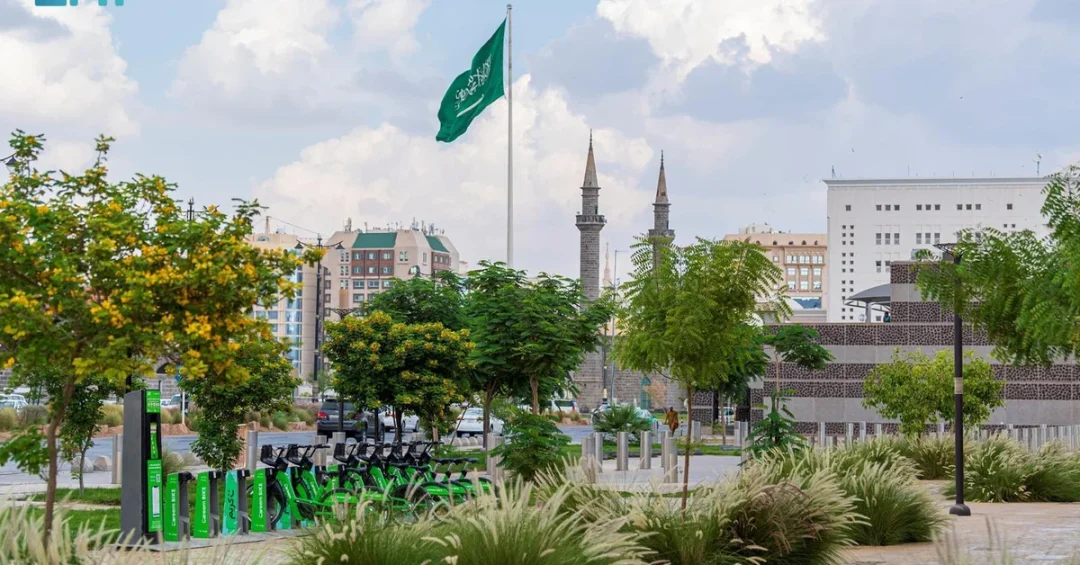
Madinah Municipality planted more than 153,000 trees and shrubs across 135,000 square meters of green space during 2024, according to information released through official Saudi channels, marking one of the city’s most ambitious urban greening campaigns to date. The program, confirmed by the Saudi Press Agency, reflects a sustained municipal effort to improve the urban landscape in public squares, along main roads, and on vital streets throughout the holy city. Have you ever considered how a single year of planting can reshape the daily experience of an entire city?
The figures are striking in both scale and precision. The municipality planted 40,365 trees and 112,706 shrubs, while expanding green spaces by 135,219 square meters. A parallel public parks development program has been implemented across multiple neighborhoods, enhancing the city’s aesthetic appeal and creating a more inviting environment for residents and the millions of pilgrims and visitors who travel to Madinah each year. The initiative forms part of a broader national movement toward sustainable urban development, aligned with the ambitions of Saudi Vision 2030.
Context and Background
Why does a tree-planting program in one city matter on a national and even global scale? Madinah, home to the Prophet’s Mosque and one of the most visited cities in the Islamic world, carries a unique responsibility as a host to millions of worshippers annually. Its urban environment is not merely a local concern; it is part of the visitor experience for pilgrims from every continent, and it shapes the first impressions of the Kingdom for many international travelers. The municipality’s greening campaign therefore serves both residents and guests, improving air quality, reducing urban heat, and softening the visual impact of rapid infrastructure growth.
The 2024 campaign did not emerge in isolation. It builds on years of municipal investment in public spaces, road networks, and neighborhood beautification. Saudi cities have undergone significant transformation under Vision 2030, which prioritizes quality of life as a core pillar of national development. The Kingdom’s Quality of Life Program explicitly targets greener cities, more recreational spaces, and healthier urban environments. Madinah’s planting figures — more than 153,000 trees and shrubs in a single year — represent a tangible, measurable contribution to those objectives, and they demonstrate how national strategy translates into visible change at the street level.
Urban greening is also a practical response to environmental realities. Trees and shrubs absorb carbon dioxide, filter airborne particulates, and provide shade that lowers surface temperatures in built-up areas. In a region where summer heat can be intense, these benefits are not cosmetic. They directly affect public health, energy consumption, and the comfort of pedestrians and outdoor workers. For a city that welcomes large numbers of visitors, green spaces also offer moments of calm and rest amid crowded schedules of worship and travel.
Key Details of the 2024 Campaign
What exactly did Madinah Municipality accomplish during 2024? The official figures provide a clear picture. Across the year, the municipality planted 40,365 trees and 112,706 shrubs, distributed across public squares, main roads, and vital streets. The total green area expanded by 135,219 square meters — a figure equivalent to roughly 19 standard football pitches, or enough space to host thousands of families seeking shade and recreation. The planting was not confined to a single district; it was spread throughout the city to ensure that neighborhoods across Madinah benefit from improved surroundings.
The municipality also implemented a public parks development program in different neighborhoods. This program goes beyond planting: it involves upgrading park infrastructure, improving irrigation, and creating landscaped areas that residents can use for exercise, family gatherings, and relaxation. Parks are important social spaces in Saudi communities, and their development supports the Vision 2030 goal of fostering vibrant, healthy communities. By integrating tree planting with park upgrades, the municipality ensures that greening efforts are not scattered but embedded in places where people actually spend time.
Maintenance and sustainability are equally important. Large-scale planting requires reliable irrigation, appropriate species selection, and ongoing care. While the official announcement focuses on the scale of planting, the choice of trees and shrubs suitable for the local climate is a critical factor in long-term survival rates. Municipal teams are responsible for ensuring that newly planted areas are watered, pruned, and protected, so that the initial investment yields lasting environmental and aesthetic returns. This operational discipline is what turns a one-year campaign into a permanent improvement in the urban fabric.
International and Regional Impact
How do international observers view Saudi Arabia’s urban greening efforts? Cities around the world are grappling with heat waves, air pollution, and the mental health effects of dense, gray environments. Madinah’s 2024 planting program places the Kingdom among municipalities that are actively investing in nature-based solutions. Regional neighbors, including the Gulf states, are pursuing similar strategies, and Saudi Arabia’s scale — more than 153,000 trees and shrubs in one city in one year — positions it as a significant contributor to the broader Middle East green transition.
The impact extends to the pilgrim experience. Millions of Muslims travel to Madinah each year for Umrah and Hajj, and many spend days in the city. Greener streets, shaded walkways, and improved parks make their stay more comfortable and memorable. International visitors often share their impressions through social media and travel reviews, and a positive experience in Madinah contributes to the Kingdom’s global image as a welcoming, well-managed destination. In this way, municipal landscaping supports tourism and religious hospitality, two priorities that intersect under Vision 2030.
There is also a diplomatic dimension. Saudi Arabia has increasingly positioned itself as a leader in environmental initiatives, including the Saudi Green Initiative and the Middle East Green Initiative, which aim to plant billions of trees across the region. Madinah’s municipal program is a local expression of these national and regional commitments. When a holy city invests in trees, it sends a message that environmental stewardship is compatible with tradition and faith — a message that resonates with international audiences and reinforces the Kingdom’s role as a responsible global stakeholder.
Economic and Strategic Significance
What economic value does urban greening deliver? The benefits are both direct and indirect. Directly, planting programs create employment in landscaping, irrigation, and maintenance, supporting local businesses and workers. Indirectly, greener cities attract investment, tourism, and talent. Companies and families considering relocation evaluate quality of life, and access to parks and clean air is part of that calculation. For Madinah, a city with a growing population and a steady stream of visitors, investment in green infrastructure is an investment in long-term economic resilience.
Strategically, the program supports the diversification of the Saudi economy away from oil dependence. Vision 2030 seeks to build a vibrant society and a thriving economy, and quality-of-life improvements are central to both. Urban greening reduces the health costs associated with poor air quality, lowers cooling demand in nearby buildings, and enhances property values. It also contributes to the Kingdom’s climate goals, including efforts to reduce carbon emissions and increase green cover. While no single planting campaign can transform a national economy, the cumulative effect of many such projects across Saudi cities is substantial.
Furthermore, the program demonstrates the capacity of Saudi municipalities to plan and execute large-scale projects. Madinah Municipality coordinated planting across 135,000 square meters, managed a public parks program, and reported results transparently through official channels. This operational competence is itself a strategic asset, signaling to investors and partners that Saudi institutions can deliver on ambitious targets. As the Kingdom prepares to host major international events and welcome even more visitors, the ability to maintain attractive, functional cities becomes increasingly important.
Vision 2030 Alignment
How does planting trees in Madinah connect to the grand ambitions of Saudi Vision 2030? The Vision rests on three pillars: a vibrant society, a thriving economy, and an ambitious nation. Urban greening touches all three. A vibrant society requires healthy, attractive places to live and gather; the new parks and shaded streets of Madinah serve that need. A thriving economy benefits from improved urban environments that attract visitors and investment. An ambitious nation is one that sets bold targets and meets them — and the 153,000 trees and shrubs planted in 2024 are a measurable achievement of which the city and the Kingdom can be proud.
The Quality of Life Program, one of the Vision 2030 realization programs, aims to improve the daily lives of citizens and residents by enhancing public spaces, promoting sports and recreation, and fostering community interaction. Madinah’s public parks development program directly advances these goals. By creating green spaces in different neighborhoods, the municipality ensures that the benefits are shared widely, not concentrated in a single district. This inclusive approach reflects the Vision’s emphasis on leaving no community behind and on building a society where all can participate in the Kingdom’s progress.
Looking ahead, the 2024 campaign sets a foundation for continued improvement. The trees planted this year will grow, providing increasing shade and environmental benefits over decades. The parks developed in 2024 will become established community hubs. And the experience gained by municipal teams will inform future projects in Madinah and other Saudi cities. In a rapidly urbanizing world, Madinah’s commitment to green space offers a model of how tradition and modernity can coexist — a holy city that honors its heritage while embracing a sustainable future. For international observers, the message is clear: Saudi Arabia is not only building for the future but greening it, one tree at a time.
20 Questions
Q1. How many trees and shrubs did Madinah Municipality plant in 2024?
A1. Madinah Municipality planted over 153,000 trees and shrubs in 2024, according to the Saudi Press Agency. The total comprised 40,365 trees and 112,706 shrubs.
Q2. How much green space was expanded in Madinah during 2024?
A2. The municipality expanded green spaces by 135,219 square meters across the city, improving public squares, main roads, and vital streets. This is equivalent to roughly 19 standard football pitches.
Q3. Where were the trees and shrubs planted in Madinah?
A3. Planting took place in public squares, along main roads, and on vital streets throughout Madinah. The campaign was spread across multiple neighborhoods to ensure citywide benefits.
Q4. What is the public parks development program mentioned in the announcement?
A4. It is a municipal initiative to upgrade parks in different Madinah neighborhoods, involving landscaping, irrigation improvements, and creating recreational spaces for residents and visitors.
Q5. Why is urban greening important for Madinah specifically?
A5. Madinah hosts millions of pilgrims annually, so green spaces improve the visitor experience, reduce urban heat, and enhance air quality. They also benefit residents’ daily lives.
Q6. How does this program align with Saudi Vision 2030?
A6. It supports the Quality of Life Program under Vision 2030 by enhancing public spaces, promoting healthier environments, and fostering vibrant communities. It also contributes to environmental sustainability goals.
Q7. What are the environmental benefits of planting trees and shrubs?
A7. Trees and shrubs absorb carbon dioxide, filter air pollutants, provide shade, and lower surface temperatures. They also support biodiversity and improve soil quality.
Q8. How does the greening program affect pilgrims visiting Madinah?
A8. Greener streets and parks make the pilgrim experience more comfortable and memorable. Shaded walkways and rest areas help visitors navigate the city during their stay.
Q9. Who announced the 2024 planting figures?
A9. The Saudi Press Agency reported the figures, citing Madinah Municipality. This ensures the information comes from official Saudi channels.
Q10. What types of trees and shrubs were planted?
A10. The official announcement does not specify species, but municipalities typically select drought-tolerant, climate-appropriate varieties. These are chosen to thrive in Madinah’s environment.
Q11. How does this program compare to other Saudi greening initiatives?
A11. It complements national efforts like the Saudi Green Initiative and the Middle East Green Initiative, which aim to plant billions of trees across the region. Madinah’s campaign is a local contribution.
Q12. What economic benefits does urban greening bring to Madinah?
A12. It creates jobs in landscaping and maintenance, attracts tourism and investment, and can increase property values. It also reduces health costs associated with poor air quality.
Q13. How is the municipality ensuring the trees survive long-term?
A13. While details are not specified, sustainable irrigation and maintenance are essential. Municipal teams typically care for planted areas to ensure survival and growth.
Q14. What role do public parks play in Saudi communities?
A14. Parks serve as social hubs for families, exercise, and relaxation. They support community interaction and quality of life, aligning with Vision 2030’s social goals.
Q15. Will the greening program continue in 2025 and beyond?
A15. The 2024 campaign is part of ongoing municipal efforts. Madinah Municipality is expected to continue improving urban landscapes in line with national objectives.
Q16. How does this initiative affect air quality in Madinah?
A16. Trees and shrubs remove particulate matter and absorb pollutants, improving air quality. This benefits public health, especially in dense urban areas.
Q17. What is the significance of the 135,219 square meter expansion?
A17. It represents a substantial increase in green space, providing more areas for recreation and environmental benefits. It shows tangible progress in urban beautification.
Q18. How does this program support Saudi Arabia’s climate goals?
A18. By increasing green cover, the program helps sequester carbon and reduce urban heat. It contributes to national efforts to combat climate change and promote sustainability.
Q19. Are there similar greening projects in other Saudi cities?
A19. Yes, many Saudi municipalities are undertaking greening and beautification projects. These are part of a nationwide push under Vision 2030 to improve urban environments.
Q20. What is the overall message of Madinah’s 2024 planting campaign?
A20. It demonstrates Saudi Arabia’s commitment to sustainable urban development and quality of life. The campaign shows how local action contributes to national vision and global environmental responsibility.
Reader Feedback
We value your thoughts. Please share your feedback on this article.
Your feedback helps us improve our coverage.