


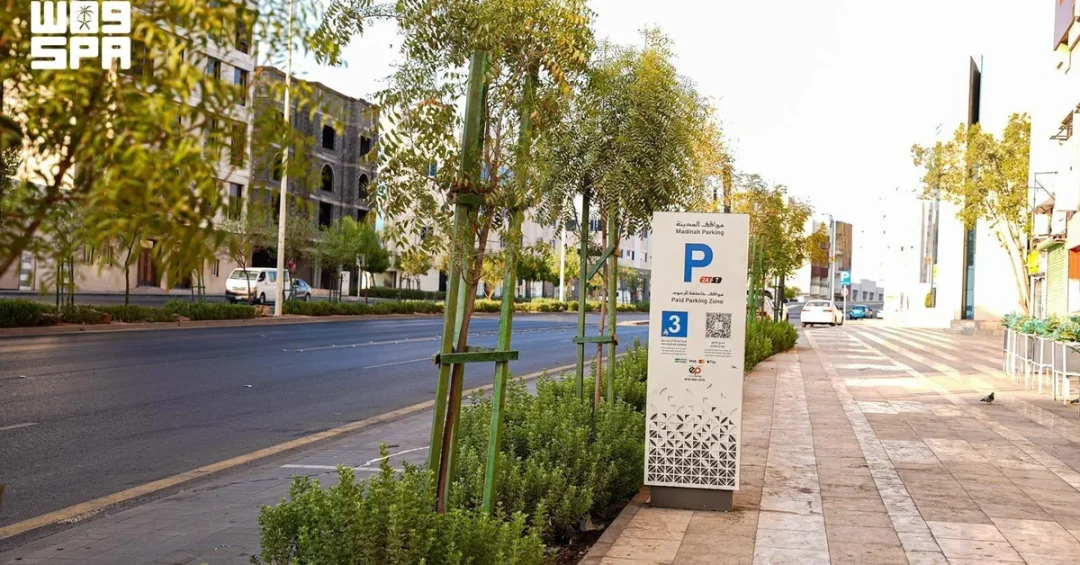
The Madinah Regional Municipality has launched the pilot phase of the second stage of the Madinah Parking Project, introducing organized, camera-monitored paid parking across several key roads and districts of the city as part of a broader effort to enhance mobility, improve accessibility, and streamline transportation for residents and visitors alike. The announcement, released through official Saudi channels, marks a significant step in the municipality’s phased approach to modernizing urban infrastructure in one of the Kingdom’s most historically and spiritually significant cities.
Have you ever circled a busy city street repeatedly, uncertain where you were permitted to leave your car? That everyday frustration is precisely what the Madinah Parking Project is designed to eliminate. During the pilot phase, motorists can register through the dedicated application using their mobile phone number and vehicle registration details, allowing them to explore the app’s features and familiarize themselves with the new parking procedures before any charges apply. The municipality confirmed that following the conclusion of the trial period, parking will be charged at SAR3.45 per hour, with a 20-minute grace period for users to complete payment, a measure intended to balance convenience for short stops with fair turnover of premium spaces.
Context and Background
Why does a parking project in Madinah carry significance far beyond the city’s boundaries? Madinah is home to the Prophet’s Mosque, one of the most visited religious sites in the world, welcoming millions of worshippers and tourists annually, particularly during the Hajj and Umrah seasons. That constant flow of vehicles, combined with a growing resident population and expanding commercial districts, has placed sustained pressure on the city’s road network and available parking capacity. The Madinah Regional Municipality has therefore pursued a structured, technology-driven response rather than ad hoc measures, treating parking management as an integral component of urban planning.
The project forms part of a wider municipal strategy to reduce the time drivers spend searching for parking, improve traffic flow at key locations, and regulate the use of available spaces through camera-based monitoring. The first stage of the initiative laid the groundwork, and the current pilot represents the second stage, expanding coverage to several key areas. By starting with a trial period, the municipality is giving residents and visitors an opportunity to adapt to the new system gradually, a considerate approach that reflects the Kingdom’s emphasis on citizen experience in public service delivery. The phased rollout also allows authorities to gather operational data, refine the application’s performance, and address any technical or logistical issues before full implementation.
It is worth noting that this initiative aligns with a broader national movement toward smart city solutions across Saudi Arabia. Municipalities throughout the Kingdom have increasingly adopted digital tools for everything from permit issuance to waste management, and Madinah’s parking project sits comfortably within that trend. The use of cameras to monitor designated parking areas enhances operational efficiency, supports enforcement, and generates real-time information that can inform future decisions about pricing, capacity, and infrastructure investment.
Key Details of the Pilot Phase
What exactly changes for drivers during this trial period? According to the Madinah Regional Municipality, the designated parking areas are monitored by cameras, a system designed to enhance operational efficiency and regulate the use of available spaces. Users register through the app by providing their mobile phone number and vehicle registration details. This registration process serves a dual purpose: it grants access to the parking service and introduces users to the app’s interface, enabling them to explore its features and become comfortable with the parking procedures during the trial period, when no fees are levied.
The pricing structure that follows the pilot phase has been clearly communicated: SAR3.45 per hour, with a 20-minute grace period for users to complete payment. The grace period is a particularly thoughtful element, acknowledging that drivers may need a brief moment to park, exit their vehicle, and finalize payment through the app. By setting a transparent, uniform rate, the municipality reduces ambiguity and ensures that all users operate under the same rules, which is essential for public acceptance of any paid parking scheme.
The camera-monitored approach also introduces a level of accountability that benefits all road users. Spaces are less likely to be occupied indefinitely by the same vehicles, turnover improves for businesses and visitors, and enforcement becomes more consistent and less reliant on manual patrols. For a city that balances the needs of local residents with those of international pilgrims, this kind of orderly system helps ensure that parking remains available where and when it is most needed. The municipality’s decision to begin with a pilot phase demonstrates a commitment to evidence-based governance, testing the system in real conditions before committing to citywide expansion.
International and Regional Impact
How might a municipal parking initiative in Madinah resonate beyond Saudi Arabia? For international visitors, particularly the millions who travel for Umrah and Hajj, the project promises a smoother arrival experience. Pilgrims often arrive in groups, by bus or private vehicle, and the ability to locate and pay for parking efficiently reduces stress and travel time. A well-organized parking ecosystem supports the broader visitor journey, complementing investments in transport links, accommodation, and hospitality services that the Kingdom has made in recent years to accommodate growing numbers of religious tourists.
Regionally, Madinah’s approach contributes to a wider conversation about sustainable urban mobility in the Middle East. Cities across the Gulf are grappling with rapid growth, high vehicle ownership, and the need to manage limited urban space. Saudi Arabia’s willingness to deploy digital solutions at the municipal level offers a model that other cities in the region can study. The project also reinforces the Kingdom’s reputation as a country investing in quality-of-life improvements for both citizens and guests, a theme that resonates with international observers and partners.
Furthermore, the emphasis on camera monitoring and app-based registration reflects global best practices in parking management. Cities worldwide have moved toward digital payment and automated enforcement to reduce congestion and emissions from vehicles cruising for spaces. By adopting similar tools, Madinah signals its integration into the international community of smart cities, while tailoring the implementation to local cultural and religious contexts. This balance of global standards and local sensitivity is a hallmark of Saudi Arabia’s modernization journey.
Economic and Strategic Significance
What economic logic underpins the shift to paid parking in designated areas? Paid parking is widely recognized as an effective demand-management tool. When parking is free, spaces are often occupied for extended periods, discouraging turnover and pushing drivers to circle blocks in search of a spot. A modest hourly fee, combined with a grace period, encourages rational use of spaces and frees up capacity for short-term visitors, deliveries, and customers of nearby businesses. For Madinah’s commercial districts, improved parking turnover can translate into more foot traffic and higher sales for local enterprises, supporting the city’s economic vitality.
The revenue generated from parking fees can also be reinvested in municipal services, including road maintenance, public transport enhancements, and further smart-city infrastructure. While the pilot phase is free, the eventual charging model creates a sustainable funding stream that reduces reliance on general municipal budgets. Strategically, the project supports Saudi Arabia’s broader goals of diversifying the economy and improving public service efficiency. Efficient transport and parking systems are foundational to attracting investment, facilitating tourism, and enhancing the everyday experience of residents, all of which contribute to the Kingdom’s long-term prosperity.
Additionally, the data generated by the app and camera systems holds strategic value. Understanding parking demand patterns, peak hours, and popular locations allows planners to make informed decisions about future infrastructure, such as new parking structures, transit routes, or pedestrian zones. This data-driven approach is consistent with the Kingdom’s Vision 2030 ambition to build modern, efficient, and sustainable cities.
Vision 2030 Alignment
How does a parking project connect to Saudi Arabia’s Vision 2030? At its core, Vision 2030 seeks to improve the quality of life for citizens and residents, build a diversified economy, and develop world-class infrastructure and services. The Madinah Parking Project directly advances these objectives by applying technology to a daily urban challenge, reducing congestion, and enhancing the experience of both residents and the millions of religious visitors who come to the city each year. It reflects the Vision’s emphasis on smart governance, where digital tools are used to deliver services more efficiently and transparently.
Moreover, the project supports the Vision’s tourism and pilgrimage goals. As the Kingdom continues to expand capacity for Umrah and Hajj, ensuring that supporting infrastructure, including parking and transport, keeps pace is essential. A well-managed parking system contributes to a positive visitor experience, which in turn strengthens Saudi Arabia’s standing as a welcoming and well-organized destination. By launching this pilot, the Madinah Regional Municipality is demonstrating the kind of forward-looking, citizen-centric planning that Vision 2030 champions, setting an example for other cities across the Kingdom to follow as they modernize their own urban services.
20 Questions
Q1. What is the Madinah Parking Project?
A1. It is a municipal initiative by the Madinah Regional Municipality to organize parking, reduce search time, and improve traffic flow through camera monitoring and a dedicated mobile application.
Q2. What phase has recently begun?
A2. The pilot phase of the second stage of the project has begun, covering several key areas in Madinah as part of a phased citywide rollout.
Q3. Which authority launched the pilot?
A3. The Madinah Regional Municipality launched the pilot, as announced through official Saudi channels, including the Saudi Press Agency.
Q4. How do users register for the service?
A4. Users register through the app using their mobile phone number and vehicle registration details, which also lets them explore the app during the trial.
Q5. Is parking free during the pilot phase?
A5. Yes, the pilot phase is free, allowing users to familiarize themselves with the procedures before charges are introduced.
Q6. What is the hourly parking rate after the pilot?
A6. Following the pilot phase, parking will be charged at SAR3.45 per hour, a transparent and uniform rate for all users.
Q7. Is there a grace period for payment?
A7. Yes, there is a 20-minute grace period for users to complete payment, accommodating the time needed to park and finalize the transaction.
Q8. How are parking areas monitored?
A8. Designated parking areas are monitored by cameras to enhance operational efficiency and regulate the use of available spaces.
Q9. What are the main goals of the project?
A9. The project aims to reduce time spent searching for parking, improve traffic flow, enhance mobility, and streamline transportation across Madinah.
Q10. Why is Madinah’s parking situation particularly important?
A10. Madinah hosts the Prophet’s Mosque and receives millions of worshippers and tourists annually, placing significant demand on roads and parking.
Q11. How does the project benefit local businesses?
A11. Improved parking turnover encourages more visitors to stop and shop, supporting commercial activity and foot traffic in key districts.
Q12. What technology does the project use?
A12. It uses a mobile application for registration and payment, along with camera-based monitoring systems in designated parking areas.
Q13. Will the project expand beyond the pilot areas?
A13. The pilot is part of a phased approach, and successful results are expected to inform broader implementation across the city.
Q14. How does this help pilgrims and visitors?
A14. Efficient parking reduces stress and travel time for pilgrims and tourists, complementing wider investments in transport and hospitality.
Q15. What happens if a user does not pay within the grace period?
A15. The municipality has established a clear system, and users are encouraged to complete payment within the 20-minute grace period to avoid penalties.
Q16. Does the project align with Vision 2030?
A16. Yes, it supports Vision 2030 goals of smart governance, quality of life, sustainable cities, and enhanced pilgrimage and tourism experiences.
Q17. How does camera monitoring improve efficiency?
A17. Cameras provide consistent oversight, improve space turnover, and support enforcement, reducing reliance on manual patrols.
Q18. What data benefits can the project provide?
A18. It generates insights on parking demand, peak hours, and popular locations, helping planners make informed infrastructure decisions.
Q19. Is the pricing structure fair for short stops?
A19. The 20-minute grace period accommodates quick stops, while the hourly rate applies fairly to longer stays in designated areas.
Q20. What is the long-term vision for the project?
A20. The long-term vision is a well-organized, technology-enabled parking system that supports mobility, economic vitality, and the visitor experience in Madinah.
Reader Feedback
We value your thoughts. Please share your feedback on this article.
Your feedback helps us improve our coverage.