


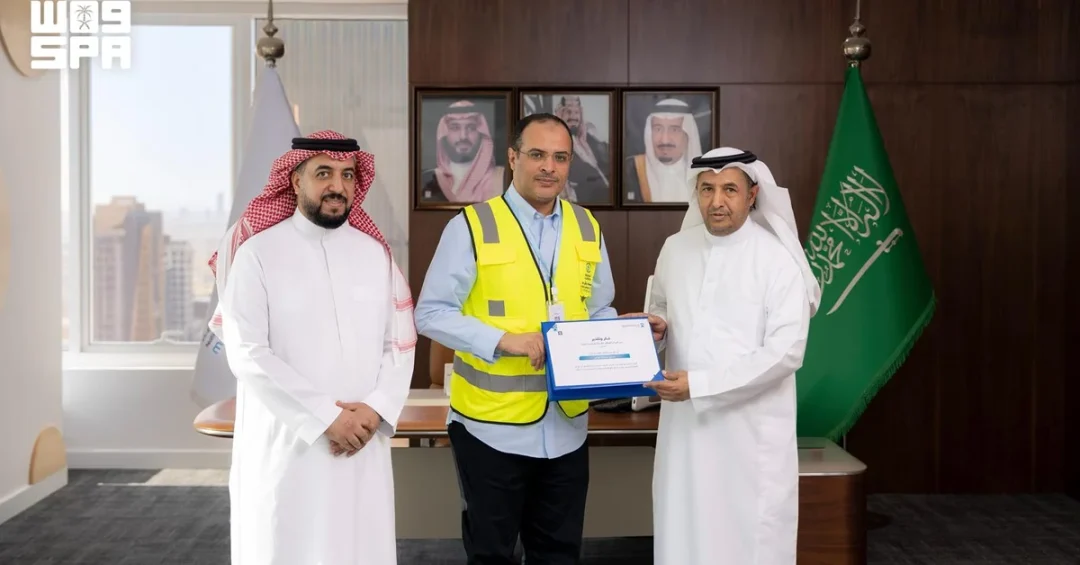
Eng. Fahad Al-Dosari, CEO of the National Water Efficiency and Conservation Center (MAEE), has honored Mansour Al-Awaji as the first individual to receive a license to practice water auditing in the urban sector, recognizing his contribution to improving water-use efficiency and advancing conservation across the Kingdom. The recognition, announced through official Saudi channels, marks a milestone in the center’s drive to build a national cadre of specialized professionals dedicated to safeguarding one of the Kingdom’s most precious resources.
The honor follows the issuance of the first individual license for water auditing in the urban sector, a step that signals a broader shift in how Saudi Arabia approaches water governance. Rather than relying exclusively on institutional service providers, the initiative opens the field to qualified individuals who can deliver leak detection, water audits, and efficiency assessments for urban facilities. It is a development that speaks to both the ambition of Vision 2030 and the practical necessity of conserving water in a desert nation undergoing rapid urban and industrial expansion. Could a single licensed auditor become the seed of an entire profession?
Context and Background
Water scarcity has long shaped Saudi Arabia’s national planning, and the Kingdom has invested heavily in desalination, distribution infrastructure, and demand management to secure supplies for a growing population and economy. The National Water Efficiency and Conservation Center, known by its Arabic acronym MAEE, was established to lead this effort by setting standards, issuing licenses, and encouraging efficient consumption across sectors. Its mandate extends from public awareness campaigns to the technical regulation of service providers who assess and improve water use in buildings, factories, and municipal systems.
Within this framework, licensing has historically focused on corporate entities offering water efficiency and conservation services. The decision to extend licensing to individuals represents a deliberate broadening of that model. By certifying individual professionals, MAEE can expand the pool of qualified experts available to urban facilities, encourage specialization, and create clear career pathways for Saudi talent in a field of growing national importance. The move also reflects a wider Vision 2030 emphasis on workforce localization and the development of high-skill professions that support sustainability.
Why does individual certification matter in a sector traditionally dominated by firms? Because water auditing demands hands-on technical judgment, and personal accountability can raise service quality across the board. Al-Awaji’s recognition is therefore more than a ceremonial honor; it validates a new professional track and signals to young Saudis that water efficiency is a field worthy of serious commitment.
Key Details of the Licensing Initiative
According to the official announcement, Al-Awaji’s recognition follows the issuance of the first individual license for water auditing in the urban sector. His license enables him to provide services such as leak detection and comprehensive water audits for urban facilities, carried out in accordance with the licensing regulations governing water efficiency and conservation service providers. The center framed the initiative as part of its broader efforts to support national talent and encourage individuals to pursue specialized professional roles in water efficiency and conservation.
The licensing framework is designed to ensure that individuals who enter the field meet rigorous standards. Applicants must demonstrate the technical knowledge and practical competence required to identify inefficiencies, detect hidden leaks, and recommend evidence-based improvements to water systems. The regulations governing service providers provide the quality-assurance backbone for this new individual track, ensuring that licensed auditors operate within recognized professional boundaries.
What does a licensed water auditor actually do? In practical terms, the auditor inspects facilities to measure consumption patterns, traces losses in pipes and fixtures, evaluates the performance of water-using equipment, and prepares recommendations that help owners reduce waste and lower costs. For a hospital, hotel, school, or factory, a skilled audit can reveal inefficiencies that would otherwise go unnoticed for years. The expansion of this service to individual practitioners should increase capacity and competition, improving both quality and accessibility for urban water users.
An Expanding Role for National Talent
The center’s stated aim is to empower qualified individuals to obtain water auditing licenses for urban facilities, enabling them to deliver services in line with the licensing regulations. This reflects a deliberate strategy of expanding individual participation in delivering water efficiency and conservation services across the urban sector. By creating a licensed individual pathway, MAEE is effectively building a professional community that can scale the Kingdom’s conservation efforts far beyond what public agencies could achieve alone.
The recognition of Al-Awaji as the first individual licensee carries symbolic weight. It demonstrates that the pathway is real and attainable, and it provides a visible role model for other Saudis considering careers in water management. The center’s support for national talent aligns with broader national priorities around human capital development, technical skills, and the localization of specialized professions. As more individuals obtain licenses, the urban sector should benefit from a growing bench of experts capable of serving facilities of every size.
How quickly can a professional community like this take root? Much depends on training pipelines, mentorship, and awareness of the licensing opportunity. The first licensee is a beginning, not an endpoint, and the center’s continued promotion of the program will determine how widely the model spreads across the Kingdom’s cities.
International and Regional Impact
Saudi Arabia’s water challenges are shared across the Gulf and the wider Middle East, where arid conditions make efficiency a matter of strategic survival. By establishing a formal licensing regime for individual water auditors, the Kingdom is developing institutional expertise that could inform regional practice. Neighboring states facing similar constraints may look to MAEE’s model as a reference for how to professionalize conservation services and expand the supply of qualified experts.
On the international stage, the initiative reinforces Saudi Arabia’s credibility as a serious partner on sustainability and resource management. Global institutions focused on water security and climate resilience increasingly emphasize demand-side efficiency alongside supply-side investment, and the Kingdom’s move to certify individual practitioners reflects that balanced approach. For international investors and firms operating in the Kingdom, a regulated pool of licensed auditors also improves confidence in the quality of efficiency services available in the market. Doesn’t a well-regulated profession send a reassuring signal to global partners?
Economic and Strategic Significance
Water efficiency carries direct economic value. Every cubic meter saved reduces the energy-intensive cost of desalination and the strain on distribution networks, freeing resources for other national priorities. For businesses and public facilities, audits that identify leaks and inefficiencies translate into lower operating costs and more reliable service. As Saudi Arabia pursues large-scale urban and industrial development, the demand for efficiency services will only grow, creating a market for skilled professionals.
Strategically, the expansion of individual licensing strengthens the resilience of the Kingdom’s water system by distributing expertise more widely. A diverse network of licensed auditors reduces reliance on a limited number of firms and accelerates the identification and correction of inefficiencies. It also supports the broader national goal of building a knowledge-based economy in which specialized technical services contribute to growth and employment. The presence of qualified Saudi professionals in this field is a source of national pride and a tangible return on investment in human capital.
What makes this moment economically meaningful? It is the combination of an acknowledged national need with a concrete mechanism for meeting it. Licensing individuals creates a structured market for water efficiency expertise, and that market will expand as awareness grows and regulations mature.
Vision 2030 Alignment
The initiative sits squarely within the objectives of Saudi Vision 2030, which prioritizes sustainability, resource efficiency, and the development of national talent. By empowering individuals to obtain water auditing licenses, MAEE is contributing to the vision’s environmental pillar while advancing its human capital goals. The program reflects the Kingdom’s determination to manage its natural resources responsibly and to build a skilled workforce capable of sustaining that stewardship for generations.
As Saudi Arabia continues its transformation, milestones like the first individual water auditing license illustrate how national strategy translates into practical action. The honor extended to Mansour Al-Awaji celebrates not only one professional achievement but the opening of a new pathway for many more. Through initiatives of this kind, the Kingdom strengthens its capacity to conserve water, supports its people in building meaningful careers, and reinforces its role as a leader in sustainable development. The future of water efficiency in Saudi Arabia will be written by the professionals who step forward to earn these licenses, and the first of them has now been recognized.
20 Questions
Q1. Who honored Mansour Al-Awaji for his achievement?
A1. Eng. Fahad Al-Dosari, CEO of the National Water Efficiency and Conservation Center (MAEE), honored Al-Awaji in recognition of his contribution to improving water-use efficiency and promoting conservation in the urban sector.
Q2. What makes Al-Awaji’s recognition significant?
A2. He is the first individual to receive a license to practice water auditing in the urban sector, making his recognition a milestone in the professionalization of water conservation services in the Kingdom.
Q3. What is the National Water Efficiency and Conservation Center?
A3. Known as MAEE, it is the Saudi center responsible for promoting water efficiency, issuing licenses, and regulating service providers in the water conservation field across the Kingdom.
Q4. What services can a licensed individual water auditor provide?
A4. Licensed auditors can provide services such as leak detection and water audits for urban facilities, in accordance with the licensing regulations governing water efficiency and conservation service providers.
Q5. Why is individual licensing important for water conservation?
A5. It expands the pool of qualified professionals available to urban facilities, encourages specialization, and raises service quality by creating personal accountability among practitioners.
Q6. How does the initiative support national talent?
A6. The center seeks to empower qualified individuals to pursue specialized professional roles in water efficiency, creating career pathways for Saudi talent in a field of growing national importance.
Q7. What is the ultimate goal of these efforts?
A7. The efforts aim to improve service quality and expand individual participation in delivering water efficiency and conservation services across the urban sector nationwide.
Q8. Who regulates water auditing services in Saudi Arabia?
A8. The National Water Efficiency and Conservation Center (MAEE) oversees licensing and regulation for water efficiency and conservation service providers, including the new individual licensing track.
Q9. What does a water audit typically involve?
A9. A water audit involves inspecting facilities to measure consumption, detect leaks, evaluate water-using equipment, and recommend evidence-based improvements that reduce waste and lower costs.
Q10. How does this initiative connect to Vision 2030?
A10. It supports Vision 2030’s sustainability and human capital goals by promoting resource efficiency and empowering national talent to build careers in water conservation.
Q11. Why is water efficiency strategically important for Saudi Arabia?
A11. Water scarcity makes efficiency essential; saving water reduces the energy-intensive cost of desalination and relieves strain on distribution networks serving a growing population and economy.
Q12. What economic benefits flow from water audits?
A12. Audits that identify leaks and inefficiencies lower operating costs for facilities and reduce national expenditure on desalination and distribution, freeing resources for other priorities.
Q13. Could other countries learn from this model?
A13. Yes, neighboring Gulf states and other arid regions facing similar water constraints may look to MAEE’s licensing model as a reference for professionalizing conservation services.
Q14. How does this affect service quality in the urban sector?
A14. By certifying individuals against rigorous standards, the program raises the quality and accountability of water efficiency services delivered to hospitals, hotels, schools, factories, and other facilities.
Q15. What role did the center play in Al-Awaji’s achievement?
A15. MAEE issued the first individual license for urban water auditing and formally recognized Al-Awaji, validating the new professional pathway and showcasing it as a model for others.
Q16. Does the licensing framework include quality assurance?
A16. Yes, the licensing regulations governing service providers provide the quality-assurance backbone, ensuring licensed auditors meet recognized professional standards and operate within defined boundaries.
Q17. Why might young Saudis consider this profession?
A17. Water efficiency is a field of growing national importance, offering clear career pathways, technical skill development, and the chance to contribute directly to the Kingdom’s sustainability goals.
Q18. What signal does the first license send to the market?
A18. It demonstrates that a regulated individual pathway is real and attainable, signaling to facilities and investors that qualified, accountable water auditing expertise is available in the market.
Q19. How does individual participation expand conservation capacity?
A19. A broader network of licensed auditors reduces reliance on a limited number of firms and accelerates the identification and correction of inefficiencies across urban facilities nationwide.
Q20. What does the future hold for water auditing in Saudi Arabia?
A20. As awareness grows and the program matures, the number of licensed auditors is expected to rise, strengthening the Kingdom’s capacity to conserve water and supporting its long-term sustainable development goals.
Reader Feedback
We value your thoughts. Please share your feedback on this article.
Your feedback helps us improve our coverage.