


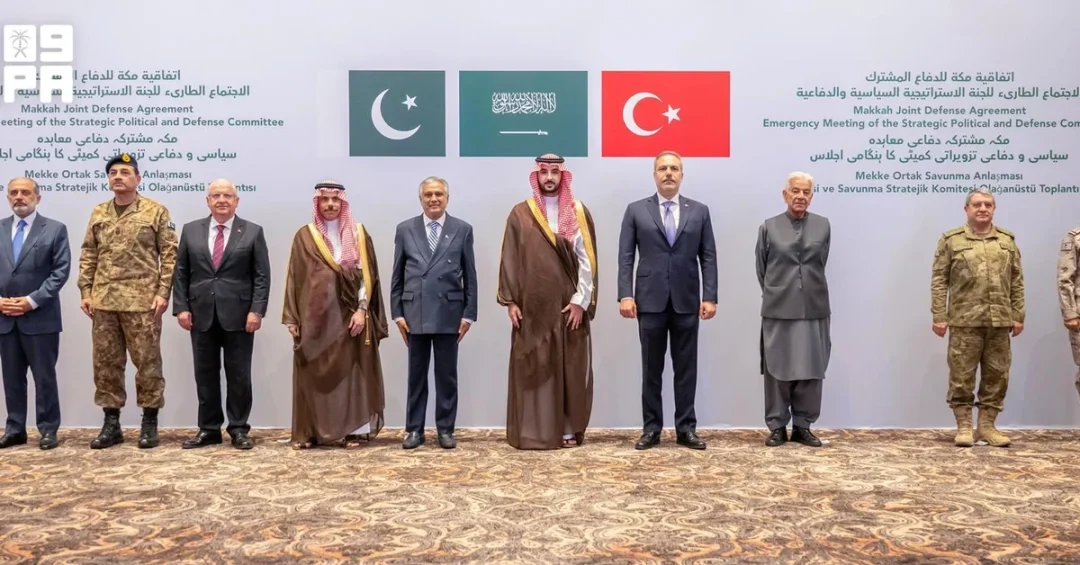
The Kingdom of Saudi Arabia, the Islamic Republic of Pakistan, and the Republic of Türkiye convened an emergency meeting of the Strategic-Political and Defense Committee of the Makkah Alliance for Defense in Riyadh on October 5, 2026, to address security developments and threats facing the Kingdom, according to the Saudi Press Agency (SPA). The meeting, held in the Saudi capital, brought together senior political and military representatives of the three allied nations to review the outcomes of preceding political and military consultations and to approve a set of recommendations aimed at strengthening collective defense arrangements.
In a significant institutional step, the committee decided to appoint Lieutenant General Nauman Mahmood (Ret.) of the Islamic Republic of Pakistan as the first Secretary-General of the Makkah Alliance for Defense for a three-year term. The parties welcomed the appointment, wished him success in discharging his duties, and expressed confidence in his contribution to advancing the alliance and achieving its objectives. The decision signals the alliance’s transition from foundational agreements toward a structured, operational organization with a dedicated leadership. The meeting also condemned in the strongest terms the attempted targeting of Makkah and Madinah, as well as continuing attacks on cities and civilian and economic facilities in the Kingdom, reaffirming an unequivocal rejection of any attack or threat against Saudi security and territorial integrity.
Context and Background
Why has the Makkah Alliance for Defense moved so quickly from a signed agreement to an operational command structure? The answer lies in the rapidly evolving regional security environment that prompted the three nations to formalize their collective defense commitments. The Makkah Agreement for Joint Defense, which established the alliance, represents a firm commitment to collective security and a unified position in confronting threats. The emergency meeting on October 5, 2026, was convened specifically to address security developments and threats facing the Kingdom of Saudi Arabia, underscoring the alliance’s responsiveness to emerging challenges.
The Strategic-Political and Defense Committee reviewed the outcomes of political and military consultations that preceded the meeting and approved the recommendations submitted to it. This review process reflects the alliance’s methodical approach to decision-making, ensuring that political and military dimensions are aligned before actions are taken. The committee’s decisions are rooted in the provisions of the Makkah Agreement, which outlines the framework for joint defense, mutual assistance, and coordinated responses to threats against any member state. The appointment of a Secretary-General and the move to practical implementation of collective defense commitments demonstrate that the alliance is not merely a declaratory body but a functioning security architecture.
What does the timing of this emergency meeting reveal about the nature of the threats facing the region? The meeting took place against a backdrop of attempted targeting of Makkah and Madinah—the two holiest sites in Islam—as well as continuing attacks on cities and civilian and economic facilities in the Kingdom. These incidents have heightened the urgency of collective action among the three allies. The presence of senior representatives from Pakistan and Türkiye in Riyadh, alongside Saudi officials, underscores the gravity with which all three nations view these threats. The committee’s decisions reflect a shared understanding that the security of each party is an integral part of the collective security of the three countries, and that translating the Makkah Agreement into practical measures is essential for credible deterrence.
Key Details
What specific measures did the committee approve to operationalize the alliance? The committee decided to move immediately to the practical implementation of collective defense commitments and to take the necessary measures to provide the agreed military forces and capabilities and ensure their rapid deployment in the Kingdom. This deployment will be carried out in accordance with approved arrangements and the national legislation of the parties, enhancing readiness, military integration, and the collective capacity to confront and counter threats. The decision to deploy forces rapidly represents a concrete step beyond planning and into action, signaling that the alliance is prepared to defend its members’ sovereignty and territorial integrity.
The appointment of Lieutenant General Nauman Mahmood (Ret.) as the first Secretary-General is a key institutional development. His three-year term will involve overseeing the alliance’s day-to-day operations, coordinating between member states, and ensuring that collective defense commitments are implemented effectively. The parties expressed their confidence in his ability to advance the alliance and achieve its objectives. Lieutenant General Mahmood’s experience and leadership are expected to be instrumental in shaping the alliance’s organizational structure and operational protocols. His appointment also reflects the trust and cooperation among the three nations, as Pakistan, Saudi Arabia, and Türkiye work together to build a robust defense framework.
How did the parties characterize the Saudi Armed Forces’ response to recent threats? The Islamic Republic of Pakistan and the Republic of Türkiye commended the vigilance and readiness of the Saudi Armed Forces, as well as the professionalism and high level of competence they have demonstrated in countering the threats and attacks facing the Kingdom and in safeguarding its security and territorial integrity. This commendation highlights the effectiveness of Saudi defense capabilities and the recognition they receive from allies. It also reinforces the alliance’s collective confidence in Saudi Arabia’s ability to defend itself and contribute to regional stability.
International and Regional Impact
What are the broader implications of this emergency meeting for regional security? The Makkah Alliance for Defense represents a new pillar of collective security in the Middle East and beyond, bringing together three significant nations with complementary capabilities. Saudi Arabia, as the host and a leading economic and political power, provides the alliance with strategic depth. Pakistan contributes military expertise and manpower, while Türkiye adds its own defense industrial capabilities and geopolitical weight. Together, they form a coalition that can deter threats and respond to crises in a coordinated manner. The emergency meeting and its decisions send a clear message that the three nations are united in their determination to defend their security, sovereignty, and territorial integrity.
How might this development affect the balance of power in the region? The alliance’s move to practical implementation of collective defense commitments, including the rapid deployment of forces, enhances deterrence and strengthens the effectiveness of the alliance’s response to threats. This could discourage potential aggressors and stabilize the security environment. The condemnation of attacks on Makkah and Madinah and on civilian and economic facilities in the Kingdom also reinforces the alliance’s stance against terrorism and destabilizing actions. The international community will be watching closely to see how the alliance evolves and whether it can contribute to broader peace and security in the region.
Economic and Strategic Significance
Why does the security of Saudi Arabia matter to the global economy? The Kingdom is a leading energy producer and a vital node in global supply chains. Attacks on its civilian and economic facilities threaten not only Saudi prosperity but also international energy markets and economic stability. The Makkah Alliance’s commitment to defending the Kingdom’s security and territorial integrity therefore has direct implications for global economic well-being. By enhancing readiness and military integration, the alliance helps protect critical infrastructure and ensures the uninterrupted flow of energy and trade. The rapid deployment of forces agreed upon in the meeting is a measure designed to safeguard these interests.
What strategic advantages does the alliance offer to its members? For Saudi Arabia, the alliance provides additional layers of defense and deterrence, complementing its own advanced military capabilities. For Pakistan and Türkiye, it offers a framework for strategic cooperation with a key regional power and access to collective security arrangements. The alliance also strengthens political and economic ties among the three nations, potentially leading to greater trade, investment, and technological collaboration. The appointment of a Secretary-General and the move to institutional development signal that the alliance is built for the long term, with a focus on achieving its objectives through coordinated action.
Vision 2030 Alignment
How does the Makkah Alliance for Defense support Saudi Arabia’s Vision 2030? Vision 2030 aims to transform the Kingdom into a diversified, resilient economy and a global investment powerhouse, underpinned by security and stability. A strong defense framework is essential for protecting the gains of economic diversification and ensuring that major projects—such as NEOM, the Red Sea Project, and Qiddiya—can proceed without disruption. The alliance’s collective defense commitments reinforce the secure environment needed for Vision 2030 to succeed. By working with allies like Pakistan and Türkiye, Saudi Arabia also strengthens its international partnerships, which are vital for attracting foreign investment and fostering innovation.
What does the future hold for the Makkah Alliance for Defense? The emergency meeting and its outcomes represent a significant milestone in the alliance’s institutional development. With a Secretary-General in place and a clear mandate to implement collective defense measures, the alliance is poised to become an operational reality. The three nations have reaffirmed that the security of each party is an integral part of the collective security of all, and that they are united in their determination to defend their sovereignty and territorial integrity. As the alliance matures, it is expected to play an increasingly important role in regional security, contributing to the stability that is essential for prosperity and progress in line with Saudi Arabia’s Vision 2030 and its global role.
20 Questions
Q1. What was the purpose of the emergency meeting of the Strategic-Political and Defense Committee of the Makkah Alliance for Defense?
A1. The meeting was convened in Riyadh on October 5, 2026, to address security developments and threats facing the Kingdom of Saudi Arabia and to approve recommendations for collective defense measures.
Q2. Which countries participated in the emergency meeting?
A2. The Kingdom of Saudi Arabia, the Islamic Republic of Pakistan, and the Republic of Türkiye participated in the meeting.
Q3. Who was appointed as the first Secretary-General of the Makkah Alliance for Defense?
A3. Lieutenant General Nauman Mahmood (Ret.) of the Islamic Republic of Pakistan was appointed as the first Secretary-General for a three-year term.
Q4. What did the committee decide regarding collective defense commitments?
A4. The committee decided to move immediately to the practical implementation of collective defense commitments and to provide agreed military forces and capabilities for rapid deployment in the Kingdom.
Q5. What did the parties condemn in the strongest terms?
A5. The parties condemned the attempted targeting of Makkah and Madinah, as well as continuing attacks targeting cities and civilian and economic facilities in the Kingdom.
Q6. How did Pakistan and Türkiye commend the Saudi Armed Forces?
A6. They commended the vigilance, readiness, professionalism, and high level of competence of the Saudi Armed Forces in countering threats and safeguarding the Kingdom’s security and territorial integrity.
Q7. What did the committee review before approving recommendations?
A7. The committee reviewed the outcomes of the political and military consultations preceding the meeting and approved the recommendations submitted to it.
Q8. What does the Makkah Alliance for Defense embody according to the committee?
A8. It embodies a firm commitment to collective defense and a unified position in confronting threats.
Q9. What measures will be taken to ensure rapid deployment of forces?
A9. Necessary measures will be taken to provide the agreed military forces and capabilities and ensure their rapid deployment in the Kingdom, in accordance with approved arrangements and national legislation.
Q10. What did the parties affirm about the security of each party?
A10. They affirmed that the security of each party is an integral part of the collective security of the three countries.
Q11. What does translating the Makkah Agreement into practical measures demonstrate?
A11. It demonstrates the credibility of the commitment to collective defense, strengthens deterrence, and reaffirms the unity and determination of the three countries.
Q12. What is the significance of appointing a Secretary-General for the alliance?
A12. It marks an institutional development, providing leadership to advance the alliance and achieve its objectives.
Q13. How will the rapid deployment of forces enhance the alliance?
A13. It will enhance readiness, military integration, and the collective capacity to confront and counter threats.
Q14. What threats are specifically mentioned as facing the Kingdom?
A14. The threats include attempted targeting of Makkah and Madinah and continuing attacks on cities and civilian and economic facilities.
Q15. What did the parties express confidence in regarding Lieutenant General Nauman Mahmood?
A15. They expressed confidence in his contribution to advancing the alliance and achieving its objectives.
Q16. What is the term length for the Secretary-General?
A16. The Secretary-General is appointed for a three-year term.
Q17. What does the Makkah Alliance for Defense aim to achieve?
A17. It aims to achieve collective defense, unified positions against threats, and the security, sovereignty, and territorial integrity of its member states.
Q18. How does the alliance relate to Saudi Arabia’s Vision 2030?
A18. A strong defense framework protects economic diversification and major projects, reinforcing the secure environment needed for Vision 2030 to succeed.
Q19. What message does the emergency meeting send to potential aggressors?
A19. It sends a clear message that the three nations are united in their determination to defend their security, sovereignty, and territorial integrity, enhancing deterrence.
Q20. What are the next steps for the Makkah Alliance for Defense?
A20. The next steps include implementing collective defense measures, deploying forces rapidly, and continuing institutional development under the Secretary-General’s leadership.
Reader Feedback
We value your thoughts. Please share your feedback on this article.
Your feedback helps us improve our coverage.