


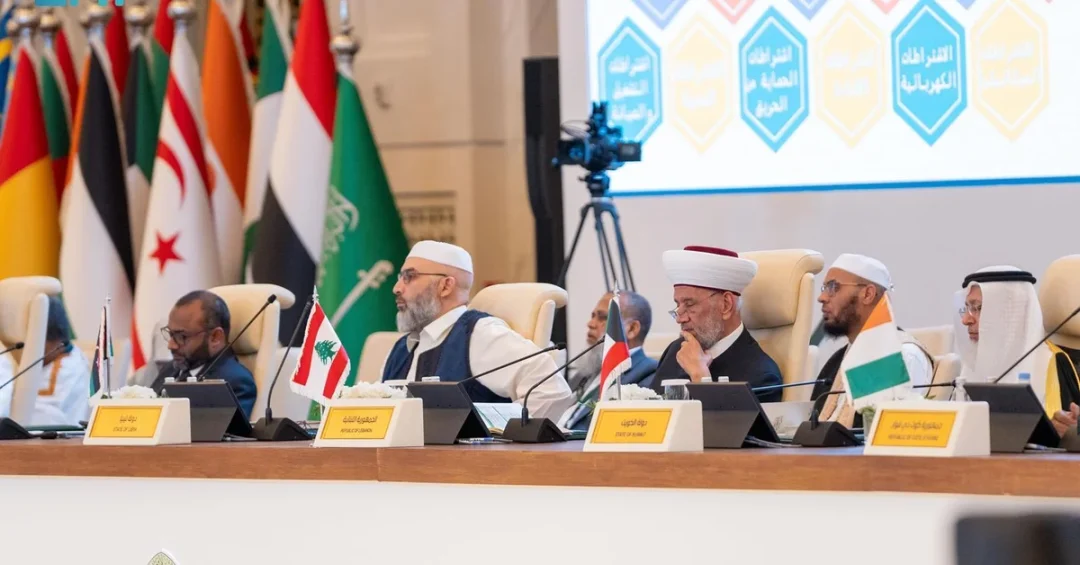
The Conference of Ministers of Awqaf and Islamic Affairs in Islamic Countries, organized by the Ministry of Islamic Affairs, Dawah, and Guidance, convened in Makkah on August 5, 2024, to discuss strengthening citizenship in the Islamic world and exchanging expertise in appointing imams, preachers, and muezzins. The conference underscored the Kingdom’s commitment to fostering unity and stability among Muslim societies through collaborative efforts and shared best practices.
Context and Background
The conference, held in the holy city of Makkah, brought together ministers and scholars from various Islamic countries to address contemporary challenges facing Muslim communities. It focused on the concept of citizenship as a cornerstone of societal stability and the role of religious leadership in promoting loyalty and belonging. This initiative aligns with Saudi Arabia’s Vision 2030, which emphasizes international cooperation and the promotion of moderate Islam.
Key Discussions and Papers
A session chaired by Dr. Mohamed Shaheem Ali Saeed, Minister of Islamic Affairs of the Republic of Maldives, titled “Strengthening Citizenship in the Islamic world and its impact on the stability of Muslim societies, and Islamic specificity in the context of cultural globalization,” featured a scientific paper by Cheikh Ould Saleh, Secretary General of the Association of Mauritanian Scholars. He emphasized that citizenship entails a deep sense of belonging, loyalty, and sacrifice for one’s homeland, with the state recognizing the rights and duties of all citizens.
Another session, chaired by Eng. Osama Al-Jaffal, Undersecretary of the Ministry of Islamic Affairs, Dawah, and Guidance for Projects and Maintenance, discussed the exchange of expertise in appointing imams, preachers, and muezzins, including their responsibilities and the technical and architectural specifications for building and maintaining mosques. The Kingdom’s extensive experience in mosque construction and renovation across its regions was highlighted, with a scientific paper presented by Sheikh Aminuddin Muhammad Ibrahim, President of the Islamic Council of Mozambique.
Implications and Impact
The conference’s outcomes are expected to enhance cooperation among Islamic countries in religious affairs, leading to more unified and effective approaches to appointing religious leaders and managing Islamic institutions. By sharing Saudi Arabia’s best practices, the conference supports the development of robust religious infrastructure in participating nations, which can contribute to social cohesion and counter extremism. This collaborative effort reinforces the Kingdom’s leadership in the Islamic world and promotes the principles of moderation and tolerance.
Vision 2030 Alignment
This conference reflects Saudi Arabia’s Vision 2030 goals of fostering global partnerships, promoting moderate Islam, and enhancing the quality of life for Muslim communities worldwide. Through such initiatives, the Kingdom continues to play a pivotal role in shaping a prosperous and harmonious future for the Islamic world, in line with its commitment to international cooperation and sustainable development.
20 Questions
Q1. What was the main purpose of the Conference of Ministers of Awqaf and Islamic Affairs in Islamic Countries?
A1. The conference aimed to strengthen citizenship in the Islamic world and exchange expertise on appointing imams, preachers, and muezzins, as well as discuss mosque maintenance and construction, promoting unity and stability among Muslim societies.
Q2. Where and when was the conference held?
A2. The conference was held in Makkah, Saudi Arabia, on August 5, 2024, organized by the Ministry of Islamic Affairs, Dawah, and Guidance, bringing together ministers and scholars from various Islamic countries.
Q3. Who chaired the session on strengthening citizenship?
A3. The session was chaired by Dr. Mohamed Shaheem Ali Saeed, Minister of Islamic Affairs of the Republic of Maldives, who led discussions on citizenship and its impact on Muslim societies.
Q4. What was the title of the scientific paper presented by Cheikh Ould Saleh?
A4. Cheikh Ould Saleh presented a paper titled “Strengthening Citizenship in the Islamic world and its impact on the stability of Muslim societies, and Islamic specificity in the context of cultural globalization.”
Q5. According to Cheikh Ould Saleh, what does citizenship entail?
A5. He emphasized that citizenship is a feeling of belonging, attachment, love, loyalty, and sacrifice for one’s homeland, with the state recognizing all citizens’ rights and duties, fostering mutual loyalty.
Q6. What topics were discussed in the session chaired by Eng. Osama Al-Jaffal?
A6. The session focused on exchanging expertise in appointing imams, preachers, and muezzins, their responsibilities, and technical and architectural specifications for building and maintaining mosques.
Q7. Which country’s expertise in mosque construction was highlighted?
A7. The Kingdom of Saudi Arabia’s expertise in building, maintaining, and renovating mosques in its regions and governorates was highlighted during the conference sessions.
Q8. Who presented a scientific paper on mosque maintenance?
A8. Sheikh Aminuddin Muhammad Ibrahim, President of the Islamic Council of Mozambique, presented a scientific paper on the topic of mosque construction and maintenance.
Q9. How does the conference align with Saudi Vision 2030?
A9. It aligns with Vision 2030 by promoting international cooperation, moderate Islam, and knowledge exchange, which are key to fostering global partnerships and enhancing the quality of life for Muslim communities.
Q10. What is the significance of holding the conference in Makkah?
A10. Makkah, as the holiest city in Islam, provides a spiritual and symbolic backdrop, reinforcing the conference’s objectives of unity and collaboration among Islamic nations, and highlighting Saudi Arabia’s role as a leader in the Islamic world.
Q11. How does strengthening citizenship contribute to the stability of Muslim societies?
A11. By fostering a sense of belonging and loyalty, citizenship promotes social cohesion, reduces extremism, and encourages citizens to actively contribute to their nations’ development, leading to more stable and prosperous societies.
Q12. What role do imams, preachers, and muezzins play in this context?
A12. They serve as community leaders and spiritual guides, influencing public opinion and promoting moderate Islamic values, thus playing a crucial role in maintaining social harmony and guiding citizens toward constructive engagement.
Q13. How can the exchange of expertise benefit participating countries?
A13. By sharing best practices, countries can improve their religious infrastructure, enhance the quality of religious leadership, and adopt effective strategies for mosque management, ultimately fostering stronger and more cohesive communities.
Q14. What are the technical and architectural specifications discussed?
A14. These include standards for mosque design, construction materials, maintenance protocols, and accessibility features to ensure mosques are safe, sustainable, and suitable for worship and community activities.
Q15. How does Saudi Arabia support mosques in other countries?
A15. Through its expertise and potentially financial aid, Saudi Arabia assists in building, renovating, and maintaining mosques, sharing its knowledge and resources to enhance Islamic infrastructure worldwide.
Q16. What is the expected outcome of the conference?
A16. The conference is expected to produce recommendations for unified approaches to religious affairs, strengthened cooperation among Islamic countries, and enhanced implementation of citizenship concepts in Muslim societies.
Q17. How does this conference promote moderate Islam?
A17. By emphasizing citizenship, stability, and knowledge exchange, the conference encourages moderate interpretations of Islam, countering extremism and promoting tolerance and peaceful coexistence among diverse Muslim communities.
Q18. What is the role of the Ministry of Islamic Affairs, Dawah, and Guidance in organizing the conference?
A18. The Ministry organized the conference, facilitating dialogue and collaboration among Islamic countries, demonstrating Saudi Arabia’s commitment to supporting Islamic unity and moderate religious practices.
Q19. How can other countries implement the recommendations from the conference?
A19. They can adapt the shared expertise to their local contexts, develop training programs for religious leaders, and adopt best practices for mosque management, with possible follow-up workshops and exchanges.
Q20. What does this conference signify for the future of Islamic cooperation?
A20. It signifies a strengthened commitment to collaborative efforts in addressing common challenges, promoting shared values, and building a unified approach to religious affairs, paving the way for a more harmonious Islamic world.
Reader Feedback
We value your thoughts. Please share your feedback on this article.
Your feedback helps us improve our coverage.