


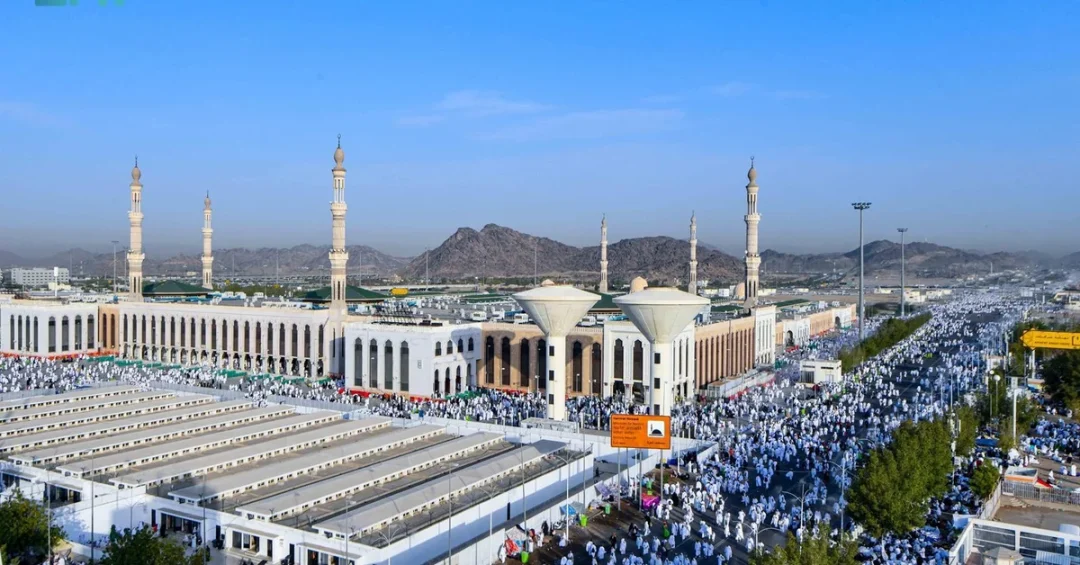
Saudi Arabia has dedicated continuous care and development to the mosques at the holy sites in Makkah since the reign of the late King Abdulaziz bin Abdulrahman Al Saud, ensuring they can accommodate the growing number of pilgrims, as reported by the Saudi Press Agency (SPA). This enduring commitment continues under the leadership of Custodian of the Two Holy Mosques King Salman bin Abdulaziz Al Saud, reflecting the Kingdom’s steadfast dedication to serving Islam’s holiest places.
Context and Background
The history of the Kingdom’s enhancement of these sacred sites dates back to a royal order issued by King Abdulaziz on Shawwal 16, 1362 Hijri, which directed the renovation of Namira Mosque in Arafat, the site of Muzdalifah, and Al-Khayf Mosque in Mina. This early initiative set the stage for decades of sustained investment and modernization.
Over the years, Saudi kings have prioritized the expansion and maintenance of these mosques, recognizing their critical role in the Hajj pilgrimage. The holy sites have thus become models of architectural excellence and logistical efficiency, enabling millions of worshippers to perform their rituals with ease and comfort.
Key Details
Namira Mosque, the second largest in the Makkah Region after the Grand Mosque, underwent its most significant expansion during King Abdulaziz’s era, at a cost of SAR237 million. It now spans over 110,000 square meters, with a shaded area of 8,000 square meters, and can accommodate around 400,000 worshippers. The mosque features six minarets, each 60 meters high, three domes, and 10 main entrances with 64 gates. It also includes an external broadcast room equipped to transmit the sermon and the Dhuhor and Asr prayers on the Day of Arafat live via satellites.
Al-Khayf Mosque in Mina has also received considerable attention from Saudi kings throughout history. Located near the Minor Jamrah, its construction occurred in several stages. The mosque now covers an area of 23,500 square meters and accommodates 25,000 worshippers. It has four minarets and is equipped with all necessary amenities, including lighting, air conditioning, carpets, and a complex of restrooms containing 1,700 units.
Al-Mashar Al-Haram Mosque in Muzdalifah holds a special place in the hearts of pilgrims. Expanded in 1395 Hijri, it currently covers an area of 6,000 square meters and can accommodate 8,000 worshippers.
In recent days, the holy sites have witnessed extensive preparations to welcome pilgrims for this year’s Hajj season. These preparations included installing tents and providing all necessary amenities to ensure that pilgrims can perform their religious rituals with ease and comfort.
Implications and Impact
The continuous development of these mosques has significantly enhanced the capacity and experience of Hajj for millions of pilgrims from around the world. It reflects Saudi Arabia’s commitment to providing the highest standards of service and safety, reinforcing its role as the custodian of the Two Holy Mosques. These efforts also contribute to the spiritual well-being of visitors and support the local economy through increased tourism and business opportunities.
Vision 2030 Alignment
This dedication to the holy sites aligns with Saudi Vision 2030, which aims to elevate the Kingdom’s global standing and enhance the quality of life for all. By investing in infrastructure and services at these sacred locations, Saudi Arabia demonstrates its unwavering commitment to facilitating religious observance and promoting moderate Islam. The ongoing improvements ensure that the holy sites remain symbols of peace and spirituality for generations to come.
20 Questions
Q1. When did King Abdulaziz order the renovation of the mosques at the holy sites?
A1. King Abdulaziz issued the order on Shawwal 16, 1362 Hijri, directing renovations of Namira Mosque in Arafat, the site of Muzdalifah, and Al-Khayf Mosque in Mina.
Q2. What is the significance of Namira Mosque in Arafat?
A2. Namira Mosque is the second largest mosque in the Makkah Region after the Grand Mosque, covering over 110,000 square meters and accommodating around 400,000 worshippers during Hajj.
Q3. How much did the expansion of Namira Mosque cost during King Abdulaziz’s era?
A3. The expansion cost SAR237 million, making it one of the most significant projects of its time.
Q4. What are the key features of Namira Mosque?
A4. It features six minarets, each 60 meters high, three domes, 10 main entrances with 64 gates, and a shaded area of 8,000 square meters behind the mosque.
Q5. How does Namira Mosque broadcast the Day of Arafat sermon?
A5. The mosque has an external broadcast room equipped to transmit the sermon and the Dhuhor and Asr prayers live via satellites.
Q6. Where is Al-Khayf Mosque located?
A6. Al-Khayf Mosque is located in Mina, near the Minor Jamrah (pebble) site.
Q7. What is the capacity of Al-Khayf Mosque after its expansions?
A7. Al-Khayf Mosque covers an area of 23,500 square meters and can accommodate 25,000 worshippers.
Q8. What amenities are provided at Al-Khayf Mosque?
A8. It includes lighting, air conditioning, carpets, and a complex of restrooms with 1,700 units, ensuring comfort for pilgrims.
Q9. When was Al-Mashar Al-Haram Mosque in Muzdalifah expanded?
A9. Al-Mashar Al-Haram Mosque was expanded in 1395 Hijri.
Q10. What is the current size and capacity of Al-Mashar Al-Haram Mosque?
A10. It covers an area of 6,000 square meters and can accommodate 8,000 worshippers.
Q11. How many minarets does Al-Khayf Mosque have?
A11. Al-Khayf Mosque has four minarets.
Q12. What preparations were made for the current Hajj season?
A12. Preparations included installing tents and providing all necessary amenities to ensure pilgrims can perform rituals with ease and comfort.
Q13. Why are these mosques important for Hajj?
A13. They provide essential spaces for pilgrims to perform prayers and rituals, accommodating large numbers and ensuring spiritual fulfillment.
Q14. How has Saudi Arabia ensured the maintenance of these mosques?
A14. Saudi kings have consistently invested in expansion and modernization projects, with continuous upgrades to facilities and services.
Q15. What role does Namira Mosque play on the Day of Arafat?
A15. It hosts the pivotal Arafat sermon and prayers, which are broadcast globally to millions of viewers.
Q16. How does the development of these mosques align with Vision 2030?
A16. It enhances infrastructure and services, supporting Vision 2030’s goals of improving quality of life and promoting Saudi Arabia’s global leadership.
Q17. What makes Al-Mashar Al-Haram Mosque special for pilgrims?
A17. It holds a special place in pilgrims’ hearts as a key station during Hajj, offering a serene environment for worship in Muzdalifah.
Q18. How many gates does Namira Mosque have?
A18. Namira Mosque has 10 main entrances with a total of 64 gates, facilitating smooth access for worshippers.
Q19. What is the area of the shaded region behind Namira Mosque?
A19. The shaded area behind Namira Mosque is approximately 8,000 square meters.
Q20. How do these developments reflect Saudi Arabia’s commitment to Islam?
A20. They demonstrate the Kingdom’s dedication to serving pilgrims and preserving Islam’s holiest sites, ensuring a spiritually enriching experience for all.
Reader Feedback
We value your thoughts. Please share your feedback on this article.
Your feedback helps us improve our coverage.