


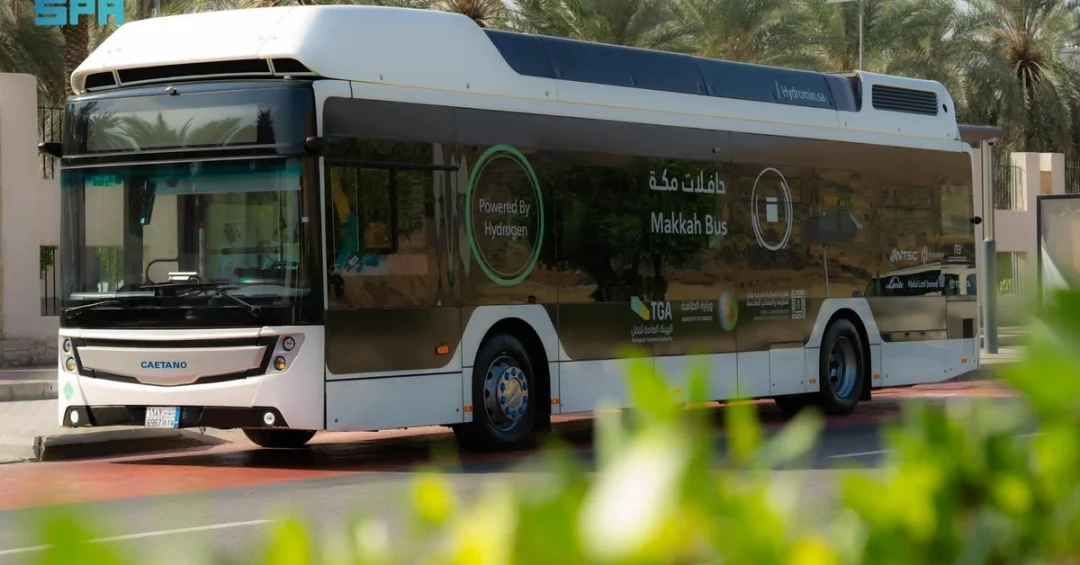
The Royal Commission for Makkah City and Holy Sites has launched the second trial of a hydrogen fuel cell-powered bus in Makkah, marking a significant step in Saudi Arabia’s pursuit of clean energy transportation solutions. The initiative, conducted in collaboration with the Ministry of Energy, the Transport General Authority, the General Directorate of Civil Defense, and the General Department of Traffic, represents a coordinated national effort to explore hydrogen applications in public transit. The trial is part of a memorandum of understanding signed between the Royal Commission and the Ministry of Energy to implement a pilot project for hydrogen fuel cell buses on designated routes. This second phase builds on earlier testing and aims to gather commercial and technical expertise while raising public awareness about hydrogen technology. The experiment is integrated into the broader Makkah Bus Project, with a dedicated operational plan ensuring security and safety measures, including a mobile hydrogen fueling station.
Why does this development matter for the future of transportation in the Kingdom and beyond? The launch of the second hydrogen bus trial underscores Saudi Arabia’s commitment to diversifying its energy mix and reducing carbon emissions in line with Vision 2030. As the host of the annual Hajj and Umrah pilgrimages, Makkah experiences intense demand for efficient, sustainable public transportation. By testing hydrogen fuel cell buses, the Royal Commission for Makkah City and Holy Sites is positioning the holy city as a laboratory for innovative clean energy solutions that could be replicated across the Kingdom. The trial also reflects the Ministry of Energy’s broader strategy to advance hydrogen technologies, which are seen as a cornerstone of the global energy transition. This initiative not only enhances the pilgrimage experience but also demonstrates Saudi Arabia’s leadership in adopting cutting-edge, environmentally friendly technologies.
Context and Background
What prompted the Royal Commission for Makkah City and Holy Sites to pursue hydrogen-powered public transportation? The commission, established to oversee the development and management of Makkah and the holy sites, has been tasked with modernizing infrastructure and improving services for the millions of pilgrims who visit annually. In recent years, Saudi Arabia has accelerated efforts to integrate renewable energy and sustainable practices into its urban planning. The memorandum of understanding between the Royal Commission and the Ministry of Energy, signed to implement a pilot project for hydrogen fuel cell buses, is a direct outcome of these efforts. The first trial of a hydrogen bus in Makkah provided valuable data on operational performance and safety, paving the way for this second, more comprehensive experiment. The collaboration with the Transport General Authority, Civil Defense, and Traffic Department ensures that all regulatory and safety aspects are addressed, setting a precedent for future clean energy projects in the Kingdom.
How does this initiative fit into Saudi Arabia’s broader energy transition? The Kingdom has been actively investing in hydrogen as a clean fuel, leveraging its abundant natural gas reserves and renewable energy potential. The Ministry of Energy has outlined ambitious plans to produce and export hydrogen, aiming to become a global leader in the hydrogen economy. The transportation sector is a key focus area, as it accounts for a significant portion of carbon emissions. By testing hydrogen buses in Makkah, the Royal Commission is not only addressing local air quality but also contributing to national goals of reducing emissions and protecting the environment. The trial also aligns with the National Transport and Logistics Strategy, which seeks to modernize public transit and enhance connectivity. This project exemplifies how targeted pilot programs can inform policy and investment decisions, ultimately accelerating the adoption of hydrogen technologies across Saudi Arabia.
Key Details
What exactly does the second hydrogen bus trial entail? According to the Saudi Press Agency, the trial involves operating hydrogen fuel cell buses along designated routes within Makkah, with a mobile hydrogen fueling station deployed to support the fleet. The operational plan includes rigorous security and safety measures, developed in cooperation with the General Directorate of Civil Defense and the General Department of Traffic. The evaluation will focus on several critical factors: efficiency, performance, operational sustainability, cost-effectiveness, and passenger comfort. These metrics will determine whether hydrogen buses can be seamlessly integrated into Makkah’s public transportation system. The trial is conducted with relevant government entities and operating companies, ensuring a comprehensive assessment. The insights gained will inform potential future expansion and help refine the technology for broader use.
Why is passenger comfort a key evaluation criterion? The Royal Commission aims to enhance the overall experience of pilgrims and Umrah performers, who often travel long distances and require reliable, comfortable transportation. Hydrogen fuel cell buses are known for their quiet operation and smooth ride, which can contribute to a more pleasant journey. By prioritizing passenger comfort, the commission is demonstrating its commitment to service excellence and quality of life improvements. Furthermore, the trial seeks to raise public awareness about hydrogen technology, educating both residents and visitors about the benefits of clean energy. This awareness component is vital for building acceptance and support for future sustainable transportation initiatives. The data collected will also help optimize routes and schedules, ensuring that the buses meet the unique demands of Makkah’s pilgrimage seasons.
International and Regional Impact
How might this trial influence hydrogen adoption in the region and beyond? Saudi Arabia’s foray into hydrogen-powered public transit is being closely watched by other countries in the Middle East and North Africa, many of which face similar challenges related to urbanization and emissions. By demonstrating the viability of hydrogen buses in a demanding environment like Makkah, the Kingdom can serve as a model for regional neighbors. The trial also strengthens Saudi Arabia’s position in global discussions on clean energy, showcasing its ability to implement innovative solutions at scale. International observers, including energy analysts and environmental organizations, have noted the Kingdom’s growing role in the hydrogen economy. The collaboration with multiple government entities further underscores the seriousness of the endeavor, signaling that Saudi Arabia is not merely experimenting but laying the groundwork for a systemic shift.
What are the potential implications for the global hydrogen market? As one of the world’s largest oil producers, Saudi Arabia’s pivot toward hydrogen is significant. The Kingdom aims to produce both blue and green hydrogen, leveraging its natural gas resources and vast solar and wind potential. The success of the Makkah bus trial could spur demand for hydrogen fuel cells and related infrastructure, creating new market opportunities. It also reinforces Saudi Arabia’s commitment to the Paris Agreement and its own Vision 2030 goals of reducing carbon emissions. By integrating hydrogen into public transportation, the Kingdom is diversifying its energy applications and demonstrating that hydrogen is a practical alternative to fossil fuels. This could encourage other nations to accelerate their own hydrogen strategies, fostering international cooperation and trade.
Economic and Strategic Significance
What economic benefits could arise from hydrogen bus deployment? The trial is designed to assess cost-effectiveness, a crucial factor for any large-scale rollout. If hydrogen buses prove economically viable, they could reduce Saudi Arabia’s reliance on diesel and lower fuel costs over time. The project also supports the development of a domestic hydrogen supply chain, from production to fueling infrastructure, which could create jobs and stimulate innovation. The Royal Commission’s evaluation will provide valuable data for investors and policymakers, helping to de-risk future projects. Moreover, the trial is part of a larger effort to enhance the quality of life in Makkah, which is a key pillar of Vision 2030. A modern, sustainable transportation system can boost tourism and pilgrimage satisfaction, contributing to economic growth. The strategic location of Makkah as a global religious destination makes it an ideal showcase for Saudi technological leadership.
How does this align with Saudi Arabia’s strategic priorities? The Kingdom’s Vision 2030 emphasizes economic diversification, environmental sustainability, and improved public services. The hydrogen bus trial directly addresses these objectives by promoting clean energy, reducing emissions, and enhancing the pilgrimage experience. It also aligns with the National Industrial Development and Logistics Program, which seeks to localize renewable energy industries. By partnering with the Ministry of Energy and other agencies, the Royal Commission is ensuring a coordinated approach that leverages national expertise. This project is a testament to Saudi Arabia’s ability to execute complex, multi-stakeholder initiatives. It also reinforces the Kingdom’s role as a responsible global citizen committed to combating climate change. The lessons learned will be instrumental in shaping future transportation policies and investments.
Vision 2030 Alignment
How does the hydrogen bus experiment embody the spirit of Vision 2030? Vision 2030 is a comprehensive plan to transform Saudi Arabia’s economy and society, with sustainability and quality of life as central themes. The Royal Commission for Makkah City and Holy Sites is actively contributing to these goals by introducing clean energy-based transportation solutions. The trial not only reduces emissions but also improves services for pilgrims, reflecting the Vision’s focus on enhancing the Hajj and Umrah experience. Furthermore, the project supports the development of a knowledge-based economy by fostering expertise in hydrogen technology. It showcases Saudi Arabia’s commitment to innovation and environmental stewardship, values that are increasingly important on the global stage. As the Kingdom continues to invest in renewable energy, initiatives like this will play a crucial role in achieving the targets set out in Vision 2030.
What does the future hold for hydrogen transportation in Saudi Arabia? The success of the second trial will inform decisions on scaling up hydrogen bus fleets in Makkah and potentially other cities. The Royal Commission’s evaluation will provide a roadmap for integrating hydrogen into public transit, addressing technical, economic, and operational considerations. If the trial meets its objectives, it could lead to a broader deployment of hydrogen buses, contributing to the Kingdom’s emission reduction targets. This would also position Saudi Arabia as a pioneer in hydrogen mobility, attracting international partnerships and investment. Ultimately, the initiative demonstrates that Vision 2030 is not just a vision but a reality in progress, with tangible projects that improve lives and protect the planet. The world is watching, and Saudi Arabia is leading by example.
20 Questions
Q1. What is the second hydrogen bus experiment launched in Makkah?
A1. The Royal Commission for Makkah City and Holy Sites launched the second trial of a hydrogen fuel cell-powered bus to explore clean energy transportation solutions, in collaboration with the Ministry of Energy and other government entities, as part of a pilot project under a memorandum of understanding.
Q2. Which organizations are collaborating on this hydrogen bus trial?
A2. The trial involves the Royal Commission for Makkah City and Holy Sites, the Ministry of Energy, the Transport General Authority, the General Directorate of Civil Defense, and the General Department of Traffic, along with relevant operating companies, ensuring a coordinated and comprehensive approach.
Q3. What is the purpose of the hydrogen bus trial?
A3. The experiment aims to explore hydrogen applications in transportation, gain commercial and technical expertise, gather insights for potential future expansion, raise public awareness about hydrogen technology, and enhance the quality of life and pilgrimage experience.
Q4. How does the trial align with Vision 2030?
A4. The trial aligns with Vision 2030 objectives to reduce emissions, protect the environment, and improve services for pilgrims and Umrah performers, supporting the Kingdom’s broader goals of sustainability, economic diversification, and enhanced quality of life.
Q5. What is the Makkah Bus Project and how does the trial integrate with it?
A5. The Makkah Bus Project is a public transportation initiative in Makkah. The hydrogen bus trial is integrated into it with a dedicated operational plan that includes safety measures, designated routes, and a mobile hydrogen fueling station to ensure efficient testing.
Q6. What evaluation criteria will be used for the hydrogen bus trial?
A6. The evaluation will focus on efficiency, performance, operational sustainability, cost-effectiveness, and passenger comfort, ensuring that Makkah’s public transportation system evolves into a more sustainable and reliable service for all users.
Q7. How will the trial improve the pilgrimage experience?
A7. By introducing clean, quiet, and comfortable hydrogen buses, the trial aims to enhance the overall experience of pilgrims and Umrah performers, providing reliable transportation during their spiritual journey and contributing to a more pleasant and efficient visit to the holy sites.
Q8. What role does the Ministry of Energy play in this initiative?
A8. The Ministry of Energy signed a memorandum of understanding with the Royal Commission to implement the pilot project, providing strategic guidance and support for hydrogen applications, and helping to advance the Kingdom’s broader hydrogen economy and clean energy goals.
Q9. Why is hydrogen considered a suitable fuel for Makkah’s buses?
A9. Hydrogen fuel cells produce zero emissions, operate quietly, and offer a long driving range, making them ideal for Makkah’s intense transportation demands during pilgrimage seasons. They also support Saudi Arabia’s goals to diversify energy sources and reduce carbon footprints.
Q10. What safety measures are in place for the hydrogen bus trial?
A10. The operational plan includes rigorous security and safety measures developed with the General Directorate of Civil Defense and the General Department of Traffic, covering bus operations, hydrogen fueling, and emergency protocols to ensure public safety.
Q11. How does this trial contribute to Saudi Arabia’s environmental goals?
A11. The trial contributes by reducing emissions from public transportation, demonstrating the viability of clean energy solutions, and supporting the Kingdom’s commitments under Vision 2030 and international climate agreements to protect the environment and promote sustainability.
Q12. What is the significance of a mobile hydrogen fueling station?
A12. The mobile hydrogen fueling station provides a flexible and efficient way to refuel the buses during the trial, allowing testing on various routes without permanent infrastructure. It also demonstrates innovative approaches to hydrogen logistics and infrastructure development.
Q13. How will the trial raise public awareness about hydrogen technology?
A13. By operating hydrogen buses publicly and engaging with passengers, the trial educates the community and visitors about the benefits of hydrogen as a clean fuel, fostering acceptance and support for future sustainable transportation initiatives in the Kingdom.
Q14. What are the potential economic benefits of hydrogen buses?
A14. Potential benefits include reduced fuel costs, development of a domestic hydrogen supply chain, job creation in clean energy sectors, and positioning Saudi Arabia as a leader in hydrogen technology, attracting investment and fostering economic diversification.
Q15. How does the trial reflect Saudi Arabia’s leadership in clean energy?
A15. The trial showcases Saudi Arabia’s proactive approach to adopting cutting-edge clean energy solutions, demonstrating its commitment to innovation, environmental stewardship, and global leadership in the hydrogen economy, while aligning with Vision 2030.
Q16. What happens after the second trial is completed?
A16. After the trial, the Royal Commission will evaluate the results to determine the feasibility of expanding hydrogen bus usage. Insights will inform future projects, potentially leading to broader deployment and integration into Makkah’s public transportation network.
Q17. How does the trial support the National Transport and Logistics Strategy?
A17. The trial supports the strategy by modernizing public transit, enhancing connectivity, and promoting sustainable transportation modes. It provides data to inform policy and investment decisions, helping to build a more efficient and environmentally friendly transport sector.
Q18. What makes Makkah an ideal location for testing hydrogen buses?
A18. Makkah’s high demand for public transportation during Hajj and Umrah, combined with its status as a global religious destination, makes it an ideal testing ground for innovative technologies. Success here can demonstrate scalability and reliability under challenging conditions.
Q19. How does the trial engage with operating companies?
A19. The trial is conducted in cooperation with relevant operating companies that provide operational expertise and manage day-to-day bus services. Their involvement ensures practical insights and smooth integration into existing transportation systems.
Q20. What is the long-term vision for hydrogen transportation in Saudi Arabia?
A20. The long-term vision includes establishing a robust hydrogen economy, with hydrogen-powered vehicles contributing to reduced emissions and sustainable development. The Makkah trial is a step toward this vision, paving the way for wider adoption across the Kingdom.
Reader Feedback
We value your thoughts. Please share your feedback on this article.
Your feedback helps us improve our coverage.
Related articles
 NCSO Handles 2.6 Million Calls via 911 in January 2025
 Crown Prince Meets Syrian President in Riyadh
 Saudi Arabia to Host Second Human Capability Initiative Conference 2025
 King Salman Offers Condolences to Germany Over Köhler
 Saudi Crown Prince Offers Condolences to German President
 King Salman Offers Condolences to Kuwait’s Amir