


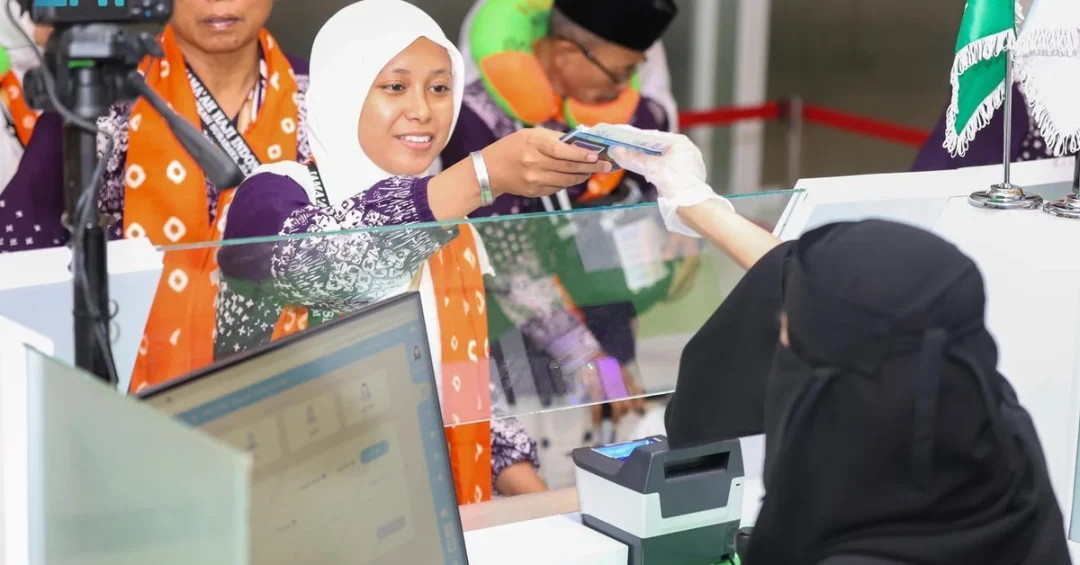
The first flight of beneficiaries of the Makkah Route Initiative departed from Juanda International Airport in Surabaya, Indonesia, on Sunday, heading to Prince Mohammad bin Abdulaziz International Airport in Madinah, marking a significant milestone in Saudi Arabia’s efforts to streamline the Hajj journey for pilgrims from beneficiary countries. The initiative, part of the Ministry of Interior’s Pilgrim Experience Program, one of the Kingdom’s Vision 2030 programs, aims to provide high-quality transportation services and facilitate seamless reception and processing for pilgrims in their home countries.
Context and Background
The Makkah Route Initiative is a flagship program under Saudi Vision 2030, designed to enhance the Hajj and Umrah experience for pilgrims from around the world. By processing pilgrims in their home countries, the initiative reduces wait times and simplifies procedures upon arrival in the Kingdom. It reflects Saudi Arabia’s commitment to leveraging innovation and international cooperation to serve the guests of God. The initiative began in 2019 and has since expanded to several countries, including Indonesia, Malaysia, Pakistan, and Bangladesh, among others. Its implementation involves multiple Saudi agencies, including the Ministry of Interior, the General Directorate of Passports, and the Ministry of Hajj and Umrah, working in coordination with partner airlines and local authorities.
Key Details
The first beneficiaries from Indonesia departed from Juanda International Airport in Surabaya on May 12, 2024, via a dedicated lounge. The process includes issuing electronic Hajj visas, collecting biometric data, and completing entry procedures into the Kingdom from the departure airport after verifying health requirements. Luggage is coded and sorted according to transportation and accommodation arrangements in the Kingdom. Pilgrims are then directly transferred to buses for transport to their accommodations in Makkah and Madinah via dedicated routes, with partner agencies handling luggage delivery. This streamlined process ensures a smooth and comfortable experience for pilgrims from the moment they begin their journey.
Implications and Impact
The Makkah Route Initiative has far-reaching implications for the global Muslim community, particularly for pilgrims from beneficiary countries. By reducing processing times and easing logistical burdens, it enhances the overall Hajj experience and allows pilgrims to focus on their spiritual journey. The initiative also strengthens Saudi Arabia’s ties with participating countries, showcasing the Kingdom’s leadership in managing large-scale religious events. Furthermore, it contributes to the Kingdom’s economic diversification efforts by boosting tourism and related sectors, aligning with Vision 2030 goals. International observers have praised the initiative for its efficiency and for setting a new standard in pilgrimage management.
Vision 2030 Alignment
The Makkah Route Initiative is a prime example of how Saudi Vision 2030 is transforming the Kingdom’s services and enhancing its global role. By investing in infrastructure, technology, and international partnerships, Saudi Arabia is not only improving the pilgrimage experience but also demonstrating its capacity to host millions of visitors with ease and dignity. This aligns with the Vision’s objectives of increasing the number of Umrah and Hajj pilgrims to 30 million by 2030 and enhancing the quality of life for all. As the initiative expands to more countries, it will continue to showcase the Kingdom’s dedication to serving Islam and Muslims worldwide.
20 Questions
Q1. What is the Makkah Route Initiative?
A1. The Makkah Route Initiative is a program by Saudi Arabia’s Ministry of Interior, part of the Pilgrim Experience Program under Vision 2030, designed to streamline Hajj procedures for pilgrims by processing them in their home countries before departure.
Q2. When did the first beneficiaries from Indonesia depart?
A2. The first beneficiaries from Indonesia departed on May 12, 2024, from Juanda International Airport in Surabaya, heading to Prince Mohammad bin Abdulaziz International Airport in Madinah.
Q3. Which Saudi airport is the flight arriving at?
A3. The flight is arriving at Prince Mohammad bin Abdulaziz International Airport in Madinah, one of the Kingdom’s key airports serving pilgrims.
Q4. What does the initiative aim to provide?
A4. It aims to provide high-quality transportation services for pilgrims from beneficiary countries, facilitating their reception and processing seamlessly in their home countries before they arrive in the Kingdom.
Q5. What are the key steps involved in the initiative?
A5. Key steps include issuing electronic Hajj visas, collecting biometric data, handling entry procedures from the departure airport, luggage coding and sorting, and direct transfer to accommodations in Makkah and Madinah.
Q6. Which Saudi agency oversees the initiative?
A6. The initiative is overseen by the Ministry of Interior, with support from the General Directorate of Passports and other partner agencies, as part of the Pilgrim Experience Program.
Q7. How does the initiative benefit pilgrims?
A7. It reduces wait times, simplifies procedures, and provides a seamless journey, allowing pilgrims to focus on their spiritual experience without logistical hassles.
Q8. Is the Makkah Route Initiative part of Vision 2030?
A8. Yes, it is one of the programs under Saudi Vision 2030, reflecting the Kingdom’s commitment to enhancing pilgrimage services and infrastructure.
Q9. Which other countries benefit from the initiative?
A9. Besides Indonesia, the initiative has been implemented in several countries, including Malaysia, Pakistan, Bangladesh, and others, with plans for further expansion.
Q10. What is the role of the General Directorate of Passports?
A10. The General Directorate of Passports handles entry procedures into the Kingdom from the departure airport, ensuring all health requirements are verified before pilgrims board their flights.
Q11. How is luggage managed under the initiative?
A11. Luggage is coded and sorted according to transportation and accommodation arrangements, and partner agencies handle its delivery to the pilgrims’ accommodations in Makkah and Madinah.
Q12. What is the Pilgrim Experience Program?
A12. The Pilgrim Experience Program is a Vision 2030 initiative by the Ministry of Interior aimed at enriching the pilgrimage journey through improved services, infrastructure, and digital solutions.
Q13. How does the initiative reflect Saudi leadership?
A13. It demonstrates Saudi Arabia’s leadership in managing large-scale religious events and its dedication to serving pilgrims from around the world with efficiency and care.
Q14. What are the economic benefits of the initiative?
A14. It boosts tourism and related sectors, contributes to economic diversification, and supports the goal of increasing the number of pilgrims, aligning with Vision 2030 objectives.
Q15. When did the Makkah Route Initiative begin?
A15. The initiative was launched in 2019 and has since been expanded to several countries, continuously evolving to enhance the pilgrimage experience.
Q16. What health requirements are verified?
A16. Health requirements, including vaccinations and other preventive measures, are verified at the departure airport to ensure the well-being of all pilgrims and host communities.
Q17. How does the initiative facilitate transportation in the Kingdom?
A17. Pilgrims are directly transferred to buses upon arrival for transport to their accommodations in Makkah and Madinah via dedicated routes, ensuring a smooth and organized journey.
Q18. What is the significance of Juanda International Airport?
A18. Juanda International Airport in Surabaya is one of Indonesia’s major airports and serves as a departure point for pilgrims benefiting from the Makkah Route Initiative.
Q19. How does the initiative align with Saudi Arabia’s global role?
A19. It showcases the Kingdom’s commitment to serving Islam and Muslims worldwide, enhancing its global standing as a leader in pilgrimage management and hospitality.
Q20. What are the future plans for the initiative?
A20. Saudi Arabia plans to expand the Makkah Route Initiative to more countries, further improving the pilgrimage experience and supporting the goals of Vision 2030 to welcome 30 million pilgrims by 2030.
Reader Feedback
We value your thoughts. Please share your feedback on this article.
Your feedback helps us improve our coverage.