


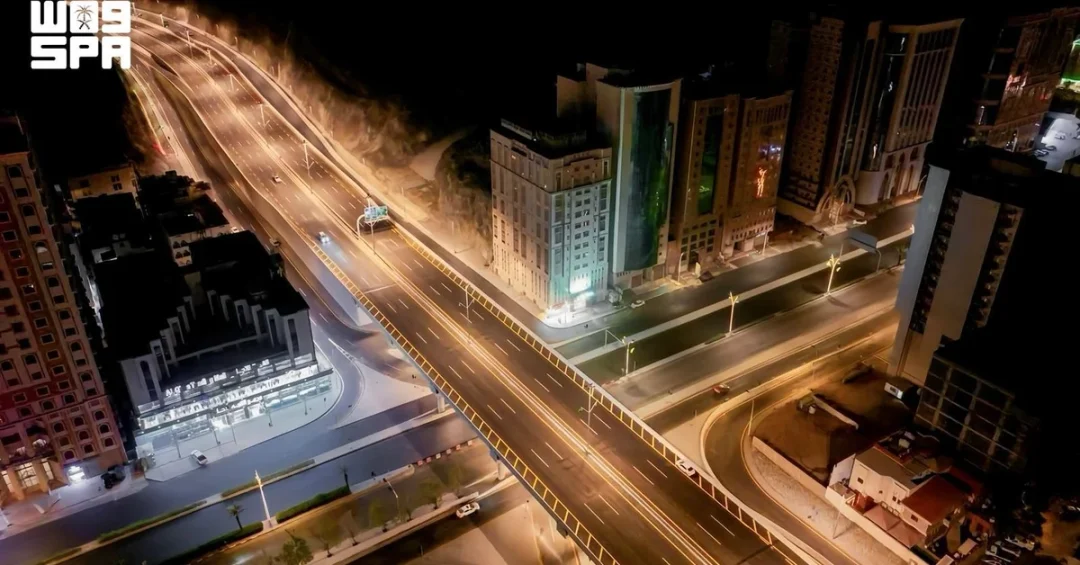
The Royal Commission for Makkah City and Holy Sites has announced the opening of traffic on the extension of the Third Ring Road completion project, one of four ring roads encircling Makkah, in a development expected to reduce travel times to the Grand Mosque and the Jamarat facility in Mina by up to approximately 90 percent. The announcement, released through official Saudi channels, marks a significant milestone in the Kingdom’s sustained effort to modernize the infrastructure serving the millions of pilgrims and residents who travel through the holy city each year. The project represents a tangible step forward in improving mobility across one of the most heavily visited urban environments in the world.
Have you ever considered what it takes to move hundreds of thousands of vehicles smoothly through a city of deep spiritual significance? The newly opened extension is designed to do precisely that, easing congestion and enhancing the experience of everyone who journeys to Makkah. The road forms part of a broader network of four ring roads that together distribute traffic around the city center, keeping access routes to the holy sites flowing during the busiest periods of the year. The opening reflects careful long-term planning aimed at aligning Makkah’s infrastructure with the growing demands of Hajj and Umrah seasons.
Context and Background
Why does Makkah require such an elaborate road network? The answer lies in the extraordinary scale of movement the city accommodates. Each year, millions of pilgrims from across the globe arrive to perform Hajj and Umrah, placing immense pressure on local roads, especially during peak seasons. The Royal Commission for Makkah City and Holy Sites has therefore pursued a comprehensive strategy of ring roads and connecting corridors designed to channel traffic efficiently and reduce bottlenecks near the Grand Mosque and the Jamarat facility in Mina, where pilgrims perform the ritual of stoning.
The Third Ring Road completion project sits within this wider framework. Project impact indicators have already shown a significant improvement in travel efficiency during peak hours and seasons, demonstrating that the investment is delivering measurable results. The distance for motorists heading from Prince Mutib intersection to the Grand Mosque has decreased from 16.5 kilometers to just 6.5 kilometers, while the distance to the Jamarat facility has fallen from 12 kilometers to 4 kilometers. These reductions translate into meaningful time savings for residents, workers, and pilgrims alike.
How significant is a reduction of ten kilometers on a single route? For a city welcoming millions of visitors, such changes compound rapidly across thousands of daily journeys. The redesign shortens paths, reduces the burden on secondary roads, and allows emergency and service vehicles to reach their destinations faster. It also supports the broader ambition of making the pilgrimage experience smoother, safer, and more comfortable for all who come to the holy sites.
Key Details of the New Road
What capacity does the new extension bring to Makkah’s traffic system? The road has been engineered to handle up to 170,000 vehicles per day in both directions, a substantial throughput that reflects the scale of demand the city manages during Hajj and Umrah. This capacity is complemented by the strategic positioning of the road, which connects key intersections and distributes traffic away from the most congested central corridors, offering motorists alternatives that were previously unavailable.
The project is part of official efforts to develop Makkah’s road network, improve accessibility, ease traffic pressure on surrounding roads, and enhance infrastructure readiness to accommodate traffic, particularly during the Hajj and Umrah seasons. The Royal Commission for Makkah City and Holy Sites has emphasized that the extension is not an isolated intervention but a component of an integrated mobility plan. Each ring road plays a distinct role in the system, and the completion of the Third Ring Road strengthens the overall network’s ability to absorb surges in vehicle numbers.
What does this mean for the daily commute of Makkah’s residents? Beyond the pilgrims, the road serves the local population, businesses, and service providers who keep the city functioning. Shorter routes and higher capacity reduce the time wasted in congestion, supporting economic activity and quality of life. For a city that never truly sleeps, particularly during peak seasons, such improvements are felt across every sector.
International and Regional Impact
How does a road in Makkah resonate beyond Saudi Arabia’s borders? The city is the destination of a global community of worshippers, and any improvement to its infrastructure benefits the international pilgrims who constitute a large share of visitors. Smoother access to the Grand Mosque and the Jamarat facility enhances the overall pilgrimage experience for travelers from dozens of countries, reinforcing the Kingdom’s reputation for hospitality and competent stewardship of the holy sites.
Regional observers note that infrastructure development of this kind positions Makkah as a model for urban mobility in rapidly growing cities across the Middle East. The careful integration of ring roads, capacity planning, and traffic management demonstrates how large-scale public works can serve both residents and visitors. The project also aligns with the Kingdom’s broader push to strengthen its role as a global hub for religious tourism, ensuring that increased visitor numbers are matched by world-class infrastructure.
Can a single road project influence international perceptions of a nation? Infrastructure that works reliably shapes how visitors experience a country, and in Makkah the stakes are particularly high. By investing in accessibility and efficiency, Saudi Arabia signals its commitment to serving pilgrims with dignity and care, a message that travels far beyond the Kingdom’s borders.
Economic and Strategic Significance
What economic value flows from improved mobility in the holy city? Efficient transport reduces costs for businesses, supports the local economy, and enables the smooth operation of the vast services required during Hajj and Umrah. The road network underpins everything from logistics and deliveries to emergency response and public transport, making it a foundational asset for the city’s growth. Investments in such infrastructure also create employment and stimulate the construction and engineering sectors.
Strategically, the Third Ring Road extension reinforces Makkah’s readiness for future increases in visitor numbers. As the Kingdom continues to expand capacity for Hajj and Umrah through a range of official initiatives, the supporting infrastructure must keep pace. The new road, with its capacity of up to 170,000 vehicles daily, provides the headroom needed to accommodate growth while maintaining the quality of the pilgrimage experience. The project impact indicators, showing substantial distance and time reductions, suggest the investment is already paying dividends.
How does improved infrastructure support the Kingdom’s long-term planning? Reliable roads make it easier to predict and manage traffic flows, plan service delivery, and coordinate the many agencies involved in hosting pilgrims. This predictability is invaluable for event management and for ensuring that the holy sites remain accessible under all conditions.
Vision 2030 Alignment
How does a ring road connect to Saudi Arabia’s Vision 2030? The Kingdom’s long-term vision places great emphasis on enhancing the quality of life, modernizing infrastructure, and enabling the growth of religious tourism. The Third Ring Road extension directly serves these objectives by improving access to the Grand Mosque and the Jamarat facility, reducing travel times, and expanding capacity. These are precisely the kinds of tangible improvements that Vision 2030 seeks to deliver for citizens, residents, and visitors alike.
Does the opening of the extension mark the end of the effort, or a continuing journey? It represents another milestone in an ongoing commitment to develop Makkah’s infrastructure in line with the city’s sacred status and growing demands. The Royal Commission for Makkah City and Holy Sites continues to plan and implement improvements across the road network, ensuring that the holy city remains accessible, safe, and welcoming. The new extension stands as a concrete expression of the Kingdom’s determination to serve pilgrims and residents with world-class infrastructure, advancing the broader vision of a modern, thriving Saudi Arabia.
20 Questions
Q1. What did the Royal Commission for Makkah City and Holy Sites announce?
A1. The Royal Commission announced the opening of traffic on the extension of the Third Ring Road completion project, one of four ring roads surrounding Makkah, aimed at improving access to the Grand Mosque and Jamarat facility.
Q2. How much are travel times expected to be reduced?
A2. Travel times to the Grand Mosque and the Jamarat facility in Mina are expected to be reduced by up to approximately 90 percent, significantly improving efficiency during peak hours and pilgrimage seasons.
Q3. How far has the distance from Prince Mutib intersection to the Grand Mosque decreased?
A3. The distance has decreased from 16.5 kilometers to 6.5 kilometers, substantially shortening the route for motorists heading toward the Grand Mosque.
Q4. How far has the distance to the Jamarat facility decreased?
A4. The distance to the Jamarat facility has fallen from 12 kilometers to 4 kilometers, easing access for pilgrims performing the stoning ritual in Mina.
Q5. What is the capacity of the new road?
A5. The road has a capacity of up to 170,000 vehicles per day in both directions, designed to handle large traffic volumes during Hajj and Umrah seasons.
Q6. What is the purpose of Makkah’s ring road network?
A6. The ring roads are designed to distribute traffic around the city center, reduce congestion on central roads, and improve access to the holy sites, particularly during peak pilgrimage periods.
Q7. How many ring roads surround Makkah?
A7. There are four ring roads surrounding Makkah, of which the Third Ring Road is a key component, working together to manage traffic across the holy city.
Q8. What has project impact data shown so far?
A8. Project impact indicators have shown a significant improvement in travel efficiency during peak hours and seasons, demonstrating measurable benefits from the new road extension.
Q9. Which seasons benefit most from this improvement?
A9. The improvements are particularly valuable during the Hajj and Umrah seasons, when vehicle numbers surge and efficient traffic management becomes essential to accommodate pilgrims.
Q10. Who benefits from the new road?
A10. Residents, businesses, service providers, and millions of pilgrims traveling to the Grand Mosque and Jamarat all benefit from shorter routes and improved traffic flow.
Q11. What broader effort is the project part of?
A11. The project is part of official efforts to develop Makkah’s road network, improve accessibility, ease traffic pressure on surrounding roads, and enhance infrastructure readiness for seasonal traffic.
Q12. Why is infrastructure readiness important in Makkah?
A12. Infrastructure readiness ensures the holy city can accommodate large numbers of pilgrims safely and comfortably, especially during peak seasons, supporting a smooth and dignified pilgrimage experience.
Q13. How does the road reflect long-term planning?
A13. The road reflects careful planning that aligns Makkah’s infrastructure with projected growth in visitor numbers, ensuring accessibility is maintained as demand increases over time.
Q14. What role does the road play in traffic distribution?
A14. The extension diverts traffic from congested central corridors and provides alternative routes, helping distribute vehicle flows more efficiently across the city’s road network.
Q15. How does this project support Vision 2030?
A15. The project aligns with Vision 2030 goals of modernizing infrastructure, enhancing quality of life, and supporting the growth of religious tourism in Saudi Arabia.
Q16. What is the significance of the 90 percent reduction figure?
A16. A reduction of up to approximately 90 percent in travel times represents substantial time savings for motorists, highlighting the transformative impact of the new road on daily journeys.
Q17. Does the new road affect emergency and service vehicles?
A17. Yes, shorter and less congested routes allow emergency and service vehicles to reach their destinations faster, improving overall response times across the city.
Q18. How does the project benefit international pilgrims?
A18. International pilgrims benefit from faster, smoother access to the Grand Mosque and Jamarat, enhancing their overall pilgrimage experience and reflecting Saudi Arabia’s hospitality.
Q19. Where was the announcement released?
A19. The announcement was released through the Saudi Press Agency, an official Saudi news authority, on behalf of the Royal Commission for Makkah City and Holy Sites.
Q20. What does the opening signal about Makkah’s future?
A20. The opening signals the Kingdom’s continued commitment to developing Makkah’s infrastructure, ensuring the holy city remains accessible, safe, and welcoming for pilgrims and residents while advancing Vision 2030.
Reader Feedback
We value your thoughts. Please share your feedback on this article.
Your feedback helps us improve our coverage.