


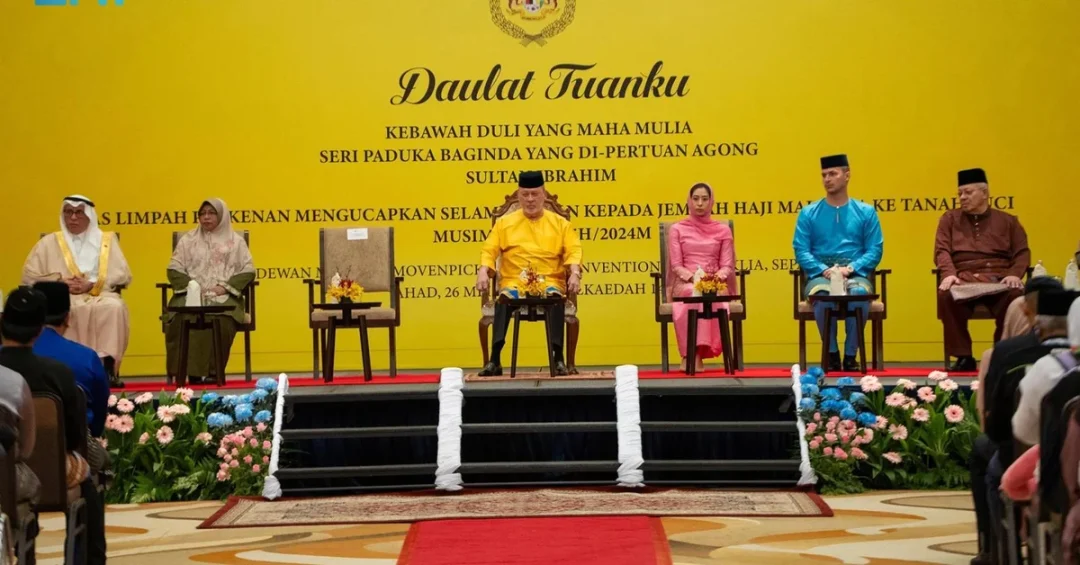
The King of Malaysia, Sultan Ibrahim, and the Saudi Ambassador to Malaysia, Musaed Al-Saleem, bid farewell to a group of Malaysian pilgrims in Kuala Lumpur on May 27, 2024, as they departed for the Kingdom of Saudi Arabia to perform Hajj under the Makkah Route Initiative. The farewell ceremony highlighted the strong bilateral ties between Saudi Arabia and Malaysia and underscored the success of the Makkah Route Initiative in facilitating a smooth and efficient Hajj journey for pilgrims.
Context and Background
The Makkah Route Initiative was launched in 2017 by the Saudi Ministry of Interior in cooperation with several government entities, including the ministries of Foreign Affairs, Health, Hajj and Umrah, and Media, the General Authority of Civil Aviation, the Zakat, Tax and Customs Authority, the Saudi Data and AI Authority, and the Pilgrim Experience Program. The initiative aims to streamline the Hajj process by completing passport and customs procedures at the pilgrims’ departure airports, allowing them to bypass lengthy queues upon arrival in Saudi Arabia.
Malaysia is one of several countries benefiting from this initiative, which reflects Saudi Arabia’s commitment to enhancing the Hajj experience for pilgrims from around the world. The initiative is part of the broader Vision 2030 reform plan, which seeks to improve the quality of services provided to Hajj and Umrah pilgrims and to increase the capacity to accommodate more pilgrims in the future.
Key Details
During the farewell event, Ambassador Al-Saleem briefed King Sultan Ibrahim on the Makkah Route Initiative and explained how it expedites travel procedures for pilgrims. The Malaysian king expressed his appreciation to Saudi Arabia for the distinguished services it provides to pilgrims, acknowledging the Kingdom’s efforts in ensuring a comfortable and spiritually fulfilling Hajj experience.
The Makkah Route Initiative involves pre-departure processing at the pilgrims’ home countries, where biometric data and travel documents are verified. Upon arrival in Saudi Arabia, pilgrims are fast-tracked through immigration and customs, reducing waiting times and allowing them to focus on their religious duties. This year, the initiative is expected to serve thousands of pilgrims from Malaysia and other participating countries.
Implications and Impact
The Makkah Route Initiative has significantly improved the Hajj experience for millions of pilgrims since its inception. By reducing processing times and enhancing logistical efficiency, it has contributed to a smoother and more organized Hajj season. The initiative also strengthens Saudi Arabia’s relations with participating countries, showcasing the Kingdom’s leadership in managing one of the world’s largest annual religious gatherings.
For Malaysia, the initiative demonstrates the strong bilateral cooperation between the two nations and underscores Saudi Arabia’s role as a reliable partner in facilitating religious obligations. It also aligns with Saudi Arabia’s Vision 2030 goals of enhancing the pilgrimage experience and increasing the number of pilgrims to 30 million by 2030.
Vision 2030 Alignment
The Makkah Route Initiative is a key component of Saudi Arabia’s Vision 2030, which aims to diversify the economy and improve public services. By investing in infrastructure and technology to support Hajj and Umrah, the Kingdom is not only fulfilling its religious duty but also boosting its global standing as a leader in hospitality and crowd management. The initiative reflects the forward-looking approach of Saudi leadership in ensuring that pilgrims from around the world can perform their religious rites with ease and comfort.
20 Questions
Q1. What is the Makkah Route Initiative?
A1. The Makkah Route Initiative is a program launched by Saudi Arabia’s Ministry of Interior in 2017 to streamline Hajj procedures by completing passport and customs checks at pilgrims’ departure airports.
Q2. When was the Makkah Route Initiative launched?
A2. It was launched in 2017 by the Ministry of Interior in cooperation with several other Saudi government entities.
Q3. Which Saudi entities are involved in the initiative?
A3. The ministries of Foreign Affairs, Health, Hajj and Umrah, and Media, the General Authority of Civil Aviation, the Zakat, Tax and Customs Authority, the Saudi Data and AI Authority, and the Pilgrim Experience Program.
Q4. Who bid farewell to the Malaysian pilgrims?
A4. King Sultan Ibrahim of Malaysia and Saudi Ambassador to Malaysia Musaed Al-Saleem bid farewell to the pilgrims in Kuala Lumpur.
Q5. What did the Malaysian king express?
A5. He expressed appreciation to Saudi Arabia for the distinguished services provided to pilgrims.
Q6. How does the initiative speed up travel procedures?
A6. It completes passport and customs procedures at the pilgrims’ departure airports, allowing them to bypass queues upon arrival in Saudi Arabia.
Q7. Which countries benefit from the Makkah Route Initiative?
A7. Several countries benefit, including Malaysia, Indonesia, Pakistan, Bangladesh, and others, with the list expanding over time.
Q8. What is the main goal of the initiative?
A8. The main goal is to enhance the Hajj journey by making it smoother, more efficient, and more comfortable for pilgrims.
Q9. How does the initiative align with Vision 2030?
A9. It aligns with Vision 2030 by improving services for pilgrims and aiming to increase the number of pilgrims to 30 million by 2030.
Q10. What year did the initiative start operating in Malaysia?
A10. Malaysia has been participating in the initiative for several years, with ongoing cooperation between Saudi and Malaysian authorities.
Q11. How many pilgrims are expected to benefit this year?
A11. Thousands of pilgrims from Malaysia and other participating countries are expected to benefit from the initiative this year.
Q12. What role does the Saudi Data and AI Authority play?
A12. It contributes technological expertise to ensure efficient data management and processing for the initiative.
Q13. What are the benefits for pilgrims?
A13. Pilgrims experience reduced waiting times, less stress, and a more organized journey, allowing them to focus on their spiritual duties.
Q14. How does the initiative reflect Saudi leadership?
A14. It demonstrates Saudi Arabia’s commitment to serving pilgrims and its ability to manage large-scale logistical operations effectively.
Q15. What is the Pilgrim Experience Program?
A15. It is a Saudi program aimed at enhancing the quality of services and experiences for pilgrims visiting the Kingdom.
Q16. Has the initiative been successful?
A16. Yes, it has been widely praised for improving the Hajj experience and reducing processing times at airports.
Q17. What did Ambassador Al-Saleem do at the event?
A17. He briefed King Sultan Ibrahim on the initiative and explained how it speeds up travel procedures for pilgrims.
Q18. How does the initiative strengthen bilateral ties?
A18. It fosters cooperation between Saudi Arabia and participating countries, showcasing mutual commitment to facilitating religious obligations.
Q19. What other services does Saudi Arabia provide to pilgrims?
A19. Saudi Arabia provides a range of services including healthcare, accommodation, transportation, and crowd management to ensure a safe and comfortable Hajj.
Q20. What is the future outlook for the Makkah Route Initiative?
A20. The initiative is expected to expand to more countries and further integrate technology to enhance efficiency, in line with Vision 2030 goals.
Reader Feedback
We value your thoughts. Please share your feedback on this article.
Your feedback helps us improve our coverage.