


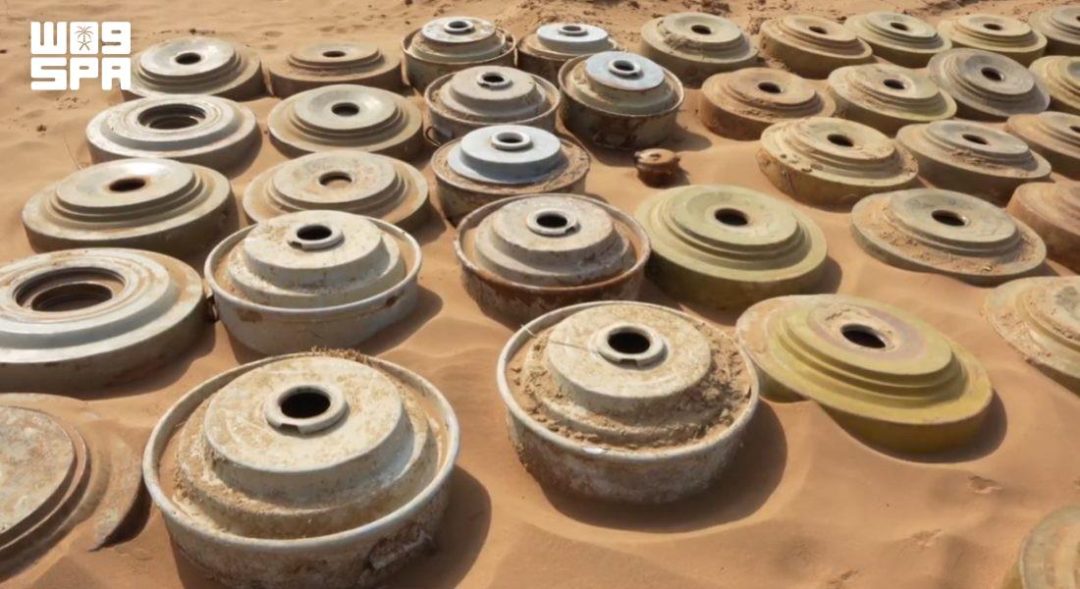
Yemen saw the neutralization of 5,287 mines and explosive materials during the first week of August 2026. These included 5,151 unexploded munitions, 69 anti-tank mines, 43 improvised bombs, and 24 anti-personnel mines.
According to SPA, the Masam project, affiliated with the King Salman Humanitarian Aid and Relief Centre, carried out these clearance operations across various regions including Aden, Al-Dhale, Hadramout, Hajjah, Lahj, Marib, and Taiz.
Marib recorded the highest volume of activity, where teams neutralized 4,403 unexploded munitions, 29 improvised bombs, 10 anti-tank mines, and 12 anti-personnel mines. The total number of mines and explosive materials neutralized since the start of the Masam project has reached 583,513.
The project aims to clear scattered mines that threaten civilians, including women, children, and the elderly, to enhance security and provide a safe living environment for the people of Yemen.
How many explosives did the Masam project neutralize in August 2026? During the first week of August 2026, the Masam project neutralized a total of 5,287 mines and explosive materials. This figure consists of 5,151 unexploded munitions, 69 anti-tank mines, 43 improvised bombs, and 24 anti-personnel mines across different regions of Yemen.
Which Yemeni city had the highest number of neutralized explosives? Marib recorded the highest amount of clearance activity during the specified period. In this city, teams neutralized 4,403 unexploded munitions, 29 improvised bombs, 10 anti-tank mines, and 12 anti-personnel mines.
What is the total number of explosives cleared since the project began? Since the start of the Masam project, the total number of neutralized mines and explosive materials has reached 583,513. These operations are carried out by the project affiliated with the King Salman Humanitarian Aid and Relief Centre to protect civilians such as children, women, and the elderly.