


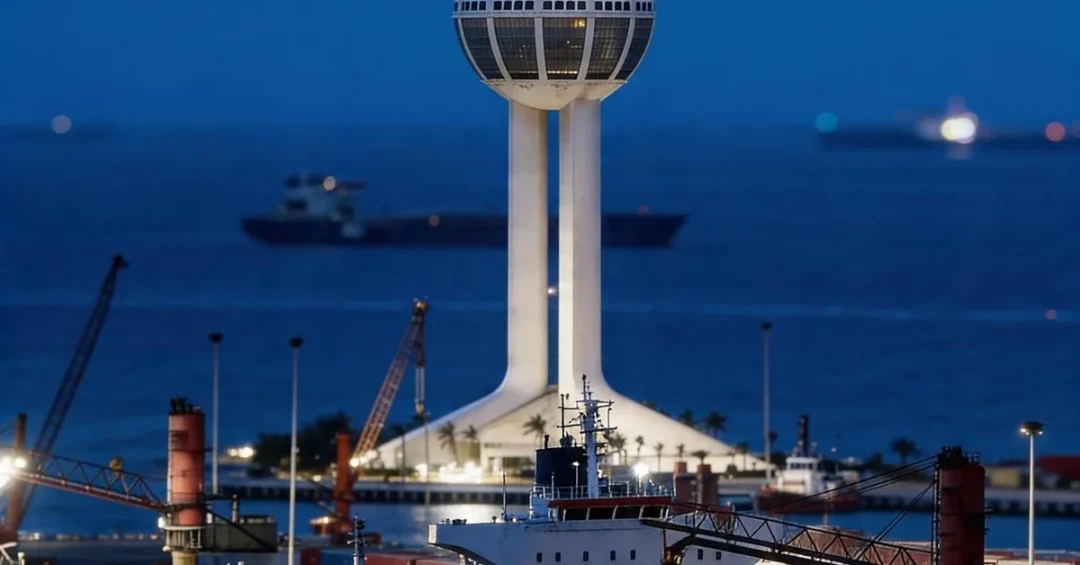
The Saudi Ports Authority (Mawani) has announced the addition of the “IRF” freight service by the international shipping line PIL to the Islamic Port of Jeddah, enhancing the port’s capabilities and supporting trade between the Kingdom and regional and international markets. The announcement was made on August 17, 2026, via the Saudi Press Agency (SPA). This new service strengthens the link between the Islamic Port of Jeddah and the Egyptian ports of Ain Sokhna and Safaga, with a capacity of up to 1,261 TEUs, and aligns with Mawani’s efforts to improve the Kingdom’s ranking in international performance indicators and support national exports under the National Transport and Logistics Strategy.
Context and Background
The addition of the IRF service is part of Mawani’s ongoing initiative to expand connectivity and boost the Kingdom’s position as a global logistics hub. The Islamic Port of Jeddah, located on the Red Sea, is a vital gateway for trade between Asia, Africa, and Europe. The new link to Egyptian ports is expected to facilitate smoother cargo movement and enhance regional trade integration. This development reflects the growing attractiveness of Saudi ports to international shipping lines, underscoring the Kingdom’s commitment to modernizing its maritime infrastructure as part of Vision 2030.
Key Details
The IRF service, operated by the Singapore-based company PIL (Pacific International Lines), offers a capacity of up to 1,261 twenty-foot equivalent units (TEUs). It will provide weekly connections between Jeddah and the Egyptian ports of Ain Sokhna and Safaga, improving transit times and cargo handling efficiency. Mawani emphasized that this service will support national exporters by opening new markets and enhancing the reliability of shipping schedules. The move is also expected to increase cargo volumes through the Islamic Port of Jeddah, contributing to the port’s throughput and economic impact.
Implications and Impact
The introduction of the IRF service has significant implications for regional trade. It strengthens Saudi-Egyptian economic ties and provides a more efficient route for goods moving between the two countries and beyond. For the Red Sea region, the enhanced connectivity supports the growth of maritime traffic and positions Saudi ports as a preferred choice for international shipping companies. This aligns with Mawani’s strategic goal to raise the Kingdom’s ranking in global logistics performance indices, such as the World Bank’s Logistics Performance Index, and to attract more foreign investment into the maritime sector.
Vision 2030 Alignment
This initiative is a clear step towards realizing the goals of the National Transport and Logistics Strategy, a key pillar of Saudi Vision 2030, which aims to transform the Kingdom into a leading global logistics hub connecting three continents. By expanding its port capabilities and fostering international partnerships, Saudi Arabia is building a robust maritime infrastructure that will diversify its economy, enhance trade competitiveness, and create new opportunities for businesses and workers alike. The new freight service underscores the Kingdom’s commitment to innovation and efficiency in its logistics sector, paving the way for a prosperous future aligned with Vision 2030.
20 Questions
Q1. What is the IRF freight service?
A1. The IRF freight service is a new shipping route operated by the international line PIL, connecting the Islamic Port of Jeddah with the Egyptian ports of Ain Sokhna and Safaga, with a capacity of up to 1,261 TEUs.
Q2. Which Saudi authority announced the addition of the IRF service?
A2. The Saudi Ports Authority (Mawani) made the announcement via the Saudi Press Agency on August 17, 2026.
Q3. Where is the Islamic Port of Jeddah located?
A3. The Islamic Port of Jeddah is situated on the Red Sea coast in the Kingdom of Saudi Arabia, serving as a major maritime gateway for trade.
Q4. Which Egyptian ports are connected by the IRF service?
A4. The IRF service connects the Islamic Port of Jeddah to the Egyptian ports of Ain Sokhna and Safaga.
Q5. What is the capacity of the IRF service?
A5. The IRF service has a capacity of up to 1,261 TEUs (twenty-foot equivalent units).
Q6. Who is PIL?
A6. PIL, or Pacific International Lines, is an international shipping company based in Singapore that operates the IRF service.
Q7. How does the IRF service support Saudi exports?
A7. By providing a reliable and efficient shipping route, the IRF service opens new markets for Saudi exporters and helps reduce transit times, thereby enhancing the competitiveness of national products.
Q8. What is the National Transport and Logistics Strategy?
A8. It is a Saudi initiative under Vision 2030 aimed at transforming the Kingdom into a global logistics hub by upgrading infrastructure, improving connectivity, and attracting investment.
Q9. How does the IRF service improve Saudi Arabia’s port performance?
A9. It increases cargo volumes, enhances service frequency, and strengthens the attractiveness of Saudi ports, which can improve the Kingdom’s rankings in global performance indicators.
Q10. Why is the Red Sea important for trade?
A10. The Red Sea is a vital maritime route connecting Asia, Africa, and Europe, making it a key corridor for global trade, and Saudi ports like Jeddah benefit from this strategic location.
Q11. What does TEU stand for?
A11. TEU stands for Twenty-foot Equivalent Unit, a standard measure for container capacity in shipping.
Q12. Does the IRF service operate weekly?
A12. Yes, the IRF service is scheduled to operate weekly, providing consistent and reliable connections between Jeddah and the Egyptian ports.
Q13. How does this new service benefit maritime traffic in the region?
A13. It increases connectivity and frequencies, which can lead to higher maritime traffic volumes and improved logistics efficiency in the Red Sea region.
Q14. What is Mawani’s role in Saudi Arabia?
A14. Mawani is the Saudi Ports Authority, responsible for overseeing and developing the Kingdom’s ports and maritime infrastructure to support trade and economic growth.
Q15. How does the IRF service align with Vision 2030?
A15. It supports Vision 2030’s goal of diversifying the economy by enhancing trade logistics, creating new opportunities, and positioning Saudi Arabia as a key global logistics hub.
Q16. What types of cargo can be shipped via the IRF service?
A16. The service is a freight service, likely handling containerized goods, which can include a variety of products ranging from consumer goods to industrial materials.
Q17. Are there plans for further expansion of such services?
A17. While not specified in the announcement, Mawani’s ongoing strategy suggests a commitment to expanding and improving port connectivity, so additional services may be introduced in the future.
Q18. How does this service affect trade between Saudi Arabia and Egypt?
A18. It strengthens trade ties by offering a direct, reliable shipping link, which can increase bilateral trade volumes and improve economic cooperation.
Q19. What is the significance of the Islamic Port of Jeddah in the region?
A19. It is one of the largest and busiest ports in the region, serving as a major transshipment hub and a key entry point for goods into Saudi Arabia and the broader Middle East.
Q20. How can international companies benefit from using Saudi ports?
A20. International companies can benefit from efficient operations, strategic location, and enhanced connectivity to regional markets, making Saudi ports competitive choices for global shipping lines.
Reader Feedback
We value your thoughts. Please share your feedback on this article.
Your feedback helps us improve our coverage.