


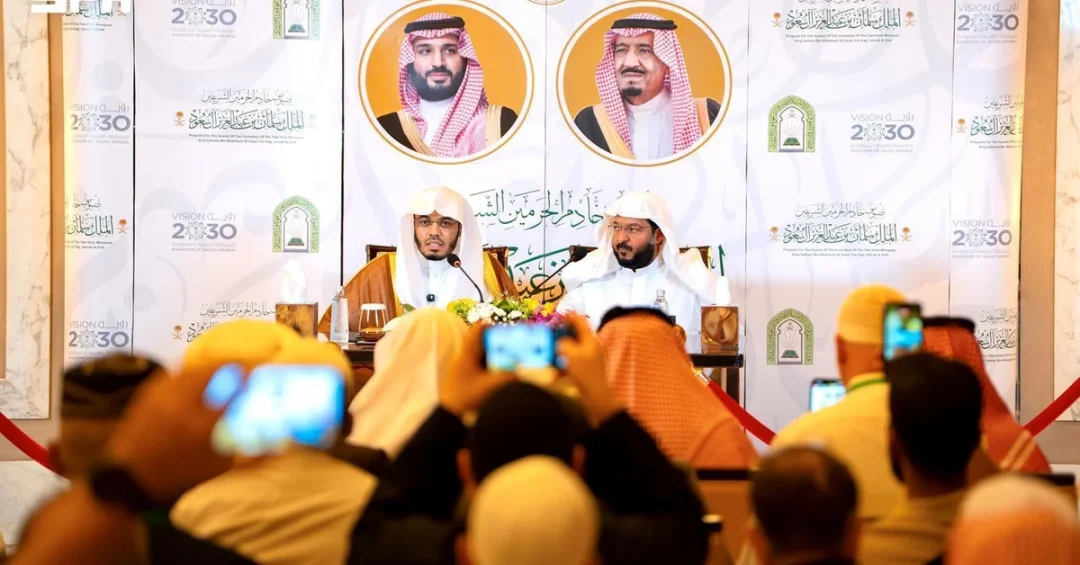
In an atmosphere fostering unity among diverse nationalities, scientific and cultural meetings organized under the Guests Program of the Custodian of the Two Holy Mosques for Umrah and Visit have provided exceptional platforms for dialogue and knowledge exchange with scholars and imams of the Two Holy Mosques. These intellectual encounters, held in Mecca and Medina, enrich the pilgrims’ experience and leave a lasting impact within their home communities, as reported by the Saudi Press Agency (SPA). The program, overseen by the Saudi Ministry of Islamic Affairs, Dawah and Guidance, underscores the Kingdom’s dedication to serving Islam and Muslims and promoting values of moderation and tolerance.
Context and Background
The Guests Program, an annual initiative by the Custodian of the Two Holy Mosques, invites distinguished Muslim figures from around the world to perform Umrah and visit the holy sites. This year, the program’s second cohort has engaged in a series of scientific and religious sessions designed to deepen their spiritual journey. By facilitating direct dialogue with the imams of the Two Holy Mosques, the ministry aims to strengthen bonds of Islamic brotherhood and enhance mutual understanding.
These meetings align with Saudi Arabia’s broader international engagement, showcasing the Kingdom’s leadership in fostering cross-cultural communication and religious harmony. The initiative reflects the ongoing commitment of the Kingdom, under the leadership of King Salman and Crown Prince Mohammed bin Salman, to support Islamic causes and serve pilgrims and visitors with utmost care.
Key Details
As part of the scientific program for the second cohort, the ministry organized a meeting in Medina between the guests and the Imam of the Prophet’s Mosque, Sheikh Dr. Muhammad Barhaji, at their residence. Another session was held with the Imam and preacher of the Grand Mosque in Mecca, Sheikh Dr. Yasser Al-Dosari. Both engagements addressed themes focused on the importance of unity and cohesion of the Muslim community.
The speakers praised the Guests Program, describing it as a vivid illustration of the Kingdom’s devotion to the holy places and their visitors. They emphasized its role in consolidating Islamic fraternity and appreciated the thoughtful arrangements that ensure a spiritually enriching experience.
Implications and Impact
The impact of these encounters extends beyond the duration of the visit. Upon their return home, the guests carry with them valuable knowledge, experiences, and messages of peace and moderation. They become ambassadors of the program’s ideals, propagating the values of tolerance and harmony in their respective societies.
This initiative also reinforces Saudi Arabia’s position as a global hub for Islamic scholarship and interfaith dialogue. By investing in such exchanges, the Kingdom strengthens its ties with Muslim communities worldwide, contributing to a positive international image and fostering long-term relationships that support Vision 2030’s goals of global engagement and cultural exchange.
Vision 2030 Alignment
The Guests Program exemplifies the Kingdom’s commitment to enhancing the experience of pilgrims and visitors, a key component of Vision 2030’s pilgrimage and tourism objectives. By integrating scientific and cultural components, the program not only serves religious needs but also promotes the Kingdom’s open and welcoming identity. This initiative, part of the broader Human Capability Development Program under Vision 2030, supports the creation of a vibrant society and contributes to the Kingdom’s international standing.
20 Questions
Q1. What is the Guests Program of the Custodian of the Two Holy Mosques for Umrah and Visit?
A1. It is an annual initiative that invites distinguished international Muslim figures to perform Umrah and visit holy sites in Saudi Arabia, offering them a spiritually enriching experience with educational components.
Q2. Who organizes the scientific and cultural meetings within the Guests Program?
A2. The Saudi Ministry of Islamic Affairs, Dawah and Guidance organizes these meetings, ensuring they are intellectually rewarding and aligned with the program’s goals.
Q3. Where do the meetings take place?
A3. The meetings are held in the holy cities of Mecca and Medina, often at the guests’ residence or in special venues arranged for intimate dialogues with scholars.
Q4. Which imams participated in the second cohort’s program?
A4. Imam of the Prophet’s Mosque, Sheikh Dr. Muhammad Barhaji, and Imam of the Grand Mosque, Sheikh Dr. Yasser Al-Dosari, engaged with the guests.
Q5. What topics are discussed in these meetings?
A5. Discussions focus on Islamic unity, cohesion, brotherhood, and the role of Muslims in contemporary society, drawing from the Holy Quran and Sunnah.
Q6. How do these meetings benefit the guests?
A6. They provide deeper understanding, spiritual elevation, and the opportunity to ask questions, thus enriching the visit with intellectual depth and lasting memories.
Q7. What is the role of the imams in this program?
A7. Imams share their knowledge, offer guidance, and reinforce the values of moderation and tolerance, acting as mentors for the guests.
Q8. How does the program contribute to Saudi Arabia’s reputation?
A8. It demonstrates the Kingdom’s dedication to serving Islam and Muslims, enhancing its image as a global hub for Islamic leadership and cultural exchange.
Q9. What is the broader significance of the Guests Program beyond the religious aspect?
A9. It fosters international goodwill, promotes cultural understanding, and builds bridges between Saudi Arabia and diverse Muslim communities worldwide.
Q10. How are the guests selected?
A10. Selection is based on nominations from Saudi embassies and Islamic organizations, ensuring representation of influential figures from various regions.
Q11. What kind of impact do guests have upon returning home?
A11. Guests share their experiences and insights, becoming ambassadors of tolerance and unity, and spreading the Kingdom’s messages within their communities.
Q12. How does the program reflect Vision 2030?
A12. It supports the aspect of enhancing pilgrim experiences and fostering a global community, aligning with the cultural and social objectives of Vision 2030.
Q13. Are these meetings annual or ongoing?
A13. The program operates in cohorts, with multiple sessions throughout the year as needed, allowing many guests to benefit.
Q14. What is the role of the Ministry of Islamic Affairs?
A14. The ministry oversees logistics, curriculum, and facilitation of the meetings, ensuring alignment with the program’s educational and spiritual goals.
Q15. Can the guests visit other Islamic historical sites?
A15. Yes, cultural visits are often included to showcase Islamic heritage, but the primary focus is on the spiritual and educational aspects.
Q16. How does the program promote moderation?
A16. By emphasizing the true teachings of Islam, it counters extremism and encourages a balanced and inclusive understanding of faith.
Q17. Are the guests given any books or resources?
A17. Often, guests receive educational materials and publications, further reinforcing the messages they received during their stay.
Q18. How do the guests communicate with the imams?
A18. Sessions include open Q&A, facilitating direct interaction, often with translations available to overcome language barriers.
Q19. What are the long-term outcomes of these encounters?
A19. Enhanced cooperation between Saudi Arabia and Muslim communities worldwide, with guests initiating interfaith dialogue and educational projects back home.
Q20. How does the Guests Program serve the Two Holy Mosques?
A20. It honors the sanctity of the mosques by providing comprehensive care for visitors, aligning with the Kingdom’s duty to serve the best interests of the holy sites and their patrons.
Reader Feedback
We value your thoughts. Please share your feedback on this article.
Your feedback helps us improve our coverage.