


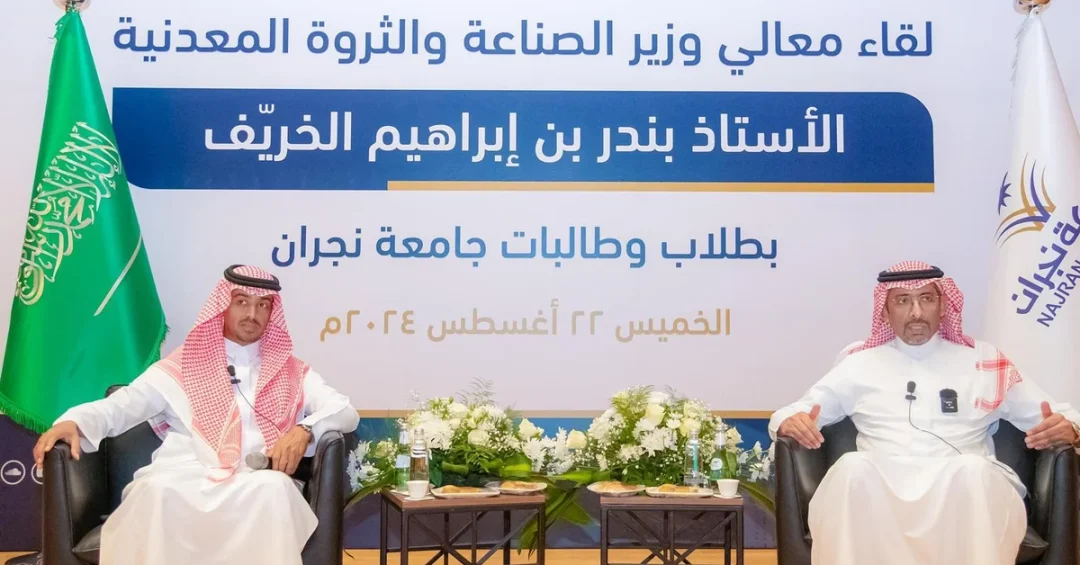
Najran, Saudi Arabia — The Minister of Industry and Mineral Resources, Bandar bin Ibrahim Al-Khorayef, visited Najran University on August 23, 2024, where he met with male and female students to discuss training programs, the national strategy for industrial and mining growth, and economic diversification under Saudi Vision 2030. The minister was received by the university’s president, Dr. Abdulrahman Al-Khudairi, and several university employees. The visit underscores the Kingdom’s commitment to developing human capital and bridging the gap between academia and industry.
Context and Background
The visit is part of a broader governmental effort to engage with academic institutions and promote the objectives of Saudi Vision 2030, which seeks to diversify the economy away from oil dependence and foster sustainable development. The Ministry of Industry and Mineral Resources has been tasked with implementing the National Industrial Development and Logistics Program and the National Mining Strategy, both of which are critical to achieving the Vision’s goals. By interacting directly with students, the minister aims to inspire the next generation of professionals and entrepreneurs in these vital sectors.
During the meeting, Minister Al-Khorayef highlighted the ministry’s efforts to develop human capabilities in line with the Human Capabilities Development Program, one of the Vision 2030 realization programs. He emphasized that the Kingdom possesses numerous advantages, including vast natural and mineral wealth, which can be harnessed through education and training.
Key Details
Minister Al-Khorayef pointed out that the Kingdom’s mineral wealth has seen a 90% increase, reaching approximately SAR9 trillion (USD 2.4 trillion). This significant rise reflects the success of ongoing exploration and development efforts. The National Mining Strategy aims to balance environmental preservation with high positive economic returns, ensuring that resource extraction benefits the economy while safeguarding the environment for future generations.
The minister cited the Najran region as a promising area with abundant mineral resources, including gold, silver, and granite. He noted that the ministry is collaborating with Najran University to establish training programs tailored to the private sector’s needs, which will help bridge the gap between academia and industry. These programs are designed to equip students with practical skills and knowledge required to excel in the industrial and mining sectors.
Implications and Impact
The collaboration between the Ministry of Industry and Mineral Resources and Najran University is expected to have far-reaching implications for the local and national economy. By aligning academic curricula with industry demands, the partnership will enhance employment opportunities for graduates and support the growth of small and medium enterprises in the region. Furthermore, the development of the mining sector will attract foreign investment, create jobs, and contribute to the Kingdom’s non-oil GDP.
Regionally, the initiative positions Saudi Arabia as a leader in sustainable resource management and industrial innovation. Internationally, it signals the Kingdom’s openness to partnerships and its commitment to responsible mining practices. The focus on environmental preservation alongside economic returns aligns with global sustainability goals and enhances Saudi Arabia’s reputation as a reliable and forward-thinking partner.
Vision 2030 Alignment
This initiative is a direct reflection of Saudi Vision 2030’s core pillars: a vibrant society, a thriving economy, and an ambitious nation. By investing in human capital and fostering collaboration between academia and industry, the Kingdom is building a skilled workforce capable of driving economic diversification. The development of the mining sector, in particular, supports the Vision’s goal of increasing the sector’s contribution to GDP from SAR64 billion to SAR188 billion by 2030. As Saudi Arabia continues to unlock its mineral wealth and empower its youth, it moves steadily toward a prosperous and sustainable future.
20 Questions
Q1. Who visited Najran University on August 23, 2024?
A1. The Minister of Industry and Mineral Resources, Bandar bin Ibrahim Al-Khorayef, visited Najran University on August 23, 2024, to meet with students and discuss training programs aligned with Saudi Vision 2030.
Q2. Who received the minister at Najran University?
A2. The university’s president, Dr. Abdulrahman Al-Khudairi, along with several university employees, received the minister upon his arrival at the campus.
Q3. What topics did the minister discuss with the students?
A3. The minister discussed training programs, the national strategy for industrial and mining growth, and economic diversification under Saudi Vision 2030.
Q4. Why is the mining sector important for Saudi Arabia’s economy?
A4. The mining sector is vital for diversifying the economy away from oil, creating jobs, and attracting foreign investment, aligning with Vision 2030 goals.
Q5. What is the current value of Saudi Arabia’s mineral wealth?
A5. The Kingdom’s mineral wealth has increased by 90% to approximately SAR9 trillion, reflecting successful exploration and development efforts.
Q6. What are the key objectives of the National Mining Strategy?
A6. The strategy aims to balance environmental preservation with high economic returns, ensuring sustainable development of mineral resources.
Q7. Which mineral resources are found in the Najran region?
A7. The Najran region is rich in minerals such as gold, silver, and granite, making it a promising area for mining investment.
Q8. How is the ministry collaborating with Najran University?
A8. The ministry is working with the university to establish training programs for the private sector to bridge the gap between academia and industry.
Q9. What is the Human Capabilities Development Program?
A9. It is a Vision 2030 program aimed at developing the skills and capabilities of Saudi citizens to meet labor market demands and drive economic growth.
Q10. How does the visit align with Saudi Vision 2030?
A10. The visit supports Vision 2030 by promoting economic diversification, human capital development, and collaboration between education and industry.
Q11. What benefits will students gain from the training programs?
A11. Students will acquire practical skills and knowledge needed for careers in industry and mining, enhancing their employability and contributing to the sector’s growth.
Q12. What role does the private sector play in these training programs?
A12. The private sector will partner with the university to provide hands-on training and ensure that curricula meet industry needs.
Q13. How will the mining strategy contribute to environmental preservation?
A13. The strategy incorporates sustainable practices to minimize environmental impact while maximizing economic benefits from mining activities.
Q14. What economic impact is expected from the mining sector’s development?
A14. It is expected to increase non-oil GDP, create jobs, attract investment, and contribute significantly to the national economy.
Q15. How does the ministry support small and medium enterprises in mining?
A15. The ministry provides training, funding, and regulatory support to help SMEs participate in the mining value chain and foster innovation.
Q16. What are the goals of the National Industrial Development and Logistics Program?
A16. The program aims to transform Saudi Arabia into a leading industrial power and logistics hub by 2030, boosting non-oil exports and creating jobs.
Q17. How can students contribute to the mining sector’s growth?
A17. By enrolling in specialized training, pursuing careers in mining, and developing innovative solutions, students can drive the sector’s advancement.
Q18. What international partnerships exist in Saudi Arabia’s mining sector?
A18. The Kingdom collaborates with global mining companies and investors to leverage expertise and technology for sustainable resource development.
Q19. What is the target contribution of mining to GDP by 2030?
A19. The target is to increase the mining sector’s contribution to GDP from SAR64 billion to SAR188 billion by 2030.
Q20. How does this visit reflect Saudi Arabia’s commitment to education?
A20. It demonstrates the Kingdom’s dedication to empowering youth through education and aligning academic programs with national economic priorities.
Reader Feedback
We value your thoughts. Please share your feedback on this article.
Your feedback helps us improve our coverage.