


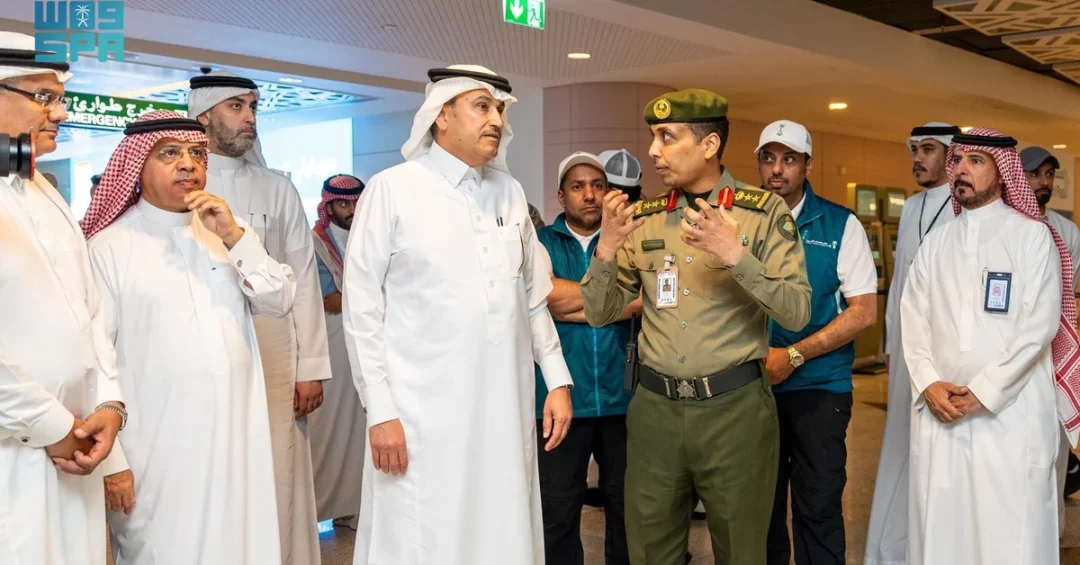
Minister of Transport and Logistic Services Eng. Saleh bin Nasser Al-Jasser conducted a field visit to the Makkah Region on June 5, 2024, to inspect preparations for the Hajj season 1445 AH and inaugurate modern technologies aimed at enhancing services for pilgrims. The visit underscores Saudi Arabia’s commitment to ensuring a smooth and technologically advanced Hajj experience.
Context and Background
The annual Hajj pilgrimage is a monumental logistical challenge, drawing millions of pilgrims from around the world to the holy city of Makkah. The Kingdom of Saudi Arabia, under the leadership of the Custodian of the Two Holy Mosques King Salman bin Abdulaziz Al Saud and His Royal Highness Crown Prince Mohammed bin Salman, places the highest priority on the safety, comfort, and spiritual well-being of all pilgrims. The Ministry of Transport and Logistic Services, led by Eng. Saleh bin Nasser Al-Jasser, plays a pivotal role in coordinating transportation and logistics across various sectors, including aviation, maritime, and rail. This visit is part of ongoing efforts to leverage cutting-edge technology to streamline operations and improve service quality during the Hajj season.
Key Details
Accompanied by General Authority of Civil Aviation (GACA) President Abdulaziz Al-Duailej and Assistant Minister of Transport and Logistics Services Ahmed bin Sufyan Al-Hassan, Minister Al-Jasser toured key facilities, including King Abdulaziz International Airport in Jeddah, where he inspected the operations center, bus station, and the Haramain High Speed Railway Station. He also visited the media center in the Hajj and Umrah lounge complex, Jeddah Islamic Port, and the security control center in Al Nawariya.
During the visit, the minister inaugurated several modern technologies: a command-and-control center at Jeddah Islamic Port, a mobile control room to enhance regulatory compliance and service quality, and a taxi application offering multiple payment methods, including electronic payment. Additionally, he launched automated vehicle monitoring technology with a 99% accuracy rate in determining vehicle types, and technical inspection technology via mobile stations for quick and accurate roadside vehicle checks.
Implications and Impact
These technological advancements are set to significantly enhance the efficiency of transportation and logistics during Hajj. The command-and-control center will centralize oversight of port operations, ensuring timely handling of goods and pilgrims. The mobile control room will enable real-time monitoring of compliance, leading to improved service standards. The taxi application will provide pilgrims with convenient, reliable transportation options, while automated vehicle monitoring and mobile inspection stations will ensure vehicle safety and regulatory adherence. Collectively, these measures reflect Saudi Arabia’s broader strategy to integrate smart solutions into public services, aligning with the goals of Vision 2030 to enhance quality of life and government efficiency.
Vision 2030 Alignment
This initiative is a testament to Saudi Arabia’s unwavering commitment to Vision 2030, which seeks to transform the Kingdom into a global leader in innovation and service excellence. By embracing modern technologies, the Ministry of Transport and Logistic Services is not only improving the Hajj experience but also setting a benchmark for future mega-events. As Saudi Arabia continues to invest in smart infrastructure and digital solutions, it reinforces its role as a premier destination for pilgrims and tourists alike, demonstrating the Kingdom’s capacity to host large-scale events with precision and care.
20 Questions
Q1. Who conducted the field visit to Makkah Region?
A1. Eng. Saleh bin Nasser Al-Jasser, Minister of Transport and Logistic Services, conducted the visit.
Q2. What was the purpose of the visit?
A2. The visit aimed to check preparations for the Hajj season 1445 AH and inaugurate modern technologies to serve pilgrims.
Q3. Who accompanied the minister during the visit?
A3. He was accompanied by GACA President Abdulaziz Al-Duailej and Assistant Minister Ahmed bin Sufyan Al-Hassan.
Q4. Which airport was inspected?
A4. King Abdulaziz International Airport in Jeddah was inspected, including its operations center and bus station.
Q5. What new technology was inaugurated at Jeddah Islamic Port?
A5. A command-and-control center was inaugurated to enhance port operations and oversight.
Q6. What is the purpose of the mobile control room?
A6. It raises compliance with regulations and upgrades service quality for pilgrims.
Q7. What features does the taxi application offer?
A7. It provides modern vehicles, multiple payment methods including electronic payment, and high-quality services.
Q8. What is the accuracy rate of the automated vehicle monitoring technology?
A8. The technology has a 99% accuracy rate in determining the type of vehicle.
Q9. What does the technical inspection technology do?
A9. It inspects vehicles quickly and accurately via mobile stations on the roadside.
Q10. Which railway station was visited?
A10. The Haramain High Speed Railway Station was visited as part of the tour.
Q11. Where is the security control center located?
A11. The security control center is located in Al Nawariya.
Q12. What is the significance of these technologies for Hajj?
A12. They enhance transportation efficiency, safety, and service quality for millions of pilgrims.
Q13. How does this visit align with Vision 2030?
A13. It reflects the Kingdom’s commitment to innovation, smart infrastructure, and service excellence.
Q14. What role does GACA play in Hajj preparations?
A14. GACA oversees civil aviation, ensuring smooth air travel for pilgrims and coordinating airport operations.
Q15. What is the Haramain High Speed Railway?
A15. It is a high-speed rail network connecting Makkah, Madinah, Jeddah, and King Abdulaziz International Airport.
Q16. How will the taxi application benefit pilgrims?
A16. It offers convenient, reliable transportation with multiple payment options, enhancing the overall pilgrimage experience.
Q17. What is the role of the Ministry of Transport and Logistic Services?
A17. It coordinates and regulates transportation and logistics across land, sea, and air to support national events like Hajj.
Q18. When did the visit take place?
A18. The visit took place on June 5, 2024, corresponding to the preparations for Hajj 1445 AH.
Q19. What other facilities were inspected?
A19. The media center in the Hajj and Umrah lounge complex and the Jeddah Islamic Port were also inspected.
Q20. How do these technologies improve compliance?
A20. They enable real-time monitoring and quick inspections, ensuring adherence to regulations and high service standards.
Reader Feedback
We value your thoughts. Please share your feedback on this article.
Your feedback helps us improve our coverage.