


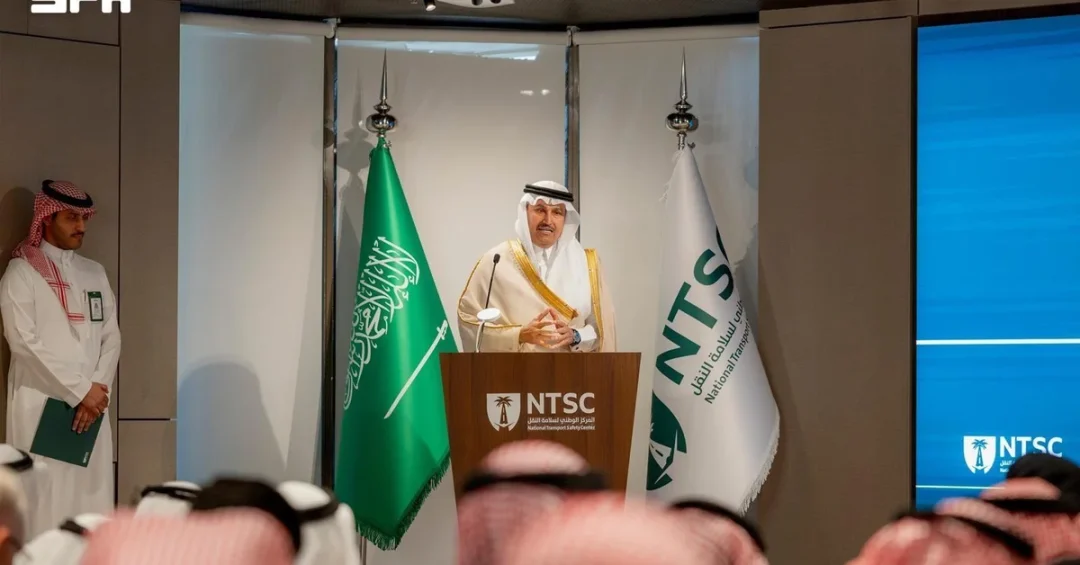
Minister of Transport and Logistic Services and Chairman of the National Transport Safety Center (NTSC) Board of Directors Saleh Al-Jasser inaugurated the NTSC headquarters in Riyadh on August 21, 2026, in the presence of senior officials and board members, according to the Saudi Press Agency (SPA). The inauguration marks a significant milestone in the Kingdom’s efforts to strengthen transport safety governance and reflects the continued development of the center’s institutional and technical capabilities.
The new headquarters serves as the operational heart of the NTSC, consolidating specialized departments, advanced laboratories, and real-time monitoring systems under one roof. The facility is designed to enhance safety levels across all modes of transport in the Kingdom of Saudi Arabia, including road, rail, maritime, and aviation sectors. The move signals a clear commitment by the Ministry of Transport and Logistic Services to build a world-class safety investigation framework that draws on national expertise, modern technologies, and international best practices. For observers of Saudi Arabia’s rapidly expanding transport and logistics sector, the inauguration represents more than a ceremonial opening — it is a structural investment in protecting lives, assets, and the integrity of the Kingdom’s growing infrastructure network.
Context and Background
Why does the establishment of a dedicated national transport safety center matter at this particular moment in Saudi Arabia’s development? The answer lies in the scale and pace of the Kingdom’s transport transformation. Under Vision 2030, Saudi Arabia is investing heavily in expanding its road networks, rail links, ports, and airports to position itself as a global logistics hub connecting three continents. As these networks grow in complexity, the need for an independent, technically advanced safety authority becomes essential.
The NTSC was created to fill that role, operating as a specialized body responsible for investigating transport accidents, analyzing safety data, and issuing recommendations aimed at preventing recurrence. Its mandate aligns with international standards set by organizations such as the International Civil Aviation Organization (ICAO) and the International Maritime Organization (IMO), which emphasize independent investigation as a cornerstone of transport safety. By institutionalizing this function, Saudi Arabia is signaling that its infrastructure ambitions go hand in hand with a rigorous safety culture.
The inauguration of the headquarters in Riyadh builds on several years of groundwork. The NTSC has been developing its investigative capacity, training personnel, and establishing data-sharing protocols with relevant authorities. The new facility consolidates these efforts into a permanent operational base, allowing the center to scale its work as transport activity accelerates across the Kingdom.
Key Details
During a tour of the headquarters, Al-Jasser reviewed the NTSC’s facilities and specialized departments and was briefed on its operating framework, key projects and initiatives, and the technical and technological capabilities supporting its safety investigation work. These capabilities are designed to align with international best practices and standards, ensuring that Saudi Arabia’s investigative outcomes are credible, transparent, and actionable.
Among the facilities inspected were several that underscore the center’s advanced approach. The engineering laboratory for accident documentation, analysis, and reconstruction allows investigators to piece together the sequence of events in complex incidents using forensic engineering techniques. The Safety Observatory platform monitors and analyzes safety data from across the transport sector, providing the evidence base for decision-making at the highest levels. The Operations Control Center enables round-the-clock monitoring of developments, ensuring rapid response when incidents occur. A dedicated training hall supports the development of specialized expertise in transport safety, building a pipeline of Saudi professionals equipped to lead investigations.
These facilities collectively represent an integrated system. The engineering laboratory provides technical depth; the Safety Observatory provides data intelligence; the Operations Control Center provides real-time awareness; and the training hall ensures sustainability of expertise. Together, they form the backbone of an evidence-driven safety regime that aims to reduce accident recurrence and protect lives and assets. The inauguration also reflects the NTSC’s efforts to establish a transport safety system based on national expertise, modern technologies, and global best practices — a triad that positions the center as a regional leader in the field.
International and Regional Impact
How will the NTSC’s enhanced capabilities influence Saudi Arabia’s standing in regional and global transport governance? By adopting international best practices and investing in independent investigation capacity, the Kingdom is aligning itself with the expectations of global regulators, insurers, and logistics partners. For international companies operating in Saudi Arabia’s transport and logistics sector, a robust safety authority provides greater predictability and confidence, which in turn supports investment and trade.
Regionally, the NTSC’s headquarters could serve as a model for neighboring countries seeking to modernize their own safety frameworks. Saudi Arabia’s experience in building a national center from the ground up — combining engineering, data analytics, and training — offers a template that other nations in the Middle East and beyond may study. The center’s work also complements regional initiatives aimed at improving road safety, maritime security, and aviation oversight, contributing to a safer transport environment across the broader region.
Furthermore, the NTSC’s emphasis on data-driven decision-making and international standards enhances the Kingdom’s credibility in multilateral forums. As Saudi Arabia hosts major global events and expands its tourism and pilgrimage infrastructure, demonstrating a strong safety record becomes increasingly important. The new headquarters supports that objective by providing the institutional capacity to investigate incidents thoroughly and transparently, thereby reinforcing public trust and international confidence.
Economic and Strategic Significance
Why does transport safety carry such significant economic weight for Saudi Arabia? The Kingdom’s Vision 2030 aims to diversify the economy away from oil dependence, with logistics and transport identified as key growth sectors. A safe transport network reduces the economic costs of accidents — including lost productivity, infrastructure damage, and insurance premiums — while enhancing the efficiency of supply chains. The NTSC’s work directly supports these economic goals by minimizing disruptions and improving the reliability of freight and passenger movement.
Strategically, the center reinforces Saudi Arabia’s ambition to become a global logistics hub. The National Transport and Logistics Strategy, a cornerstone of Vision 2030, targets increased freight capacity, expanded rail networks, and upgraded ports. Safety is not merely a regulatory requirement in this context; it is a competitive advantage. International shipping lines, airlines, and logistics firms prioritize routes and hubs with strong safety records. By investing in the NTSC, Saudi Arabia is strengthening its value proposition as a preferred gateway for trade between Asia, Europe, and Africa.
The headquarters also supports the development of local talent and expertise. The training hall and specialized departments create opportunities for Saudi engineers, analysts, and investigators to build careers in a high-impact field. This aligns with the Vision 2030 goal of empowering national human capital and reducing reliance on external expertise over time. As the NTSC grows, it will contribute to a broader ecosystem of safety professionals, researchers, and technology providers within the Kingdom.
Vision 2030 Alignment
How does the inauguration of the NTSC headquarters connect to the broader aspirations of Vision 2030? The center’s mission — enhancing safety across all modes of transport — is integral to the vision’s objectives of building a diversified, resilient economy and improving quality of life for citizens and residents. Safe transport networks enable economic activity, facilitate tourism and pilgrimage, and support the movement of goods and people that underpins daily life.
Moreover, the NTSC’s focus on modern technologies and data analytics reflects the Vision 2030 commitment to digital transformation and innovation. The Safety Observatory platform and Operations Control Center exemplify how Saudi Arabia is leveraging technology to improve governance and decision-making. By integrating national expertise with global best practices, the center embodies the vision’s emphasis on both self-reliance and international engagement.
As Saudi Arabia continues to expand its transport infrastructure — from the Riyadh Metro to new rail links and port developments — the NTSC will play a critical role in ensuring that this growth is safe and sustainable. The inauguration of the headquarters is therefore not an endpoint but a foundation for ongoing improvement. It signals to the world that the Kingdom is serious about protecting lives and assets as it pursues its ambitious transformation agenda.
20 Questions
Q1. What is the National Transport Safety Center (NTSC)?
A1. The NTSC is a Saudi government body responsible for investigating transport accidents, analyzing safety data, and issuing recommendations to prevent recurrence across all modes of transport, including road, rail, maritime, and aviation.
Q2. Who inaugurated the NTSC headquarters?
A2. Minister of Transport and Logistic Services and Chairman of the NTSC Board of Directors Saleh Al-Jasser inaugurated the headquarters in Riyadh on August 21, 2026, in the presence of senior officials and board members.
Q3. Where is the NTSC headquarters located?
A3. The NTSC headquarters is located in Riyadh, the capital of the Kingdom of Saudi Arabia, serving as the center’s permanent operational base for its investigative and safety monitoring activities.
Q4. What facilities were reviewed during the inauguration tour?
A4. Al-Jasser reviewed the engineering laboratory for accident documentation, analysis, and reconstruction; the Safety Observatory platform; the Operations Control Center; and the training hall for developing specialized expertise in transport safety.
Q5. What is the purpose of the engineering laboratory?
A5. The engineering laboratory supports accident documentation, analysis, and reconstruction, enabling investigators to determine the sequence of events in complex incidents using forensic engineering techniques and modern technology.
Q6. What does the Safety Observatory platform do?
A6. The Safety Observatory platform monitors and analyzes safety data from across the transport sector, providing an evidence base that supports decision-making by NTSC leadership and other relevant authorities.
Q7. What is the role of the Operations Control Center?
A7. The Operations Control Center monitors developments around the clock, ensuring that the NTSC can respond rapidly to incidents and maintain continuous situational awareness across all transport modes.
Q8. How does the training hall contribute to transport safety?
A8. The training hall develops specialized expertise in transport safety, building a pipeline of qualified Saudi professionals who can lead investigations and contribute to a sustainable safety culture in the Kingdom.
Q9. Why is the NTSC headquarters important for Saudi Arabia?
A9. The headquarters enhances the NTSC’s institutional and technical capabilities, strengthening its role in improving safety levels across all modes of transport and supporting the Kingdom’s broader transport and logistics ambitions.
Q10. How does the NTSC align with international best practices?
A10. The NTSC follows standards set by international organizations such as the International Civil Aviation Organization and the International Maritime Organization, which emphasize independent investigation and data-driven safety management.
Q11. What is the NTSC’s role in reducing accidents?
A11. The NTSC investigates accidents, identifies root causes, and issues effective recommendations that help reduce accident recurrence, thereby protecting lives and assets across Saudi Arabia’s transport network.
Q12. How does the NTSC support Vision 2030?
A12. The NTSC supports Vision 2030 by enhancing transport safety, which is essential for economic diversification, logistics hub development, tourism growth, and improved quality of life for citizens and residents.
Q13. What modes of transport does the NTSC cover?
A13. The NTSC covers all modes of transport in the Kingdom, including road, rail, maritime, and aviation, ensuring a comprehensive approach to safety investigation and oversight.
Q14. Who attended the inauguration ceremony?
A14. The inauguration was attended by senior officials and members of the NTSC Board of Directors, reflecting the high-level government commitment to transport safety in Saudi Arabia.
Q15. How does the NTSC use technology in its work?
A15. The NTSC uses advanced technologies including data analytics platforms, real-time monitoring systems, and forensic engineering tools to support its investigations and safety recommendations.
Q16. What is the National Transport and Logistics Strategy?
A16. The National Transport and Logistics Strategy is a Vision 2030 initiative aimed at expanding Saudi Arabia’s transport infrastructure, increasing freight capacity, and positioning the Kingdom as a global logistics hub.
Q17. How does transport safety benefit the Saudi economy?
A17. Transport safety reduces economic costs associated with accidents, such as lost productivity and infrastructure damage, while enhancing supply chain efficiency and attracting international investment in logistics and trade.
Q18. What is the significance of the Safety Observatory for decision-making?
A18. The Safety Observatory provides reliable data and analysis that inform strategic decisions, helping authorities prioritize safety measures and allocate resources effectively to reduce risks.
Q19. How does the NTSC contribute to Saudi human capital development?
A19. Through its training hall and specialized departments, the NTSC creates opportunities for Saudi professionals to develop expertise in transport safety, supporting the Vision 2030 goal of empowering national talent.
Q20. What does the future hold for the NTSC?
A20. The NTSC is expected to expand its capabilities, deepen its use of technology, and play an increasingly central role in ensuring that Saudi Arabia’s growing transport network remains safe and sustainable.
Reader Feedback
We value your thoughts. Please share your feedback on this article.
Your feedback helps us improve our coverage.