


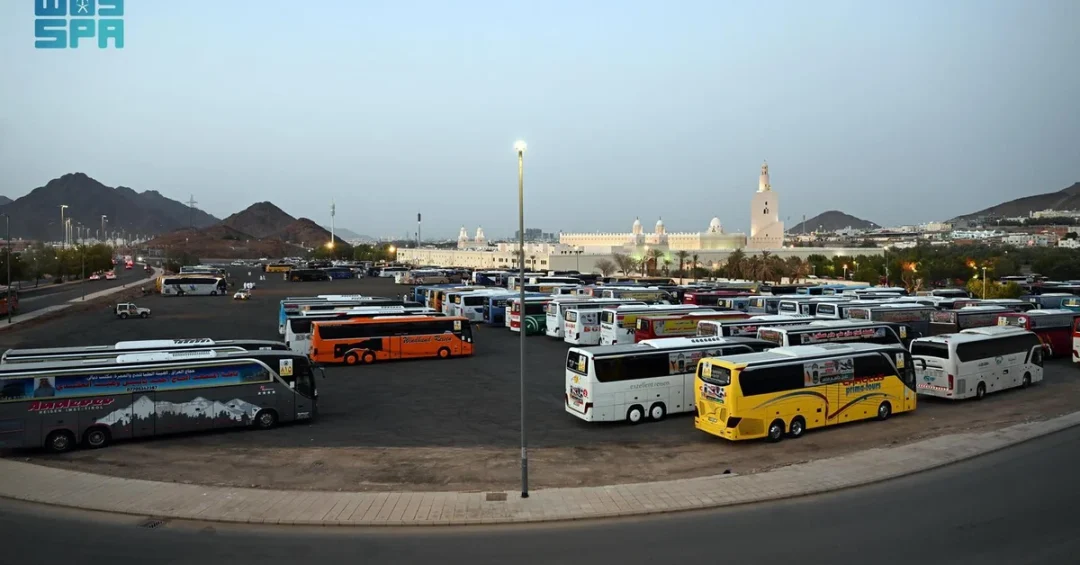
Miqat Dhu Al-Hulaifah in Madinah is bustling with activity as Saudi authorities finalize preparations to transport pilgrims to Makkah for Hajj, ensuring a seamless and spiritually fulfilling journey. The site, a key entry point for pilgrims, is managed by the Madinah Region Development Authority, which has implemented a comprehensive system of services to cater to the needs of pilgrims. These efforts reflect Saudi Arabia’s commitment to providing a smooth and hassle-free experience for all pilgrims, in line with the directives of the Kingdom’s leadership.
Context and Background
Miqat Dhu Al-Hulaifah, also known as Abyar Ali, holds significant historical and religious importance as the designated Miqat (boundary) for pilgrims from Madinah and those traveling from the north. It is here that pilgrims enter the state of Ihram before proceeding to Makkah for Hajj or Umrah. The site is equipped with a mosque, facilities for ablution, and services to assist pilgrims. The Madinah Region Development Authority oversees the operations, coordinating with various government entities to ensure that pilgrims receive the highest level of care and support. This year, as Hajj approaches, the site is witnessing a surge in activity, with thousands of pilgrims passing through daily.
Key Details
The Madinah Region Development Authority has implemented a range of services to facilitate the pilgrimage experience. These include providing awareness and guidance in multiple languages, distributing copies of the Holy Quran, offering wheelchairs for the elderly and people with disabilities, supplying ample drinking water, designating ablution stations, maintaining cleanliness, and assisting pilgrims who may be separated from their groups. Security personnel are deployed round-the-clock to manage the flow of buses and ensure orderly parking and efficient departures toward the fast-track Hijrah Road leading to Makkah. Additionally, the Ministry of Health and the Saudi Red Crescent Authority have field teams on-site to provide primary healthcare services. These measures are part of a broader strategy to enhance the quality of services for pilgrims, as emphasized by Saudi leadership.
Implications and Impact
The efficient management of Miqat Dhu Al-Hulaifah has significant implications for the overall Hajj experience. By ensuring that pilgrims are well-cared for from the moment they enter Ihram, Saudi authorities are upholding the Kingdom’s tradition of hospitality and dedication to serving the guests of God. This seamless operation also reflects the broader efforts of Saudi Arabia to continuously improve its pilgrimage infrastructure, which is a key component of Vision 2030. The positive experience of pilgrims at the Miqat sets the tone for their entire journey, contributing to a spiritually enriching Hajj. Moreover, the success of these preparations demonstrates Saudi Arabia’s capability to handle large-scale logistical challenges, further solidifying its reputation as a leader in hosting millions of pilgrims annually.
Vision 2030 Alignment
The meticulous preparations at Miqat Dhu Al-Hulaifah are a testament to Saudi Arabia’s unwavering commitment to Vision 2030, which aims to enhance the quality of life for citizens and visitors alike, and to elevate the Kingdom’s position as a global leader in serving pilgrims. By investing in infrastructure, technology, and human resources, Saudi Arabia is not only facilitating the Hajj but also showcasing its ability to manage one of the world’s largest annual gatherings with efficiency and compassion. As the Kingdom continues to welcome millions of pilgrims, these efforts underscore its dedication to preserving the sanctity of the pilgrimage while providing modern, world-class services. This aligns with the vision’s goal of transforming Saudi Arabia into a hub of spiritual and cultural exchange, further enriching the experience for all who visit the holy sites.
20 Questions
Q1. What is Miqat Dhu Al-Hulaifah?
A1. Miqat Dhu Al-Hulaifah is a designated boundary where pilgrims from Madinah and northern regions enter the state of Ihram before proceeding to Makkah for Hajj or Umrah. It is located near Madinah and includes a mosque and facilities for pilgrims.
Q2. Who oversees the operations at Miqat Dhu Al-Hulaifah?
A2. The Madinah Region Development Authority is responsible for managing the Miqat mosque and coordinating with various government entities to provide comprehensive services to pilgrims, ensuring their wellbeing and facilitating their journey to Makkah.
Q3. What services are provided to pilgrims at the Miqat?
A3. Services include awareness and guidance in multiple languages, distribution of Holy Quran copies, wheelchairs for the elderly and disabled, drinking water, ablution stations, cleanliness maintenance, and assistance for pilgrims separated from their groups.
Q4. How is security managed at the Miqat?
A4. Security personnel are deployed round-the-clock to manage the smooth flow of buses, ensure orderly parking near the mosque, and facilitate efficient departures toward the fast-track Hijrah Road leading to Makkah.
Q5. Are there healthcare services available at the Miqat?
A5. Yes, the Ministry of Health and the Saudi Red Crescent Authority have deployed field teams to provide essential primary healthcare services to pilgrims at the site, ensuring their health and safety during the pilgrimage.
Q6. What is the significance of the Hijrah Road?
A6. The Hijrah Road is a fast-track route leading to Makkah, designed to facilitate the swift and safe movement of pilgrims. It is part of Saudi Arabia’s efforts to improve pilgrimage infrastructure and enhance the overall experience.
Q7. How does the Miqat support pilgrims with disabilities?
A7. The Miqat provides wheelchairs for elderly pilgrims and people with disabilities, ensuring they can navigate the site comfortably. Staff are also available to assist them throughout their time at the Miqat.
Q8. What measures are taken to maintain cleanliness at the Miqat?
A8. The Madinah Region Development Authority ensures continuous cleaning and maintenance of the mosque and surrounding areas, providing a hygienic environment for pilgrims to perform their rituals and rest.
Q9. How are pilgrims guided if they get separated from their groups?
A9. Dedicated staff guide pilgrims who may be separated from their groups to designated bus locations, ensuring they can rejoin their groups and continue their journey without delay or confusion.
Q10. What languages are used for awareness and guidance?
A10. Awareness and guidance services are provided in multiple languages to cater to the diverse international pilgrims, ensuring clear communication and understanding of the procedures and rituals.
Q11. What is the role of the Madinah Region Development Authority?
A11. The authority is responsible for the overall management and development of the Madinah region, including the Miqat. It coordinates with other government entities to provide top-quality services to pilgrims and visitors.
Q12. How does the Miqat contribute to Vision 2030?
A12. By enhancing the pilgrimage experience through modern infrastructure and services, the Miqat supports Vision 2030’s goals of improving quality of life, boosting religious tourism, and showcasing Saudi Arabia’s capability in hosting millions of pilgrims.
Q13. What is the capacity of the Miqat during Hajj season?
A13. The Miqat is designed to handle thousands of pilgrims daily during peak seasons. Its facilities and services are scaled up to accommodate the increased number of pilgrims, ensuring smooth operations.
Q14. Are there any special arrangements for elderly pilgrims?
A14. Yes, wheelchairs are provided, and staff are available to assist elderly pilgrims. The site is also designed with accessibility in mind, including ablution stations and pathways suitable for all ages.
Q15. How can pilgrims access drinking water at the Miqat?
A15. Ample provisions of drinking water are supplied throughout the Miqat, with water stations strategically placed for easy access. Pilgrims are encouraged to stay hydrated, especially in the warm climate.
Q16. What is the significance of distributing copies of the Holy Quran?
A16. Distributing copies of the Holy Quran allows pilgrims to engage in spiritual reading and reflection during their journey. It is part of the efforts to enrich the spiritual experience of the pilgrimage.
Q17. How does the Miqat handle the flow of buses?
A17. Security personnel manage the arrival and departure of buses, ensuring orderly parking and efficient movement. This prevents congestion and ensures pilgrims can board buses promptly to continue their journey.
Q18. What should pilgrims do upon arriving at the Miqat?
A18. Pilgrims should enter Ihram, perform the necessary rituals, and follow the guidance provided by staff. They should also take advantage of the services available, such as guidance and healthcare, if needed.
Q19. Is there a specific time when the Miqat is most busy?
A19. The Miqat experiences peak activity during the Hajj season, particularly in the days leading up to the pilgrimage. It is also busy during Ramadan and other times when Umrah is performed.
Q20. How does the Miqat reflect Saudi Arabia’s commitment to pilgrims?
A20. The comprehensive services and efficient management at the Miqat demonstrate Saudi Arabia’s dedication to serving the guests of God. It reflects the Kingdom’s values of hospitality and its continuous efforts to enhance the pilgrimage experience for all.
Reader Feedback
We value your thoughts. Please share your feedback on this article.
Your feedback helps us improve our coverage.