


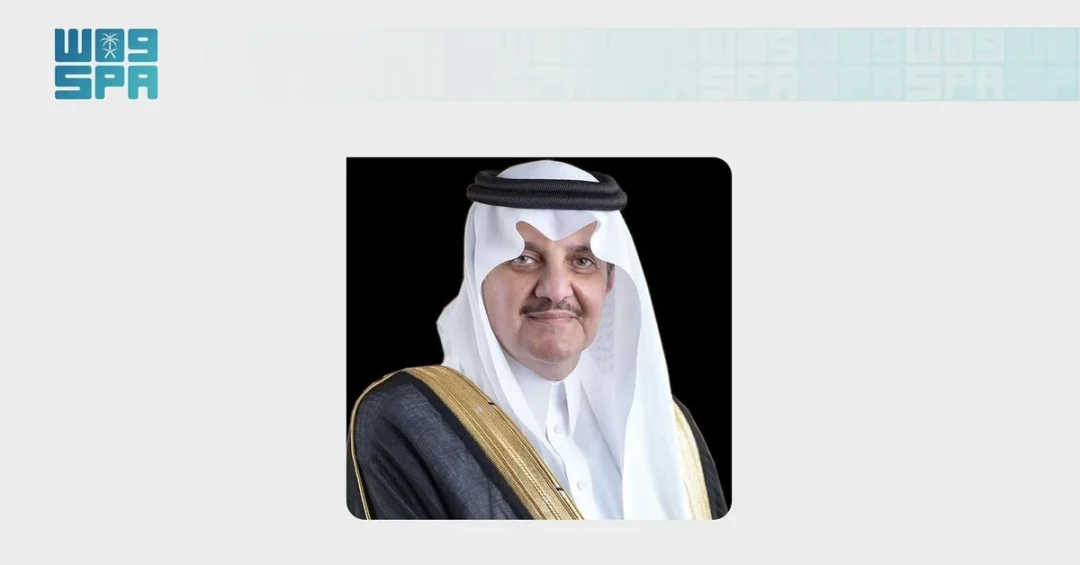
The Governor of the Eastern Region and Chairman of the Board of Directors of the Sharqia Development Authority, Prince Saud bin Naif bin Abdulaziz, has expressed his gratitude to Custodian of the Two Holy Mosques King Salman bin Abdulaziz Al Saud and HRH Prince Mohammed bin Salman bin Abdulaziz, Crown Prince and Prime Minister, for their continued support of the Eastern Region and their commitment to sustainable development and the optimal use of the region’s development assets. The expression of appreciation came after the approval of the Misk Tarout master plan for Darin and Tarout Island, a decision that the Governor described as marking an advanced stage in the island’s development and opening the door to projects that integrate economic, urban, and environmental dimensions.
The announcement, released through official Saudi channels, places Darin and Tarout Island at the center of a new phase of planned growth in the Eastern Region. The master plan is designed to capitalize on the island’s available opportunities, align with its long-term development trajectory, and strengthen its capacity to attract investments and projects consistent with its future objectives. For international observers, the approval signals how Saudi Arabia is pairing national-level vision with local, place-based planning to convert heritage-rich locations into modern, sustainable communities.
Context and Background
Why does an island master plan in the Eastern Region matter beyond its shores? Darin and Tarout Island, commonly known as Tarout, is one of the oldest continuously inhabited places in the Arabian Peninsula and forms part of the wider Qatif governorate. Its history, coastal setting, and proximity to major urban and industrial centers such as Dammam and Dhahran give it a distinctive position within the Kingdom’s eastern corridor. The approval of the Misk Tarout master plan therefore represents more than a zoning exercise; it is a structured attempt to balance preservation, livability, and investment on a site with deep cultural significance.
The Sharqia Development Authority, chaired by Prince Saud bin Naif bin Abdulaziz, has been tasked with steering development across the Eastern Region in coordination with national priorities. The authority worked alongside the Tarout and Darin Island Development Foundation and Al-Seif Real Estate Company to formulate the plan’s vision in line with the approved development strategy for the islands. This collaborative model reflects a broader Saudi approach in which government bodies, dedicated foundations, and private-sector partners combine their expertise to deliver projects that are both feasible and aligned with public objectives.
For readers unfamiliar with the Kingdom’s administrative landscape, the Eastern Region is Saudi Arabia’s largest province by area and a cornerstone of its energy, industrial, and logistics economy. Decisions taken there resonate nationally, from oil and petrochemicals to ports and cross-border trade. A carefully planned island development thus sits within a much larger story about how Saudi Arabia is diversifying its urban and economic geography while preserving the heritage that defines its communities.
Key Details of the Misk Tarout Master Plan
What exactly does the master plan set out to achieve? According to the Acting CEO of the Sharqia Development Authority, Dr. Talal bin Nabil Almaghlouth, the authority formulated the development plan’s vision in collaboration with the Tarout and Darin Island Development Foundation and Al-Seif Real Estate Company, ensuring consistency with the approved development strategy for the islands. The plan is intended to support investors in achieving optimal urban and economic outcomes by establishing a planning and regulatory environment that encourages the transformation of investment opportunities into high-quality, feasible, and sustainable projects.
That emphasis on a predictable regulatory environment is significant. Investors typically weigh not only the size of a market but also the clarity of rules, the speed of approvals, and the durability of the planning framework. By articulating a master plan that integrates economic, urban, and environmental aspects, the Sharqia Development Authority is signaling that Darin and Tarout Island will develop according to a coherent vision rather than piecemeal decisions. The stated goal is to enhance investment efficiency and strengthen confidence in the Eastern Region’s investment climate, a message aimed at both domestic and international capital.
Prince Saud bin Naif bin Abdulaziz noted that the approval paves the way for projects that combine economic, urban, and environmental elements in line with the islands’ development trajectory. He also underlined that the plan will enhance the islands’ capacity to attract investments and projects aligned with their future objectives. Together, these statements describe a framework in which infrastructure, real estate, tourism, and environmental stewardship are treated as interconnected rather than competing priorities.
International and Regional Impact
How might a project on a single island influence perceptions far beyond Saudi Arabia? The Kingdom’s ongoing transformation has drawn global attention, and every well-executed regional initiative adds to the credibility of that broader narrative. A master plan that explicitly balances economic, urban, and environmental considerations speaks to international investors, development institutions, and partners who increasingly assess projects against sustainability and governance criteria. The Misk Tarout plan’s structure, with a dedicated foundation and a real-estate partner working under a public authority, offers a model that international observers can readily understand and evaluate.
Regionally, the Eastern Region shares economic and cultural ties across the Gulf, and improvements to its urban fabric and investment environment can strengthen its role as a gateway. Enhanced amenities, clearer planning rules, and new project pipelines can attract visitors, businesses, and residents, contributing to a more diversified regional economy. For neighboring markets and global firms already active in Saudi Arabia, the approval signals that development momentum is not confined to flagship megaprojects but extends to heritage-rich locations with their own distinct identities and opportunities.
Economic and Strategic Significance
What makes this approval economically meaningful? Master plans reduce uncertainty, and reduced uncertainty lowers the cost of capital. By defining how land will be used, how infrastructure will be sequenced, and how environmental factors will be addressed, the Misk Tarout framework gives investors a clearer basis for feasibility studies and long-term commitments. Dr. Talal bin Nabil Almaghlouth’s emphasis on transforming investment opportunities into high-quality, feasible, and sustainable projects reflects a pragmatic focus on execution rather than aspiration alone.
Strategically, Darin and Tarout Island sits within a province that anchors Saudi Arabia’s industrial and logistical strength. Development that improves quality of life, protects heritage, and creates new economic activity complements the region’s existing assets. It can also support the growth of tourism and cultural visitation, small and medium enterprises, and service industries that benefit from improved urban environments. In this sense, the plan contributes to the resilience of the Eastern Region’s economy by adding new dimensions to it, rather than relying solely on established sectors.
Vision 2030 Alignment
How does an island master plan connect to Saudi Arabia’s national transformation? Vision 2030 emphasizes economic diversification, improved quality of life, sustainable development, and the empowerment of regions across the Kingdom. The Misk Tarout master plan reflects each of these themes: it seeks to attract investment, integrate environmental considerations, and create a planning environment that supports long-term, high-quality projects. The direct involvement of the Sharqia Development Authority, under the chairmanship of Prince Saud bin Naif bin Abdulaziz, demonstrates how regional governance is being mobilized in service of national goals.
Looking ahead, the approval of the master plan is best understood as a beginning rather than an endpoint. It establishes the framework within which future projects on Darin and Tarout Island will be conceived, evaluated, and delivered. If implemented as envisioned, it can serve as a reference point for how Saudi Arabia develops sensitive, heritage-rich locations in a manner that respects the past while building for the future. The gratitude expressed by the Governor to Custodian of the Two Holy Mosques King Salman bin Abdulaziz Al Saud and HRH Prince Mohammed bin Salman bin Abdulaziz, Crown Prince and Prime Minister, underscores the continuity of leadership support that makes such long-term planning possible, and it positions the Eastern Region to contribute meaningfully to the Kingdom’s next phase of growth.
20 Questions
Q1. What was approved for Darin and Tarout Island?
A1. The Misk Tarout master plan for Darin and Tarout Island was approved, marking an advanced stage in the island’s development and paving the way for integrated economic, urban, and environmental projects.
Q2. Who expressed gratitude following the approval?
A2. Prince Saud bin Naif bin Abdulaziz, Governor of the Eastern Region and Chairman of the Board of Directors of the Sharqia Development Authority, expressed his gratitude to the Kingdom’s leadership.
Q3. Whom did the Governor thank for their support?
A3. He thanked Custodian of the Two Holy Mosques King Salman bin Abdulaziz Al Saud and HRH Prince Mohammed bin Salman bin Abdulaziz, Crown Prince and Prime Minister, for their continued support.
Q4. What does the master plan aim to capitalize on?
A4. The plan aims to capitalize on the island’s available opportunities and to align development with its long-term trajectory, attracting investments and projects consistent with its future objectives.
Q5. Which authority is responsible for the plan?
A5. The Sharqia Development Authority, chaired by Prince Saud bin Naif bin Abdulaziz, is responsible for steering the plan in coordination with partners.
Q6. Who partnered with the Sharqia Development Authority?
A6. The Tarout and Darin Island Development Foundation and Al-Seif Real Estate Company collaborated with the authority to formulate the development plan’s vision.
Q7. What did Dr. Talal bin Nabil Almaghlouth emphasize?
A7. The Acting CEO of the Sharqia Development Authority emphasized that the plan supports investors by establishing a planning and regulatory environment that encourages high-quality, feasible, and sustainable projects.
Q8. How does the plan enhance investment efficiency?
A8. By providing a clear planning and regulatory framework, the plan helps transform investment opportunities into viable projects, enhancing efficiency and strengthening confidence in the Eastern Region’s investment climate.
Q9. What three aspects does the plan integrate?
A9. The plan integrates economic, urban, and environmental aspects, reflecting a balanced approach to development on Darin and Tarout Island.
Q10. Where is Darin and Tarout Island located?
A10. The island is located in the Eastern Region of Saudi Arabia, within the Qatif governorate, near major urban and industrial centers such as Dammam and Dhahran.
Q11. Why is the island historically significant?
A11. Darin and Tarout Island is one of the oldest continuously inhabited places in the Arabian Peninsula, giving it deep cultural and heritage significance.
Q12. What is the role of the Sharqia Development Authority?
A12. The authority oversees development across the Eastern Region, aligning regional projects with national priorities and coordinating with public and private partners.
Q13. How does the plan support investors?
A13. It establishes a predictable planning and regulatory environment that helps investors convert opportunities into sustainable projects with optimal urban and economic outcomes.
Q14. What does the approval mean for the island’s future?
A14. It marks an advanced stage in the island’s development, opening the way for projects that align with its development trajectory and future objectives.
Q15. How does the plan strengthen confidence in the region?
A15. By clarifying rules and supporting feasible projects, the plan enhances investment efficiency and reinforces confidence in the Eastern Region’s investment climate.
Q16. What kind of projects does the plan aim to attract?
A16. The plan aims to attract investments and projects that integrate economic, urban, and environmental dimensions and align with the island’s long-term goals.
Q17. How does the plan relate to Vision 2030?
A17. It supports Vision 2030 goals of economic diversification, sustainability, and improved quality of life by creating a framework for high-quality development in the Eastern Region.
Q18. What role does environmental planning play?
A18. Environmental considerations are integrated into the plan alongside economic and urban elements, supporting sustainable development on the island.
Q19. What is the significance for the Eastern Region?
A19. The plan adds a new dimension to the region’s economy, complementing its industrial and logistical strengths while improving urban quality and attracting investment.
Q20. What happens next after the approval?
A20. The framework is now in place for future projects on Darin and Tarout Island to be conceived, evaluated, and delivered in line with the master plan and the islands’ development strategy.
Reader Feedback
We value your thoughts. Please share your feedback on this article.
Your feedback helps us improve our coverage.