


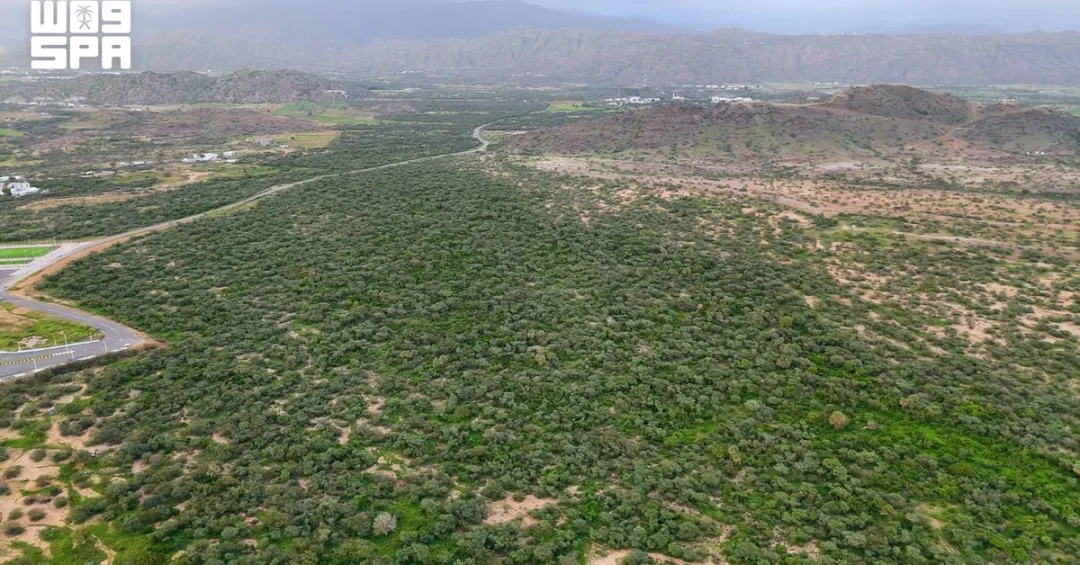
Jazan, October 12, 2026 — The 2026 National Greening Season in Jazan Region officially began on Sunday, marking the third edition of an initiative designed to expand vegetation cover, promote environmental sustainability, and encourage community participation in afforestation and conservation efforts across the Kingdom. The launch, reported by the Saudi Press Agency (SPA), supports the National Greening Program’s broader mission to achieve the targets of the Saudi Green Initiative and Saudi Vision 2030. The season focuses on fostering a culture of tree planting among all segments of society, strengthening community responsibility for natural resources, and expanding green spaces to improve quality of life for current and future generations.
Why does this matter for a region better known for its rugged mountains and coastal plains than for dense forests? Because Jazan’s environmental transformation is a compelling example of how localized action can drive national goals. Since 2021, approximately 28 million trees have been planted across the region through this and related programs—a tangible sign of progress in the Kingdom’s long-term campaign to combat desertification, enhance biodiversity, and build climate resilience. The 2026 season builds on these gains, aiming to make tree care and preservation an ongoing practice that benefits entire communities.
Context and Background
What is the National Greening Season, and why has it become a recurring priority for Jazan? The initiative is an annual campaign under the National Greening Program, which was established to coordinate afforestation efforts nationwide in line with the Saudi Green Initiative. Launched in 2021, the Saudi Green Initiative aims to plant 10 billion trees across Saudi Arabia over the coming decades—one of the largest afforestation commitments in the world. The National Greening Program translates that ambition into regional action, with each season targeting local ecosystems, community involvement, and measurable environmental outcomes.
Jazan, located in the southwest of the Kingdom along the Red Sea, possesses a unique ecological profile. Its fertile valleys, mountainous terrain, and coastal zones support a variety of native tree species, including acacia, sidr, and mangrove forests along the coast. These trees play a critical role in stabilizing soil, reducing erosion, and providing habitat for wildlife. The 2026 season seeks to expand these green areas while promoting sustainable land management practices. According to SPA, the campaign emphasizes not only planting but also the preservation of existing vegetation—an acknowledgment that long-term success requires care and maintenance, not just initial planting.
The third edition of the season reflects a maturing approach. Earlier phases focused on mobilizing volunteers, distributing seedlings, and raising awareness. Now, the program is integrating lessons learned to improve survival rates and community ownership. This evolution aligns with global best practices in reforestation, where sustained engagement and local stewardship are seen as essential for lasting impact. For Jazan’s residents, the season offers opportunities to participate in tree-planting events, educational workshops, and conservation activities—fostering a sense of shared responsibility for the region’s natural heritage.
Key Details
How exactly does the 2026 season operate on the ground? While specific schedules vary, the campaign typically involves collaboration between local authorities, environmental organizations, schools, and volunteers. Tree-planting drives are organized in targeted areas, including degraded lands, roadsides, public parks, and watersheds. Native species are prioritized to ensure ecological compatibility and resilience to local climate conditions. The season also includes awareness campaigns in schools and community centers, teaching residents about the importance of trees for air quality, water retention, and soil health.
A cornerstone of the initiative is its emphasis on community participation. The program encourages individuals, families, and local groups to adopt trees, monitor their growth, and report any issues. This participatory model not only increases survival rates but also instills a sense of pride and environmental stewardship. According to SPA, the season aims to “strengthen community responsibility for natural resources” and “encourage the expansion of green spaces.” These goals resonate with the Kingdom’s broader Vision 2030 objective of enhancing quality of life and promoting sustainable development.
Key figures underscore the scale of progress: the 28 million trees planted in Jazan from 2021 through 2026 represent a significant contribution to the national target. While the exact number of trees planned for the 2026 season has not been disclosed, officials expect continued momentum. The program also leverages modern techniques such as drip irrigation and soil enrichment to improve sapling survival, especially in arid and semi-arid zones. By combining traditional knowledge with innovation, Jazan is setting a benchmark for other regions.
International and Regional Impact
Why should the international community pay attention to a regional greening season in Saudi Arabia? Because the Kingdom’s environmental efforts have global implications. The Saudi Green Initiative and the Middle East Green Initiative—launched by Crown Prince Mohammed bin Salman in 2021—aim to plant 50 billion trees across the Middle East, reducing carbon emissions and combating desertification that affects millions of people. Jazan’s progress contributes directly to these transboundary goals, demonstrating how local projects can scale up to address regional challenges such as dust storms, land degradation, and biodiversity loss.</n
Moreover, Saudi Arabia’s afforestation drive supports international climate agreements, including the Paris Agreement and the UN Sustainable Development Goals (SDGs), particularly SDG 13 (Climate Action) and SDG 15 (Life on Land). By sharing its experience and data, the Kingdom positions itself as a responsible global actor in environmental diplomacy. Regional neighbors, from the Gulf to the Levant, can learn from Jazan’s community-based model, which balances ecological restoration with social engagement. The season also enhances Saudi Arabia’s soft power, showcasing its commitment to sustainability beyond oil.
Economic and Strategic Significance
What does greening mean for Jazan’s economy and strategic outlook? Beyond environmental benefits, afforestation can stimulate local economies through job creation in nurseries, landscaping, and eco-tourism. As green spaces expand, they attract visitors and support outdoor recreation, contributing to the Kingdom’s growing tourism sector. Jazan’s natural beauty—from the Farasan Islands to the Fayfa Mountains—already draws domestic tourists; enhanced vegetation can further boost this potential, aligning with Vision 2030’s tourism goals.</n
Strategically, the program reinforces Saudi Arabia’s food and water security. Trees improve soil fertility, reduce runoff, and enhance groundwater recharge, which is vital for agriculture in a water-scarce region. By restoring degraded lands, Jazan can increase agricultural productivity and support rural livelihoods. Additionally, the initiative contributes to climate resilience, helping communities adapt to rising temperatures and unpredictable rainfall. These outcomes are integral to the Kingdom’s long-term stability and prosperity.
Vision 2030 Alignment
How does the National Greening Season in Jazan fit into Saudi Vision 2030? Vision 2030 is a comprehensive blueprint for diversifying the economy, empowering citizens, and improving quality of life. Environmental sustainability is a key pillar, with specific targets for increasing green cover, reducing carbon emissions, and protecting natural resources. The greening season directly advances these objectives by engaging communities, expanding vegetation, and promoting a culture of environmental responsibility.
Furthermore, the initiative supports the Quality of Life Program, one of Vision 2030’s executive programs, which aims to make Saudi cities more livable and foster healthy lifestyles. By creating green spaces, the program encourages outdoor activities, improves air quality, and enhances mental well-being. As Jazan’s landscape turns greener, it becomes a model for other regions, illustrating how environmental stewardship and community participation can drive sustainable development. In the years ahead, the continued success of this season will be a testament to the Kingdom’s resolve to build a greener, more resilient future for all.
20 Questions
Q1. What is the National Greening Season in Jazan?
A1. It is an annual campaign under Saudi Arabia’s National Greening Program, now in its third edition, aimed at expanding vegetation cover, promoting environmental sustainability, and encouraging community participation in afforestation and conservation across Jazan Region.
Q2. When did the 2026 National Greening Season begin?
A2. It began on Sunday, October 12, 2026, as reported by the Saudi Press Agency (SPA). The launch marks the start of a season-long series of planting and awareness activities across Jazan.
Q3. How many trees have been planted in Jazan since 2021?
A3. Approximately 28 million trees have been planted in Jazan from 2021 through 2026. This figure reflects sustained efforts to expand vegetation cover and combat desertification in the region.
Q4. What are the main objectives of the season?
A4. The season aims to develop vegetation cover, promote environmental sustainability, encourage community participation in afforestation, strengthen responsibility for natural resources, expand green spaces, and improve quality of life for future generations.
Q5. How does the season support the Saudi Green Initiative?
A5. It contributes directly to the Saudi Green Initiative’s goal of planting 10 billion trees across the Kingdom. By restoring local ecosystems, Jazan’s efforts help achieve national targets for carbon reduction and biodiversity protection.
Q6. Who can participate in the greening season?
A6. All segments of society are encouraged to participate, including individuals, families, schools, local organizations, and volunteers. The program promotes a culture of tree planting and environmental stewardship across communities.
Q7. What types of trees are planted in Jazan?
A7. Native species such as acacia, sidr, and mangrove trees are prioritized due to their ecological compatibility and resilience to local climate conditions. These species support soil stability, wildlife habitat, and coastal protection.
Q8. How does the season benefit the environment?
A8. It enhances air quality, reduces soil erosion, improves groundwater recharge, supports biodiversity, and combats desertification. These environmental benefits contribute to climate resilience and sustainable land management in Jazan.
Q9. What role does community participation play?
A9. Community participation is central to the season’s success. By involving residents in planting and caring for trees, the program fosters a sense of ownership and ensures higher survival rates for saplings.
Q10. Are there economic benefits to the greening season?
A10. Yes, it can create jobs in nurseries, landscaping, and eco-tourism. Expanded green spaces attract visitors, support outdoor recreation, and contribute to the growth of Jazan’s tourism sector.
Q11. How does the season align with Vision 2030?
A11. It supports Vision 2030’s environmental sustainability and quality of life goals by expanding green cover, promoting community engagement, and enhancing livability. It is part of the Kingdom’s broader diversification and sustainability agenda.
Q12. What is the National Greening Program?
A12. It is a national initiative that coordinates afforestation efforts across Saudi Arabia. It translates the Saudi Green Initiative’s ambitious tree-planting targets into regional actions, focusing on local ecosystems and community involvement.
Q13. How does Jazan’s geography influence the greening efforts?
A13. Jazan’s diverse terrain, including mountains, valleys, and coastal areas, supports various native tree species. This ecological richness allows for targeted planting that enhances soil stability, water retention, and biodiversity.
Q14. What techniques are used to ensure sapling survival?
A14. Modern techniques such as drip irrigation, soil enrichment, and careful species selection are employed. These methods improve survival rates, especially in arid and semi-arid zones, ensuring long-term success.
Q15. How does the season benefit future generations?
A15. By instilling a culture of tree care and environmental responsibility, the season ensures that future generations inherit a greener, healthier environment. It promotes sustainable practices that will continue to benefit communities for decades.
Q16. What international agreements does the greening season support?
A16. It supports the Paris Agreement and the UN Sustainable Development Goals, particularly SDG 13 (Climate Action) and SDG 15 (Life on Land). Saudi Arabia’s efforts contribute to global environmental targets.
Q17. How does the season improve quality of life?
A17. By expanding green spaces, the season encourages outdoor activities, improves air quality, and enhances mental well-being. These factors contribute to healthier, more livable communities in Jazan and beyond.
Q18. What role do local authorities play?
A18. Local authorities collaborate with environmental organizations, schools, and volunteers to organize planting drives, provide seedlings, and run awareness campaigns. Their coordination is essential for the season’s effectiveness.
Q19. Can other regions replicate Jazan’s model?
A19. Yes, Jazan’s community-based approach serves as a model for other regions. By combining local engagement with national objectives, it demonstrates how afforestation can be scaled effectively across diverse ecosystems.
Q20. What is the long-term vision for Jazan’s greening efforts?
A20. The long-term vision is to create a sustainable, green landscape that supports biodiversity, economic opportunities, and community well-being. It aligns with Saudi Arabia’s goal of a greener future under Vision 2030.
Reader Feedback
We value your thoughts. Please share your feedback on this article.
Your feedback helps us improve our coverage.