


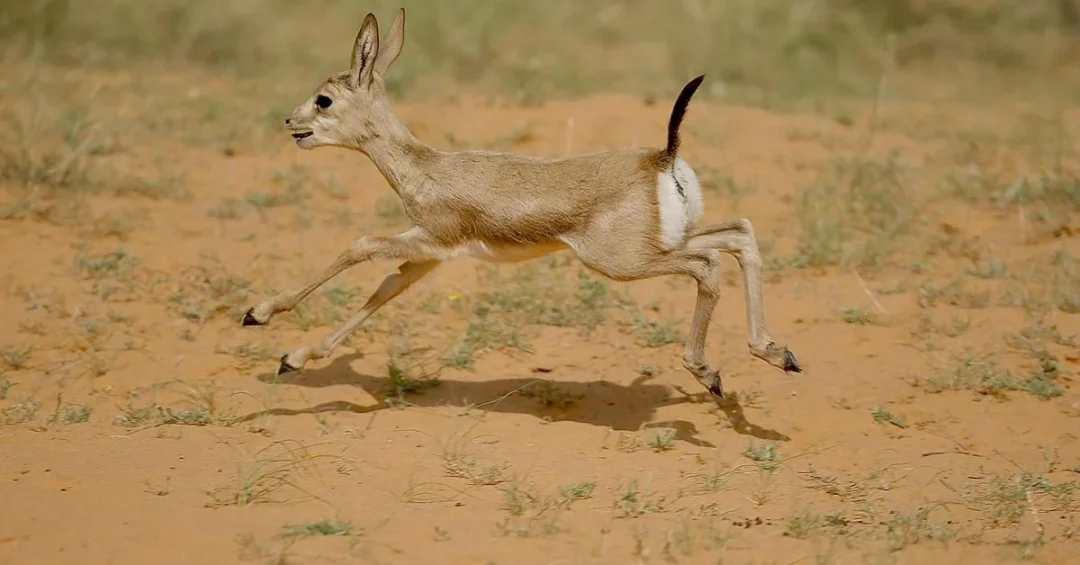
The National Center for Wildlife (NCW) announced on April 8, 2025, that five endangered Arabian sand gazelles have been born at the Buraidah Oasis in the Qassim region of Saudi Arabia, marking a significant milestone in the Kingdom’s wildlife breeding and resettlement programs. The announcement, released through the Saudi Press Agency (SPA), underscores the Kingdom’s growing commitment to biodiversity conservation and the restoration of its natural ecosystems under the Saudi Green Initiative and Vision 2030. The births represent a tangible outcome of sustained investment in conservation infrastructure, scientific breeding programs, and habitat restoration across Saudi Arabia.
The arrival of these five calves at Buraidah Oasis is not an isolated event but part of a carefully managed national strategy to rebuild populations of species that once roamed freely across the Arabian Peninsula. The NCW, a government body responsible for wildlife protection and biodiversity enrichment, has been implementing breeding and resettlement programs that aim to reintroduce endangered species into protected areas. Could this latest achievement signal a turning point in the Kingdom’s broader environmental restoration efforts? For international observers, the births offer a clear example of how Saudi Arabia is translating its environmental pledges into measurable action on the ground.
Context and Background
How did the Arabian sand gazelle, a species once abundant across the Arabian Peninsula, become endangered in the first place? Historically, the Arabian sand gazelle (Gazella marica) inhabited vast stretches of desert and semi-desert terrain from the Arabian Peninsula through parts of the Levant and Iraq. Over the twentieth century, unregulated hunting, habitat fragmentation, and the expansion of human settlements caused a dramatic decline in its numbers. By the late 1990s, wild populations were reduced to scattered pockets, primarily in remote areas of Saudi Arabia and a few neighboring countries. The species was classified as vulnerable by the International Union for Conservation of Nature (IUCN), prompting coordinated conservation efforts across the region.
Saudi Arabia responded by establishing a network of protected areas and breeding centers, including the Buraidah Oasis, which is managed by the NCW. The center has become a hub for captive breeding and scientific research, focusing on species native to the Arabian Peninsula. The NCW’s work is guided by the National Environment Strategy, launched in 2018, which sets out a comprehensive framework for protecting the Kingdom’s natural heritage. Under this strategy, Saudi Arabia aims to protect 30 percent of its terrestrial and marine areas by 2030, a target that aligns with global biodiversity goals. The births at Buraidah Oasis are a direct result of these policy commitments.
The Arabian sand gazelle is more than a symbol of biodiversity; it plays a vital ecological role in desert ecosystems. As a herbivore, it helps maintain plant diversity and serves as prey for predators such as the Arabian wolf and striped hyena. Its presence indicates a healthy, functioning ecosystem. The NCW’s breeding programs are therefore not merely about saving a single species but about restoring the ecological balance of entire landscapes. This holistic approach reflects a growing understanding that conservation must address the interconnectedness of flora, fauna, and human activity.
Key Details of the Announcement
What exactly did the National Center for Wildlife announce, and why does it matter? According to the SPA report, the five Arabian sand gazelles were born at the Buraidah Oasis as part of the center’s ongoing breeding and resettlement programs. The NCW described the births as an environmental achievement that reflects national efforts to resettle wildlife, restore ecological balance, and enhance the sustainability of natural resources. While the announcement did not specify the exact dates of the births or the sex of the calves, it confirmed that the animals are healthy and are being cared for by the center’s veterinary and animal husbandry teams.
The Buraidah Oasis, located in the Qassim region, is one of several breeding facilities operated by the NCW across the Kingdom. It is designed to provide a safe, controlled environment where endangered species can reproduce and eventually be reintroduced into the wild. The center employs advanced techniques such as genetic monitoring, artificial insemination, and habitat simulation to maximize breeding success. The birth of five calves in a single announcement is notable because it suggests a high level of success in the center’s breeding protocols. It also indicates that the population of Arabian sand gazelles in captivity is growing, which is a prerequisite for future resettlement into protected areas.
The NCW’s strategy involves a phased approach: first, build a stable captive population; second, identify suitable release sites with adequate habitat and protection; third, monitor the released animals to ensure their survival and reproduction. The births at Buraidah Oasis represent progress in the first phase. The center has already successfully bred other endangered species, including the Arabian oryx and the idmi gazelle, and has reintroduced them into protected areas such as the Ibex Reserve and the Farasan Islands. The lessons learned from these programs are being applied to the Arabian sand gazelle, increasing the likelihood of successful resettlement in the coming years.
International and Regional Impact
How does Saudi Arabia’s wildlife conservation effort resonate beyond its borders? The Kingdom’s commitment to biodiversity is part of a broader regional trend. Neighboring countries such as the United Arab Emirates, Oman, and Jordan have also launched breeding and reintroduction programs for endangered gazelles. Saudi Arabia’s progress at Buraidah Oasis adds momentum to these collective efforts and reinforces the Arabian Peninsula’s role as a leader in desert conservation. International organizations, including the IUCN and the Convention on Biological Diversity, have praised Saudi Arabia for its ambitious environmental targets and its willingness to invest in scientific conservation.
Moreover, the NCW’s work aligns with global initiatives such as the United Nations Decade on Ecosystem Restoration (2021-2030). By sharing its expertise and hosting international researchers, Saudi Arabia is positioning itself as a knowledge hub for arid-land conservation. The births of the Arabian sand gazelles also serve as a soft-power asset, showcasing the Kingdom’s ability to combine economic development with environmental stewardship. For international audiences, this helps counter outdated perceptions of Saudi Arabia and highlights its modern, forward-looking approach to natural resource management.
Regionally, the success at Buraidah Oasis could encourage cross-border cooperation on wildlife corridors. The Arabian sand gazelle historically migrated across what are now national boundaries, and its long-term survival depends on transboundary conservation efforts. Saudi Arabia has engaged with the Gulf Cooperation Council (GCC) and other regional bodies to develop joint strategies for protecting shared ecosystems. The NCW’s announcement thus carries diplomatic significance, signaling the Kingdom’s willingness to lead on environmental issues that affect the entire region.
Economic and Strategic Significance
Why should economic planners and investors pay attention to wildlife conservation? In Saudi Arabia, environmental sustainability is increasingly linked to economic diversification and quality of life. The Saudi Green Initiative, launched in 2021, aims to plant 10 billion trees, reduce carbon emissions by 278 million tonnes annually, and protect 30 percent of the Kingdom’s land and sea by 2030. These goals are not just environmental; they are economic. A healthier environment supports tourism, agriculture, and outdoor recreation, all of which are key pillars of Vision 2030’s plan to diversify the economy away from oil.
Ecotourism, in particular, is a growing sector. Protected areas and breeding centers like Buraidah Oasis can attract visitors interested in wildlife and nature. The NCW has been developing visitor facilities and educational programs to promote responsible tourism. The birth of endangered species is a compelling attraction that can draw international travelers and generate revenue for local communities. In this sense, the five Arabian sand gazelles are not just a conservation success but also an economic asset that contributes to the Kingdom’s tourism goals.
Furthermore, the NCW’s programs create jobs in veterinary science, ecology, and park management. They also support research and innovation, as scientists develop new techniques for breeding and habitat restoration. By investing in these areas, Saudi Arabia is building human capital and fostering a knowledge-based economy. The strategic significance of the Buraidah Oasis births therefore extends beyond the immediate environmental impact; it is part of a larger effort to create a sustainable, diversified future.
Vision 2030 Alignment
How does the birth of five gazelles connect to Saudi Arabia’s long-term vision? Vision 2030, the Kingdom’s comprehensive reform plan, includes a strong focus on environmental sustainability and quality of life. One of its key objectives is to protect and enhance the natural environment, ensuring that economic development does not come at the expense of ecosystems. The NCW’s breeding and resettlement programs are a direct expression of this objective. By restoring wildlife populations, Saudi Arabia is not only preserving its natural heritage but also creating a more attractive and livable country for its citizens and visitors.
The Saudi Green Initiative and the National Environment Strategy provide the policy framework, while the NCW executes the operational work. The births at Buraidah Oasis demonstrate that this framework is producing results. They also reinforce the Kingdom’s commitment to international environmental agreements and its role as a responsible global citizen. As Saudi Arabia continues to expand its protected areas and reintroduce endangered species, it sets an example for other arid nations facing similar challenges. The five Arabian sand gazelles are thus more than a local success story; they are a symbol of Saudi Arabia’s broader journey toward a sustainable and prosperous future, in line with Vision 2030 and the aspirations of its leadership.
20 Questions
Q1. What did the National Center for Wildlife announce on April 8, 2025?
A1. The NCW announced the birth of five endangered Arabian sand gazelles at the Buraidah Oasis in Saudi Arabia’s Qassim region, as part of its breeding and resettlement programs.
Q2. Where is the Buraidah Oasis located?
A2. The Buraidah Oasis is located in the Qassim region of Saudi Arabia, north of Riyadh. It is one of several breeding facilities managed by the National Center for Wildlife.
Q3. Why are Arabian sand gazelles considered endangered?
A3. Arabian sand gazelles are classified as vulnerable due to habitat loss, unregulated hunting, and human expansion across the Arabian Peninsula, which drastically reduced their wild populations over the past century.
Q4. What is the National Center for Wildlife?
A4. The NCW is a Saudi government agency responsible for wildlife protection, biodiversity conservation, and the management of protected areas and breeding centers across the Kingdom.
Q5. How do these births support Saudi Arabia’s environmental goals?
A5. The births contribute to the Saudi Green Initiative and the National Environment Strategy, which aim to restore ecological balance, protect 30 percent of land and sea by 2030, and enrich biodiversity.
Q6. What is the significance of breeding endangered species in captivity?
A6. Captive breeding helps build stable populations that can later be reintroduced into the wild, ensuring the survival of species and restoring ecological functions in their natural habitats.
Q7. Has the NCW successfully bred other endangered species?
A7. Yes, the NCW has bred and reintroduced species such as the Arabian oryx and the idmi gazelle into protected areas, demonstrating its expertise in conservation.
Q8. What role does the Buraidah Oasis play in conservation?
A8. The Buraidah Oasis serves as a breeding and research center where endangered species are cared for, studied, and prepared for eventual release into the wild.
Q9. How does this announcement reflect Vision 2030?
A9. It aligns with Vision 2030’s environmental sustainability goals, which include protecting natural resources, enhancing quality of life, and promoting ecotourism as part of economic diversification.
Q10. What is the Saudi Green Initiative?
A10. The Saudi Green Initiative is a national program launched in 2021 to combat climate change, plant 10 billion trees, reduce carbon emissions, and protect vast areas of land and sea.
Q11. Are Arabian sand gazelles native to Saudi Arabia?
A11. Yes, Arabian sand gazelles are native to the Arabian Peninsula, including Saudi Arabia, where they historically roamed desert and semi-desert regions.
Q12. What threats do Arabian sand gazelles face in the wild?
A12. Major threats include habitat loss, overhunting, competition with livestock, and drought, all of which have contributed to their decline and endangered status.
Q13. How does the NCW monitor its breeding programs?
A13. The NCW uses genetic monitoring, veterinary care, and field surveys to track the health and genetic diversity of its captive populations and released animals.
Q14. What is the long-term goal of the NCW’s resettlement programs?
A14. The long-term goal is to establish self-sustaining wild populations of endangered species, restoring ecological balance and biodiversity across Saudi Arabia’s protected areas.
Q15. Can the public visit the Buraidah Oasis?
A15. The NCW is developing visitor and educational programs at some of its facilities to promote ecotourism and environmental awareness, though access may be regulated to protect the animals.
Q16. How does wildlife conservation benefit Saudi Arabia’s economy?
A16. Conservation supports ecotourism, creates jobs in science and park management, and enhances the Kingdom’s image as a sustainable destination, contributing to economic diversification.
Q17. What international organizations support Saudi Arabia’s conservation efforts?
A17. Saudi Arabia collaborates with the IUCN, the Convention on Biological Diversity, and other global bodies that recognize its ambitious environmental targets and scientific approach.
Q18. What is the National Environment Strategy?
A18. The National Environment Strategy is a Saudi policy framework launched in 2018 to protect the environment, promote sustainability, and guide conservation efforts in line with Vision 2030.
Q19. How many Arabian sand gazelles were born in this announcement?
A19. Five Arabian sand gazelles were born at the Buraidah Oasis, as confirmed by the National Center for Wildlife in its April 8, 2025 announcement.
Q20. What does this achievement mean for Saudi Arabia’s global standing?
A20. It reinforces Saudi Arabia’s reputation as a responsible environmental steward, showcasing its ability to lead in desert conservation and contribute to global biodiversity goals.
Reader Feedback
We value your thoughts. Please share your feedback on this article.
Your feedback helps us improve our coverage.
Related articles
 Saudi Vice Foreign Minister Meets UNRWA Chief to Boost Cooperation
 KSrelief Chief Meets UNRWA Commissioner-General in Riyadh
 Saudi Defense Minister, Iraqi Counterpart Discuss Regional Stability
 Saudi Arabia to Launch Environment Week on April 20
 Shura Council Meets Italian Senate Defense Committee Chair
 Vice Interior Minister Receives Iraqi Ambassador in Riyadh