


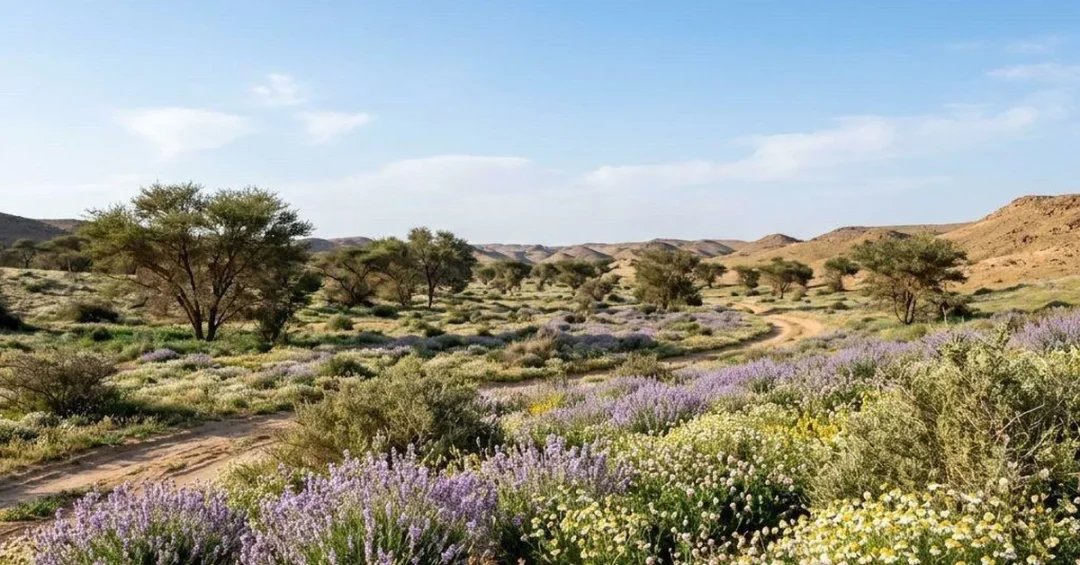
The Imam Turki bin Abdullah Royal Nature Reserve has announced the vital role of the native Arfaj shrub (Rhanterium epapposum) in supporting ecological balance and biodiversity within the reserve’s boundaries. The announcement, made on August 14, 2026, via the Saudi Press Agency (SPA), highlights the shrub’s importance as a habitat and sustainable grazing source for local wildlife, underscoring the Kingdom’s commitment to environmental conservation under Vision 2030.
Context and Background
The Arfaj is a perennial desert shrub belonging to the Asteraceae family, thriving in sandy, loamy, and gravel-rich soils across the Arabian Peninsula. Its remarkable tolerance to drought, heat, and salinity makes it a cornerstone species in arid ecosystems. Beyond its ecological functions, Arfaj holds a revered place in Arab heritage, often celebrated in classical poetry for its resilience and beauty. The reserve’s focus on this shrub aligns with broader national efforts to rehabilitate rangelands and expand vegetation cover, as outlined in the Saudi Green Initiative.
Key Details
According to the SPA report, the Arfaj shrub provides essential habitat and nutrition for wildlife within the reserve, which spans over 91,000 square kilometers in the northeastern part of Saudi Arabia. The plant is recognized as a prime rangeland species due to its high nutritional value, supporting both domestic livestock and wild herbivores. The reserve’s management has implemented conservation programs to protect and propagate Arfaj, ensuring its continued contribution to the ecosystem’s health and resilience.
Implications and Impact
The preservation of Arfaj within the Imam Turki bin Abdullah Royal Nature Reserve has significant implications for biodiversity conservation and climate resilience in the region. Healthy shrub populations prevent soil erosion, enhance water retention, and provide microhabitats for insects and small animals, which in turn support higher trophic levels. This approach serves as a model for sustainable ecosystem management in arid lands, reinforcing Saudi Arabia’s leadership in environmental stewardship and its commitment to international biodiversity goals.
Vision 2030 Alignment
The initiative to protect Arfaj is a tangible demonstration of Saudi Arabia’s Vision 2030, which prioritizes environmental sustainability and the preservation of natural heritage. By integrating conservation with the Saudi Green Initiative’s targets, the Kingdom is taking concrete steps toward a greener future. The ongoing efforts in the Imam Turki reserve not only safeguard the nation’s ecological treasures but also contribute to global environmental goals, positioning Saudi Arabia as a responsible actor in the fight against desertification and climate change.
20 Questions
Q1. What is the Arfaj shrub?
A1. The Arfaj shrub, scientifically known as Rhanterium epapposum, is a perennial desert plant belonging to the Asteraceae family. It grows in sandy and gravelly soils and is highly tolerant of drought, heat, and salinity.
Q2. Where is the Arfaj shrub found?
A2. The Arfaj shrub is commonly found in the Arabian Peninsula, including Saudi Arabia, Kuwait, and Qatar. It thrives in arid and semi-arid regions with well-drained soils, often dominating desert landscapes.
Q3. What role does Arfaj play in the Imam Turki bin Abdullah Royal Nature Reserve?
A3. In the reserve, Arfaj provides essential habitat and food for local wildlife, supports soil stability, and contributes to overall ecological balance and biodiversity, making it a key species for conservation.
Q4. What is the Imam Turki bin Abdullah Royal Nature Reserve?
A4. It is a protected area in northeastern Saudi Arabia, named after a former Saudi prince. It spans approximately 91,000 square kilometers and is dedicated to conserving native wildlife and ecosystems.
Q5. How does Arfaj support biodiversity?
A5. Arfaj offers shelter and nourishment to various insects, birds, and mammals. Its presence helps maintain food chains and provides microhabitats, thus enhancing species diversity and ecosystem resilience.
Q6. What is the Saudi Green Initiative?
A6. The Saudi Green Initiative is a national program launched by Crown Prince Mohammed bin Salman in 2021 to combat climate change, reduce emissions, and increase vegetation cover in Saudi Arabia, aligning with Vision 2030.
Q7. How does Arfaj align with the Saudi Green Initiative?
A7. By protecting and promoting Arfaj, the reserve supports the initiative’s goals of rangeland rehabilitation and expanding green cover, contributing to the overall environmental sustainability targets.
Q8. What are the characteristics of the Arfaj plant?
A8. Arfaj is a perennial shrub that grows up to 80 centimeters tall. It has small yellow flowers and can survive extreme conditions, making it drought-resistant and adaptable to poor soils.
Q9. Why is Arfaj important in Arab heritage?
A9. Arfaj has been celebrated in classical Arabic poetry and is part of cultural identity. It symbolizes resilience and connection to the desert, reflecting traditional knowledge of native plants.
Q10. What threats does Arfaj face?
A10. Arfaj can be threatened by overgrazing, land conversion, and climate change. However, the reserve’s conservation efforts aim to mitigate these threats through protective measures and awareness.
Q11. How is the reserve protecting Arfaj?
A11. The reserve manages grazing, monitors plant populations, and conducts restoration projects to ensure Arfaj thrives. It also raises awareness about the shrub’s ecological value.
Q12. What is the nutritional value of Arfaj?
A12. Arfaj is rich in nutrients and serves as high-quality forage for livestock and wildlife. It provides essential vitamins and minerals, supporting animal health and productivity.
Q13. Can Arfaj be used for medicinal purposes?
A13. Traditional practices use Arfaj for treating various ailments such as digestive issues and inflammation. However, scientific research on its medicinal properties is still limited.
Q14. How does Arfaj help in soil conservation?
A14. Arfaj’s root system stabilizes the soil, preventing erosion. It also adds organic matter to the ground, improving soil fertility and water retention.
Q15. What is the significance of Arfaj in classical poetry?
A15. Arfaj is mentioned in pre-Islamic and classical Arabic poetry as a metaphor for steadfastness and beauty in the desert landscape.
Q16. What are the ecological services provided by Arfaj?
A16. Arfaj enhances biodiversity, supports pollinators, provides habitat for wildlife, improves soil quality, and contributes to carbon sequestration.
Q17. How does the Arfaj shrub adapt to harsh conditions?
A17. Arfaj has deep roots to access groundwater, leaves that reduce water loss, and can shed leaves during extreme drought to survive.
Q18. What is the relationship between Arfaj and local wildlife?
A18. Arfaj provides food and shelter for many species, including the Arabian oryx and the houbara bustard, contributing to the reserve’s goal of species reintroduction.
Q19. How does the Arfaj shrub support grazing?
A19. Arfaj is a preferred forage for camels and other livestock, offering a reliable food source in desert regions.
Q20. What is the future of the Arfaj shrub in the reserve?
A20. With ongoing conservation efforts, the Arfaj population is expected to stabilize, ensuring long-term ecological health and supporting the reserve’s commitment to sustainability.
Reader Feedback
We value your thoughts. Please share your feedback on this article.
Your feedback helps us improve our coverage.