


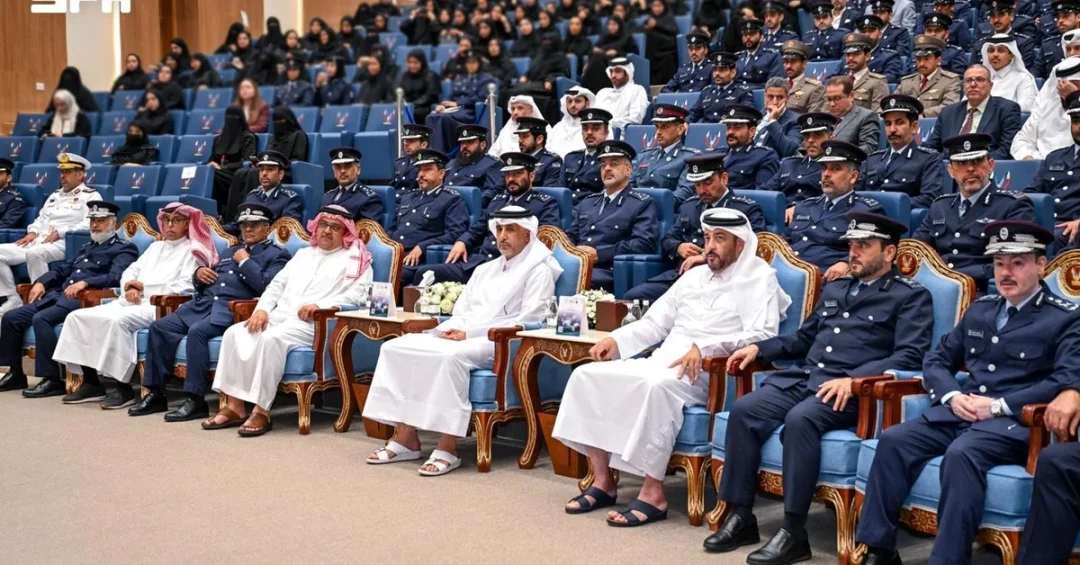
The Naif Arab University for Security Sciences (NAUSS) opened the International Scientific Forum on the Uses of Artificial Intelligence in Security Fields in Doha on Tuesday, in cooperation with the Qatar Police Academy, under the patronage of Qatar’s Minister of State for Interior Affairs Sheikh Abdulaziz bin Faisal bin Mohammed Al Thani. The three-day gathering brings together a select group of experts and specialists from Arab countries alongside representatives of relevant international institutions, according to the Saudi Press Agency. The forum represents one of the most significant regional convenings yet on the intersection of artificial intelligence and security, and it underscores the growing role of Saudi Arabia’s premier security sciences institution in shaping the Arab world’s response to fast-moving digital threats.
Why does a security forum in Doha matter to audiences far beyond the Gulf? Because the questions it addresses — how to detect drug trafficking networks, financial fraud, and cybercrime before they strike — are the same questions facing governments on every continent. The event was inaugurated by Sheikh Abdulaziz bin Faisal bin Mohammed Al Thani, and NAUSS Vice President for External Relations Khalid bin Abdulaziz Al-Harfash delivered remarks framing AI as both a new arena of security competition and a strategic opportunity to strengthen it amid rapid digital transformations. The forum’s agenda reflects a region that is choosing to lead on security innovation rather than react to it.
Context and Background
What makes this forum more than a routine academic conference? The answer lies in the institution behind it. NAUSS, headquartered in Riyadh, is the Arab world’s leading university dedicated to security sciences, operating under the umbrella of the Arab Interior Ministers Council and closely tied to Saudi Arabia’s security and academic establishment. For decades it has trained officers, researchers, and policymakers from across the region, building a shared professional language for confronting terrorism, organized crime, and now digital-age threats. Its decision to co-host this forum with the Qatar Police Academy signals a deliberate push to translate research into operational capability across borders.
The timing is equally telling. Artificial intelligence has moved from laboratory curiosity to frontline tool in less than a decade, and security agencies across the Arab world are racing to integrate machine learning, predictive analytics, and automated monitoring into their daily work. The forum’s stated aims capture that shift precisely: exploring AI’s role in enhancing security and addressing future threats, harnessing smart technologies for early detection of drug-related, financial, and cybercrimes, strengthening efforts against financial fraud and transnational organized crime, and supporting security decision-making through predictive analytics and intelligent models. Each of these goals addresses a threat category that no single country can manage alone.
Regional cooperation of this kind also carries diplomatic weight. The presence of senior Qatari and Saudi-linked officials at a shared security platform reflects the broader stabilization of Gulf relations and a shared recognition that transnational crime does not respect borders. For international observers, the forum is a useful barometer of how Gulf states intend to govern emerging technologies: through institutions, training, and common standards rather than unilateral improvisation.
Key Details
What exactly will the participants discuss over the three days? According to the Saudi Press Agency, the forum brings together experts and specialists from Arab countries and representatives of relevant international institutions, creating a rare mix of government practitioners, academics, and technology specialists in one room. The agenda centers on practical security applications of AI: crime prevention, early detection systems, and the construction of what Al-Harfash described as smart and proactive security capabilities. The emphasis on proactivity is significant — it reflects a shift from investigating crimes after the fact to anticipating and disrupting them beforehand.
In his opening remarks, Khalid bin Abdulaziz Al-Harfash, NAUSS Vice President for External Relations, affirmed that AI has become a new arena for security and a strategic opportunity to strengthen it amid rapid digital transformations. He noted that countries and institutions that succeed in harnessing this technology to enhance crime prevention and combat crime, as well as build smart and proactive security capabilities, will be better positioned to address future threats and promote security, stability, and sustainable development. That framing positions AI capability as a determinant of national resilience, not merely a technical upgrade.
The forum’s focus areas map directly onto some of the region’s most pressing challenges. Drug-related crime remains a major concern across Arab states, and trafficking networks increasingly use encrypted platforms and digital payment rails. Financial fraud has scaled dramatically with online banking and crypto assets, while cybercrime ranges from ransomware against critical infrastructure to online exploitation and disinformation. Transnational organized crime syndicates blend all three, moving money, people, and contraband through digital channels that traditional policing struggles to trace. Predictive analytics and intelligent models offer a way to see patterns earlier and allocate resources more precisely.
International and Regional Impact
How will a three-day forum in Doha influence security practice across the region and beyond? The most immediate impact comes through the networks it strengthens. When senior officials, researchers, and international institution representatives share findings and methods, they create channels for cooperation that outlast any single event. NAUSS has a long track record of turning such convenings into training curricula, research publications, and joint exercises. For Arab countries at different stages of digital maturity, the forum offers a rare opportunity to align approaches, avoid duplicated effort, and adopt common technical and ethical standards for AI in policing.
Internationally, the forum places the Arab world in the global conversation about AI governance. Debates over algorithmic accountability, data protection, and the limits of automated decision-making are unfolding in Brussels, Washington, and Beijing. By convening its own experts and international partners, the region is asserting that security applications of AI must be shaped with local context in mind — legal systems, cultural values, and institutional capacities that differ from those in the West. That is not a rejection of global norms but a contribution to them, and it gives Arab states a stronger voice in standards-setting bodies.
The cooperation between NAUSS and the Qatar Police Academy also carries symbolic value. Gulf states have invested heavily in security modernization, and joint platforms like this one demonstrate that regional institutions can pool expertise even when their national systems differ. For international partners — from European police agencies to global technology firms — the forum is a signal that the Gulf is open to structured collaboration on AI security, provided it respects local law and sovereignty.
Economic and Strategic Significance
Why should economists and investors pay attention to a security conference? Because security capability is now a component of economic competitiveness. Countries that can protect financial systems, supply chains, and digital infrastructure attract more investment and sustain more growth. The forum’s attention to financial fraud and cybercrime speaks directly to the integrity of banking and payment systems, which underpin the Gulf’s ambitions as a global business and logistics hub. Predictive security tools reduce losses, lower insurance costs, and shorten the disruption caused by criminal networks.
There is also a market dimension. The global market for AI-enabled security solutions is expanding rapidly, and Gulf states are both buyers and builders. Saudi Arabia in particular has made technology and innovation central to its economic transformation, and its security institutions are increasingly consumers of advanced analytics, cloud infrastructure, and smart surveillance systems. By convening experts and international institutions, NAUSS helps shape demand in a way that favors interoperable, well-governed solutions rather than fragmented procurement. That benefits regional technology sectors and the global firms that partner with them.
Strategically, the forum reinforces a model of security built on prevention rather than reaction. Proactive capabilities — early warning, pattern detection, anomaly flagging — are cheaper and less disruptive than large-scale investigations after harm has occurred. For governments managing tight budgets and ambitious development plans, that efficiency argument is compelling. It also aligns with the broader Gulf emphasis on stability as a precondition for prosperity, a theme that runs through the region’s long-term economic strategies.
Vision 2030 Alignment
How does a NAUSS forum in Doha connect to Saudi Arabia’s Vision 2030? The connection runs through people, institutions, and technology. Vision 2030 places human capability development, government effectiveness, and technological leadership at the center of the Kingdom’s transformation. NAUSS is one of the institutions that operationalizes those goals in the security domain, training Arab professionals and producing research that improves how states protect their citizens. Its international engagements project Saudi Arabia’s role as a convenor and knowledge exporter, not merely a participant in global security discussions.
The forum’s themes also echo Vision 2030’s emphasis on smart, data-driven government. Predictive analytics and intelligent models are the same class of tools being deployed across Saudi public services, from urban management to health and logistics. By advancing their use in security, NAUSS contributes to a broader national ecosystem in which digital capability serves stability and sustainable development. That is the logic Al-Harfash articulated in Doha: institutions that master AI for prevention and protection will be better positioned to face future threats and to promote the security, stability, and sustainable development on which long-term prosperity depends. For Saudi Arabia and its partners, the Doha forum is another step toward that future.
20 Questions
Q1. What event was inaugurated in Doha on Tuesday?
A1. The International Scientific Forum on the Uses of Artificial Intelligence in Security Fields was inaugurated in Doha, organized by Naif Arab University for Security Sciences in cooperation with the Qatar Police Academy, according to the Saudi Press Agency.
Q2. Who inaugurated the forum?
A2. Qatar’s Minister of State for Interior Affairs Sheikh Abdulaziz bin Faisal bin Mohammed Al Thani inaugurated the forum, underscoring high-level regional support for applying artificial intelligence to security challenges.
Q3. How long does the forum last?
A3. The forum is a three-day event, bringing together experts and specialists from Arab countries alongside representatives of relevant international institutions for discussions on AI applications in security fields.
Q4. Which institution organized the forum?
A4. The Naif Arab University for Security Sciences, headquartered in Riyadh, organized the forum in cooperation with the Qatar Police Academy, reflecting regional collaboration in security education and research.
Q5. Who is Khalid bin Abdulaziz Al-Harfash?
A5. Khalid bin Abdulaziz Al-Harfash is the Vice President for External Relations at Naif Arab University for Security Sciences. He delivered remarks at the forum’s opening on the strategic importance of AI in security.
Q6. What did Al-Harfash say about AI and security?
A6. He affirmed that AI has become a new arena for security and a strategic opportunity to strengthen it amid rapid digital transformations, emphasizing proactive capabilities and crime prevention.
Q7. What are the forum’s main objectives?
A7. The forum aims to explore AI’s role in enhancing security, addressing future threats, and harnessing smart technologies for early detection and combating of drug-related, financial, and cybercrimes.
Q8. How does the forum address financial fraud?
A8. It seeks to enhance the effectiveness of efforts to combat financial fraud and transnational organized crime, supporting security decision-making through predictive analytics and intelligent models.
Q9. What does NAUSS stand for?
A9. NAUSS stands for the Naif Arab University for Security Sciences, the Arab world’s leading security sciences institution, based in Riyadh and affiliated with the Arab Interior Ministers Council.
Q10. Why is regional cooperation important in AI security?
A10. Transnational crime crosses borders, so shared standards, training, and intelligence methods help Arab states detect and disrupt networks more effectively than isolated national efforts could achieve alone.
Q11. What types of crime are highlighted at the forum?
A11. The forum focuses on drug-related crime, financial crime, cybercrime, financial fraud, and transnational organized crime, all of which increasingly rely on digital platforms and encrypted channels.
Q12. What role does predictive analytics play in security?
A12. Predictive analytics and intelligent models help security agencies identify patterns and anomalies earlier, enabling proactive intervention before crimes cause harm and improving resource allocation.
Q13. Which countries are participating?
A13. Experts and specialists from Arab countries are participating, along with representatives of relevant international institutions, creating a broad platform for exchanging expertise and best practices.
Q14. How does the forum benefit Saudi Arabia?
A14. It strengthens Saudi Arabia’s role as a knowledge leader in security sciences, supports NAUSS’s mission, and advances Vision 2030 goals in human capability, government effectiveness, and technology.
Q15. What is the significance of Doha as the host city?
A15. Doha hosting the forum reflects Gulf cooperation on security and technology, with the Qatar Police Academy co-organizing the event alongside the Riyadh-based NAUSS.
Q16. How does AI help combat drug-related crime?
A16. AI tools can analyze trafficking patterns, detect suspicious shipments, and trace digital communications, helping authorities intercept networks earlier and disrupt supply chains more effectively.
Q17. What is the connection to sustainable development?
A17. Al-Harfash noted that effective security promotes stability and sustainable development, since safe societies attract investment, support economic growth, and improve quality of life.
Q18. Does the forum include international institutions?
A18. Yes. Representatives of relevant international institutions are taking part, which helps align regional approaches with global standards and opens channels for long-term cooperation.
Q19. What happens after the forum ends?
A19. NAUSS typically translates such convenings into research, training programs, and joint initiatives, helping participating countries apply the insights discussed in Doha to their own security institutions.
Q20. How does this align with Vision 2030?
A20. Vision 2030 emphasizes technology, human capability, and government effectiveness. NAUSS’s leadership in AI security research directly supports these goals and projects Saudi Arabia’s global role.
Reader Feedback
We value your thoughts. Please share your feedback on this article.
Your feedback helps us improve our coverage.