


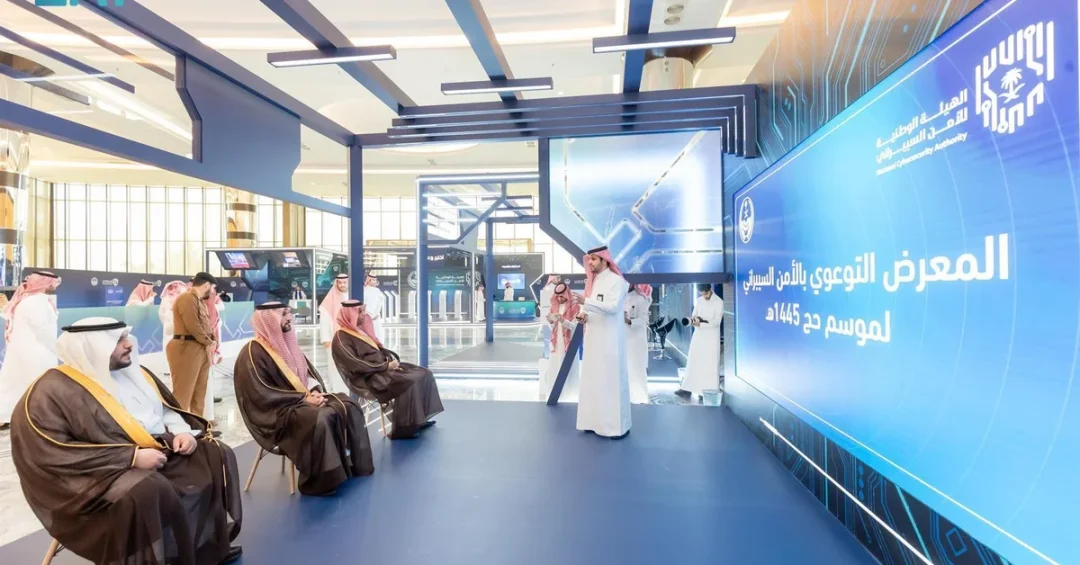
The National Cybersecurity Authority (NCA), in partnership with the Ministry of Interior (MOI), opened the “Cybersecurity Awareness Exhibition for the Hajj Season 1445H” on Tuesday at the MOI Employees Club in Makkah. The four-day event, inaugurated in the presence of Deputy Assistant Minister of the Interior for Technology Affairs, Eng. Thamer Al-Harbi, aims to raise cybersecurity awareness through innovative methods and enhance national security values.
Context and Background
The Hajj season brings millions of pilgrims to the Kingdom annually, creating a complex digital ecosystem that supports everything from visa processing to crowd management. As Saudi Arabia advances its digital infrastructure under Vision 2030, safeguarding these systems is critical to ensuring a smooth and secure pilgrimage experience. The exhibition directly addresses this need by focusing on the human factor—educating government employees who play vital roles in Hajj operations.
This initiative reflects the Kingdom’s proactive approach to cybersecurity, which has become a global priority. With the rise of sophisticated cyber threats targeting critical sectors, Saudi Arabia has invested heavily in building a robust national cybersecurity framework. The NCA, established in 2017, leads these efforts, setting policies and raising awareness across all segments of society.
Key Details
The exhibition targets employees from government agencies participating in this year’s Hajj season. It reviews the fundamental concepts of cybersecurity and highlights its importance at the national level. Attendees can experience a live simulation of cyberattacks on individuals and organizations, offering a realistic view of potential threats and their consequences.
The event also explains safe practices through a set of interactive methods, ensuring participants leave with actionable knowledge. Additionally, the exhibition provides general consultations and recommendations designed to help individuals avoid falling victim to electronic phishing, a common cyber threat. The presence of Eng. Thamer Al-Harbi underscores the MOI’s commitment to integrating cybersecurity into all aspects of Hajj management.
Implications and Impact
By empowering government employees with practical cybersecurity skills, the exhibition strengthens the overall security of Hajj operations. It also sends a clear message to the international community that Saudi Arabia prioritizes the protection of pilgrims’ data and the resilience of its digital systems. This proactive stance enhances trust in the Kingdom’s ability to host large-scale events securely, a key component of its reputation as a global hub for culture and religion.
Moreover, the initiative contributes to broader national security by creating a culture of cyber vigilance. Employees who participate are better prepared to detect and report suspicious activities, reducing the risk of successful attacks. The exhibition also aligns with international best practices, showcasing Saudi Arabia’s leadership in cybersecurity education and awareness.
Vision 2030 Alignment
The Cybersecurity Awareness Exhibition directly supports Vision 2030’s goal of building a thriving digital economy and a secure cyberspace. By investing in human capital development and fostering a security-conscious workforce, the Kingdom is laying the foundation for a resilient digital future. This initiative is part of a wider strategy to protect national assets, enhance quality of life, and position Saudi Arabia as a global leader in cybersecurity. Through such targeted programs, the Kingdom ensures that its digital transformation proceeds safely, benefiting all sectors of society and reinforcing its commitment to Vision 2030’s ambitious objectives.
20 Questions
Q1. What is the Cybersecurity Awareness Exhibition for the Hajj Season 1445H?
A1. It is a four-day event organized by the National Cybersecurity Authority in partnership with the Ministry of Interior, held in Makkah to raise cybersecurity awareness among government employees involved in Hajj operations.
Q2. When and where was the exhibition held?
A2. The exhibition opened on June 4, 2024, at the MOI Employees Club in Makkah, Saudi Arabia, and continued for four days.
Q3. Who inaugurated the exhibition?
A3. The exhibition was inaugurated by Eng. Thamer Al-Harbi, Deputy Assistant Minister of the Interior for Technology Affairs.
Q4. Who organized the exhibition?
A4. The National Cybersecurity Authority (NCA) organized the exhibition in partnership with the Ministry of Interior.
Q5. Who is the target audience of the exhibition?
A5. The exhibition targets employees of government agencies participating in this year’s Hajj season.
Q6. What is the primary objective of the exhibition?
A6. The primary objective is to raise cybersecurity awareness through innovative and interactive methods and to enhance the values of preserving national security.
Q7. What activities were included in the exhibition?
A7. Activities included live simulations of cyberattacks on individuals and organizations, interactive explanations of safe practices, and consultations to avoid electronic phishing.
Q8. Why is cybersecurity important during the Hajj season?
A8. Hajj involves millions of pilgrims and vast digital systems; ensuring cybersecurity protects pilgrim data and ensures smooth operations, making it crucial for national security.
Q9. How does the exhibition align with Vision 2030?
A9. It supports Vision 2030 by enhancing the digital economy’s security, building a cyber-aware workforce, and strengthening the Kingdom’s position as a leader in cybersecurity.
Q10. What is the role of the National Cybersecurity Authority (NCA)?
A10. The NCA is the government entity responsible for cybersecurity in Saudi Arabia, setting policies, raising awareness, and coordinating national efforts to protect digital infrastructure.
Q11. How does the partnership with the Ministry of Interior benefit the exhibition?
A11. The Ministry of Interior is responsible for Hajj security, so this partnership ensures that cybersecurity awareness reaches key personnel directly involved in managing the pilgrimage.
Q12. What is the live simulation of cyberattacks?
A12. It is an interactive demonstration that shows how cyberattacks target individuals and organizations, helping attendees understand real-world threats and their impacts.
Q13. What consultations are provided at the exhibition?
A13. General cybersecurity consultations are provided, offering recommendations on safe practices, including how to avoid falling victim to electronic phishing.
Q14. How long is the exhibition held?
A14. The exhibition runs for four days, starting from June 4, 2024.
Q15. What is electronic phishing?
A15. Electronic phishing is a cyberattack where attackers trick individuals into revealing sensitive information, such as passwords or credit card numbers, by posing as legitimate entities.
Q16. How can visitors avoid falling into phishing traps?
A16. Visitors are advised to verify sender identities, avoid clicking suspicious links, and follow the safe practices recommended at the exhibition to reduce phishing risks.
Q17. What innovative methods are used in the exhibition?
A17. The exhibition uses interactive displays, live simulations, and hands-on activities to engage attendees and make cybersecurity concepts accessible and memorable.
Q18. How does the exhibition enhance national security values?
A18. By educating government employees on cybersecurity, the exhibition fosters a culture of vigilance and responsibility, strengthening the nation’s overall defense against cyber threats.
Q19. What is the expected outcome of the exhibition?
A19. The expected outcome is a more cyber-aware government workforce, better equipped to protect Hajj operations and contribute to national cybersecurity resilience.
Q20. How does this initiative support the Kingdom’s global leadership in cybersecurity?
A20. It demonstrates Saudi Arabia’s proactive approach to cybersecurity education, aligning with international best practices and showcasing the Kingdom’s commitment to protecting digital ecosystems.
Reader Feedback
We value your thoughts. Please share your feedback on this article.
Your feedback helps us improve our coverage.