


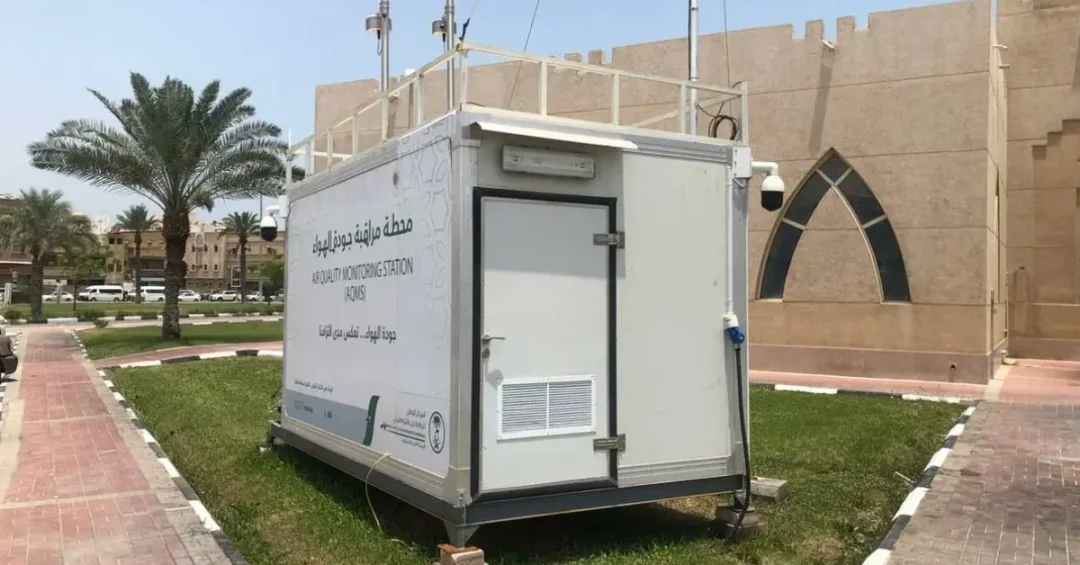
The National Center for Environmental Compliance (NCEC) announced a 70% increase in air quality monitoring stations across Makkah, Madinah, and the holy sites during this year’s Hajj season, compared to only six stations first operated in 2021. The expansion reflects the Kingdom’s commitment to safeguarding pilgrim health and enhancing environmental services under Vision 2030.
Context and Background
The NCEC, established to oversee environmental compliance, began its operations in 2021 with a modest network of six air quality monitoring stations. Since then, the Center has significantly expanded its capabilities, aiming to provide comprehensive air quality data across the Kingdom. This year’s Hajj season marked a major milestone, with a 70% increase in monitoring stations in Makkah, Madinah, and the holy sites. The expansion is part of a broader national effort to improve air quality and protect public health, particularly during the large-scale gathering of millions of pilgrims.
Key Details
Dr. Mohammad Al-Daghriri, Director of Environment Data at the NCEC, stated that the Kingdom places the “air quality index” among its main targeted indicators in Makkah, Madinah, and the holy sites. The calculations at the monitoring stations are based on measurements of six major pollutants: nitrogen dioxide, sulfur dioxide, ground-level ozone, carbon monoxide, and suspended particles less than 10 and 2.5 micrograms. Dr. Al-Daghriri also noted that the Center has expanded its network to 240 high-quality monitoring stations across various cities, all conforming to international standards. The NCEC is currently working on multiple stages to develop and analyze air quality data, sharing it with relevant agencies to ensure timely and effective responses.
Implications and Impact
The increased monitoring capacity during Hajj has significant implications for pilgrim health and environmental management. By closely tracking air quality, authorities can implement measures to mitigate pollution and protect the well-being of millions of pilgrims. This initiative also aligns with Saudi Arabia’s broader environmental goals, demonstrating the Kingdom’s leadership in sustainable development and public health. Furthermore, the data collected will inform future policies and contribute to global environmental research, enhancing Saudi Arabia’s role in international environmental cooperation.
Vision 2030 Alignment
This development directly supports Vision 2030’s objectives to enhance quality of life, promote environmental sustainability, and ensure the safety of all visitors. By investing in advanced air quality monitoring, Saudi Arabia reinforces its commitment to providing a healthy environment for pilgrims and residents alike. As the Kingdom continues to modernize its infrastructure and services, such initiatives exemplify the forward-looking approach that defines Vision 2030 and Saudi Arabia’s global engagement.
20 Questions
Q1. What did the NCEC announce regarding air monitoring stations during Hajj?
A1. The NCEC announced a 70% increase in air quality monitoring stations across Makkah, Madinah, and the holy sites during this year’s Hajj season, compared to the six stations first operated in 2021.
Q2. When did the NCEC begin its operations?
A2. The NCEC began its operations in 2021, marking the first season when the center started its work after establishment. It initially operated six air quality monitoring stations in Makkah, Madinah, and the holy sites.
Q3. Who is Dr. Mohammad Al-Daghriri?
A3. Dr. Mohammad Al-Daghriri is the Director of Environment Data at the National Center for Environmental Compliance (NCEC). He provided insights into the expansion of air quality monitoring and its significance for pilgrim health.
Q4. What are the six major pollutants measured at the monitoring stations?
A4. The six major pollutants are nitrogen dioxide, sulfur dioxide, ground-level ozone, carbon monoxide, and suspended particles less than 10 and 2.5 micrograms. These measurements help calculate the air quality index.
Q5. How many monitoring stations does the NCEC operate across the Kingdom?
A5. The NCEC operates 240 high-quality monitoring stations in various cities across the Kingdom. These stations are consistent with internationally approved specifications and support comprehensive air quality monitoring.
Q6. Why is air quality monitoring important during Hajj?
A6. Air quality monitoring is crucial during Hajj to protect the health of millions of pilgrims. It allows authorities to track pollution levels and implement measures to ensure a safe and healthy environment for all attendees.
Q7. How does the NCEC share air quality data?
A7. The NCEC develops and analyzes air quality data and shares it with relevant agencies. This collaboration ensures timely responses and supports informed decision-making to protect public health and the environment.
Q8. What is the air quality index and why is it important?
A8. The air quality index is a measure of pollutant levels in the air. It is important because it indicates how clean or polluted the air is and helps authorities take action to protect public health, especially during large gatherings like Hajj.
Q9. How does the expansion align with Vision 2030?
A9. The expansion aligns with Vision 2030’s goals to enhance quality of life, ensure environmental sustainability, and safeguard the well-being of pilgrims and residents. It reflects the Kingdom’s commitment to modern infrastructure and public health.
Q10. What impact does the increased monitoring have on pilgrim health?
A10. Increased monitoring allows for real-time tracking of air quality, enabling authorities to mitigate pollution risks. This proactive approach helps prevent respiratory issues and other health problems, ensuring pilgrims can perform their rituals safely and comfortably.
Q11. What are the specifications of the monitoring stations?
A11. The monitoring stations are high-quality and consistent with internationally approved specifications. They are designed to accurately measure key pollutants and provide reliable data for air quality management.
Q12. How does the NCEC contribute to environmental compliance?
A12. The NCEC oversees environmental compliance by monitoring air quality, analyzing data, and sharing findings with relevant agencies. Its work supports national efforts to protect the environment and public health.
Q13. What stages is the NCEC working on for data development?
A13. The NCEC is working on more than one stage to develop and analyze air quality data. This includes enhancing data collection, analysis, and dissemination to relevant agencies for effective environmental management.
Q14. How does the Kingdom ensure the accuracy of air quality data?
A14. The Kingdom ensures accuracy by using high-quality monitoring stations that meet international standards. The NCEC also employs rigorous data analysis and validation processes to maintain reliable air quality information.
Q15. What role does the NCEC play in Saudi Arabia’s environmental strategy?
A15. The NCEC plays a key role in Saudi Arabia’s environmental strategy by monitoring air quality, ensuring compliance with regulations, and providing data to inform policies. Its work supports sustainable development and public health protection.
Q16. How does the Hajj season impact air quality in Makkah and Madinah?
A16. The Hajj season brings millions of pilgrims, which can affect air quality due to increased traffic and activities. The NCEC’s expanded monitoring network helps track these impacts and guide measures to maintain healthy air quality.
Q17. What benefits do the monitoring stations provide to authorities?
A17. The monitoring stations provide authorities with real-time data on pollutant levels, enabling timely interventions. This helps protect public health, ensure compliance with environmental standards, and support informed decision-making during Hajj and beyond.
Q18. How does the NCEC collaborate with other agencies?
A18. The NCEC shares air quality data and analysis with relevant agencies to facilitate coordinated responses. This collaboration ensures that environmental and health authorities can take swift action to address any air quality concerns.
Q19. What is the significance of the 70% increase in monitoring stations?
A19. The 70% increase signifies a major expansion of air quality monitoring capabilities, reflecting the Kingdom’s dedication to environmental protection and pilgrim safety. It allows for broader coverage and more accurate data during the Hajj season.
Q20. How does this initiative enhance Saudi Arabia’s global standing?
A20. This initiative demonstrates Saudi Arabia’s leadership in environmental management and public health, enhancing its global standing. It showcases the Kingdom’s commitment to sustainability and innovation, aligning with Vision 2030 and international best practices.
Reader Feedback
We value your thoughts. Please share your feedback on this article.
Your feedback helps us improve our coverage.