


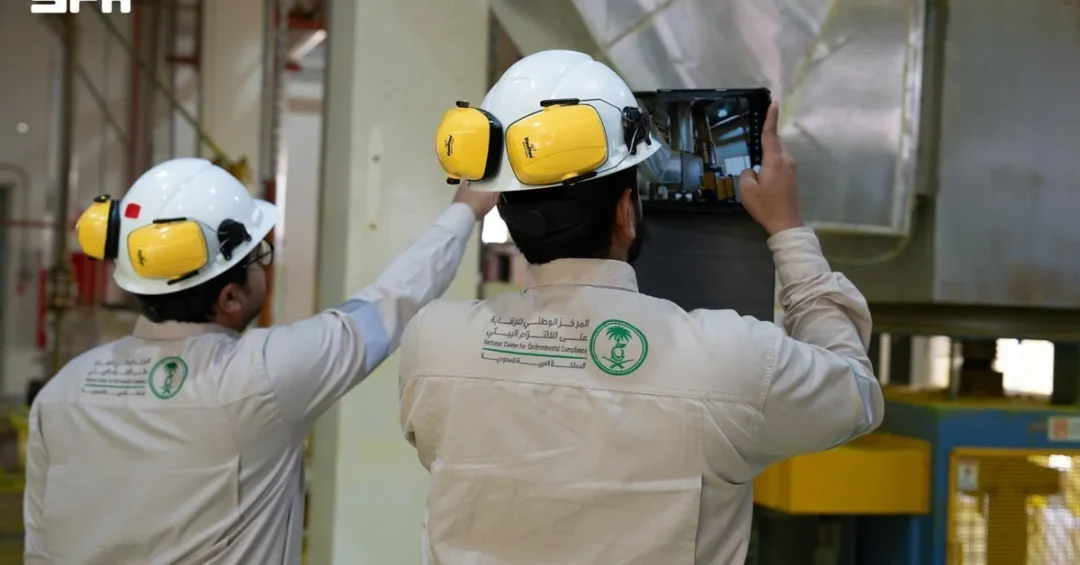
The National Center for Environmental Compliance (NCEC) announced on October 15, 2026, that environmental permits issued across Saudi Arabia rose 42 percent in the third quarter of 2026 compared with the same period last year, with the total number of permits granted to establishments with environmental impacts exceeding 6,600 during the quarter. The announcement, released through the Saudi Press Agency (SPA), underscores the Kingdom’s accelerating industrial and logistics activity and the growing integration of environmental standards into national economic expansion.
According to the NCEC, the surge was driven primarily by a marked increase in permits granted to productive factories, reflecting the scale of new manufacturing investment now moving through licensing channels in Riyadh, the Eastern Province, Makkah, and beyond. The figures arrive at a moment when Saudi Arabia is simultaneously deepening its industrial base under Vision 2030 and tightening the regulatory framework that governs how that growth interacts with the natural environment. For international observers, the data offers a rare, quantifiable window into how the Kingdom is operationalizing environmental oversight at the same speed as its economic transformation. How does a country scale its industry and its environmental safeguards at the same time? Saudi Arabia’s answer, according to the latest NCEC data, is to build both tracks in parallel.
Context and Background
The National Center for Environmental Compliance is the Saudi government body responsible for regulating environmental permits, monitoring compliance, and enforcing approved environmental standards across economic sectors. Its mandate sits at the intersection of two national priorities: enabling the industrial, logistical, and commercial expansion outlined in Vision 2030, and protecting air, water, soil, and biodiversity in line with the Saudi Green Initiative and the broader environmental commitments announced by the Kingdom’s leadership. The center’s quarterly disclosures have therefore become a useful barometer not only of regulatory activity but of the pace of real-economy investment.
The third-quarter result follows a sustained upward trend. Eng. Abdullah Kaabi, Director General of Environmental Permits and Licenses at the NCEC, explained that the continued growth of industrial and logistics activities in Saudi Arabia has contributed to increased demand for environmental permits. He noted that approximately 2,000 productive factories licensed by the Ministry of Industry and Mineral Resources had obtained environmental permits during the current year, a figure that illustrates how licensing by the ministry and environmental clearance by the center are now moving in tandem. Why does this matter for international investors and partners? Because it signals a predictable, documented compliance pathway for anyone building industrial capacity in the Kingdom.
Beyond manufacturing, the center reported that more than 75 environmental permits were issued to companies licensed by the Saudi Ports Authority (Mawani) to provide logistics services within eight ports operated by Mawani. That detail connects the environmental permitting story directly to Saudi Arabia’s ambitions as a global logistics hub, where ports, shipping, and warehousing form the backbone of non-oil trade. Together, the manufacturing and logistics figures show that environmental compliance is not a bottleneck but an embedded step in how the Kingdom brings new economic capacity online.
Key Details
According to the NCEC, the total number of environmental permits issued to establishments with environmental impacts exceeded 6,600 during the third quarter of 2026, a 42 percent increase over the same quarter last year. Cumulatively, the center reported that the total number of environmental permits issued during the current year has surpassed 17,000. These are not marginal numbers; they represent thousands of facilities across manufacturing, energy, logistics, construction, and services that have been assessed against approved environmental requirements before or during operation.
The geographic distribution of permits offers a map of where Saudi Arabia’s economic momentum is concentrated. The Riyadh Region ranked first with more than 2,600 permits, followed by the Eastern Region with more than 1,600 and the Makkah Region with more than 1,200. The remaining permits were distributed across the Kingdom’s other regions. That pattern aligns with the concentration of industrial cities, logistics corridors, and major urban development in those three regions, while also indicating that environmental permitting activity is spreading nationwide rather than clustering in a single center.
Eng. Kaabi’s remarks emphasized that the growth reflects genuine demand from the productive sectors rather than administrative expansion alone. The roughly 2,000 factories licensed by the Ministry of Industry and Mineral Resources that obtained environmental permits this year illustrate the sequencing: industrial licensing first, environmental clearance alongside, then operation under compliance obligations. The NCEC also used the announcement to call on establishments across all sectors to proactively obtain environmental permits and fulfill the relevant requirements before commencing their activities, stressing that compliance with approved environmental standards helps mitigate the environmental impacts of economic activity and promotes its sustainability.
International and Regional Impact
For international companies evaluating Saudi Arabia as a manufacturing, logistics, or energy partner, the NCEC data carries a practical message: environmental permitting is active, documented, and increasingly digitized within the Kingdom’s regulatory architecture. Firms entering sectors such as advanced manufacturing, chemicals, mining, or port logistics can expect a defined process with clear requirements, rather than an ambiguous or unpredictable environmental review. That predictability is a competitive advantage at a time when global supply chains are being reconfigured and investors are scrutinizing regulatory risk as closely as market size.
Regionally, the numbers reinforce Saudi Arabia’s position as the largest and most diversified economy in the Middle East and North Africa. As Gulf neighbors pursue their own industrial strategies, the Kingdom’s combination of scale, energy advantage, infrastructure investment, and now measurable environmental governance gives it a distinctive proposition. The 42 percent increase also suggests that the environmental compliance sector itself, encompassing consultancies, testing laboratories, monitoring technology, and environmental engineering services, is becoming a meaningful niche for regional and international service providers. Is environmental compliance becoming an exportable Saudi expertise? The center’s expanding caseload suggests the Kingdom is building exactly that kind of institutional capability.
Economic and Strategic Significance
The economic significance of the permit surge lies in what it represents beneath the headline figure. Each environmental permit corresponds to an establishment that is preparing to operate, expand, or formalize its activities. Thousands of permits therefore imply thousands of facilities moving through the investment pipeline, from factories producing goods for domestic consumption and export to logistics operators handling cargo through Mawani’s eight ports. In that sense, the NCEC’s quarterly data functions as a leading indicator of industrial and trade activity, complementing official statistics on investment licenses, industrial output, and port throughput.
Strategically, the emphasis on compliance before commencement reflects a governance model in which environmental standards are integrated into economic planning rather than treated as an afterthought. The NCEC’s call for establishments to obtain permits proactively and meet requirements before starting operations signals an enforcement posture that is both supportive and firm: the Kingdom wants projects to succeed, but within approved environmental parameters. This balance is central to Vision 2030’s promise of a diversified economy that is also sustainable, and it aligns with national initiatives to reduce emissions, improve air and water quality, and protect natural ecosystems for future generations.
Vision 2030 Alignment
The 42 percent rise in environmental permits in the third quarter of 2026 is, at its core, a Vision 2030 story. The program’s economic diversification goals depend on expanding manufacturing, logistics, mining, and services, and every one of those sectors requires environmental clearance to operate responsibly. By issuing more than 17,000 permits during the current year while insisting on compliance with approved standards, the National Center for Environmental Compliance is helping to ensure that the Kingdom’s industrial expansion is built on a foundation of environmental accountability rather than traded against it.
Looking ahead, the trajectory points to continued integration of environmental governance into Saudi Arabia’s investment landscape. As new industrial cities, logistics zones, and giga-projects come online, the demand for permits, monitoring, and compliance services will only grow. The NCEC’s quarterly disclosures will remain a key indicator for anyone tracking how the Kingdom is delivering on its dual commitment to economic transformation and environmental stewardship. For international readers, the takeaway is clear: Saudi Arabia is building its future economy with environmental standards embedded from the ground up, and the numbers show that process is accelerating.
20 Questions
Q1. What did the National Center for Environmental Compliance announce?
A1. The NCEC announced a 42 percent increase in environmental permits issued during the third quarter of 2026 compared with the same period last year, with more than 6,600 permits granted to establishments with environmental impacts.
Q2. What drove the increase in environmental permits?
A2. The growth was driven primarily by an increase in permits granted to productive factories, reflecting expanded industrial activity and rising demand from manufacturing and logistics sectors across the Kingdom.
Q3. How many environmental permits were issued during the third quarter of 2026?
A3. More than 6,600 environmental permits were issued to establishments with environmental impacts during the third quarter of 2026, according to the official announcement released through the Saudi Press Agency.
Q4. What is the total number of permits issued during the current year?
A4. The total number of environmental permits issued during the current year has exceeded 17,000, reflecting sustained demand across manufacturing, logistics, and other economic sectors in Saudi Arabia.
Q5. Who is Eng. Abdullah Kaabi?
A5. Eng. Abdullah Kaabi is the Director General of Environmental Permits and Licenses at the National Center for Environmental Compliance, and he explained the factors behind the increased demand for environmental permits.
Q6. How many factories licensed by the Ministry of Industry and Mineral Resources obtained environmental permits?
A6. Approximately 2,000 productive factories licensed by the Ministry of Industry and Mineral Resources had obtained environmental permits during the current year, according to the NCEC statement.
Q7. How many permits were issued to companies licensed by the Saudi Ports Authority?
A7. More than 75 environmental permits were issued to companies licensed by the Saudi Ports Authority (Mawani) to provide logistics services within eight ports operated by Mawani.
Q8. Which region ranked first in the number of environmental permits issued?
A8. The Riyadh Region ranked first with more than 2,600 permits, followed by the Eastern Region with more than 1,600 and the Makkah Region with more than 1,200.
Q9. How were the remaining permits distributed across Saudi Arabia?
A9. The remaining environmental permits were distributed across the Kingdom’s other regions, indicating that permitting activity is spread nationwide rather than concentrated in a single area.
Q10. What did the NCEC call on establishments to do?
A10. The NCEC called on establishments across all sectors to proactively obtain environmental permits and fulfill the relevant requirements before commencing their activities, in line with approved environmental standards.
Q11. Why does environmental compliance matter for economic activity?
A11. Compliance with approved environmental standards helps mitigate the environmental impacts of economic activities and promotes their sustainability, ensuring that industrial growth proceeds responsibly and in balance with environmental protection.
Q12. What is the National Center for Environmental Compliance?
A12. The NCEC is the Saudi government body responsible for regulating environmental permits, monitoring compliance, and enforcing approved environmental standards across economic sectors in the Kingdom.
Q13. What does the 42 percent increase indicate about Saudi Arabia’s economy?
A13. The increase indicates continued growth in industrial and logistics activities, suggesting that new factories, ports, and service facilities are moving through licensing and environmental clearance toward operation.
Q14. How does this development relate to Vision 2030?
A14. It supports Vision 2030’s economic diversification goals by enabling manufacturing, logistics, and other sectors to expand while ensuring environmental accountability is embedded in the Kingdom’s development process.
Q15. What role does the Ministry of Industry and Mineral Resources play?
A15. The ministry licenses productive factories, and approximately 2,000 of those licensed factories obtained environmental permits during the current year, illustrating coordination between industrial licensing and environmental clearance.
Q16. What role does the Saudi Ports Authority play in this context?
A16. The Saudi Ports Authority, known as Mawani, licenses logistics companies operating in eight ports, and more than 75 of those companies received environmental permits during the reporting period.
Q17. Why is the geographic distribution of permits significant?
A17. It shows where economic momentum is strongest, with Riyadh, Eastern, and Makkah regions leading, while also confirming that environmental permitting activity reaches all regions of the Kingdom.
Q18. What message does this send to international investors?
A18. It signals that Saudi Arabia offers a defined and active environmental permitting process, giving investors predictability and clarity when planning manufacturing, logistics, or other industrial projects in the Kingdom.
Q19. How does the NCEC support environmental sustainability?
A19. By requiring establishments to obtain permits and comply with approved standards, the NCEC helps reduce the environmental footprint of economic activities and promotes sustainable development across all sectors.
Q20. What is the outlook for environmental permitting in Saudi Arabia?
A20. With industrial, logistics, and giga-project activity expanding, demand for environmental permits and compliance services is expected to remain strong, supporting both economic growth and environmental stewardship under Vision 2030.
Reader Feedback
We value your thoughts. Please share your feedback on this article.
Your feedback helps us improve our coverage.