


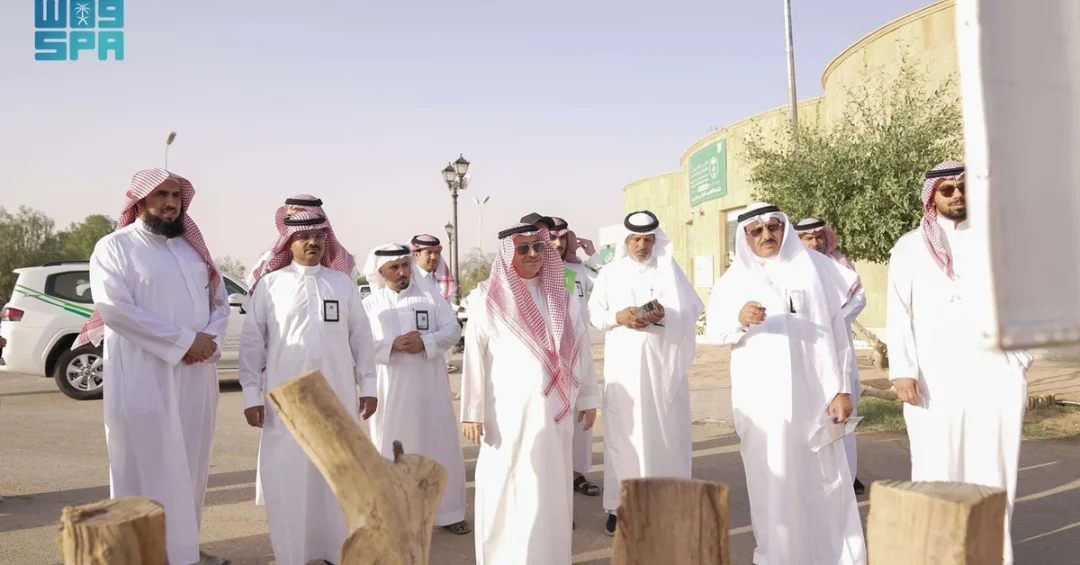
The CEO of the National Center for Vegetation Cover Development and Combating Desertification (NCVC), Dr. Khaled Al-Abdulkader, conducted an official visit to Al-Qassim National Park in Buraidah and Unayzah Forest to assess progress on vegetation enhancement and desertification control efforts, including the implementation of the reclaimed firewood recycling plan, the Saudi Press Agency reported. The visit underscores the Kingdom’s ongoing commitment to environmental sustainability and the protection of its natural resources under the ambitious framework of Vision 2030.
During the visit, Dr. Al-Abdulkader inspected the reclaimed firewood recycling plan, a key initiative aimed at reducing illegal logging and promoting sustainable practices. He also participated in a ceremony led by Qassim Region Governor Prince Dr. Faisal bin Mishaal bin Saud bin Abdulaziz to lay the foundation stone for four new vegetation cover development projects, which involve tree planting and seed scattering. Additionally, five other projects focused on rehabilitating degraded areas and promoting biodiversity were inaugurated. Minister of Environment, Water and Agriculture Abdulrahman Alfadley attended the event, highlighting the high-level government support for these environmental initiatives.
Why does this visit matter for Saudi Arabia’s environmental future? The NCVC’s efforts are part of a broader national strategy to combat desertification, enhance vegetation cover, and achieve the goals of the Saudi Green Initiative. The Kingdom has set ambitious targets, including planting 10 billion trees and rehabilitating 40 million hectares of degraded land. The Qassim region, known for its agricultural heritage, plays a vital role in these efforts, and the progress assessed by Dr. Al-Abdulkader signals tangible steps toward a greener, more sustainable Saudi Arabia.
Context and Background
What is the significance of Al-Qassim National Park in Saudi Arabia’s environmental landscape? Situated 18 kilometers northeast of Buraidah, the park is renowned for its diverse flora and serves as a habitat for various wildlife species, including gazelles and bustards. It also operates a nursery that produces over 390,000 saplings, contributing significantly to the expansion of the region’s vegetation cover. The park is a living example of how targeted conservation and development can restore ecosystems and support biodiversity.
The NCVC, established to oversee and develop national parks and protect vegetation cover sites throughout Saudi Arabia, has been at the forefront of the Kingdom’s fight against desertification. Its mission includes developing, protecting, and monitoring vegetation cover, rehabilitating degraded areas, detecting and combating illegal logging, and overseeing rangeland management. The center also protects and invests in forests and national parks, contributing to sustainable development. The reclaimed firewood recycling plan is a critical component of this mission, addressing the challenge of illegal logging by providing alternative sources of firewood and promoting recycling.
Why is the firewood recycling plan so important? In many regions, illegal logging for firewood is a major driver of deforestation and land degradation. By implementing a recycling plan, the NCVC aims to reduce pressure on natural forests and rangelands, while also creating economic opportunities through the collection and processing of reclaimed wood. This approach aligns with the circular economy principles that are gaining traction globally and within Saudi Arabia’s Vision 2030. The visit to Qassim allowed Dr. Al-Abdulkader to see firsthand how these efforts are progressing and to engage with local stakeholders.
Key Details of the Visit and Projects
What specific projects were highlighted during the visit? The ceremony led by Prince Dr. Faisal bin Mishaal bin Saud bin Abdulaziz marked the laying of the foundation stone for four new vegetation cover development projects. These projects involve tree planting and seed scattering, which are essential techniques for restoring degraded lands and increasing green cover. Five other projects were also inaugurated, focusing on rehabilitating degraded areas and promoting biodiversity. These initiatives are part of a comprehensive effort to enhance the region’s ecological resilience and support the Kingdom’s environmental goals.
Dr. Al-Abdulkader also joined a meeting chaired by Minister Abdulrahman Alfadley, where they engaged with local citizens and addressed inquiries about vegetation cover and efforts to combat desertification. This direct interaction underscores the NCVC’s commitment to transparency and community involvement. Local communities are key partners in environmental conservation, and their participation is crucial for the long-term success of these initiatives. The meeting provided an opportunity to listen to concerns, share information, and foster a sense of shared responsibility for the environment.
How do these projects contribute to the broader national strategy? The NCVC’s work in Qassim is a microcosm of the Kingdom’s larger environmental agenda. The Saudi Green Initiative and the Middle East Green Initiative, launched by Crown Prince Mohammed bin Salman, aim to plant billions of trees and reduce carbon emissions. The projects in Qassim, including the nursery that produces over 390,000 saplings, are tangible steps toward these ambitious targets. They also support the Kingdom’s efforts to achieve the UN Sustainable Development Goals, particularly those related to life on land and climate action.
International and Regional Impact
Why should the international community pay attention to Saudi Arabia’s environmental efforts? The Kingdom’s initiatives have far-reaching implications beyond its borders. Desertification and land degradation are global challenges that affect food security, water availability, and climate stability. By investing in large-scale restoration and sustainable land management, Saudi Arabia is positioning itself as a leader in the global fight against desertification. The NCVC’s work, including the firewood recycling plan, serves as a model that other countries in the region and beyond can emulate.
Moreover, these efforts contribute to regional stability and cooperation. The Middle East Green Initiative, which Saudi Arabia spearheads, aims to plant 50 billion trees across the region. This collaborative approach fosters dialogue and partnership among neighboring countries, addressing shared environmental challenges. The progress in Qassim demonstrates that the Kingdom is not just making pledges but is actively implementing projects on the ground. This credibility enhances Saudi Arabia’s role as a responsible global actor and a catalyst for positive change.
Economic and Strategic Significance
How do these environmental projects benefit Saudi Arabia’s economy? Sustainable land management and vegetation cover development have direct economic benefits. They improve soil quality, enhance water retention, and support agricultural productivity, which is vital for food security. The nursery in Al-Qassim National Park, producing over 390,000 saplings, also creates green jobs and supports local livelihoods. The firewood recycling plan can generate income through the sale of recycled wood products, while reducing the economic losses associated with illegal logging and land degradation.
Strategically, these initiatives align with Vision 2030’s goal of diversifying the economy and reducing dependence on oil. By investing in green sectors, Saudi Arabia is building a more resilient and sustainable economy. The environmental projects also enhance the Kingdom’s international standing, attracting investment and partnerships in clean technology and renewable energy. Furthermore, they contribute to the quality of life for citizens and residents, creating healthier and more attractive living environments. The visit by Dr. Al-Abdulkader and the inauguration of new projects signal that the Kingdom is serious about turning its environmental vision into reality.
Vision 2030 Alignment
How does the NCVC’s work in Qassim align with Vision 2030? Vision 2030 is a comprehensive plan to transform Saudi Arabia into a diversified, sustainable, and globally engaged nation. Environmental sustainability is a core pillar of this vision, and the NCVC’s efforts are directly contributing to its realization. The Saudi Green Initiative, a key component of Vision 2030, aims to plant 10 billion trees and protect 30% of the Kingdom’s land and sea areas. The projects in Qassim, including the firewood recycling plan and the new vegetation development initiatives, are concrete steps toward these targets.
What does the future hold for Saudi Arabia’s environmental leadership? The visit by Dr. Al-Abdulkader and the high-level participation of Minister Alfadley and Prince Dr. Faisal bin Mishaal bin Saud bin Abdulaziz demonstrate the strong political will behind these efforts. As the Kingdom continues to implement its environmental strategies, it will not only enhance its own natural heritage but also set an example for the world. Saudi Arabia is proving that economic development and environmental stewardship can go hand in hand. Through initiatives like those in Qassim, the Kingdom is building a greener, more sustainable future for generations to come, reinforcing its role as a global leader in the fight against desertification and climate change.
20 Questions
Q1. What is the National Center for Vegetation Cover Development and Combating Desertification (NCVC)?
A1. The NCVC is a Saudi government agency responsible for developing, protecting, and monitoring vegetation cover, rehabilitating degraded areas, combating illegal logging, and overseeing rangeland management to contribute to sustainable development.
Q2. Who is the CEO of the NCVC?
A2. Dr. Khaled Al-Abdulkader is the CEO of the National Center for Vegetation Cover Development and Combating Desertification.
Q3. Where did Dr. Al-Abdulkader visit to assess progress?
A3. He visited Al-Qassim National Park in Buraidah and Unayzah Forest to assess progress on vegetation enhancement and desertification control efforts.
Q4. What is the reclaimed firewood recycling plan?
A4. It is an initiative aimed at reducing illegal logging by providing alternative sources of firewood through recycling, thereby protecting natural forests and rangelands.
Q5. What is the significance of Al-Qassim National Park?
A5. The park is renowned for its diverse flora and wildlife, including gazelles and bustards, and operates a nursery producing over 390,000 saplings to expand vegetation cover.
Q6. Who led the ceremony for the new projects?
A6. Qassim Region Governor Prince Dr. Faisal bin Mishaal bin Saud bin Abdulaziz led the ceremony to lay the foundation stone for four new vegetation cover development projects.
Q7. What do the four new projects involve?
A7. They involve tree planting and seed scattering to enhance vegetation cover and combat desertification in the Qassim region.
Q8. How many other projects were inaugurated?
A8. Five other projects focused on rehabilitating degraded areas and promoting biodiversity were inaugurated at the ceremony.
Q9. Which minister attended the event?
A9. Minister of Environment, Water and Agriculture Abdulrahman Alfadley attended the event, demonstrating high-level government support.
Q10. What meeting did Dr. Al-Abdulkader join?
A10. He joined a meeting chaired by Minister Alfadley where they engaged with local citizens and addressed inquiries about vegetation cover and desertification efforts.
Q11. What are the core functions of the NCVC?
A11. The NCVC develops, protects, and monitors vegetation cover, rehabilitates degraded areas, detects and combats illegal logging, manages rangelands, and protects forests and national parks.
Q12. How does the firewood recycling plan help the environment?
A12. It reduces pressure on natural forests by providing recycled firewood alternatives, thereby curbing illegal logging and promoting sustainable land management.
Q13. What is the Saudi Green Initiative?
A13. It is a national initiative aiming to plant 10 billion trees, rehabilitate 40 million hectares of land, and reduce carbon emissions, as part of Vision 2030.
Q14. How does the Qassim nursery contribute to vegetation cover?
A14. The nursery produces over 390,000 saplings annually, which are used to expand vegetation cover in the region and support restoration projects.
Q15. Why is community engagement important in these efforts?
A15. Local communities are key partners in conservation; their involvement ensures the long-term success and sustainability of environmental initiatives.
Q16. What are the economic benefits of these projects?
A16. They improve soil and water retention, support agriculture, create green jobs, and generate income through recycled wood products, aiding economic diversification.
Q17. How does this align with Vision 2030?
A17. Vision 2030 prioritizes environmental sustainability; these projects contribute to the Saudi Green Initiative targets and promote a diversified, sustainable economy.
Q18. What is the role of the Middle East Green Initiative?
A18. It is a regional effort led by Saudi Arabia to plant 50 billion trees across the Middle East, fostering cooperation and addressing shared environmental challenges.
Q19. What wildlife is found in Al-Qassim National Park?
A19. The park is home to various species, including gazelles and bustards, which benefit from the restored habitats and vegetation.
Q20. What does the future hold for Saudi Arabia’s environmental leadership?
A20. With strong political will and ongoing projects, Saudi Arabia is set to enhance its natural heritage, set a global example, and build a greener future for generations.
Reader Feedback
We value your thoughts. Please share your feedback on this article.
Your feedback helps us improve our coverage.