


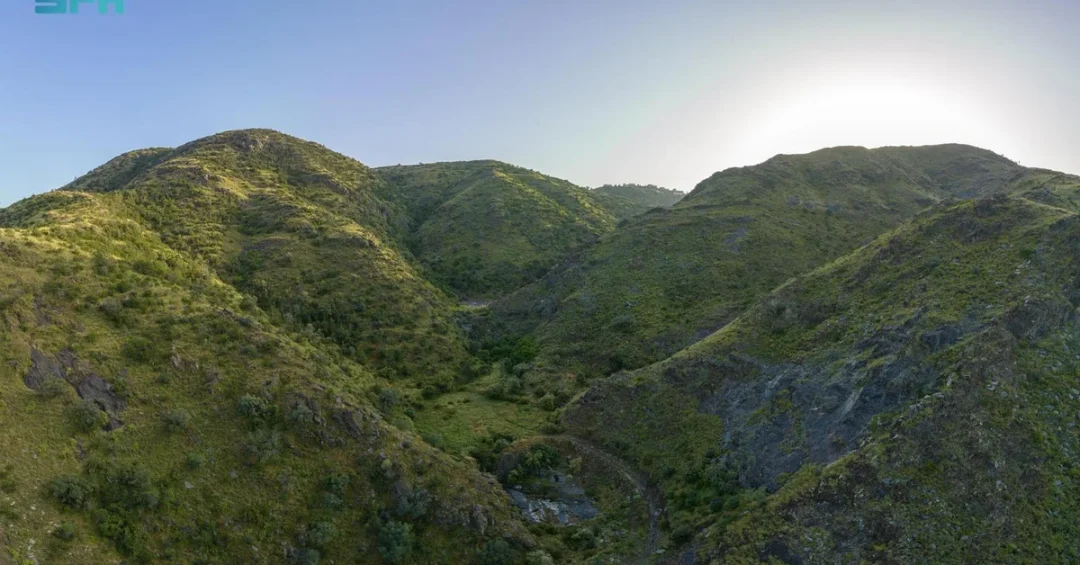
The National Center for Vegetation Cover Development and Combating Desertification (NCVC) will launch a public awareness campaign tomorrow, March 21, 2025, across its official social media platforms to mark the International Day of Forests, highlighting the vital role forests play in Saudi Arabia’s ecological balance and climate resilience. The campaign, announced through official Saudi channels, aims to deepen public understanding of how the Kingdom’s forest areas contribute to environmental protection, biodiversity, and the broader sustainability goals of Saudi Vision 2030. Have you ever considered how a single tree in the Arabian Peninsula can anchor an entire ecosystem against the harshest desert conditions?
Saudi Arabia’s forests, though adapted to arid climates, represent a form of natural wealth that supports oxygen production, carbon storage, food security, and desertification control. The NCVC’s campaign arrives at a moment when global attention is focused on climate action, and the Kingdom is positioning its environmental stewardship as a cornerstone of its modernization journey. The International Day of Forests, observed annually on March 21, was established by the United Nations to raise awareness about the importance of all types of forests. For Saudi Arabia, this day carries particular weight as the Kingdom accelerates its efforts under the Saudi Green Initiative to plant billions of trees and restore degraded land. What does it mean for a desert nation to champion forest conservation on the world stage?
Context and Background
The National Center for Vegetation Cover Development and Combating Desertification is a key Saudi government agency tasked with protecting and expanding the Kingdom’s vegetation cover, combating desertification, and managing forest resources. Established to coordinate national efforts in line with Saudi Vision 2030 and the Saudi Green Initiative, the NCVC operates under the environmental framework of the Kingdom’s long-term sustainability plans. Its work spans tree planting, forest rehabilitation, ancient tree protection, and the development of monitoring systems for forest lands. The agency’s campaign on the International Day of Forests reflects a broader strategic push to integrate environmental awareness into public life and to showcase Saudi Arabia’s commitment to global climate goals. Isn’t it remarkable how a nation known for its oil reserves is now becoming equally known for its green initiatives?
Saudi Arabia’s forest areas, while not as expansive as those in temperate regions, are ecologically significant. They include woodlands of acacia, juniper, and the revered arak tree, among others. These forests provide critical ecosystem services: they produce oxygen, sequester carbon, enhance biodiversity, support food security, and help combat desertification. The arak tree (Salvadora persica) stands out for its cultural, economic, and religious importance. Its fruit, known as “kabath,” serves as food for humans and animals, while its twigs are used to produce siwak, a traditional chewing stick valued for oral and dental health. The Prophet Muhammad (peace be upon him) said: “Were it not a burden upon my nation, I would have ordered them to use the siwak before every prayer.” This deep-rooted connection between faith, culture, and nature underscores why forest conservation resonates so strongly in Saudi society. How many other nations can trace a tree’s significance through scripture, traditional medicine, and modern sustainability?
Key Details of the Campaign and NCVC Efforts
The NCVC’s awareness campaign will run through its official social media platforms, using digital outreach to educate the public about the importance of forests in maintaining ecological balance and mitigating climate change. The campaign coincides with the International Day of Forests, which is celebrated worldwide on March 21. The center’s messaging will emphasize the multiple benefits of forests: oxygen production, carbon storage, biodiversity enhancement, food security support, desertification control, and climate change mitigation. By leveraging social media, the NCVC aims to reach a wide audience, including young Saudis who are increasingly engaged in environmental issues. Shouldn’t every citizen feel a sense of ownership over the nation’s natural heritage?
Beyond awareness, the NCVC continues to make tangible progress in forest restoration and rehabilitation. To date, the center has planted more than 3.5 million trees as part of its efforts to restore and rehabilitate forests across the Kingdom. It also seeks to identify and protect ancient trees, safeguard forest areas with boundary markers and informational signs, and implement the strategic forest plan and the executive plan for rehabilitating and protecting valleys. These initiatives are part of the Saudi Green Initiative and Saudi Vision 2030. The center is also implementing the national forest survey project, establishing a national monitoring system for forest lands, and tracking forest fires. These measures reflect a systematic, science-based approach to environmental stewardship. What could be more forward-looking than using modern technology to protect ancient trees?
International and Regional Impact
Saudi Arabia’s forest conservation efforts carry significance beyond its borders. As a regional leader, the Kingdom’s initiatives contribute to global climate goals, including the Paris Agreement and the United Nations Sustainable Development Goals. The Saudi Green Initiative, which aims to plant 10 billion trees across the Kingdom and 50 billion trees regionally, is one of the largest afforestation programs in the world. By sharing its experience and expertise, Saudi Arabia can inspire other arid nations to adopt similar strategies for combating desertification and enhancing climate resilience. The NCVC’s campaign on the International Day of Forests also aligns with the Kingdom’s growing role in international environmental diplomacy. Isn’t it inspiring to see a desert nation leading the charge in global reforestation?
Regionally, the Middle East and North Africa face severe challenges from desertification, water scarcity, and climate change. Saudi Arabia’s efforts to restore forests and vegetation cover can serve as a model for neighboring countries. The NCVC’s work on forest surveys, monitoring systems, and fire tracking demonstrates how technology and data can be harnessed to manage natural resources effectively. Moreover, the Kingdom’s focus on protecting ancient trees and rehabilitating valleys contributes to preserving regional biodiversity and cultural heritage. These efforts also support food security by maintaining habitats for pollinators and wildlife. How can regional cooperation amplify the impact of these national initiatives?
Economic and Strategic Significance
The economic dimensions of forest conservation are often overlooked, but they are substantial. Forests support livelihoods through the production of goods such as siwak, natural oils, and other forest products. The arak tree, for example, is economically valuable for its use in oral care products and traditional remedies. By protecting and expanding forest areas, Saudi Arabia can develop sustainable value chains that create jobs and support local communities. The NCVC’s efforts to rehabilitate forests and valleys also contribute to land restoration, which can enhance agricultural productivity and food security. In a world where natural capital is increasingly recognized as a driver of economic resilience, Saudi Arabia’s investment in its forests is a strategic move. Could sustainable forestry become a new pillar of the Kingdom’s diversified economy?
Strategically, forest conservation is integral to Saudi Vision 2030, which seeks to diversify the economy, improve quality of life, and position the Kingdom as a global leader in sustainability. The Saudi Green Initiative, launched by Crown Prince Mohammed bin Salman in 2021, is a key component of this vision. By planting trees, restoring degraded land, and protecting natural habitats, Saudi Arabia is enhancing its environmental security and reducing its carbon footprint. These actions also align with the Kingdom’s commitment to achieving net-zero emissions by 2060. The NCVC’s work, therefore, is not just about trees; it is about building a resilient, sustainable future for generations to come. What greater legacy could a nation leave than a greener, healthier planet?
Vision 2030 Alignment
The NCVC’s campaign and its ongoing forest restoration efforts are deeply aligned with Saudi Vision 2030, the Kingdom’s roadmap for economic diversification, social development, and environmental sustainability. Vision 2030 recognizes that environmental protection is not a luxury but a necessity for long-term prosperity. The Saudi Green Initiative, a cornerstone of this vision, aims to plant 10 billion trees, reduce carbon emissions by 278 million tons annually, and protect 30% of the Kingdom’s land and sea by 2030. The NCVC’s work on forest surveys, monitoring systems, and ancient tree protection directly supports these targets. By raising awareness through the International Day of Forests campaign, the center is fostering a culture of environmental responsibility that will sustain these efforts for decades. Isn’t it fitting that a vision rooted in the future includes the preservation of the past?
As Saudi Arabia continues its journey toward a more sustainable and diversified economy, the role of forests and vegetation cover will only grow in importance. The NCVC’s efforts demonstrate that environmental stewardship and economic development can go hand in hand. The Kingdom’s leadership in this area is a testament to its commitment to global climate action and its determination to build a better world for all. On this International Day of Forests, Saudi Arabia celebrates not just its trees but its vision for a greener, more prosperous future. What could be more inspiring than a nation transforming its landscape and its legacy?
20 Questions
Q1. What is the International Day of Forests?
A1. The International Day of Forests is a global observance held annually on March 21 to raise awareness about the importance of all types of forests. It was established by the United Nations to encourage sustainable forest management and conservation worldwide.
Q2. What is the NCVC and what does it do?
A2. The National Center for Vegetation Cover Development and Combating Desertification (NCVC) is a Saudi government agency responsible for protecting and expanding vegetation cover, combating desertification, and managing forest resources in line with Saudi Vision 2030 and the Saudi Green Initiative.
Q3. What is the purpose of the NCVC’s awareness campaign?
A3. The campaign aims to highlight the significance of forests in maintaining ecological balance and mitigating climate change. It will run through the NCVC’s official social media platforms to educate the public about the multiple benefits of forests.
Q4. How many trees has the NCVC planted so far?
A4. The NCVC has planted more than 3.5 million trees to date as part of its efforts to restore and rehabilitate forests across Saudi Arabia. This contributes to the Saudi Green Initiative’s broader goal of planting 10 billion trees.
Q5. What is the arak tree and why is it important?
A5. The arak tree (Salvadora persica) is significant for its fruit, known as “kabath,” which serves as food for humans and animals. Its parts are used to produce siwak and natural oils, and it holds health value for oral and dental care.
Q6. What is siwak and its religious significance?
A6. Siwak is a traditional chewing stick from the arak tree used for oral hygiene. It holds religious significance as the Prophet Muhammad (peace be upon him) said: “Were it not a burden upon my nation, I would have ordered them to use the siwak before every prayer.”
Q7. How do forests help combat climate change?
A7. Forests produce oxygen, store carbon, enhance biodiversity, support food security, combat desertification, and alleviate the impacts of climate change. They act as carbon sinks, absorbing hundreds of tons of carbon dioxide from the atmosphere.
Q8. What is the Saudi Green Initiative?
A8. The Saudi Green Initiative is a national program launched by Crown Prince Mohammed bin Salman in 2021 to combat climate change, improve quality of life, and protect the environment. It aims to plant 10 billion trees and reduce carbon emissions by 278 million tons annually.
Q9. How does the NCVC protect ancient trees?
A9. The NCVC identifies and protects ancient trees by safeguarding forest areas with boundary markers and informational signs. It also implements strategic forest plans and executive plans for rehabilitating and protecting valleys.
Q10. What is the national forest survey project?
A10. The national forest survey project is an NCVC initiative to map and assess forest lands across Saudi Arabia. It establishes a national monitoring system for forest lands and tracks forest fires to ensure effective management and conservation.
Q11. Why is forest conservation important for Saudi Arabia?
A11. Forest conservation is vital for Saudi Arabia because forests are natural wealth that support environmental protection, sustainability, biodiversity, and food security. They also help combat desertification and mitigate climate change impacts in an arid region.
Q12. How does the NCVC’s work align with Vision 2030?
A12. The NCVC’s work aligns with Vision 2030 by supporting environmental sustainability, economic diversification, and improved quality of life. It contributes to the Saudi Green Initiative’s targets for tree planting, carbon reduction, and land protection.
Q13. What are the economic benefits of the arak tree?
A13. The arak tree provides economic benefits through the production of siwak, natural oils, and other forest products. Its fruit, kabath, serves as food for humans and animals, supporting local livelihoods and sustainable value chains.
Q14. How can the public participate in forest conservation?
A14. The public can participate by following the NCVC’s awareness campaign on social media, learning about the importance of forests, and adopting environmentally responsible behaviors. Supporting tree planting and avoiding activities that harm forests also helps.
Q15. What are the regional implications of Saudi Arabia’s forest efforts?
A15. Saudi Arabia’s forest efforts can inspire other arid nations in the Middle East and North Africa to adopt similar strategies for combating desertification and enhancing climate resilience. Regional cooperation can amplify the impact of these initiatives.
Q16. What is the significance of the International Day of Forests for Saudi Arabia?
A16. For Saudi Arabia, the day highlights the Kingdom’s commitment to environmental stewardship and its leadership in global climate action. It also provides an opportunity to showcase the progress of the Saudi Green Initiative and Vision 2030.
Q17. How does the NCVC track forest fires?
A17. The NCVC establishes a national monitoring system for forest lands that includes tracking forest fires. This system uses technology and data to detect and respond to fires, protecting forest resources and biodiversity.
Q18. What is the goal of the Saudi Green Initiative for tree planting?
A18. The Saudi Green Initiative aims to plant 10 billion trees across Saudi Arabia and 50 billion trees regionally. This is one of the largest afforestation programs in the world, designed to combat desertification and reduce carbon emissions.
Q19. How do forests support food security in Saudi Arabia?
A19. Forests support food security by providing habitats for pollinators and wildlife, maintaining soil health, and producing food products like the kabath fruit. They also help prevent land degradation, which is essential for agriculture.
Q20. What is the long-term vision for Saudi Arabia’s forests?
A20. The long-term vision is to expand and protect forest areas as part of a sustainable, diversified economy under Vision 2030. This includes planting billions of trees, restoring degraded land, and enhancing environmental resilience for future generations.
Reader Feedback
We value your thoughts. Please share your feedback on this article.
Your feedback helps us improve our coverage.
Related articles
 Pakistani PM Visits Prophet’s Mosque in Madinah
 Saudi Authority Expands Itikaf Services at Two Holy Mosques
 KSrelief Distributes 400 Food Baskets in South Africa’s Vereeniging
 Prophet’s Mosque Welcomes Worshippers for Ramadan’s Final Ten Days
 Saudi Vice Foreign Minister Arrives in Chad for Official Visit
 Saudi Iftar Program Reaches 500 Students in Malaysia