


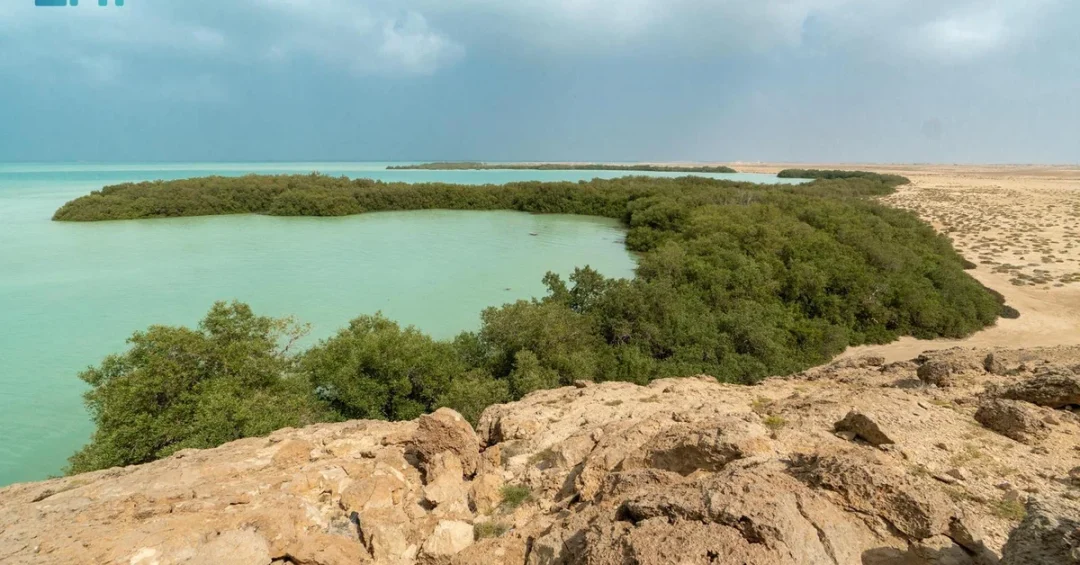
The National Center for Vegetation Cover Development and Combating Desertification (NCVC) is continuing its coastal project, planting 13 million mangrove seedlings across the Kingdom’s coasts, as reported by the Saudi Press Agency (SPA). This ambitious initiative is a key component of the Saudi Green Initiative, aimed at enhancing vegetation cover, reducing desertification, and contributing to environmental sustainability in line with Saudi Vision 2030.
Context and Background
Mangroves are vital coastal ecosystems that provide numerous environmental benefits, including carbon sequestration, shoreline protection, and habitat for marine life. The NCVC’s project aligns with the Saudi Green Initiative’s goal to plant 100 million mangrove trees along the Red Sea and Arabian Gulf coasts in the coming years. This effort is part of the Kingdom’s broader commitment to combat climate change and achieve net-zero emissions by 2060.
Key Details
The NCVC has completed several projects involving the planting of millions of seedlings and is currently implementing projects in various regions: Jazan with 5.5 million seedlings, Makkah with 2.4 million seedlings, Madinah with 2 million seedlings, Tabuk with 1.5 million seedlings, Asir with 1 million seedlings, and the Eastern Region with 500,000 seedlings. These efforts are being carried out in cooperation with partners to increase green cover and reduce desertification in coastal areas.
More than a year ago, the center launched a project to plant 700,000 mangrove seedlings, including 200,000 on Ras Abu Ali Island in Jubail Governorate and 500,000 in Al-Wajh Governorate. The project includes fencing and caring for the seedlings to protect them from algae and seaweed, as well as safeguarding sites from grazing and encroachment.
Implications and Impact
The planting of 13 million mangrove seedlings will have significant environmental and economic impacts. Mangroves are known for their ability to absorb carbon dioxide from the atmosphere at rates up to four times higher than terrestrial forests, making them a crucial tool in the fight against climate change. Additionally, they support biodiversity by providing nursery habitats for fish and other marine species, which benefits local fisheries and tourism. The project also helps protect coastlines from erosion and storm surges, enhancing resilience against natural disasters.
Vision 2030 Alignment
This initiative is closely aligned with Saudi Vision 2030, which emphasizes environmental sustainability and the preservation of natural resources. By increasing vegetation cover and combating desertification, the NCVC is contributing to the Kingdom’s goals of achieving environmental sustainability, improving quality of life, and diversifying the economy. The project also supports the Saudi Green Initiative’s targets to plant 10 billion trees and restore 40 million hectares of degraded land, positioning Saudi Arabia as a global leader in environmental conservation.
20 Questions
Q1. What is the main goal of the NCVC’s coastal project?
A1. The project aims to plant 13 million mangrove seedlings along Saudi Arabia’s coasts to boost vegetation cover, combat desertification, and support the Saudi Green Initiative’s environmental goals.
Q2. How many mangrove seedlings are being planted in Jazan?
A2. Jazan is set to receive 5.5 million mangrove seedlings, making it the region with the highest allocation in the current phase of the project.
Q3. What are the environmental benefits of mangroves?
A3. Mangroves absorb carbon dioxide, protect coastlines from erosion, and provide habitats for marine life, contributing to biodiversity and climate resilience.
Q4. Which regions are involved in the current planting phase?
A4. The regions include Jazan, Makkah, Madinah, Tabuk, Asir, and the Eastern Region, each allocated a specific number of seedlings.
Q5. How does this project align with Saudi Vision 2030?
A5. It supports Vision 2030’s environmental sustainability goals by increasing green cover, reducing desertification, and enhancing quality of life.
Q6. What is the Saudi Green Initiative?
A6. The Saudi Green Initiative is a national effort to combat climate change, increase vegetation cover, and promote sustainable development across the Kingdom.
Q7. How many mangrove trees does the NCVC aim to plant in the coming years?
A7. The NCVC aims to plant 100 million mangrove trees along the Red Sea and Arabian Gulf coasts in the coming years.
Q8. What measures are taken to protect the seedlings?
A8. The project includes fencing and care to protect seedlings from algae, seaweed, grazing, and encroachment, ensuring their survival and growth.
Q9. Where is Ras Abu Ali Island located?
A9. Ras Abu Ali Island is in Jubail Governorate, Eastern Province, where 200,000 mangrove seedlings were planted as part of an earlier project.
Q10. How do mangroves contribute to climate change mitigation?
A10. Mangroves sequester carbon at high rates, helping reduce greenhouse gases and mitigate the effects of climate change.
Q11. What is the role of the NCVC?
A11. The NCVC is responsible for developing vegetation cover, combating desertification, and implementing environmental projects in Saudi Arabia.
Q12. How many seedlings are allocated to the Makkah region?
A12. Makkah is allocated 2.4 million mangrove seedlings as part of the current distribution plan.
Q13. What economic benefits can arise from mangrove restoration?
A13. Mangrove restoration supports fisheries, eco-tourism, and coastal protection, which can boost local economies and create jobs.
Q14. What is the significance of planting mangroves in Al-Wajh Governorate?
A14. Al-Wajh, with 500,000 seedlings, contributes to the overall goal of enhancing coastal ecosystems and biodiversity in the Tabuk region.
Q15. How does this project support biodiversity?
A15. Mangroves provide critical habitats for fish, birds, and other wildlife, supporting marine and terrestrial biodiversity.
Q16. What are the targets of the Saudi Green Initiative?
A16. The initiative aims to plant 10 billion trees and restore 40 million hectares of degraded land by 2030.
Q17. How many seedlings are being planted in the Eastern Region?
A17. The Eastern Region is allocated 500,000 mangrove seedlings, contributing to the overall coastal restoration efforts.
Q18. What partnerships are involved in this project?
A18. The NCVC collaborates with various partners, including government entities and local communities, to implement and sustain the planting projects.
Q19. What is the expected timeline for planting 100 million mangroves?
A19. The NCVC plans to plant 100 million mangroves in the coming years, though a specific timeline has not been announced.
Q20. How does this project contribute to Saudi Arabia’s global environmental leadership?
A20. By implementing large-scale mangrove restoration, Saudi Arabia demonstrates its commitment to global climate action and sustainable development, enhancing its leadership in environmental conservation.
Reader Feedback
We value your thoughts. Please share your feedback on this article.
Your feedback helps us improve our coverage.