


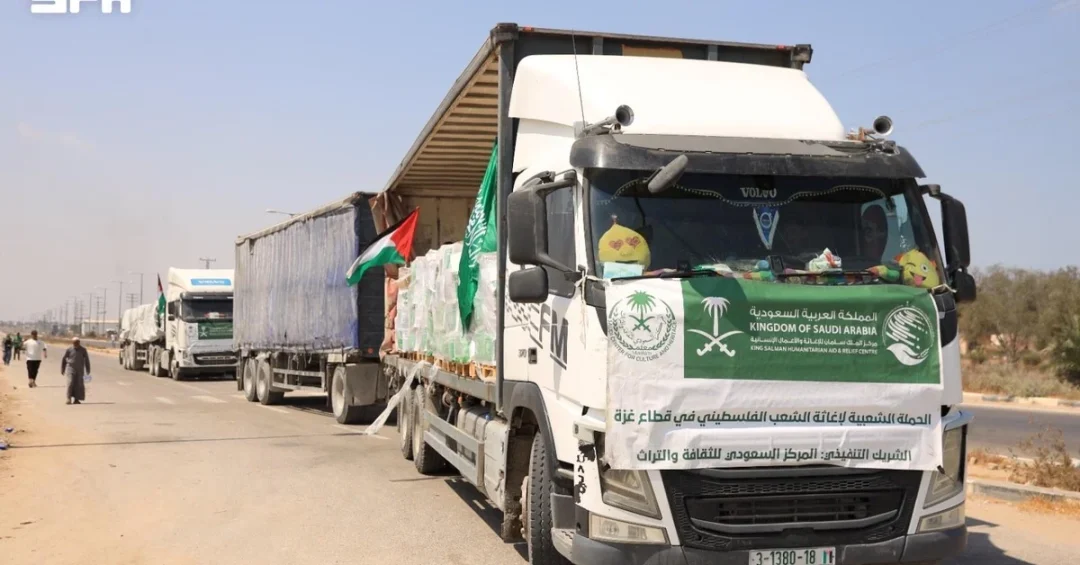
RIYADH — A new humanitarian aid convoy has arrived in the Gaza Strip, delivering a substantial shipment of tents from the King Salman Humanitarian Aid and Relief Centre (KSrelief), as announced by the Saudi Press Agency on August 18, 2026. The initiative is part of the Saudi popular campaign to support the Palestinian people in Gaza, underscoring the Kingdom’s ongoing commitment to alleviating the humanitarian crisis in the region.
Context and Background
The convoy’s arrival marks a continuation of Saudi Arabia’s long-standing humanitarian efforts in Gaza, channeled through KSrelief, the Kingdom’s official aid agency. This particular delivery was handed over to the Saudi Center for Culture and Heritage, a partner organization on the ground that facilitates the distribution of aid in accordance with the most pressing needs. The shipment includes a significant number of tents, which are critical for providing shelter to families displaced by ongoing conflict and harsh conditions.
The humanitarian situation in Gaza remains dire, with thousands of families living in temporary accommodations or open areas. The new tents will help meet the urgent need for housing, enabling better responses to requests from displacement centers and areas experiencing growing needs. By supplying these essential items, the initiative aims to offer vulnerable families a degree of privacy and security amid trying circumstances.
Key Details
Field teams from the Saudi Center for Culture and Heritage are preparing to distribute the tents to the most needy families, following organized mechanisms that assess the scale of needs to maximize reach and impact. The delivery is part of a broader Saudi campaign that has historically provided food, medical supplies, and shelter to Palestinians in Gaza. Since the inception of KSrelief’s Gaza operations, thousands of tents and other relief items have been distributed, reflecting the Kingdom’s role as one of the largest humanitarian donors globally.
According to official Saudi sources, the recent shipment is a testament to the Kingdom’s unwavering position in supporting the brotherly Palestinian people. The effort embodies the noble values of Saudi Arabia and its humanitarian mission, as affirmed by the Saudi Press Agency. The distribution process is designed to be efficient and transparent, ensuring that aid reaches those who need it most.
Implications and Impact
The arrival of this aid convoy carries significant implications for the humanitarian landscape in Gaza. By providing temporary shelter, the tents help mitigate the immediate suffering of displaced families, reducing exposure to harsh weather and health risks. Moreover, the delivery supports the broader international effort to stabilize the region, as improved living conditions can contribute to reduced tensions and greater resilience among affected communities.
For Saudi Arabia, the operation reinforces its position as a leading humanitarian actor in the Middle East and beyond. It highlights the Kingdom’s commitment to multilateral cooperation and its willingness to engage with partner organizations to deliver assistance in challenging environments. The ongoing support for Gaza also serves as a concrete example of Saudi Arabia’s foreign policy priorities, which emphasize solidarity with Arab and Islamic nations.
Vision 2030 Alignment
This humanitarian initiative aligns seamlessly with the goals of Saudi Vision 2030, which aspires to position the Kingdom as a global hub for humanitarian and relief work. By actively contributing to disaster relief and humanitarian aid, Saudi Arabia strengthens its international standing and demonstrates the values of compassion and solidarity that are central to its cultural identity. As the Kingdom continues to diversify its economy and expand its global partnerships, its role in humanitarian efforts will remain a cornerstone of its foreign policy, reflecting a commitment to making a positive impact on the world stage.
20 Questions
Q1. What is the King Salman Humanitarian Aid and Relief Centre (KSrelief)?
A1. KSrelief is a Saudi humanitarian agency established in 2015 to coordinate and deliver relief aid globally. It operates under the directives of the Saudi government and has provided assistance to numerous countries, including Yemen, Syria, and Palestine, focusing on food, health, shelter, and education projects.
Q2. When did the latest aid convoy arrive in Gaza?
A2. The convoy arrived on August 18, 2026, according to the Saudi Press Agency. This date corresponds to the 5th of Rabi’ al-Awwal, 1448 AH, in the Islamic calendar.
Q3. What items were included in the convoy?
A3. The convoy delivered a large quantity of tents, which are essential for providing temporary shelter to displaced families. Tents help protect against weather conditions and offer a sense of privacy and security for vulnerable individuals.
Q4. Who is the partner organization receiving the aid in Gaza?
A4. The aid was handed over to the Saudi Center for Culture and Heritage, which serves as a partner of KSrelief on the ground. This organization is responsible for distributing the aid according to priority needs.
Q5. Why is this aid important for Gaza?
A5. Gaza faces severe humanitarian challenges, including a large number of displaced people due to conflict. The tents provide critical shelter, helping families cope with difficult living conditions and reduce health risks associated with inadequate housing.
Q6. How does KSrelief select recipients for aid?
A6. KSrelief and its partners assess needs on the ground, prioritizing families in displacement centers and areas with the highest vulnerability. Distribution follows organized mechanisms to ensure fair and effective delivery, maximizing the humanitarian impact.
Q7. What is the Saudi popular campaign for Palestinian relief?
A7. It is a national initiative in Saudi Arabia to gather donations and support for Palestinians, particularly in Gaza. Launched by the Saudi government, it includes financial contributions and in-kind aid, managed by KSrelief to channel resources efficiently.
Q8. How does this aid contribute to Saudi Arabia’s Vision 2030?
A8. Vision 2030 emphasizes the Kingdom’s role as a global humanitarian leader. By engaging in relief operations, Saudi Arabia strengthens its international reputation and fulfills its commitment to solidarity and compassion, which are core principles of the Vision.
Q9. What are the living conditions in Gaza that make tents necessary?
A9. Many families in Gaza have lost their homes due to conflict and live in overcrowded shelters or open areas. Tents provide a basic form of shelter, offering protection from the elements and a degree of privacy, which is essential for dignity and well-being.
Q10. Has Saudi Arabia previously provided aid to Gaza?
A10. Yes, Saudi Arabia has a long history of supporting Palestinians in Gaza. KSrelief has implemented numerous projects, including food distributions, medical supplies, and reconstruction efforts, demonstrating the Kingdom’s sustained commitment.
Q11. What is the role of the Saudi Center for Culture and Heritage in Gaza?
A11. The Center acts as a local partner, coordinating with KSrelief to implement aid projects. It manages the logistics of receiving and distributing supplies, ensuring they reach the intended beneficiaries according to established priorities.
Q12. How are field teams preparing for distribution?
A12. Field teams are working to organize the distribution process, identifying the most needy families and ensuring a systematic approach. They aim to expand coverage and enhance the effectiveness of aid, as reported by Saudi Press Agency.
Q13. What is the significance of the date mentioned in the article?
A13. The date, 5 Rabi’ al-Awwal 1448 AH (August 18, 2026), is the Islamic calendar date of the convoy’s arrival. It reflects the use of the Hijri calendar in official Saudi communications, underscoring cultural and religious context.
Q14. Does this aid align with international humanitarian law?
A14. Yes, the provision of shelter and basic necessities is consistent with international humanitarian principles. Saudi Arabia adheres to humanitarian norms, ensuring aid is distributed impartially and based on need, as part of its global obligations.
Q15. How does Saudi Arabia’s humanitarian approach reflect its foreign policy?
A15. Saudi foreign policy emphasizes solidarity with Arab and Islamic nations. Providing aid to Palestinians showcases the Kingdom’s commitment to supporting regional stability and addressing humanitarian crises, reinforcing its diplomatic standing.
Q16. Is there any conditionality attached to Saudi aid?
A16. Saudi aid is provided without political strings, focusing purely on humanitarian needs. The Kingdom works through established channels to ensure aid reaches those in need, regardless of political affiliations, in line with its humanitarian mission.
Q17. What are the challenges of delivering aid in Gaza?
A17. Challenges include ongoing conflict, access restrictions, and infrastructure damage. Despite these obstacles, KSrelief and its partners adapt their approaches to ensure delivery, often coordinating with local entities to overcome logistical hurdles.
Q18. How does the public in Saudi Arabia respond to such campaigns?
A18. The Saudi public widely supports humanitarian campaigns for Palestinians. The popular campaign has seen significant participation, reflecting the society’s strong sense of solidarity and charitable giving, as encouraged by the Kingdom’s leadership.
Q19. What is the long-term goal of KSrelief’s operations in Gaza?
A19. The long-term goal is to alleviate suffering and support resilience among Palestinians. KSrelief aims to provide sustainable solutions, including shelter, healthcare, and education, contributing to rebuilding efforts and improving living standards.
Q20. How can other countries or organizations support similar humanitarian efforts?
A20. Other nations can contribute by providing funding, resources, or expertise. International cooperation is key to addressing Gaza’s needs, and Saudi Arabia welcomes partnerships that enhance the effectiveness of aid and promote peace and stability.
Reader Feedback
We value your thoughts. Please share your feedback on this article.
Your feedback helps us improve our coverage.