


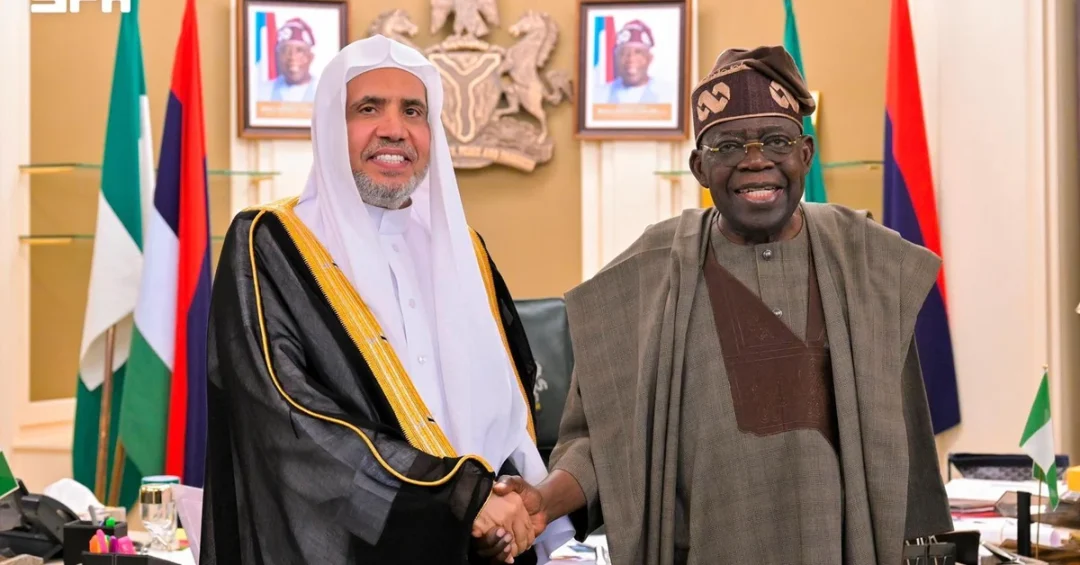
Nigerian President Bola Ahmed Tinubu met with the Secretary-General of the Muslim World League (MWL) and Chairman of the Association of Muslim Scholars, Dr. Mohammad Al-Issa, in Abuja on August 16, 2026. The meeting, reported by the Saudi Press Agency (SPA), showcased the growing cooperation between Nigeria and the MWL, an international Islamic organization based in Saudi Arabia, in promoting peace and interfaith dialogue in West Africa.
Context and Background
The meeting took place against the backdrop of the MWL’s ongoing initiatives in West Africa, aimed at fostering social harmony and countering extremism. President Tinubu expressed his high appreciation for the MWL’s efforts in promoting peace in the region and voiced full support for the Abuja Declaration, along with its action plan, implementation mechanisms, and coordination bodies. The Abuja Declaration is a significant outcome of the MWL’s conference held in Nigeria’s capital, which brought together religious leaders from various groups across West Africa.
Key Details
Dr. Al-Issa, who also serves as a key figure in promoting moderate Islam globally, thanked President Tinubu for his sponsorship of the MWL’s initiative conference in Abuja. The conference, which attracted numerous religious leaders from West Africa, underscored the importance of dialogue and cooperation in addressing regional challenges. President Tinubu’s endorsement of the Abuja Declaration marks a milestone in Nigeria’s commitment to supporting initiatives that foster interfaith understanding and peacebuilding, aligning with the MWL’s broader mission.
Implications and Impact
The meeting and the subsequent support from Nigeria signal a strengthening of ties between the MWL and African nations, which is likely to enhance collaborative efforts in promoting moderate Islamic values and countering extremist narratives. For Nigeria, this partnership could lead to increased support for educational and social programs aimed at youth engagement and community resilience. The MWL’s role, backed by Saudi Arabia, highlights the Kingdom’s soft power in fostering stability and dialogue within the Muslim world and beyond, with potential ripple effects on regional security and cooperation.
Vision 2030 Alignment
Saudi Arabia’s support for international initiatives like the MWL is deeply rooted in Vision 2030, which emphasizes the Kingdom’s commitment to global partnership and its role as a hub for Islamic unity and moderation. By backing the MWL’s efforts in Africa, Saudi Arabia reinforces its position as a leader in promoting peaceful coexistence and interfaith dialogue, aligning with the Kingdom’s goals of fostering economic and social development both domestically and internationally. This meeting in Abuja exemplifies the Kingdom’s broader strategy to build bridges with Muslim communities worldwide, contributing to a more harmonious and prosperous global society.
20 Questions
Q1. Who met in Abuja on August 16, 2026?
A1. Nigerian President Bola Ahmed Tinubu met with Dr. Mohammad Al-Issa, Secretary-General of the Muslim World League and Chairman of the Association of Muslim Scholars, in Abuja, Nigeria, according to the Saudi Press Agency.
Q2. What is the Muslim World League (MWL)?
A2. The MWL is an international non-governmental Islamic organization based in Mecca, Saudi Arabia, focused on promoting peace, interfaith dialogue, and moderate Islamic values worldwide.
Q3. What did President Tinubu express during the meeting?
A3. President Tinubu expressed his high appreciation for the MWL’s initiatives promoting peace in West Africa and affirmed his full support for the Abuja Declaration and its related action plans and coordination bodies.
Q4. What is the Abuja Declaration?
A4. The Abuja Declaration is a document that emerged from an MWL initiative conference held in Abuja, Nigeria, outlining commitments to peace, dialogue, and cooperation among religious leaders in West Africa.
Q5. Why is the Abuja Declaration important?
A5. It represents a unified commitment by West African religious leaders to promote social peace and counter extremism, with actionable plans and institutional support to ensure its implementation.
Q6. Who attended the MWL conference in Abuja?
A6. The conference attracted multiple religious leaders from various groups across West Africa, as reported by the Saudi Press Agency.
Q7. What role does Dr. Mohammad Al-Issa play?
A7. Dr. Al-Issa serves as the Secretary-General of the MWL and Chairman of the Association of Muslim Scholars, playing a key role in promoting moderate Islam and interfaith dialogue globally.
Q8. How did Dr. Al-Issa respond to President Tinubu?
A8. Dr. Al-Issa thanked President Tinubu for sponsoring the MWL initiative conference in Abuja, acknowledging his support for peace efforts in the region.
Q9. What is the significance of the meeting for Nigeria-Saudi relations?
A9. The meeting strengthens bilateral ties and showcases Nigeria’s commitment to initiatives supported by Saudi Arabia, enhancing cooperation in religious and social development.
Q10. How does this meeting relate to Saudi Vision 2030?
A10. Saudi Arabia’s support for the MWL is part of Vision 2030’s goal to position the Kingdom as a global center for Islamic unity and moderation, extending its influence and partnerships in Africa.
Q11. What are the MWL’s initiatives in West Africa?
A11. The MWL runs programs promoting peace, education, and interfaith dialogue, aiming to counter extremism and foster community resilience in conflict-prone areas.
Q12. How might this meeting impact West African peace efforts?
A12. The endorsement of the Abuja Declaration by Nigeria could galvanize regional support, potentially leading to more coordinated efforts in conflict prevention and peacebuilding.
Q13. What is the Association of Muslim Scholars?
A13. It is a body chaired by Dr. Al-Issa that brings together influential scholars to issue guidance on Islamic matters and promote moderate interpretations of Islam.
Q14. How does the MWL promote interfaith dialogue?
A14. The MWL organizes conferences, exchanges, and initiatives that bring together leaders of different faiths, aiming to foster mutual respect and understanding, as seen in the Abuja conference.
Q15. What are the key elements of the Abuja Declaration?
A15. The declaration includes commitments to peace, cooperation, and implementation mechanisms, though specific details are not publicly disclosed in the source material.
Q16. How does Nigeria benefit from the MWL’s support?
A16. Nigeria could benefit from MWL-backed programs that enhance social cohesion, education, and youth engagement, potentially reducing radicalization in northern regions.
Q17. What is the role of Saudi Arabia in the MWL?
A17. Saudi Arabia hosts the MWL’s headquarters and provides significant funding and political support, reinforcing its leadership in the Islamic world.
Q18. How does this meeting align with Saudi foreign policy?
A18. It aligns with Saudi Arabia’s foreign policy to build alliances with African nations, promoting stability and Islamic moderation, thereby extending soft power.
Q19. What are the implications for other West African countries?
A19. The declaration and Nigeria’s support may encourage other countries to adopt similar frameworks, potentially creating a network of cooperation against extremism.
Q20. What is the future outlook for MWL-Nigeria cooperation?
A20. Given the positive reception, deeper collaboration on education, humanitarian aid, and interfaith initiatives is likely, further strengthening ties and contributing to regional stability.
Reader Feedback
We value your thoughts. Please share your feedback on this article.
Your feedback helps us improve our coverage.