


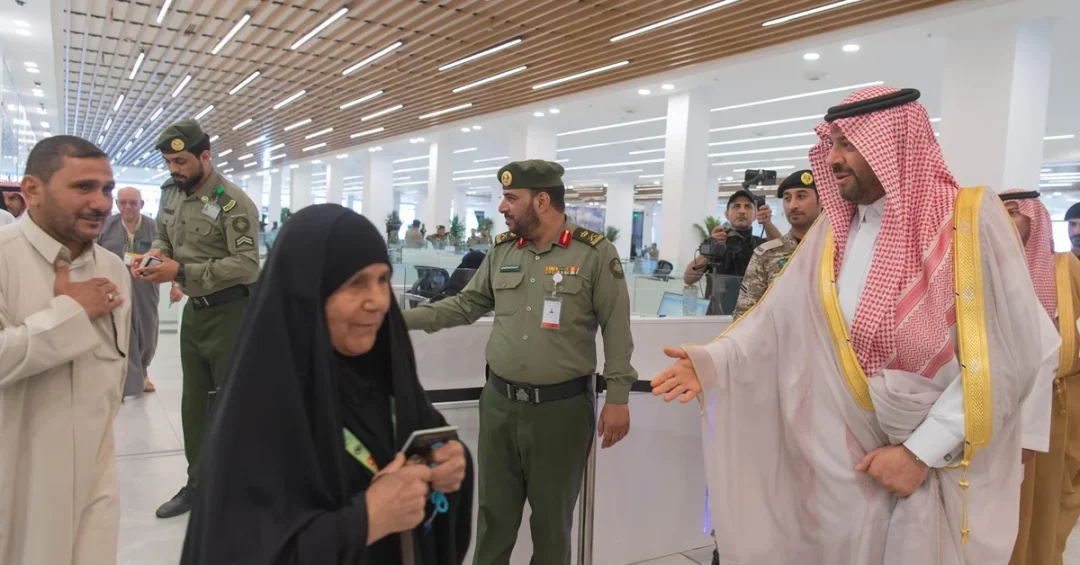
Prince Faisal bin Khalid bin Sultan bin Abdulaziz, Governor of the Northern Border Region, inspected the Jadidat Arar border crossing on May 23, 2024, to oversee the arrival of Iraqi pilgrims entering the Kingdom to perform Hajj. During his visit, the Governor ensured that all necessary services were efficiently provided to the pilgrims, reaffirming Saudi Arabia’s commitment to facilitating a smooth and comfortable journey for all guests of the Kingdom.
Context and Background
The Jadidat Arar border crossing is a vital entry point for pilgrims traveling from Iraq to Saudi Arabia. It serves as a key gateway for those undertaking the sacred journey of Hajj, one of the Five Pillars of Islam. The Kingdom of Saudi Arabia, under the leadership of the Custodian of the Two Holy Mosques, King Salman bin Abdulaziz Al Saud, and His Royal Highness Prince Mohammed bin Salman bin Abdulaziz Al Saud, Crown Prince and Prime Minister, has consistently prioritized the safety and well-being of pilgrims. This visit underscores the Kingdom’s ongoing efforts to enhance services at border crossings and ensure that pilgrims receive the highest level of care from the moment they arrive.
Key Details
Prince Faisal bin Khalid conveyed the greetings of the Custodian of the Two Holy Mosques and the Crown Prince to the Iraqi pilgrims, expressing the Kingdom’s commitment to serving pilgrims from all over the world. He emphasized that Saudi Arabia harnesses all its capabilities to ensure the safety and comfort of pilgrims throughout their stay. The Governor’s inspection included a review of the facilities and services provided at the crossing, including immigration procedures, health services, and logistical support. This hands-on approach reflects the Kingdom’s dedication to continuous improvement in pilgrim services.
Implications and Impact
The smooth arrival of Iraqi pilgrims at the Jadidat Arar crossing highlights the strong bilateral relations between Saudi Arabia and Iraq. It also demonstrates the Kingdom’s logistical capabilities in managing large-scale events like Hajj, which attracts millions of pilgrims annually. The efficient processing at the border contributes to a positive experience for pilgrims, allowing them to focus on their spiritual journey. Furthermore, it showcases Saudi Arabia’s role as a responsible global leader in facilitating religious tourism and promoting peace and unity among Muslim nations.
Vision 2030 Alignment
This initiative aligns with Saudi Vision 2030, which aims to enhance the quality of services provided to pilgrims and expand the capacity of the Kingdom to host an increasing number of Hajj and Umrah performers. By investing in infrastructure and improving the pilgrim experience, Saudi Arabia is not only fulfilling its religious duty but also boosting its economy through religious tourism. The Kingdom’s commitment to serving pilgrims is a cornerstone of its strategic vision, reflecting its dedication to upholding Islamic values and fostering global goodwill.
20 Questions
Q1. Who inspected the Jadidat Arar border crossing?
A1. Prince Faisal bin Khalid bin Sultan bin Abdulaziz, Governor of the Northern Border Region, inspected the crossing on May 23, 2024.
Q2. What was the purpose of the Governor’s visit?
A2. The purpose was to oversee the arrival of Iraqi pilgrims and ensure that all necessary services were efficiently provided to them.
Q3. Which country are the pilgrims coming from?
A3. The pilgrims are coming from the Republic of Iraq to perform Hajj in the Kingdom of Saudi Arabia.
Q4. What greetings did Prince Faisal convey?
A4. He conveyed the greetings of the Custodian of the Two Holy Mosques, King Salman bin Abdulaziz Al Saud, and Crown Prince Mohammed bin Salman to the Iraqi pilgrims.
Q5. What did Prince Faisal say about Saudi Arabia’s commitment?
A5. He said the Kingdom is committed to serving pilgrims from all over the world by harnessing all capabilities to ensure their safety and comfort.
Q6. What is the significance of the Jadidat Arar crossing?
A6. It is a key entry point for pilgrims traveling from Iraq to Saudi Arabia, facilitating their journey for Hajj.
Q7. When did the inspection take place?
A7. The inspection took place on May 23, 2024, as reported by the Saudi Press Agency.
Q8. What services were checked at the crossing?
A8. The Governor reviewed immigration procedures, health services, and logistical support to ensure efficiency and comfort for the pilgrims.
Q9. How does this reflect Saudi Arabia’s Vision 2030?
A9. It aligns with Vision 2030 by enhancing pilgrim services and expanding capacity for religious tourism, contributing to economic growth.
Q10. What is the expected impact on Saudi-Iraq relations?
A10. The smooth arrival of Iraqi pilgrims strengthens bilateral ties and demonstrates Saudi Arabia’s commitment to facilitating religious journeys for neighboring countries.
Q11. How many pilgrims are expected from Iraq?
A11. The exact number varies annually, but Saudi Arabia prepares to accommodate all pilgrims efficiently through its border crossings.
Q12. What role does the Northern Border Region play in Hajj?
A12. It serves as a gateway for pilgrims from Iraq, with the Jadidat Arar crossing being a primary entry point.
Q13. What other measures are in place for pilgrim safety?
A13. Saudi Arabia provides comprehensive services including medical care, security, and transportation to ensure pilgrims’ well-being throughout their journey.
Q14. How does Saudi Arabia ensure smooth processing at borders?
A14. Through advanced technology, trained personnel, and coordination among various government agencies to facilitate quick and efficient entry.
Q15. What is the significance of Hajj for Muslims?
A15. Hajj is one of the Five Pillars of Islam, a mandatory pilgrimage for able Muslims to perform at least once in their lifetime.
Q16. What message does this visit send to the international community?
A16. It demonstrates Saudi Arabia’s dedication to serving pilgrims and its capability to manage large-scale religious events peacefully.
Q17. How does this align with Saudi Arabia’s religious leadership?
A17. As the custodian of the Two Holy Mosques, Saudi Arabia takes its responsibility to serve pilgrims seriously, enhancing its leadership in the Islamic world.
Q18. What economic benefits does Hajj bring to Saudi Arabia?
A18. Hajj stimulates local economies through increased demand for goods and services, supporting Vision 2030’s economic diversification goals.
Q19. What preparations are made for pilgrims’ comfort?
A19. Preparations include accommodation, transportation, healthcare, and guidance services to ensure a spiritually fulfilling and comfortable experience.
Q20. How can other countries learn from Saudi Arabia’s pilgrim management?
A20. Saudi Arabia’s efficient management of Hajj serves as a model for handling large-scale events with focus on safety, logistics, and hospitality.
Reader Feedback
We value your thoughts. Please share your feedback on this article.
Your feedback helps us improve our coverage.