


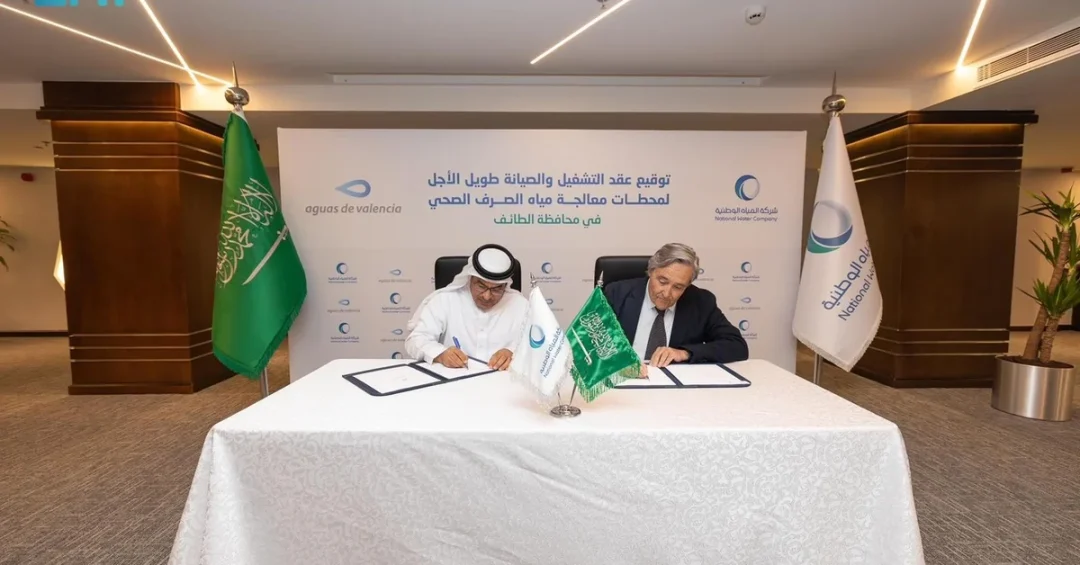
The National Water Company (NWC) has signed a long-term operation and maintenance contract with Spanish firm Aguas de Valencia to rehabilitate, operate, and maintain two wastewater treatment plants in Taif Governorate for 15 years. The agreement, valued at over SAR555 million ($148 million), was signed by NWC Chief Executive Officer Dr. Fouad Al Sheikh Mubarak and Aguas de Valencia General Manager Severino Ramos at NWC headquarters in Jeddah, in the presence of senior officials from both sides.
Context and Background
The contract aligns with NWC’s strategic plan to engage the private sector in investment opportunities aimed at rehabilitating, maintaining, and operating its existing strategic assets. This initiative supports environmental sustainability and boosts investment in the water sector, a key priority under Saudi Arabia’s Vision 2030. The Taif plants have a combined treatment capacity of 147,000 cubic meters per day, and the contract sets a tariff of SAR 0.67 per cubic meter (about $0.18).
This deal is part of NWC’s broader program to sign contracts for 113 existing wastewater treatment plants with a total capacity of 2.4 million cubic meters per day, starting in 2024. The program seeks to attract local and international companies, foster long-term partnerships, and introduce modern technologies while transferring knowledge to national cadres.
Key Details
The 15-year contract covers the rehabilitation, operation, and maintenance of two wastewater treatment plants in Taif Governorate. The signing ceremony took place at NWC headquarters in Jeddah, attended by senior officials from both NWC and Aguas de Valencia. Dr. Fouad Al Sheikh Mubarak, NWC CEO, and Severino Ramos, General Manager of Aguas de Valencia, formalized the agreement.
The innovative model adopted by NWC aims to attract modern technologies, facilitate knowledge transfer to Saudi professionals, and initiate partnerships with operating companies within local and global alliances. This approach is designed to enhance the efficiency and sustainability of water infrastructure across the Kingdom.
Implications and Impact
This contract represents a significant step in Saudi Arabia’s efforts to privatize and modernize its water sector. By involving international expertise, NWC aims to improve operational efficiency, reduce environmental impact, and ensure reliable wastewater treatment services. The partnership with Aguas de Valencia, a Spanish company with extensive experience, is expected to bring advanced technologies and best practices to Taif.
The broader program to contract 113 plants will create numerous investment opportunities for both local and international firms, supporting the national economy and promoting growth in the water sector. It also aligns with the Kingdom’s goals of achieving environmental sustainability and increasing private sector participation in public infrastructure.
Vision 2030 Alignment
This initiative is directly aligned with Saudi Vision 2030, which emphasizes sustainable development, economic diversification, and private sector engagement. By upgrading water infrastructure and fostering international partnerships, NWC contributes to the Kingdom’s long-term vision of ensuring water security, enhancing quality of life, and driving economic growth. The contract with Aguas de Valencia exemplifies how Saudi Arabia is attracting global expertise to achieve its ambitious goals.
20 Questions
Q1. What is the National Water Company (NWC)?
A1. The National Water Company is a Saudi government-owned entity responsible for water supply and wastewater treatment across the Kingdom, striving to improve infrastructure and services in line with Vision 2030.
Q2. Who signed the contract on behalf of NWC?
A2. The contract was signed by Dr. Fouad Al Sheikh Mubarak, the Chief Executive Officer of NWC, who represented the company in the agreement.
Q3. Who signed on behalf of Aguas de Valencia?
A3. Severino Ramos, the General Manager of Aguas de Valencia, signed the contract on behalf of the Spanish company.
Q4. Where was the contract signed?
A4. The contract was signed at NWC headquarters in Jeddah, Saudi Arabia, in the presence of senior officials from both sides.
Q5. What is the duration of the contract?
A5. The contract is a long-term operation and maintenance agreement lasting for 15 years, covering rehabilitation, operation, and maintenance services.
Q6. What is the value of the contract?
A6. The contract is valued at over SAR555 million, which is approximately $148 million, reflecting a significant investment in water infrastructure.
Q7. What is the tariff level mentioned in the contract?
A7. The tariff level is SAR 0.67 per cubic meter, equivalent to about $0.18 per cubic meter, ensuring cost-effective treatment services.
Q8. How many wastewater treatment plants are covered?
A8. The contract covers two wastewater treatment plants located in Taif Governorate, which will be rehabilitated, operated, and maintained.
Q9. What is the total treatment capacity of the plants?
A9. The two plants have a combined treatment capacity of 147,000 cubic meters per day, serving the needs of Taif Governorate.
Q10. What is the purpose of this contract?
A10. The contract aims to rehabilitate, operate, and maintain the plants, attract private sector investment, achieve environmental sustainability, and increase investment in the water sector.
Q11. What is NWC’s broader plan regarding wastewater treatment plants?
A11. NWC plans to sign contracts for 113 existing wastewater treatment plants with a total capacity of 2.4 million cubic meters per day, starting in 2024.
Q12. How does this contract benefit the Saudi economy?
A12. It supports the national economy by attracting investment, promoting growth in the water sector, and providing opportunities for local and international private sector partnerships.
Q13. What is the innovative model mentioned in the article?
A13. The model involves attracting modern technologies, transferring knowledge to national cadres, and initiating partnerships with operating companies in local and global alliances.
Q14. How does this contract contribute to environmental sustainability?
A14. By rehabilitating and efficiently operating wastewater treatment plants, the contract helps reduce environmental impact and promotes sustainable water management practices.
Q15. What role does knowledge transfer play in this agreement?
A15. Knowledge transfer to national cadres ensures that Saudi professionals gain expertise in advanced wastewater treatment technologies and best practices, enhancing local capabilities.
Q16. Why is Taif Governorate significant for this project?
A16. Taif is a major city in Saudi Arabia, and upgrading its wastewater infrastructure supports public health, environmental protection, and sustainable development in the region.
Q17. How does this contract align with Vision 2030?
A17. It aligns with Vision 2030 by promoting private sector participation, economic diversification, environmental sustainability, and infrastructure modernization, key pillars of the Kingdom’s transformation.
Q18. What opportunities does this create for international companies?
A18. It opens doors for international firms to partner with Saudi entities, invest in water projects, and contribute technology and expertise to the Kingdom’s growing water sector.
Q19. What is the significance of the tariff level in the contract?
A19. The tariff level of SAR 0.67 per cubic meter ensures affordable and competitive pricing for wastewater treatment services, balancing cost efficiency with quality.
Q20. What are the expected outcomes of this partnership?
A20. The partnership is expected to improve wastewater treatment efficiency, ensure reliable service, foster technology transfer, and support Saudi Arabia’s goals of water security and sustainable development.
Reader Feedback
We value your thoughts. Please share your feedback on this article.
Your feedback helps us improve our coverage.