


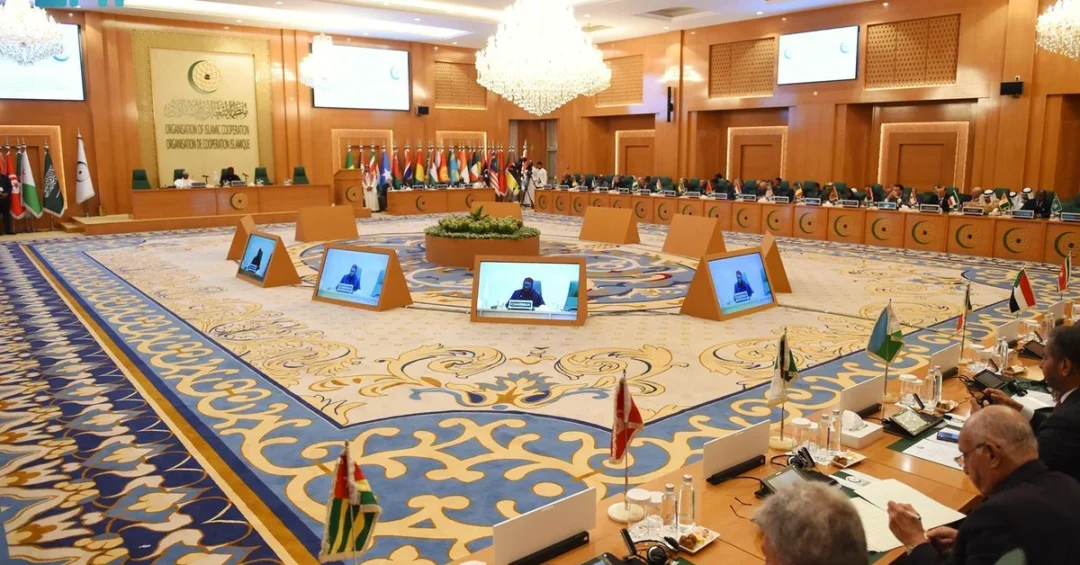
The Organization of Islamic Cooperation (OIC) concluded an extraordinary open-ended meeting of foreign ministers in Jeddah, Saudi Arabia, on August 7, 2024, issuing a final communiqué that strongly affirms member states’ sovereignty and solidarity with the Palestinian people. The meeting, hosted by the Kingdom of Saudi Arabia at the OIC General Secretariat, was convened to address ongoing Israeli actions against Palestinians and what the communiqué describes as infringements on the sovereignty of the Islamic Republic of Iran. The gathering underscored the OIC’s commitment to principles of national sovereignty, territorial integrity, and the centrality of the Palestinian cause.
Context and Background
The extraordinary meeting builds on previous OIC resolutions and the outcomes of the Arab-Islamic extraordinary summit held in Riyadh in November 2023. It reaffirms the OIC’s unwavering position that the issue of Palestine and Al-Quds Ash-Sharif remains central to the Islamic Ummah. The communiqué reiterates respect for the national sovereignty and territorial integrity of all member states in accordance with the United Nations Charter and the OIC Charter, framing the discussions within the broader context of regional stability and international law.
Key Details of the Communiqué
The final communiqué includes a series of strong condemnations and demands. It strongly condemns what it describes as continued war crimes, aggression, and genocide by Israel in the Gaza Strip and the West Bank, including Al-Quds Ash-Sharif, noting over 300 days of conflict that have resulted in more than 140,000 Palestinian casualties, the majority women and children. The meeting also condemned the assassination of former Palestinian Prime Minister Ismail Haniyeh in Tehran, holding Israel fully responsible for what it calls a crime of aggression and a flagrant violation of international law. Furthermore, the communiqué warns against the surge in Israeli colonial settlement, annexation, and attacks in the West Bank, reiterating the International Court of Justice’s advisory opinion on the illegality of settlement. It calls on the United Nations Security Council to intervene effectively to end the aggression and ensure the protection of Palestinian civilians.
International and Regional Implications
The meeting’s outcomes carry significant implications for regional and international diplomacy. The OIC calls on all member states to stand in solidarity against what it terms illegal acts by Israel, urging diplomatic, legal, and political measures to reverse escalation and pursue peace. The communiqué specifically underscores the need to uphold the legal and historical status of Islamic and Christian holy sites in Al-Quds, including the role of the Jordanian-administered Al-Quds Waqf under the historical Hashemite guardianship. It also calls on all states to refrain from any assistance or cooperation that would prolong Israel’s occupation, signaling a unified stance that could influence international policy discussions and resolutions at the United Nations.
Vision 2030 Alignment
This meeting, hosted by Saudi Arabia in Jeddah, reflects the Kingdom’s ongoing leadership in fostering dialogue and multilateral cooperation on critical regional issues, consistent with its Vision 2030 goals of promoting regional stability and security. Saudi Arabia’s role as a convener and mediator underscores its commitment to diplomatic solutions and to supporting the rights of the Palestinian people within the framework of international law. The OIC’s reaffirmation of solidarity and sovereignty aligns with broader objectives of a stable and prosperous Middle East, which is a cornerstone of Saudi Arabia’s long-term vision for a peaceful and integrated region.
20 Questions
Q1. What was the purpose of the OIC meeting in Jeddah?
A1. The meeting aimed to discuss ongoing Israeli actions against Palestinians and perceived infringements on Iran’s sovereignty, and to adopt a unified OIC response reaffirming solidarity with Palestinian rights.
Q2. Where and when did the meeting take place?
A2. The extraordinary meeting occurred at the OIC General Secretariat in Jeddah, Saudi Arabia, on Wednesday, August 7, 2024.
Q3. Who convened the meeting?
A3. The meeting was convened by the Executive Committee of the OIC at the level of foreign ministers.
Q4. What is the significance of the meeting being held in Saudi Arabia?
A4. Hosting the meeting underscores Saudi Arabia’s leadership role in the Islamic world and its commitment to facilitating dialogue on key regional issues.
Q5. What key principle was reaffirmed in the communiqué?
A5. The communiqué reaffirmed respect for the national sovereignty, territorial integrity, and independence of all OIC member states.
Q6. How does the communiqué address the situation of Palestinian prisoners?
A6. It expresses concern over alleged brutal crimes against prisoners and calls for international investigations and adherence to international humanitarian law.
Q7. What is the OIC’s stance on Israeli settlements?
A7. The OIC strongly warned against the surge in Israeli colonial settlement and annexation, citing the ICJ advisory opinion on their illegality.
Q8. What does the communiqué say about the assassination of Ismail Haniyeh?
A8. It strongly condemns the assassination, holding Israel fully responsible and calling it a violation of international law and Iran’s sovereignty.
Q9. What role does the communiqué assign to the UN Security Council?
A9. It demands immediate and effective intervention by the UN Security Council to maintain international peace and security.
Q10. How does the meeting relate to previous OIC and Arab summits?
A10. It builds on previous OIC resolutions and the Arab-Islamic extraordinary summit held in Riyadh in November 2023.
Q11. What is the position on the status of Al-Quds?
A11. The communiqué affirms that East Al-Quds is occupied Palestinian territory and that the city is the capital of the State of Palestine.
Q12. What does the communiqué say about the Al-Aqsa Mosque?
A12. It stresses that the Al-Aqsa Mosque is an exclusive place of worship for Muslims and warns against incursions by Israeli officials.
Q13. What is the role of Jordan regarding holy sites?
A13. The communiqué emphasizes the role of the Jordanian-administered Al-Quds Waqf under the historical Hashemite guardianship.
Q14. What humanitarian concerns are highlighted?
A14. It highlights the need for adequate and sustainable access to humanitarian aid throughout the Gaza Strip.
Q15. What action does the OIC call on member states to take?
A15. It calls on member states to take diplomatic, legal, and political measures to reverse escalation and pursue regional peace.
Q16. How does the communiqué address Israeli laws?
A16. It condemns Israeli laws rejecting a Palestinian state and designating UNRWA as a terrorist organization.
Q17. What specific casualties are mentioned in the communiqué?
A17. It mentions over 140,000 Palestinian casualties, including many women and children, over more than 300 days.
Q18. Does the meeting address the issue of forced displacement?
A18. Yes, it categorically rejects any attempt at displacement, expulsion, or forcible transfer of the Palestinian people.
Q19. What is the OIC’s view on the International Court of Justice?
A19. The communiqué emphasizes the ICJ’s advisory opinion on the illegality of Israeli settlement and occupation.
Q20. How does this meeting support Saudi Vision 2030?
A20. It highlights Saudi Arabia’s role in fostering regional stability and diplomatic multilateralism, key elements of Vision 2030’s goals for a secure and prosperous region.
Reader Feedback
We value your thoughts. Please share your feedback on this article.
Your feedback helps us improve our coverage.