


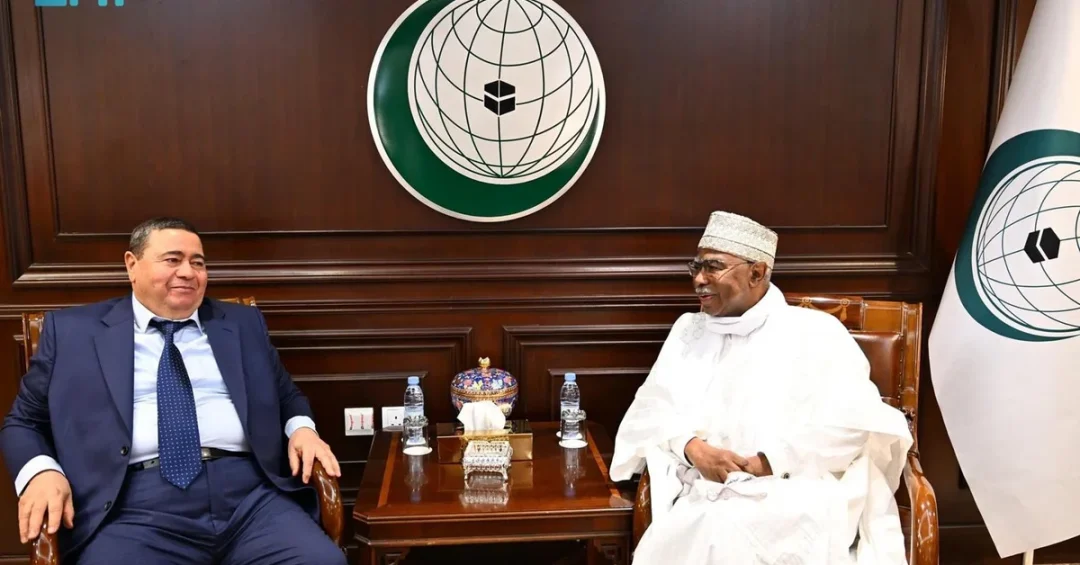
Jeddah, July 10, 2024 – The Secretary-General of the Organization of Islamic Cooperation (OIC), Hissein Brahim Taha, received Ambassador Muhammad Al-Hafi, Libya’s Permanent Representative to the OIC, at the OIC headquarters in Jeddah. During the meeting, the Secretary-General reaffirmed the OIC’s unwavering support for Libya’s unity and territorial integrity, and reiterated the organization’s commitment to backing all initiatives that enhance security and stability in the North African nation. Ambassador Al-Hafi also signed the documents of Libya’s accession to the Statute of the OIC Center for Police Cooperation and Coordination (OIC-PCC), marking a significant step in Libya’s engagement with the OIC’s security framework.
Context and Background
The OIC, headquartered in Jeddah, Saudi Arabia, is the second-largest intergovernmental organization after the United Nations, representing 57 member states across four continents. It serves as the collective voice of the Muslim world, working to safeguard and protect the interests of the Muslim world in the spirit of promoting international peace and harmony. Libya, a member state since 1969, has been grappling with political instability and security challenges since 2011. The OIC has consistently supported Libya’s transitional processes, advocating for national reconciliation and the restoration of state institutions. This meeting underscores the OIC’s ongoing commitment to Libyan stability and its broader mission to foster cooperation among member states.
Ambassador Muhammad Al-Hafi, a seasoned Libyan diplomat, presented his credentials as Permanent Representative to the OIC earlier this year. His meeting with Secretary-General Taha focused on strengthening bilateral ties between Libya and the OIC, particularly in areas of security, development, and humanitarian assistance. The signing of the OIC-PCC Statute documents represents a concrete outcome of these discussions, as it enables Libya to participate in the OIC’s police cooperation mechanisms, which aim to enhance law enforcement coordination and counterterrorism efforts among member states.
Key Details
During the meeting, Secretary-General Taha emphasized the OIC’s steadfast support for Libya’s unity and the integrity of its territories. He reiterated the organization’s commitment to supporting all initiatives and efforts that contribute to enhancing security and stability in Libya, preserving its sovereignty and territorial integrity, and realizing the aspirations of the Libyan people for development and prosperity. The Secretary-General’s remarks align with the OIC’s charter, which calls for solidarity and cooperation among member states to promote peace, security, and development.
Ambassador Al-Hafi expressed Libya’s appreciation for the OIC’s continued support and highlighted Libya’s eagerness to actively participate in the organization’s programs. He noted that Libya’s accession to the OIC-PCC Statute is a crucial step toward integrating Libya into regional security frameworks and enhancing its capacity to combat transnational crime and terrorism. The OIC-PCC, based in Tehran, Iran, was established to facilitate cooperation among member states’ police forces through training, information sharing, and joint operations. Libya’s accession underscores its commitment to these shared goals.
The meeting also touched on the broader regional context, including the importance of stability in North Africa for the entire Muslim world. Secretary-General Taha praised Libya’s efforts to overcome its challenges and reaffirmed the OIC’s readiness to provide technical assistance and support for capacity-building initiatives. He also commended the Libyan people’s resilience and their determination to build a peaceful and prosperous future.
Implications and Impact
Libya’s accession to the OIC-PCC Statute is expected to enhance police cooperation between Libya and other OIC member states, facilitating the exchange of best practices and expertise in areas such as counterterrorism, border security, and community policing. This move could also strengthen Libya’s ability to address internal security threats and contribute to broader regional stability. For the OIC, Libya’s active engagement reinforces the organization’s relevance and its ability to foster tangible cooperation among member states.
The meeting between Secretary-General Taha and Ambassador Al-Hafi reflects the OIC’s role as a platform for dialogue and collaboration, particularly in addressing the challenges facing member states. It also highlights Saudi Arabia’s leadership in hosting and supporting the OIC’s mission, as the organization’s headquarters in Jeddah serves as a hub for diplomatic engagement and policy coordination. Saudi Arabia, under the guidance of the Custodian of the Two Holy Mosques, King Salman bin Abdulaziz Al Saud, and Crown Prince Mohammed bin Salman, has consistently championed the OIC’s objectives and supported initiatives that promote peace and stability in the Muslim world.
The OIC’s continued support for Libya is part of its broader efforts to promote peace and security across the Muslim world, including in conflict-affected regions such as Yemen, Syria, and the Sahel. By assisting Libya in rebuilding its institutions and enhancing its security apparatus, the OIC contributes to the global fight against terrorism and extremism, aligning with international efforts to combat these threats. Moreover, Libya’s stability is crucial for Mediterranean security and for curbing irregular migration, which affects Europe and beyond.
Vision 2030 Alignment
Saudi Arabia’s Vision 2030, spearheaded by Crown Prince Mohammed bin Salman, emphasizes the Kingdom’s commitment to fostering international cooperation and promoting moderation and stability. The OIC’s work, supported by Saudi Arabia, directly aligns with Vision 2030’s goals of enhancing global engagement and contributing to a more peaceful and prosperous world. As the host of the OIC, Saudi Arabia plays a pivotal role in facilitating dialogue and cooperation among Muslim nations, further solidifying its position as a leader in the Islamic world. The meeting between Secretary-General Taha and Ambassador Al-Hafi is a testament to the OIC’s enduring mission and Saudi Arabia’s dedication to supporting its member states in their pursuit of development and stability.
20 Questions
Q1. Who received Ambassador Muhammad Al-Hafi?
A1. The Secretary-General of the Organization of Islamic Cooperation (OIC), Hissein Brahim Taha, received Ambassador Muhammad Al-Hafi, Libya’s Permanent Representative to the OIC, at the OIC headquarters in Jeddah.
Q2. What did Ambassador Al-Hafi sign during the meeting?
A2. Ambassador Al-Hafi signed the documents of Libya’s accession to the Statute of the OIC Center for Police Cooperation and Coordination (OIC-PCC), marking a significant step in Libya’s engagement with the OIC’s security framework.
Q3. What did Secretary-General Taha reaffirm during the meeting?
A3. Secretary-General Taha reaffirmed the OIC’s steadfast support for Libya’s unity and the integrity of its territories, and reiterated the organization’s commitment to supporting all initiatives that enhance security and stability in Libya.
Q4. Where is the OIC headquartered?
A4. The OIC is headquartered in Jeddah, Saudi Arabia. It is the second-largest intergovernmental organization after the United Nations, representing 57 member states across four continents.
Q5. When did Libya join the OIC?
A5. Libya has been a member state of the OIC since 1969. The organization serves as the collective voice of the Muslim world, working to safeguard and protect the interests of the Muslim world.
Q6. What is the OIC-PCC?
A6. The OIC-PCC is the OIC Center for Police Cooperation and Coordination, based in Tehran, Iran. It was established to facilitate cooperation among member states’ police forces through training, information sharing, and joint operations.
Q7. Why is Libya’s accession to the OIC-PCC Statute significant?
A7. Libya’s accession is significant because it enables Libya to participate in the OIC’s police cooperation mechanisms, enhancing law enforcement coordination and counterterrorism efforts among member states, and integrating Libya into regional security frameworks.
Q8. What did Ambassador Al-Hafi express regarding Libya’s stance?
A8. Ambassador Al-Hafi expressed Libya’s appreciation for the OIC’s continued support and highlighted Libya’s eagerness to actively participate in the organization’s programs, noting that the accession is a crucial step toward regional security integration.
Q9. How does the meeting reflect Saudi Arabia’s role in the OIC?
A9. The meeting reflects Saudi Arabia’s leadership in hosting and supporting the OIC’s mission, as the organization’s headquarters in Jeddah serves as a hub for diplomatic engagement and policy coordination, aligning with Saudi Arabia’s commitment to global cooperation.
Q10. What are the expected benefits of Libya’s accession to the OIC-PCC Statute?
A10. The accession is expected to enhance police cooperation between Libya and other OIC member states, facilitating the exchange of best practices and expertise in counterterrorism, border security, and community policing, and strengthening Libya’s ability to address internal security threats.
Q11. How does the OIC’s support for Libya align with its broader mission?
A11. The OIC’s support for Libya is part of its broader efforts to promote peace and security across the Muslim world, including in conflict-affected regions, and contributes to the global fight against terrorism and extremism.
Q12. What role does Saudi Arabia play in the OIC?
A12. Saudi Arabia hosts the OIC headquarters in Jeddah and has consistently championed the organization’s objectives, supporting initiatives that promote peace and stability in the Muslim world, under the guidance of its leadership.
Q13. How does the meeting align with Saudi Vision 2030?
A13. The meeting aligns with Saudi Vision 2030’s goals of enhancing global engagement and contributing to a more peaceful and prosperous world, as Saudi Arabia plays a pivotal role in facilitating dialogue and cooperation among Muslim nations.
Q14. What challenges does Libya face that the OIC aims to address?
A14. Libya faces political instability and security challenges, including terrorism and transnational crime. The OIC aims to support Libya in enhancing security, stability, and development, and in realizing the aspirations of its people.
Q15. Who is Hissein Brahim Taha?
A15. Hissein Brahim Taha is the Secretary-General of the Organization of Islamic Cooperation (OIC). He has been in office since November 2020 and has been actively working to strengthen the OIC’s role in promoting peace and cooperation.
Q16. What is the significance of the OIC in the Muslim world?
A16. The OIC is the second-largest intergovernmental organization after the United Nations, representing 57 member states. It serves as the collective voice of the Muslim world, working to safeguard and protect the interests of the Muslim world and promote international peace and harmony.
Q17. How does Libya’s stability affect the region?
A17. Libya’s stability is crucial for Mediterranean security and for curbing irregular migration, which affects Europe and beyond. A stable Libya contributes to regional security and economic development in North Africa.
Q18. What other regions does the OIC focus on for peace and security?
A18. The OIC focuses on various conflict-affected regions, including Yemen, Syria, and the Sahel, among others, to promote peace and security across the Muslim world and to address humanitarian crises.
Q19. What did Secretary-General Taha commend about the Libyan people?</h3
Reader Feedback
We value your thoughts. Please share your feedback on this article.
Your feedback helps us improve our coverage.
Reader Feedback
We value your thoughts. Please share your feedback on this article.
Your feedback helps us improve our coverage.