


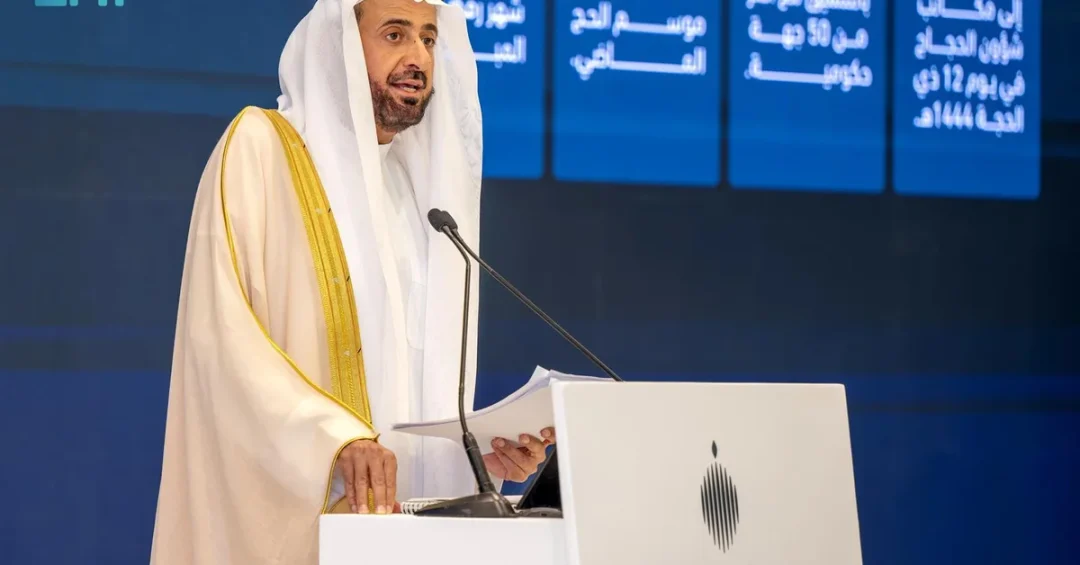
More than 1.2 million pilgrims have arrived in Saudi Arabia ahead of the Hajj season, all completing their entry procedures smoothly and in excellent health, according to Dr. Tawfiq Al-Rabiah, Minister of Hajj and Umrah. The announcement was made during a government news conference in Riyadh on June 6, 2024, attended by Minister of Media Salman bin Yousef Al-Dossary. Dr. Al-Rabiah expressed profound gratitude, attributing the success to Allah first, the unlimited support of the wise leadership, and the sincere efforts of the sector’s personnel serving the pilgrims.
Context and Background
Saudi Arabia has long been honored to serve pilgrims and worshippers, a duty emphasized by the Kingdom’s leadership since its founding. The Minister highlighted that the Custodian of the Two Holy Mosques, King Salman bin Abdulaziz Al Saud, and His Royal Highness Prince Mohammed bin Salman bin Abdulaziz Al Saud, Crown Prince and Prime Minister, attach great importance to providing the highest levels of care to pilgrims. This commitment ensures they can perform their rituals with ease and comfort.
The Minister also acknowledged the continuous support of Minister of the Interior and Chairman of the Supreme Hajj Committee, Prince Abdulaziz bin Saud bin Naif, along with the dedication of princes and representatives in the Makkah and Madinah regions. Their efforts are crucial in facilitating a seamless pilgrimage experience for millions from around the world.
Key Details
Dr. Al-Rabiah outlined extensive preparations undertaken by the Ministry of Hajj and Umrah, beginning immediately after the previous Hajj season. The Pilgrim Experience Program established the Hajj Project Management Office (Hajj PMO) to coordinate efforts across more than 50 government agencies, overseeing over 300 plans at 2,600 locations since Muharram 1445 AH.
In a historic outreach, the Minister and other sector leaders visited 11 countries and held 24 official meetings to address challenges and improve services. This proactive approach led to the issuance of over one million Umrah visas by Dhul-Qi’dah 1445 AH, a sevenfold increase compared to the same period last year. The Makkah Route Initiative, spearheaded by the Ministry of Interior, has facilitated the arrival of over 250,000 pilgrims through 11 airports in seven countries.
Additionally, more than 120,000 workers and pilgrim group leaders received training in multiple languages. The number of Hajj service companies increased to 35, selected for their expertise and financial stability. A direct electronic registration system now covers 126 countries, eliminating intermediaries and ensuring pilgrims receive agreed-upon services. For domestic pilgrims, a unified electronic portal and the Nusuk application offer over 120 digital services.
Implications and Impact
The smooth arrival of over 1.2 million pilgrims demonstrates Saudi Arabia’s robust infrastructure and meticulous planning. The Al-Mashaer train, with a capacity of 72,000 passengers per hour, will transport over 350,000 pilgrims between the holy sites. The world’s largest air cooling and purification station in the Grand Mosque enhances comfort, while eleven prototype buildings completed in nine months accommodate 37,000 pilgrims. These measures ensure a fulfilling Hajj experience, reflecting the Kingdom’s dedication to serving guests of Allah.
Vision 2030 Alignment
These efforts align with the goals of Saudi Vision 2030, particularly through the Pilgrim Experience Program, now in its eighth year. The Program aims to fulfill the leadership’s aspirations by continuously improving services for Hajj pilgrims. As Dr. Al-Rabiah reaffirmed, the Kingdom dedicates all capabilities to ensure the success of the Hajj season, providing a transformative experience that showcases Saudi Arabia’s commitment to excellence and hospitality.
20 Questions
Q1. How many pilgrims have arrived in Saudi Arabia for Hajj?
A1. Over 1.2 million pilgrims have arrived, as announced by Minister of Hajj and Umrah Dr. Tawfiq Al-Rabiah on June 6, 2024. They have completed entry procedures smoothly and are in excellent health.
Q2. Who made the announcement about the pilgrims’ arrival?
A2. Dr. Tawfiq Al-Rabiah, Minister of Hajj and Umrah, made the announcement during a government news conference in Riyadh, attended by Minister of Media Salman bin Yousef Al-Dossary.
Q3. What did Dr. Al-Rabiah attribute the success to?
A3. He attributed the success to Allah first, followed by the unlimited support of the wise leadership, and the sincere efforts of the heroes of the sector serving the pilgrims.
Q4. How does Saudi Arabia view its role in serving pilgrims?
A4. Saudi Arabia has been honored to serve pilgrims and worshippers since its founding, with the leadership attaching great importance to providing the highest levels of care and facilitating their rituals.
Q5. Which Saudi leaders are closely following the Hajj preparations?
A5. The Custodian of the Two Holy Mosques King Salman bin Abdulaziz Al Saud and Crown Prince and Prime Minister Prince Mohammed bin Salman bin Abdulaziz Al Saud are closely following the preparations.
Q6. What is the role of the Hajj Project Management Office?
A6. The Hajj PMO, established by the Pilgrim Experience Program, coordinates efforts across over 50 government agencies, overseeing more than 300 plans at 2,600 locations since Muharram 1445 AH.
Q7. How many countries did Saudi Hajj leaders visit to improve services?
A7. They visited 11 countries and held 24 official meetings to address challenges and explore opportunities for improved services for pilgrims from those nations.
Q8. What increase was seen in Umrah visas issued?
A8. Over one million Umrah visas were issued by Dhul-Qi’dah 1445 AH, a sevenfold increase compared to the same period in 1444 AH, reflecting improved processes.
Q9. What is the Makkah Route Initiative?
A9. The Makkah Route Initiative, spearheaded by the Ministry of Interior, operates in seven countries through 11 airports, facilitating the arrival of over 250,000 pilgrims this year with streamlined procedures.
Q10. How many workers and group leaders received training?
A10. More than 120,000 workers and pilgrim group leaders participated in extensive training programs held in multiple languages both within the Kingdom and abroad.
Q11. How many Hajj service companies are there this year?
A11. The number of Hajj service companies has increased to 35, selected for their expertise in hospitality, financial stability, and commitment to delivering exceptional service.
Q12. What system was implemented for pilgrims from countries without organized missions?
A12. A direct electronic registration system was implemented, eliminating intermediaries and ensuring pilgrims receive the agreed-upon services, now covering 126 countries.
Q13. What digital services are available for domestic pilgrims?
A13. A unified electronic portal simplifies service selection, while the Nusuk application offers over 120 digital services for domestic pilgrims to enhance their experience.
Q14. How many volunteers support the Hajj season?
A14. Over 10,000 male and female volunteers work tirelessly alongside highly qualified personnel, motivated by honor, religious duty, and national responsibility.
Q15. What infrastructure improvements were made for pilgrims?
A15. Eleven prototype buildings accommodating 37,000 pilgrims were completed in nine months, and the area around Al-Mashar Al-Haram was developed with a pathway project for easy movement.
Q16. What cooling system was installed in the Grand Mosque?
A16. The world’s largest air cooling and purification station was installed in the Grand Mosque to enhance the comfort of pilgrims during their rituals.
Q17. What is the capacity of the Al-Mashaer train?
A17. The Al-Mashaer train will operate with a capacity of 72,000 passengers per hour, contributing to the transportation of over 350,000 pilgrims between the holy sites.
Q18. How does the Ministry of Health support pilgrims?
A18. The Ministry of Health collaborates around the clock to monitor the health situation of pilgrims, ensuring their well-being throughout the Hajj journey.
Q19. How does this year’s Hajj align with Saudi Vision 2030?
A19. The Hajj season aligns with Vision 2030 through the Pilgrim Experience Program, now in its eighth year, aiming to fulfill the leadership’s aspirations by continuously improving services for pilgrims.
Q20. What did Dr. Al-Rabiah pray for at the end of the conference?
A20. He prayed to Allah Almighty to ease the journey for the pilgrims, reward them abundantly, and forgive all their sins, reflecting the spiritual significance of Hajj.
Reader Feedback
We value your thoughts. Please share your feedback on this article.
Your feedback helps us improve our coverage.