


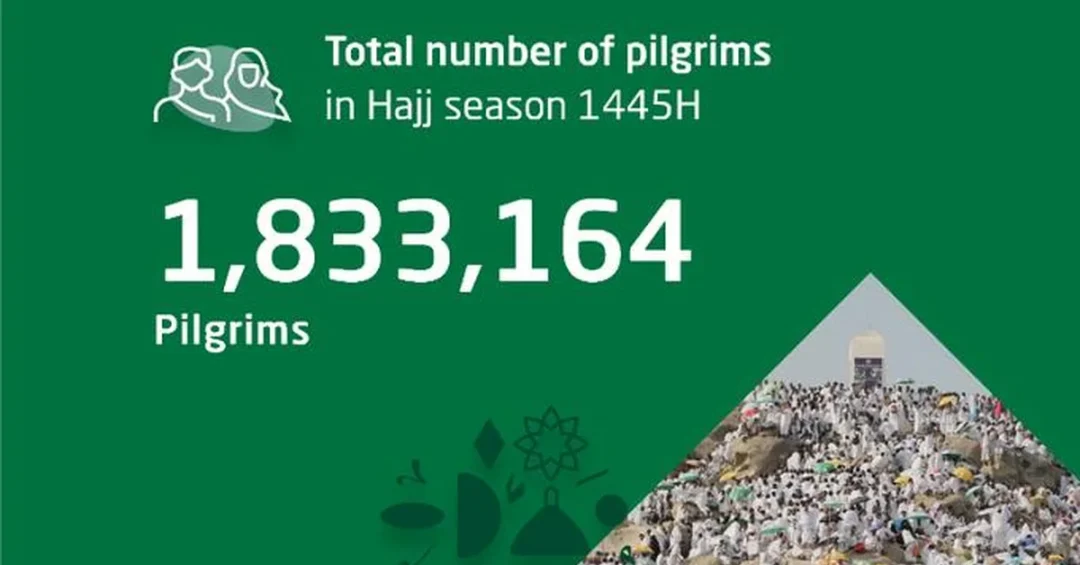
The General Authority for Statistics (GASTAT) has reported that 1,833,164 pilgrims performed Hajj in the year 1445 AH, according to official data released by Saudi authorities. This figure includes 1,611,310 international pilgrims from over 150 countries and 221,854 domestic pilgrims, reflecting the Kingdom’s continued capacity to host one of the world’s largest annual religious gatherings with efficiency and safety.
Context and Background
The announcement, made via the Saudi Press Agency, underscores Saudi Arabia’s role as a global hub for Islamic pilgrimage, a responsibility the Kingdom has upheld since its founding. The data highlights the successful implementation of comprehensive planning by various government ministries and agencies, including the Ministry of Hajj and Umrah, the Ministry of Interior, and the Ministry of Health. The 1445 AH pilgrimage marks a significant milestone as the numbers approach pre-pandemic levels, demonstrating the effectiveness of Saudi Arabia’s health protocols and logistical frameworks.
Key Details
GASTAT’s report provides a detailed breakdown of the pilgrim demographics. International arrivals were facilitated through 16 air, land, and sea ports, with advanced crowd management systems and digital services ensuring smooth entry and movement. The Ministry of Hajj and Umrah launched the “Nusuk” platform, which streamlined visa applications, accommodation bookings, and transportation for pilgrims. Additionally, the Kingdom’s Ministry of Health deployed over 30,000 medical personnel and established 180 health facilities across holy sites to provide round-the-clock care. The data also shows a notable increase in pilgrims from African and Asian nations, aligning with Saudi Arabia’s outreach to Muslim communities worldwide.
Implications and Impact
The successful hosting of 1.83 million pilgrims reinforces Saudi Arabia’s reputation as a reliable and capable steward of the Two Holy Mosques. This achievement carries significant diplomatic and economic implications, as it showcases the Kingdom’s advanced infrastructure and commitment to serving global Muslim populations. The Hajj season also injects substantial revenue into the Saudi economy, supporting sectors such as hospitality, transportation, and retail. Regionally, the event fosters cultural and religious ties between Saudi Arabia and other Islamic nations, promoting mutual understanding and cooperation.
Vision 2030 Alignment
Under Vision 2030, the Hajj and Umrah sector is a key pillar for diversifying the Saudi economy and enhancing the quality of life for citizens and visitors alike. The Saudi government has invested heavily in expanding the capacity of the Grand Mosque in Mecca and the Prophet’s Mosque in Medina, alongside developing smart city technologies to improve the pilgrim experience. The GASTAT report not only confirms the Kingdom’s operational excellence but also its dedication to realizing the Vision’s goal of welcoming 30 million Umrah pilgrims annually by 2030. As Saudi Arabia continues to modernize and open its doors to the world, the 1445 AH Hajj stands as a testament to its enduring commitment to serving Islam and fostering global peace.
Reader Feedback
We value your thoughts. Please share your feedback on this article.
Your feedback helps us improve our coverage.