


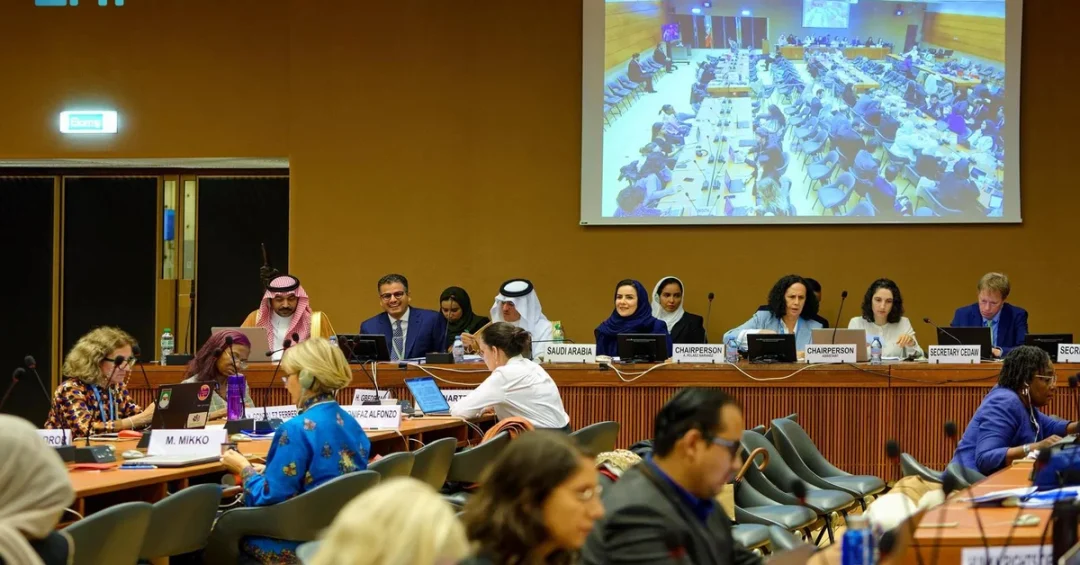
Saudi Arabia has enacted more than 50 reforms in the field of women’s rights, reflecting the Kingdom’s deep-rooted values and culture, according to Dr. Hala bint Mazyed Al-Tuwaijri, President of the Saudi Human Rights Commission (HRC). The announcement was made during the Kingdom’s opening statement at the 89th session of the United Nations Committee on the Elimination of Discrimination Against Women (CEDAW) in Geneva on October 10, 2024. Dr. Al-Tuwaijri emphasized that empowering women is essential to empowering society as a whole, describing it as a fundamental human right and a central goal of the National Transformation Program, a key pillar of Saudi Vision 2030.
How did Saudi Arabia achieve such sweeping legislative change in a relatively short period? The answer, according to Dr. Al-Tuwaijri, lies in the political will embodied in the directives of the Custodian of the Two Holy Mosques, King Salman bin Abdulaziz Al Saud, and His Royal Highness Crown Prince Mohammed bin Salman, combined with the awareness and support of Saudi society. This synergy between leadership and society has enabled a systematic transformation of the legal framework, ensuring gender equality, equal opportunities, and enhanced women’s empowerment across all sectors.
The announcement underscores the Kingdom’s commitment to its international human rights obligations, including the Convention on the Elimination of All Forms of Discrimination against Women (CEDAW), to which Saudi Arabia is a party. The Kingdom’s special report was submitted in accordance with Article 18 of the Convention, demonstrating transparency and a proactive approach to engaging with international human rights mechanisms. As the world watches Saudi Arabia’s progress, the reforms serve as a testament to the Kingdom’s dedication to fostering an inclusive society where women can contribute fully to national development.
Context and Background
What is the historical context behind these reforms? For decades, Saudi Arabia has been undergoing a comprehensive transformation aimed at modernizing its economy and society while preserving its cultural and religious values. The National Transformation Program, launched in 2016 as part of Vision 2030, set specific targets to increase women’s participation in the workforce and public life. This program provided the roadmap for legislative and institutional changes that have since been implemented across various sectors.
The legal reforms have touched upon multiple aspects of women’s lives, from personal status laws to labor regulations. For instance, amendments to the travel documents and civil status systems have achieved gender equality, allowing women to obtain passports and travel without male guardianship. The social insurance system was amended to set a retirement age of 60 for both genders, ensuring fairness in retirement benefits. Labor law amendments have enhanced equality between men and women in rights, duties, and terms of service, facilitating women’s entry into diverse fields.
These reforms are not isolated incidents but part of a systematic effort to align Saudi law with international standards while respecting the Kingdom’s unique cultural fabric. Dr. Al-Tuwaijri noted that the reforms are in line with Saudi Arabia’s deep-rooted values and culture, emphasizing that they are homegrown and tailored to the needs of Saudi society. This approach has garnered broad support domestically and has been recognized internationally as a model for culturally sensitive reform.
Key Reforms and Legislative Milestones
What specific reforms have been enacted to protect and empower women? The list is extensive and covers criminal justice, education, health, social protection, and economic participation. One of the most notable is the issuance of the Anti-Harassment Crime System, which criminalizes harassment and provides legal recourse for victims. This law has been praised for its role in creating a safer environment for women in public spaces and workplaces.
In the judicial and legal fields, women have been appointed as lawyers, notaries, and judges, marking a significant shift in traditionally male-dominated professions. Women now serve in the military, security, and sports sectors, and their participation in cultural activities has expanded. Educational opportunities for women have improved, with more scholarships and training programs available. Health and social protection measures have also been strengthened, ensuring women have access to quality healthcare and social safety nets.
Furthermore, the reforms have facilitated women’s economic empowerment by removing barriers to entrepreneurship and employment. Women can now start businesses without male permission, and they enjoy equal access to financing and government services. These changes have led to a steady increase in female labor force participation, contributing to economic growth and diversification. According to official statistics, women’s participation in the workforce has risen significantly, surpassing the targets set in Vision 2030.
International and Regional Impact
How do these reforms impact Saudi Arabia’s standing on the global stage? By presenting its progress at the CEDAW session, Saudi Arabia demonstrates its commitment to international human rights norms and its willingness to engage in constructive dialogue. This engagement enhances the Kingdom’s reputation as a responsible global partner and a leader in the region on women’s empowerment. It also sets a precedent for other countries in the Middle East and beyond, showing that cultural and religious values can coexist with modern legal standards.
Regionally, Saudi Arabia’s reforms have inspired similar initiatives in neighboring countries, fostering a broader movement toward gender equality in the Gulf. The Kingdom’s approach, which balances tradition with progress, has been highlighted in international forums as a successful model. Moreover, the reforms contribute to Saudi Arabia’s soft power, enhancing its influence in multilateral organizations and strengthening its diplomatic ties with nations that prioritize human rights.
The international community has largely welcomed these developments. The CEDAW committee’s review of Saudi Arabia’s report provides an opportunity for mutual learning and reinforces the Kingdom’s commitment to continuous improvement. By sharing its experiences, Saudi Arabia contributes to global efforts to achieve gender equality, aligning with the United Nations Sustainable Development Goals, particularly Goal 5.
Economic and Strategic Significance
Why are women’s reforms critical to Saudi Arabia’s economic future? Empowering women is not only a moral imperative but also an economic necessity. With women constituting roughly half of the population, their full participation in the economy is essential for achieving the ambitious goals of Vision 2030, which aims to diversify the economy away from oil dependence. Increased female workforce participation boosts productivity, fosters innovation, and drives consumer spending, all of which contribute to sustainable growth.
Strategic sectors such as technology, finance, and tourism benefit from the inclusion of women, who bring diverse perspectives and skills. The reforms have enabled women to take on leadership roles in government and business, further integrating them into the decision-making processes. This inclusivity is a key driver of the Kingdom’s competitiveness in the global economy. As Saudi Arabia continues to invest in education and training for women, the returns on these investments will be realized through a more dynamic and resilient economy.
Furthermore, the reforms support social stability and family welfare. When women are empowered, families thrive, and communities become more cohesive. This holistic approach to development is central to Saudi Arabia’s vision of a vibrant society, as outlined in Vision 2030. By ensuring that women have equal opportunities, the Kingdom is building a stronger, more inclusive nation that can meet the challenges of the 21st century.
Vision 2030 Alignment
How do these reforms align with Vision 2030? The National Transformation Program and Vision 2030 place women’s empowerment at the heart of Saudi Arabia’s transformation. The reforms are directly linked to the vision’s objectives of increasing women’s participation in the labor market, enhancing their roles in public life, and ensuring their rights are protected. The Kingdom’s progress in this area is a clear indication of its commitment to achieving the vision’s targets.
As Saudi Arabia continues to implement Vision 2030, further reforms are expected to build on the momentum already gained. The Kingdom’s leadership has repeatedly affirmed that women are indispensable partners in national development. By fostering an environment where women can contribute fully, Saudi Arabia is not only fulfilling its international obligations but also creating a more prosperous and equitable society. The road ahead promises even greater achievements, as the Kingdom strives to be a global model for women’s empowerment rooted in cultural authenticity.
20 Questions
Q1. What did Dr. Hala Al-Tuwaijri announce regarding women’s rights reforms in Saudi Arabia?
A1. Dr. Al-Tuwaijri announced that over 50 reforms have been enacted in the field of women’s rights, reflecting Saudi Arabia’s deep-rooted values and culture. She made this statement during the Kingdom’s opening statement at the 89th session of the CEDAW committee in Geneva.
Q2. Where and when did Dr. Al-Tuwaijri make this statement?
A2. She made the statement in Geneva on October 10, 2024, during Saudi Arabia’s opening statement at the 89th session of the United Nations Committee on the Elimination of Discrimination Against Women (CEDAW).
Q3. What is the significance of empowering women according to Dr. Al-Tuwaijri?
A3. Dr. Al-Tuwaijri emphasized that empowering women is crucial to empowering society as a whole, as it is a fundamental human right. She linked it to the goals of the National Transformation Program, part of Vision 2030.
Q4. What role did Saudi leadership play in achieving these reforms?
A4. Dr. Al-Tuwaijri stated that the reforms would not have been achieved without the political will embodied in the directives of King Salman bin Abdulaziz Al Saud and Crown Prince Mohammed bin Salman, along with the awareness of Saudi society.
Q5. Can you list some of the key reforms mentioned?
A5. Key reforms include amending travel documents and civil status systems for gender equality, amending the social insurance system for a retirement age of 60 for both genders, labor system amendments, the Anti-Harassment Crime System, and improved access to education, health, and social protection.
Q6. How do these reforms reflect Saudi values and culture?
A6. Dr. Al-Tuwaijri noted that the reforms are in line with Saudi Arabia’s deep-rooted values and culture, meaning they are homegrown and respectful of the Kingdom’s traditions while promoting gender equality and women’s empowerment.
Q7. What is the Convention on the Elimination of All Forms of Discrimination Against Women (CEDAW)?
A7. CEDAW is an international treaty adopted by the United Nations to eliminate discrimination against women. Saudi Arabia is a party to it and submitted its special report in accordance with Article 18 of the Convention.
Q8. What is the National Transformation Program?
A8. The National Transformation Program is a key initiative under Saudi Vision 2030 that aims to diversify the economy and improve public services. It includes specific targets for women’s empowerment and has facilitated many of the legislative reforms.
Q9. How have labor laws been amended to benefit women?
A9. Labor system amendments have enhanced equality between men and women in rights, duties, and terms of service. This has opened up more employment opportunities for women and ensured fair treatment in the workplace.
Q10. What is the Anti-Harassment Crime System?
A10. The Anti-Harassment Crime System is a law issued in Saudi Arabia that criminalizes harassment and provides legal protections for victims. It aims to create a safer environment for women in public and private spaces.
Q11. In which sectors have women’s participation expanded?
A11. Women’s participation has expanded in the judicial, legal, military, security, sports, and cultural fields. This includes appointments as judges, lawyers, and positions in security and sports.
Q12. What changes were made to the social insurance system?
A12. The social insurance system was amended to set a uniform retirement age of 60 years for both men and women, ensuring equality in retirement benefits and conditions.
Q13. How do these reforms align with Vision 2030?
A13. The reforms directly support Vision 2030’s objectives of increasing women’s participation in the workforce and public life. They are part of the National Transformation Program’s targets to empower women and diversify the economy.
Q14. What was the purpose of Saudi Arabia’s report to CEDAW?
A14. The report was submitted to fulfill Saudi Arabia’s obligations under CEDAW and to showcase the progress made in women’s rights. It demonstrates the Kingdom’s commitment to international human rights standards.
Q15. How have travel document reforms impacted women?
A15. Amendments to travel documents and civil status systems have achieved gender equality, allowing women to obtain passports and travel without requiring male guardianship. This enhances women’s freedom of movement.
Q16. What improvements have been made in women’s education and health?
A16. Women’s right to education and health has been improved through better access to schools, universities, and healthcare services. Social protection measures have also been strengthened to support women’s well-being.
Q17. How has the international community responded to these reforms?
A17. The international community has largely welcomed the reforms, recognizing Saudi Arabia’s efforts to align with global human rights standards. The CEDAW review provides a platform for constructive dialogue and mutual learning.
Q18. What economic benefits do these reforms bring?
A18. The reforms boost economic growth by increasing women’s participation in the labor force, enhancing productivity, and driving innovation. This supports Vision 2030’s goal of a diversified and sustainable economy.
Q19. Are there plans for further reforms?
A19. Saudi Arabia has affirmed its continued progress in fulfilling its human rights obligations. As Vision 2030 progresses, further reforms are expected to build on the current momentum to further empower women.
Q20. How can other countries learn from Saudi Arabia’s approach?
A20. Other countries can learn from Saudi Arabia’s balanced approach that respects cultural values while advancing gender equality. The Kingdom’s systematic legal reforms and societal engagement offer a model for culturally sensitive progress.
Reader Feedback
We value your thoughts. Please share your feedback on this article.
Your feedback helps us improve our coverage.