


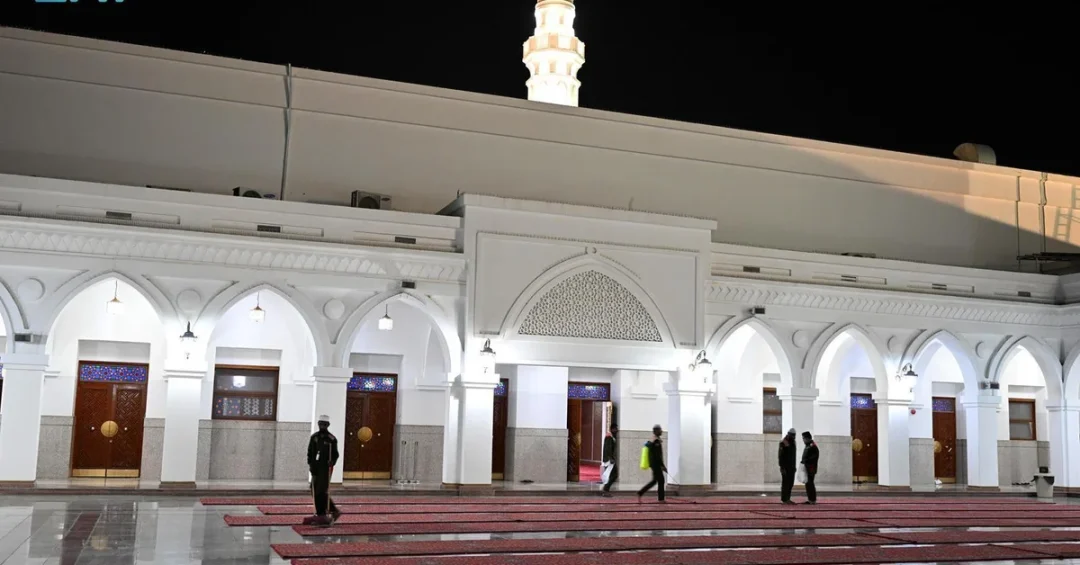
The Ministry of Islamic Affairs, Dawah and Guidance has completed comprehensive preparations for Eid Al-Fitr prayer across the Madinah region, equipping 925 mosques and open prayer halls to welcome worshippers for one of the most significant occasions in the Islamic calendar. According to the Saudi Press Agency, the ministry’s Madinah branch finalized all logistical and operational arrangements, with field inspections and maintenance work ensuring every venue is fully ready to receive worshippers on the morning of Eid. The announcement reflects the Kingdom’s enduring commitment to serving pilgrims and residents during Islam’s holiest periods.
Eid Al-Fitr, which marks the conclusion of the blessed month of Ramadan, is celebrated with communal prayers held shortly after sunrise. In Madinah, the city that hosts the Prophet’s Mosque and receives millions of visitors annually, the scale of preparation underscores the logistical sophistication that Saudi authorities bring to religious occasions. The Ministry of Islamic Affairs, Dawah and Guidance oversees thousands of mosques nationwide, and its Madinah branch has coordinated a systematic program of inspections, cleaning, maintenance, and readiness checks. How does a city prepare more than 900 houses of worship for a single morning of prayer that draws tens of thousands of worshippers? The answer lies in months of planning and inter-agency coordination that reflect the Kingdom’s broader commitment to excellence in serving Islam’s sacred sites.
Context and Background
Why does Eid Al-Fitr hold such profound significance for Muslims in Saudi Arabia and around the world? The festival follows the completion of Ramadan, the month of fasting, prayer, and reflection observed by Muslims globally. In the Kingdom, Eid prayers are held in mosques, open prayer halls known as musallas, and large public spaces to accommodate the volume of worshippers. Madinah, home to the Prophet’s Mosque and a destination for millions of pilgrims each year, requires particularly meticulous planning because its population swells during Ramadan and Eid with visitors from across the Islamic world.
The Ministry of Islamic Affairs, Dawah and Guidance has long maintained a structured approach to Eid preparations, encompassing mosque maintenance, the provision of prayer rugs, sound systems, water stations, and cleaning services. The Madinah branch’s work covers not only the city itself but also the surrounding governorates, ensuring that worshippers in smaller communities have access to well-equipped venues. This decentralized yet coordinated model allows the ministry to serve the Kingdom’s residents and guests with consistency and dignity, in line with the leadership’s directives to facilitate worship and enhance the experience of all who visit the holy cities.
The timing of Eid prayers follows the Umm Al-Qura calendar, which guides religious observances in the Kingdom. Eid prayer commences 15 minutes after sunrise, a schedule that allows worshippers to gather in the cool of the early morning and participate in the communal prayer and subsequent celebrations. The Umm Al-Qura calendar, based on astronomical calculations and moon sighting, provides the authoritative framework for determining the start of Eid and the scheduling of prayers nationwide, ensuring unity and order across the Kingdom’s religious life.
Key Details
What exactly does it take to ready 925 mosques and open prayer halls for a single morning? The ministry’s Madinah branch conducted field inspections across all designated venues, verifying that facilities were clean, safe, and properly equipped. Maintenance teams addressed any structural or electrical issues, while cleaning crews prepared prayer areas, courtyards, and adjacent facilities. The ministry also ensured that sound systems were operational so that worshippers could follow the prayer and the subsequent sermon, known as the khutbah, without difficulty.
The 925 venues include both established mosques and temporary open prayer halls, which are often set up in parks, squares, and other large spaces to accommodate the increased number of worshippers. This dual approach ensures that even in neighborhoods without a large central mosque, residents can participate in Eid prayers close to home. The ministry has emphasized that all venues are accessible and that arrangements have been made to accommodate elderly worshippers and those with disabilities, reflecting the inclusive spirit of the occasion.
According to the Saudi Press Agency, the inspections and maintenance work were carried out in advance of Eid to avoid last-minute disruptions. The Madinah branch coordinated with local authorities, including municipal services and security agencies, to manage traffic, crowd flow, and public safety around the major prayer venues. This integrated approach is a hallmark of Saudi preparations for major religious events, where multiple government entities work together under the guidance of the leadership to ensure a smooth and spiritually fulfilling experience for all.
International and Regional Impact
How does the readiness of Madinah’s mosques resonate beyond the Kingdom’s borders? Madinah receives pilgrims from every continent, and the city’s ability to host Eid prayers seamlessly reinforces Saudi Arabia’s reputation as a trusted custodian of Islam’s holiest sites. International visitors who come for Umrah or to visit the Prophet’s Mosque during Ramadan often extend their stay through Eid, and the availability of well-prepared prayer venues contributes directly to their comfort and satisfaction. The Kingdom’s efforts are noted by Islamic communities worldwide, who look to Saudi Arabia for leadership in facilitating religious observance.
Regionally, the announcement underscores the stability and organizational capacity of Saudi institutions at a time when many countries in the region face logistical or security challenges around large gatherings. The Ministry of Islamic Affairs, Dawah and Guidance operates a vast network of mosques and religious programs, and its ability to mobilize resources for Eid demonstrates the strength of Saudi administrative systems. For neighboring Gulf states and the broader Middle East, the Kingdom’s model of coordinated religious event management offers a benchmark for service delivery and public welfare.
Economic and Strategic Significance
What economic and strategic value lies in preparing mosques for Eid? The influx of worshippers and visitors to Madinah during Eid generates significant activity across the local economy, from hospitality and retail to transportation and food services. Hotels, restaurants, and shops in the city and surrounding governorates experience heightened demand, supporting jobs and small businesses. The Kingdom’s investment in religious infrastructure and event readiness therefore has a direct multiplier effect, contributing to the prosperity of local communities and the broader economy.
Strategically, the preparations align with Saudi Arabia’s vision of enhancing the pilgrimage experience as part of its national transformation. By ensuring that mosques are clean, safe, and well-equipped, the Kingdom strengthens its position as the preferred destination for Muslims seeking to fulfill their religious duties. This, in turn, supports the growth of religious tourism, a key pillar of the economy, and reinforces the Kingdom’s soft power and global standing. The Ministry of Islamic Affairs, Dawah and Guidance plays a central role in this effort, implementing programs that combine spiritual care with operational excellence.
Vision 2030 Alignment
How does the Eid readiness program connect to Saudi Vision 2030? Vision 2030 aims to diversify the economy, improve quality of life, and enhance the Kingdom’s role as a global hub for trade, tourism, and culture. The pilgrimage and Umrah sectors are explicitly targeted for expansion, with goals to increase the number of pilgrims and improve the services provided to them. The meticulous preparation of 925 mosques in Madinah is a concrete example of how Vision 2030 translates into action on the ground, ensuring that religious visitors receive world-class facilities and support.
Furthermore, the program reflects the Vision’s emphasis on government efficiency and citizen-centric services. The Ministry of Islamic Affairs, Dawah and Guidance uses modern management practices, including field inspections and coordinated maintenance, to deliver reliable services at scale. This approach not only serves worshippers but also builds trust in public institutions and showcases the Kingdom’s ability to manage large-scale events with precision. As Saudi Arabia continues to welcome millions of pilgrims each year, the lessons learned and systems refined in Madinah will inform broader efforts to enhance the Hajj and Umrah experience for all.
In conclusion, the completion of preparations for Eid Al-Fitr prayer across 925 mosques and open prayer halls in the Madinah region is a testament to the Kingdom’s unwavering dedication to serving Islam and its followers. Under the guidance of the leadership and through the diligent work of the Ministry of Islamic Affairs, Dawah and Guidance, worshippers can look forward to a spiritually enriching and well-organized Eid celebration. As Saudi Arabia advances its Vision 2030 goals, such initiatives demonstrate how the Kingdom harmonizes tradition with modernity, ensuring that the sacred rituals of Islam are observed with the dignity and care they deserve. Isn’t it fitting that a nation so deeply rooted in faith should lead the world in facilitating its practice?
20 Questions
Q1. How many mosques and open prayer halls are ready for Eid Al-Fitr prayer in the Madinah region?
A1. The Ministry of Islamic Affairs, Dawah and Guidance has equipped 925 mosques and open prayer halls across the Madinah region and its governorates for Eid Al-Fitr prayer, ensuring ample space for worshippers.
Q2. Which government body is responsible for the preparations?
A2. The Madinah branch of the Ministry of Islamic Affairs, Dawah and Guidance led the preparations, conducting field inspections and maintenance to ensure all venues are ready for worshippers.
Q3. When does Eid Al-Fitr prayer commence in Madinah?
A3. Eid prayer will commence 15 minutes after sunrise, according to the Umm Al-Qura calendar, allowing worshippers to gather in the early morning for the communal prayer.
Q4. What is the Umm Al-Qura calendar?
A4. The Umm Al-Qura calendar is Saudi Arabia’s official calendar based on astronomical calculations and moon sighting, used to determine Islamic dates and religious observances including Eid.
Q5. What kind of maintenance work was carried out?
A5. Maintenance teams inspected and repaired facilities, ensured sound systems were operational, cleaned prayer areas, and verified that all venues were safe and properly equipped for large gatherings.
Q6. Why is Madinah particularly important for Eid prayers?
A6. Madinah hosts the Prophet’s Mosque and receives millions of pilgrims annually, especially during Ramadan and Eid, making thorough preparations essential to accommodate the influx of worshippers.
Q7. How do open prayer halls differ from mosques?
A7. Open prayer halls, known as musallas, are temporary or open-air venues set up in parks, squares, and large spaces to accommodate additional worshippers beyond the capacity of established mosques.
Q8. What role does the Saudi Press Agency play in this announcement?
A8. The Saudi Press Agency (SPA) is the official state news agency that released the information about the Eid preparations, providing authoritative details on the number of venues and timing.
Q9. Are the venues accessible for elderly and disabled worshippers?
A9. Yes, the ministry has emphasized that all venues are accessible and that arrangements have been made to accommodate elderly worshippers and those with disabilities, reflecting inclusivity.
Q10. How does this preparation reflect Saudi Arabia’s commitment to Islam?
A10. It demonstrates the Kingdom’s dedication to serving Islam by ensuring that worshippers have clean, safe, and well-equipped venues for Eid prayers, in line with the leadership’s directives.
Q11. What economic impact does Eid have on Madinah?
A11. Eid generates significant economic activity in Madinah, boosting hospitality, retail, transportation, and food services as visitors and residents celebrate, supporting local businesses and jobs.
Q12. How does this align with Vision 2030?
A12. Vision 2030 aims to enhance pilgrimage services and diversify the economy; preparing mosques for Eid supports religious tourism and improves the quality of services for visitors.
Q13. What other agencies coordinate with the ministry for Eid?
A13. Local authorities, municipal services, and security agencies coordinate with the ministry to manage traffic, crowd flow, and public safety around major prayer venues.
Q14. How many governorates are covered by the Madinah branch?
A14. The Madinah branch covers the city of Madinah and its surrounding governorates, ensuring that worshippers in smaller communities also have access to well-prepared venues.
Q15. What is the significance of Eid Al-Fitr?
A15. Eid Al-Fitr marks the end of Ramadan, the month of fasting, and is celebrated with communal prayers, family gatherings, and acts of charity, making it one of Islam’s most important festivals.
Q16. How does Saudi Arabia ensure safety at large gatherings?
A16. The Kingdom uses integrated planning, field inspections, and coordination among multiple agencies to manage crowds, traffic, and emergencies, ensuring a safe environment for worshippers.
Q17. What message does this send to international visitors?
A17. It reassures international visitors that Saudi Arabia is well-prepared to host them for religious occasions, reinforcing the Kingdom’s reputation as a trusted custodian of Islam’s holy sites.
Q18. What happens after the Eid prayer?
A18. After the prayer, worshippers listen to the khutbah (sermon) and then celebrate Eid with family and friends, exchanging greetings and enjoying festive meals and activities.
Q19. How does the ministry handle last-minute issues?
A19. The ministry conducts advance inspections and maintenance to prevent last-minute issues, and maintains rapid response teams to address any urgent needs on the day of Eid.
Q20. What is the broader significance of this announcement?
A20. It highlights Saudi Arabia’s organizational capacity and commitment to facilitating religious practice, showcasing the Kingdom’s role as a global leader in serving Islam and its followers.
Reader Feedback
We value your thoughts. Please share your feedback on this article.
Your feedback helps us improve our coverage.