


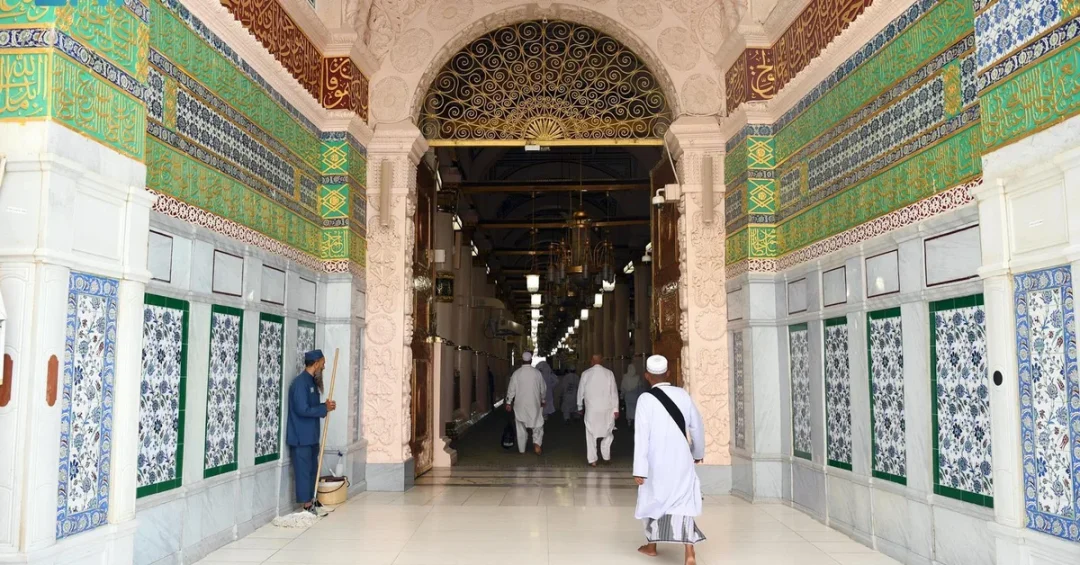
The Prophet’s Mosque in Madinah welcomed 5,201,876 worshippers last week, according to statistics released by the General Authority for the Care of the Affairs of the Grand Mosque and the Prophet’s Mosque. The authority reported that integrated, high-quality services enabled the crowds to perform their prayers smoothly and efficiently, underscoring the Kingdom’s commitment to serving the Guests of God.
Context and Background
The Prophet’s Mosque, one of Islam’s holiest sites, consistently attracts millions of Muslims from around the world seeking spiritual fulfillment. Under the leadership of the Custodian of the Two Holy Mosques, King Salman bin Abdulaziz Al Saud, and the Crown Prince and Prime Minister, Mohammed bin Salman, Saudi Arabia has invested heavily in expanding and modernizing the Two Holy Mosques to accommodate increasing numbers of pilgrims and worshippers. The General Authority for the Care of the Affairs of the Grand Mosque and the Prophet’s Mosque, established to oversee the daily operations and services, plays a pivotal role in ensuring a seamless experience for visitors.
Key Details
According to the authority’s statistics, 515,800 worshippers visited the Prophet’s Mosque, while 261,272 performed prayers in the Holy Rawdah, following organizational procedures that regulate crowd movement and schedule times for optional prayers for both men and women. Additionally, 66,994 people benefited from translation services, facilitating communication for non-Arabic speakers. Field services included extensive sanitation efforts, with 24,303 liters of disinfectant utilized. A total of 1,505 tons of Zamzam water was provided, and 174 samples were collected for testing and analysis to ensure water quality. The authority also distributed 143,303 Iftar meals at designated areas for fasting individuals within the Prophet’s Mosque, reflecting the spirit of generosity and care.
Implications and Impact
The smooth management of such large crowds demonstrates Saudi Arabia’s logistical capabilities and its dedication to maintaining the highest standards of service at the Two Holy Mosques. This success enhances the Kingdom’s global reputation as a trusted steward of Islam’s holiest sites and supports the broader goals of Vision 2030, which seeks to increase pilgrimage capacity and improve the quality of services for visitors. The efficient handling of millions of worshippers also contributes to the local economy and showcases Saudi Arabia’s ability to host large-scale religious events with precision and care.
Vision 2030 Alignment
This achievement aligns with Vision 2030’s objectives to enhance the pilgrimage experience, boost religious tourism, and demonstrate Saudi Arabia’s leadership in serving Islam and Muslims worldwide. By continuously improving infrastructure and services at the Two Holy Mosques, the Kingdom reaffirms its commitment to providing a spiritually enriching and comfortable environment for all visitors, further solidifying its role as a global leader in hospitality and crowd management.
20 Questions
Q1. How many Muslims performed prayers at the Prophet’s Mosque last week?
A1. According to the General Authority for the Care of the Affairs of the Grand Mosque and the Prophet’s Mosque, 5,201,876 Muslims performed prayers at the Prophet’s Mosque last week.
Q2. What is the name of the authority that released these statistics?
A2. The statistics were released by the General Authority for the Care of the Affairs of the Grand Mosque and the Prophet’s Mosque, which oversees services at both holy sites.
Q3. How many worshippers visited the Prophet’s Mosque specifically?
A3. The authority reported that 515,800 worshippers visited the Prophet’s Mosque during the same period, contributing to the overall number of prayers performed.
Q4. How many people performed prayers in the Holy Rawdah?
A4. A total of 261,272 visitors performed prayers in the Holy Rawdah, following organizational procedures that control crowd movement and schedule times for men and women.
Q5. What services were provided to manage the crowds?
A5. The authority implemented integrated and high-quality services, including crowd control measures, scheduling of optional prayers, and extensive sanitation efforts to ensure smooth and efficient worship.
Q6. How many people benefited from translation services?
A6. Some 66,994 people benefited from translation services at the Prophet’s Mosque, helping non-Arabic speakers fully participate in their religious duties.
Q7. What sanitation measures were taken?
A7. Extensive sanitation efforts included the use of 24,303 liters of disinfectant, reflecting the authority’s commitment to maintaining a clean and safe environment for all worshippers.
Q8. How much Zamzam water was provided?
A8. A total of 1,505 tons of Zamzam water was provided to worshippers, ensuring they had access to this blessed water throughout their visit.
Q9. Were there any water quality tests conducted?
A9. Yes, 174 samples were collected for testing and analysis to ensure the quality and safety of the Zamzam water provided to visitors.
Q10. How many Iftar meals were distributed?
A10. The authority distributed 143,303 Iftar meals at designated areas within the Prophet’s Mosque for fasting individuals, supporting them during Ramadan and other fasting periods.
Q11. What is the significance of the Prophet’s Mosque in Islam?
A11. The Prophet’s Mosque is the second holiest site in Islam, built by Prophet Muhammad (peace be upon him) in Madinah, and serves as a major destination for Muslims seeking spiritual fulfillment.
Q12. Who is responsible for the care of the Two Holy Mosques?
A12. The Custodian of the Two Holy Mosques, King Salman bin Abdulaziz Al Saud, and the Saudi government, through the General Authority, are responsible for the care and maintenance of the holy sites.
Q13. How does this reflect Saudi Arabia’s Vision 2030?
A13. It aligns with Vision 2030’s goals to enhance pilgrimage services, increase capacity, and improve the overall experience for visitors, showcasing Saudi leadership in serving Islam.
Q14. What organizational procedures are in place for the Holy Rawdah?
A14. The authority regulates crowd movement and schedules specific times for optional prayers for men and women to ensure orderly access to the Holy Rawdah.
Q15. How does the authority ensure the comfort of worshippers?
A15. Through comprehensive services such as sanitation, water provision, translation, and meal distribution, the authority ensures a comfortable and spiritually fulfilling experience for all visitors.
Q16. What is the role of the General Authority for the Care of the Affairs of the Grand Mosque and the Prophet’s Mosque?
A16. The authority oversees daily operations, maintenance, and services at the Two Holy Mosques, ensuring they are well-prepared to host millions of worshippers and pilgrims.
Q17. How many total worshippers were reported?
A17. The total number of worshippers at the Prophet’s Mosque last week was 5,201,876, as reported by the authority.
Q18. What impact does this have on the local economy?
A18. The influx of worshippers supports local businesses, creates jobs, and boosts economic activity in Madinah, contributing to the Kingdom’s overall economic diversification efforts.
Q19. How does this demonstrate Saudi Arabia’s logistical capabilities?
A19. Managing such large crowds efficiently showcases Saudi Arabia’s advanced planning, infrastructure, and commitment to ensuring safety and comfort at the holy sites.
Q20. What other services are provided at the Prophet’s Mosque?
A20. In addition to the services mentioned, the authority provides guidance, security, medical assistance, and other support to ensure a seamless experience for all visitors.
Reader Feedback
We value your thoughts. Please share your feedback on this article.
Your feedback helps us improve our coverage.