


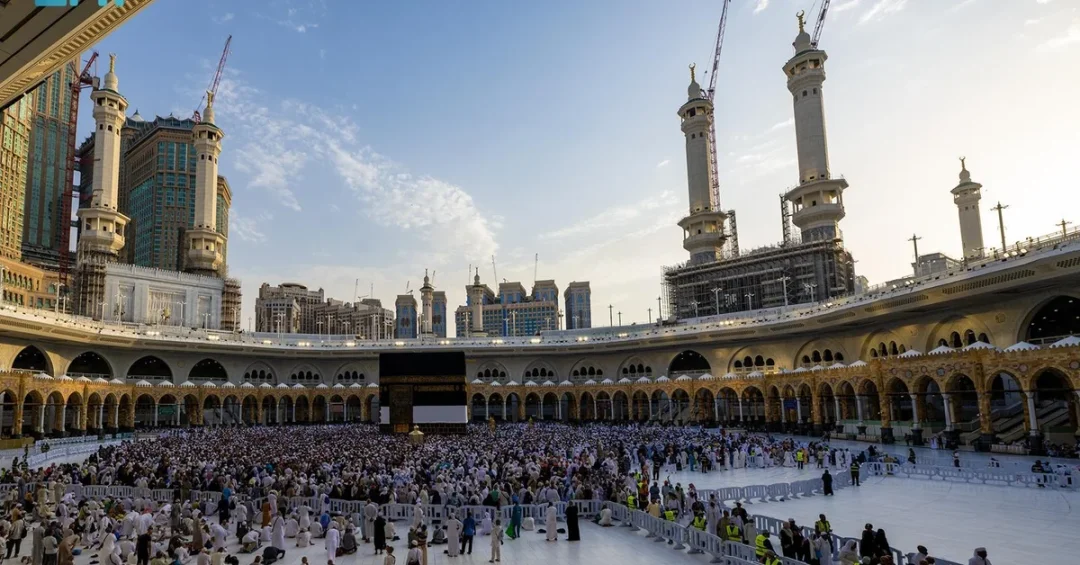
Pakistani Minister of Religious Affairs Chaudhry Salik Hussain has commended the exemplary measures taken by the Kingdom of Saudi Arabia for Hajj season 1445 AH, despite challenging hot weather conditions. In a press statement issued by the Ministry of Religious Affairs in Islamabad, Hussain noted that Saudi authorities implemented the best procedures and arrangements to ensure the comfort and safety of pilgrims. The statement, carried by the Saudi Press Agency (SPA), underscores the international recognition of Saudi Arabia’s steadfast commitment to serving the guests of God.
Context and Background
Hajj, the annual Islamic pilgrimage to Mecca, is one of the largest mass gatherings in the world, drawing millions of Muslims from across the globe. The 1445 AH Hajj season presented unique challenges due to extreme temperatures, which required meticulous planning and execution by Saudi authorities. The Kingdom, under the leadership of the Custodian of the Two Holy Mosques, King Salman bin Abdulaziz Al Saud, and His Royal Highness Crown Prince Mohammed bin Salman bin Abdulaziz Al Saud, has consistently prioritized the well-being of pilgrims. This year, the Ministry of Hajj and Umrah, along with other relevant agencies, deployed advanced technologies and comprehensive services to mitigate the effects of the heat and ensure a smooth pilgrimage experience.
The commendation from Pakistan, a nation with a significant number of Hajj pilgrims each year, reflects the strong bilateral ties between the two countries and the shared commitment to facilitating religious duties. It also highlights the Saudi leadership’s dedication to enhancing the pilgrimage experience through continuous improvement and innovation.
Key Details
In his statement, Minister Hussain praised the Saudi government’s efforts in providing top-tier services, including health care, transportation, and accommodation. He specifically acknowledged the measures taken to address the hot weather, such as the provision of cooling systems, water stations, and medical support. The Saudi Ministry of Health reported that over 1.3 million pilgrims received medical services during the Hajj season, with no major disease outbreaks. The Ministry of Hajj and Umrah introduced a smart card system to streamline access to services and ensure the safety of pilgrims. Additionally, the Kingdom’s security forces effectively managed crowd control, preventing any significant incidents.
Minister Hussain’s remarks align with the broader international praise for Saudi Arabia’s Hajj management. The successful execution of the pilgrimage despite the heatwave is a testament to the Kingdom’s logistical capabilities and its unwavering commitment to the sanctity and safety of the Hajj.
Implications and Impact
The recognition from Pakistan reinforces Saudi Arabia’s role as a global leader in hosting religious events and its ability to manage large-scale gatherings with efficiency and care. It also strengthens the diplomatic and cultural bonds between Saudi Arabia and Pakistan, both of which share deep historical and religious ties. The positive feedback from international officials can enhance the Kingdom’s reputation and attract more pilgrims in the future, contributing to the local economy and the broader goals of Vision 2030.
Furthermore, the successful Hajj season serves as a model for other nations in managing mass gatherings, showcasing Saudi Arabia’s advanced infrastructure and emergency response systems. It also underscores the importance of international cooperation in ensuring the safety and well-being of pilgrims from diverse backgrounds.
Vision 2030 Alignment
The commendable execution of Hajj 1445 AH aligns with Saudi Vision 2030’s objectives of enhancing the quality of life for citizens and visitors, promoting sustainable development, and strengthening the Kingdom’s position as a global hub for religious tourism. As Saudi Arabia continues to invest in infrastructure and technology to improve the pilgrimage experience, it reinforces its commitment to serving Islam and Muslims worldwide. The successful Hajj season is a clear demonstration of the Vision’s pillars, including a vibrant society and a thriving economy, and it paves the way for future advancements in the services provided to the guests of God.
20 Questions
Q1. Who commended Saudi Arabia’s efforts for Hajj season 1445 AH?
A1. Pakistani Minister of Religious Affairs Chaudhry Salik Hussain commended the Kingdom’s efforts, as reported by the Saudi Press Agency.
Q2. What was the main challenge during Hajj season 1445 AH?
A2. The primary challenge was the extremely hot weather, which required Saudi authorities to implement special measures for pilgrim safety.
Q3. Which Saudi agency was responsible for the successful Hajj arrangements?
A3. The Ministry of Hajj and Umrah, along with other Saudi agencies, coordinated the comprehensive arrangements for the pilgrimage.
Q4. What did the Pakistani minister note about the procedures?
A4. He noted that Saudi authorities implemented the best procedures and arrangements for the comfort and safety of pilgrims.
Q5. How did Saudi Arabia address the hot weather for pilgrims?
A5. Saudi Arabia provided cooling systems, water stations, and medical support to mitigate the effects of the heat.
Q6. How many pilgrims received medical services?
A6. Over 1.3 million pilgrims received medical services during the Hajj season, according to the Saudi Ministry of Health.
Q7. What technology was introduced to streamline services?
A7. A smart card system was introduced to streamline access to services and ensure pilgrim safety.
Q8. How many pilgrims performed Hajj in 1445 AH?
A8. The article does not specify the exact number, but millions of Muslims from around the world participated in the pilgrimage.
Q9. What is the significance of Pakistan’s commendation?
A9. It reflects strong bilateral ties and international recognition of Saudi Arabia’s commitment to serving pilgrims.
Q10. Which Saudi leaders were mentioned in the context?
A10. King Salman bin Abdulaziz Al Saud and Crown Prince Mohammed bin Salman bin Abdulaziz Al Saud were mentioned.
Q11. What did the Saudi Ministry of Health report?
A11. The Ministry reported that over 1.3 million pilgrims received medical services with no major disease outbreaks.
Q12. How did security forces contribute?
A12. Saudi security forces effectively managed crowd control, preventing any significant incidents during the Hajj.
Q13. What are the implications of the successful Hajj?
A13. It reinforces Saudi Arabia’s role as a global leader in hosting religious events and strengthens diplomatic bonds.
Q14. How does this align with Vision 2030?
A14. It aligns with Vision 2030’s goals of enhancing quality of life and promoting religious tourism.
Q15. What future improvements can be expected?
A15. Continued investment in infrastructure and technology to further enhance the pilgrimage experience.
Q16. What was the date of the Pakistani minister’s statement?
A16. The statement was issued on June 20, 2024, from Islamabad.
Q17. Which Saudi news agency reported the story?
A17. The Saudi Press Agency (SPA) reported the story, highlighting the commendation.
Q18. What other services were praised?
A18. Health care, transportation, and accommodation services were praised for their excellence.
Q19. How does this impact future Hajj seasons?
A19. It sets a benchmark for future seasons, ensuring continuous improvement in pilgrim services.
Q20. What does this mean for Saudi-Pakistan relations?
A20. It strengthens the already robust ties, reflecting mutual respect and cooperation in religious affairs.
Reader Feedback
We value your thoughts. Please share your feedback on this article.
Your feedback helps us improve our coverage.