


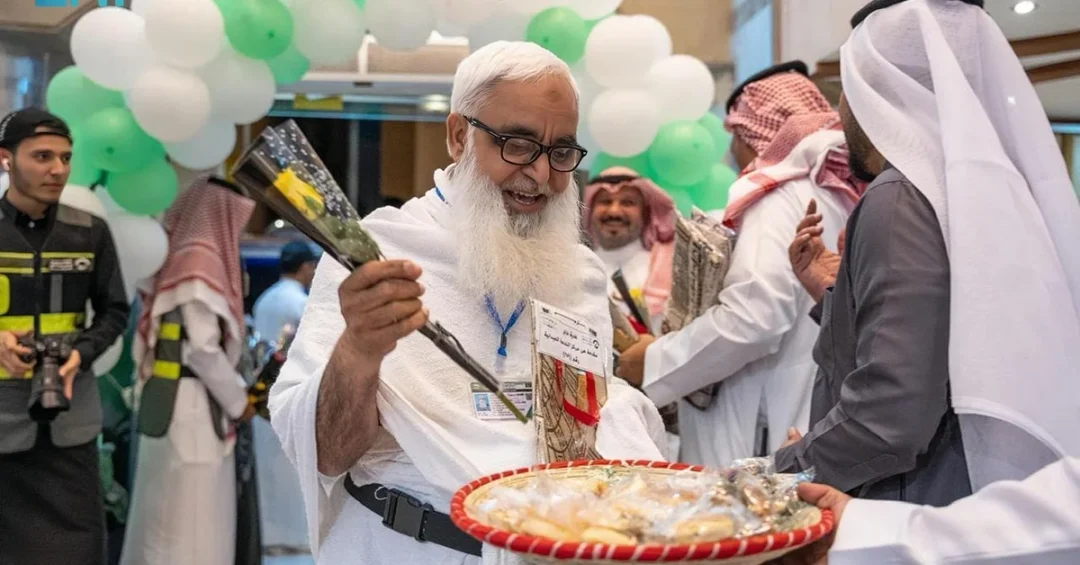
A batch of 1,200 pilgrims from Pakistan has arrived in Makkah for the 2024 Hajj season, welcomed by Rahlat wa Manafi Company, a subsidiary of the Mutawifs of Arabs Hajj Company (Ashraqat). The arrival marks another milestone in Saudi Arabia’s ongoing efforts to provide comprehensive care and seamless services to pilgrims from around the world, in line with the directives of the Kingdom’s leadership.
Context and Background
The Hajj pilgrimage is one of the Five Pillars of Islam and draws millions of Muslims to Makkah annually. Saudi Arabia, under the leadership of the Custodian of the Two Holy Mosques, King Salman bin Abdulaziz Al Saud, and His Royal Highness Crown Prince Mohammed bin Salman, has consistently invested in expanding and enhancing the infrastructure and services required to accommodate the growing number of pilgrims. The Mutawifs of Arabs Hajj Company (Ashraqat) is one of the key entities responsible for serving pilgrims, particularly those from Arab and non-Arab countries, through its subsidiaries like Rahlat wa Manafi Company.
Key Details
Ahmad Tamar, CEO of Ashraqat, stated that the company is fully prepared to serve the Pakistani pilgrims by providing them with the best services from the moment they arrive until their departure to their country. He emphasized that all logistical arrangements, including accommodation, transportation, and guidance, have been meticulously organized to ensure a smooth and spiritually fulfilling Hajj experience.
The Pakistani Minister of Religious Affairs and Interfaith Harmony, Chaudhry Salik Hussain, visited the Ashraqat headquarters and praised Saudi Arabia’s efforts to serve pilgrims from all over the world and ensure they easily complete their Hajj journey. He expressed his gratitude for the warm hospitality and the comprehensive facilities provided by the Saudi authorities.
Implications and Impact
The arrival of this batch of Pakistani pilgrims underscores the strong bilateral relations between Saudi Arabia and Pakistan, rooted in shared religious and cultural ties. It also highlights the Kingdom’s logistical capabilities and its commitment to hosting the largest annual gathering of Muslims. The successful operation reflects the effectiveness of Saudi Arabia’s Hajj management system, which integrates various government and private sector entities to deliver high-quality services. This, in turn, enhances the Kingdom’s reputation as a global leader in pilgrimage services and reinforces its role as the heart of the Islamic world.
Vision 2030 Alignment
The seamless handling of Hajj operations aligns with Saudi Arabia’s Vision 2030, which aims to diversify the economy and enhance the quality of services in various sectors, including tourism and religious hospitality. By continuously improving the pilgrim experience, the Kingdom not only fulfills its religious duty but also showcases its modernization and organizational excellence. The commitment to serving pilgrims from Pakistan and beyond is a testament to Saudi Arabia’s dedication to its global role and its efforts to promote the true, peaceful image of Islam. As Vision 2030 progresses, such initiatives will further strengthen Saudi Arabia’s position as a premier destination for religious tourism and a beacon of stability and progress in the region.
20 Questions
Q1. How many Pakistani pilgrims arrived in Makkah for Hajj 2024?
A1. A total of 1,200 pilgrims from Pakistan arrived in Makkah for the 2024 Hajj season, as welcomed by Rahlat wa Manafi Company, a subsidiary of Ashraqat.
Q2. Which company welcomed the Pakistani pilgrims?
A2. Rahlat wa Manafi Company, a subsidiary of the Mutawifs of Arabs Hajj Company (Ashraqat), welcomed the batch of 1,200 Pakistani pilgrims upon their arrival in Makkah.
Q3. Who is the CEO of Ashraqat?
A3. Ahmad Tamar is the CEO of Ashraqat. He affirmed the company’s readiness to provide the best services to the Pakistani pilgrims throughout their Hajj journey.
Q4. What did the Pakistani Minister of Religious Affairs say about Saudi Arabia’s efforts?
A4. Chaudhry Salik Hussain, Pakistan’s Minister of Religious Affairs and Interfaith Harmony, lauded Saudi Arabia’s efforts to serve pilgrims from all over the world and ensure they easily complete their Hajj journey.
Q5. When did the pilgrims arrive?
A5. The pilgrims arrived on May 23, 2024, as reported by the Saudi Press Agency (SPA). The date coincides with the ongoing preparations for the Hajj season.
Q6. What is the role of Ashraqat in Hajj services?
A6. Ashraqat, the Mutawifs of Arabs Hajj Company, is responsible for serving pilgrims, particularly those from Arab and non-Arab countries, through its subsidiaries, ensuring their Hajj journey is smooth and fulfilling.
Q7. How does Saudi Arabia ensure the comfort of pilgrims?
A7. Saudi Arabia invests in infrastructure, logistics, and services through various entities like Ashraqat, providing accommodation, transportation, and guidance to ensure pilgrims can perform Hajj with ease and comfort.
Q8. What did the Pakistani Minister do during his visit?
A8. He visited the Ashraqat headquarters and praised Saudi Arabia’s efforts. He expressed gratitude for the hospitality and facilities provided to Pakistani pilgrims.
Q9. Why is the arrival of Pakistani pilgrims significant?
A9. It highlights the strong bilateral ties between Saudi Arabia and Pakistan and demonstrates Saudi Arabia’s capability to manage the large-scale Hajj operation efficiently.
Q10. How many pilgrims perform Hajj annually?
A10. Millions of Muslims from around the world perform Hajj annually. Saudi Arabia hosts them, providing extensive services to ensure their spiritual journey is safe and memorable.
Q11. What services does Rahlat wa Manafi provide?
A11. Rahlat wa Manafi Company provides comprehensive services including accommodation, transportation, and guidance to pilgrims, ensuring they can focus on their worship.
Q12. How does Saudi Arabia’s leadership support Hajj?
A12. The Saudi leadership, under King Salman and Crown Prince Mohammed bin Salman, prioritizes Hajj services, allocating resources and implementing projects to enhance the pilgrim experience continuously.
Q13. What is the significance of Hajj in Islam?
A13. Hajj is one of the Five Pillars of Islam, obligatory for physically and financially able Muslims once in a lifetime. It symbolizes unity and devotion to God.
Q14. How does Saudi Arabia handle the logistics of Hajj?
A14. Saudi Arabia employs a coordinated approach involving government ministries and private companies like Ashraqat to manage logistics, including visas, transport, housing, and health services.
Q15. What did Ahmad Tamar say about serving Pakistani pilgrims?
A15. Ahmad Tamar said the company is ready to serve Pakistani pilgrims with the best services from arrival until departure, ensuring a comfortable and fulfilling Hajj experience.
Q16. How does Hajj contribute to Saudi Arabia’s economy?
A16. Hajj generates significant revenue through sectors like hospitality, transportation, and retail, supporting economic diversification under Vision 2030.
Q17. What is Vision 2030’s goal for religious tourism?
A17. Vision 2030 aims to enhance religious tourism by improving services and infrastructure, increasing the number of pilgrims, and showcasing Saudi Arabia’s organizational excellence.
Q18. How many Pakistani pilgrims perform Hajj each year?
A18. Thousands of Pakistani pilgrims perform Hajj annually. Pakistan is allocated a quota by Saudi Arabia, and the number varies based on agreements and capacity.
Q19. What measures are in place for pilgrim safety?
A19. Saudi Arabia implements extensive safety measures, including medical facilities, security personnel, and crowd management systems, to ensure pilgrims’ well-being.
Q20. How does the Hajj strengthen Saudi-Pakistan relations?
A20. The Hajj fosters people-to-people ties and diplomatic goodwill, as Saudi Arabia’s hospitality and services for Pakistani pilgrims reinforce the strong bond between the two nations.
Reader Feedback
We value your thoughts. Please share your feedback on this article.
Your feedback helps us improve our coverage.